

Let's be honest: buying used restaurant equipment in Las Vegas, Nevada, can feel like a high-stakes gamble. The allure of saving a few thousand dollars upfront is strong, especially when you're just starting out. But that initial savings can vanish in an instant if a key piece of gear dies on you mid-service.
Finding Your Footing in the Las Vegas Used Equipment Market
Welcome to the heart of Nevada’s hospitality scene. From five-star dining on the Strip that caters to every palate to the cool, eclectic spots in Henderson and scrappy downtown food trucks, Las Vegas is a culinary battleground. Success here isn’t just about having a killer menu; you need a kitchen that can take a beating, especially from our brutal desert heat.
This is where every operator faces the big equipment dilemma. Going with pre-owned gear can seriously slash your startup costs, and who doesn't want that? But a critical failure can bring your entire operation to a screeching halt.
Picture this: it’s a sweltering July afternoon, your walk-in cooler gives up the ghost, and thousands of dollars in inventory starts to sweat. Or your ice machine quits on a packed Friday night. These aren't just minor headaches; they're the kind of emergencies that can sink a business in this vibrant city.

What Your Kitchen Can't Live Without in This Climate
In a city where the thermometer regularly tops 100°F, certain pieces of equipment are essential workhorses for success. You can't afford for them to fail. When you're looking at used options, you have to inspect these with a microscope.
-
Commercial Refrigerators: Your cooler is the heart of the kitchen, protecting your entire inventory. A used unit could have a tired compressor or worn-out door seals, making it work twice as hard and sending your NV Energy bill through the roof.
-
Commercial Freezers: Just as vital, your freezer needs to hold a consistent sub-zero temperature without wavering. Any hiccup means spoilage and a huge financial hit. The reliability of a second-hand freezer is a massive question mark.
-
Ice Machines: Here in Vegas, ice isn't a luxury—it's a utility. From high-end cocktails on the Strip to iced coffees in Summerlin, a busted ice machine can cripple your bar service and alienate customers fast. Used machines are notorious for hidden scale buildup and failing cooling systems.
The smartest investment for a Las Vegas operator isn't always the cheapest one upfront. It's the one that guarantees reliability when the kitchen is slammed and the temperatures are soaring.
This guide is here to help you make smarter, more informed decisions. We’ll walk through how to find and properly inspect used gear right here in Vegas and Henderson. We'll also take a hard look at the pros and cons compared to buying new, warrantied equipment.
My goal is to give you the practical knowledge you need to outfit your kitchen with dependable equipment that won't let you down in this fiercely competitive city.
Decision Matrix New vs Used Kitchen Gear in Las Vegas
To make things a bit clearer, I've put together a quick comparison table. It's a simple way to weigh the trade-offs when you're standing on a showroom floor, trying to decide where to put your hard-earned capital.
| Factor | Used Equipment | New Warranty-Backed Equipment |
|---|---|---|
| Upfront Cost | Significantly lower, freeing up initial capital. | Higher initial investment, requires more cash or financing. |
| Warranty & Support | Typically sold "as-is" with no warranty or support. | Comes with a manufacturer's warranty and service support. |
| Reliability | Unknown history. Potential for unexpected breakdowns. | Brand new components, ensuring maximum reliability from day one. |
| Energy Efficiency | Older models are often less efficient, leading to higher utility bills. | Built to modern standards, offering better energy efficiency. |
| Compliance | May not meet current health or safety codes. | Guaranteed to meet all current SNHD and safety regulations. |
| Lifespan | Reduced operational lifespan due to prior use and wear. | Full expected lifespan, maximizing your return on investment. |
Ultimately, the right choice depends on your budget, your tolerance for risk, and how critical a particular piece of equipment is to your daily operation. Sometimes saving money now makes sense, but for core items like refrigeration, the peace of mind a warranty provides can be priceless.
How To Find And Vet Local Sellers
Finding used restaurant equipment in Las Vegas is a bit of a treasure hunt. The constant churn of our city's incredible and diverse food scene means there's always gear changing hands, which is fantastic news for anyone smart enough to be looking. You'll start your search online, but the real work—the part that saves you money and headaches—happens in person.
Your first stops should be the usual suspects: Craigslist, Facebook Marketplace, and OfferUp. You can find just about anything here, from a single prep table to an entire kitchen liquidation from a restaurant that's upgrading. These platforms connect you directly with the sellers, which often means you can snag a better deal. But be warned, this is also where you'll find the highest risk of scams and equipment that's not quite as advertised.
Don't forget to keep an eye on the local auction houses that handle restaurant closures. These events can be absolute goldmines. We're talking high-end, big-name equipment going for pennies on the dollar. Get on their email lists right away so you're the first to know about upcoming sales in Vegas and Henderson.
Vetting Sellers To Avoid Costly Mistakes
Once you've spotted a piece of equipment that looks promising, it's time to put on your detective hat. This is where you separate the real deals from the duds. Your first conversation, whether by phone or email, is all about getting the information the seller conveniently left out of the ad.
You need to ask sharp, specific questions to piece together the equipment's history. A good, honest seller will have no problem answering.
- "What's the exact model and serial number?" This is your key. With it, you can look up the manufacturer's specs, figure out how old it is, and research any common problems with that particular unit.
- "Do you have any maintenance or service records?" Honestly, it's rare for a private seller to have these, but just asking the question shows you're serious and not a pushover. A reputable dealer, on the other hand, should have this info ready.
- "So, why are you selling it?" You're listening for a story that makes sense. A menu change, upgrading to a larger unit, or a business closing are all logical reasons. If you get a vague, shifty answer, that's a red flag.
A seller who gets weird about sending clear photos, dodges your questions, or tries to pressure you into a quick sale without seeing the item is telling you everything you need to know. Trust your gut. It's always better to walk away from a sketchy deal.
Scheduling an In-Person Inspection
This is the most critical step, and it's completely non-negotiable. You must insist on an in-person inspection where you can see the equipment powered on and running. This is especially true for the workhorses of your kitchen—commercial refrigerators, freezers, and ice machines that are absolutely vital for any restaurant in the Las Vegas heat.
A legit seller will have zero issues with this. If they start making excuses or tell you they can't plug it in for some reason, just hang up the phone. It's a classic sign that something's wrong with the unit. Your time is money, and so is your capital. The smartest thing you can do is build a shortlist of sellers you've already vetted before you waste a single gallon of gas driving around the valley.
Your Essential On-Site Inspection Checklist
Alright, this is where the rubber meets the road. You've vetted the seller and set up a time to see the equipment. Now it’s time to show up ready to do a real, hands-on inspection. Don't get distracted by a fresh coat of paint or a smooth sales pitch; the problems that will cost you the most are almost always lurking just out of sight.
If you take away only one thing, let it be this: never buy equipment you can't see powered on and running.
This simple flowchart breaks down the process we follow. You find them, you ask the right questions, and then you get your hands on the equipment to inspect it properly.
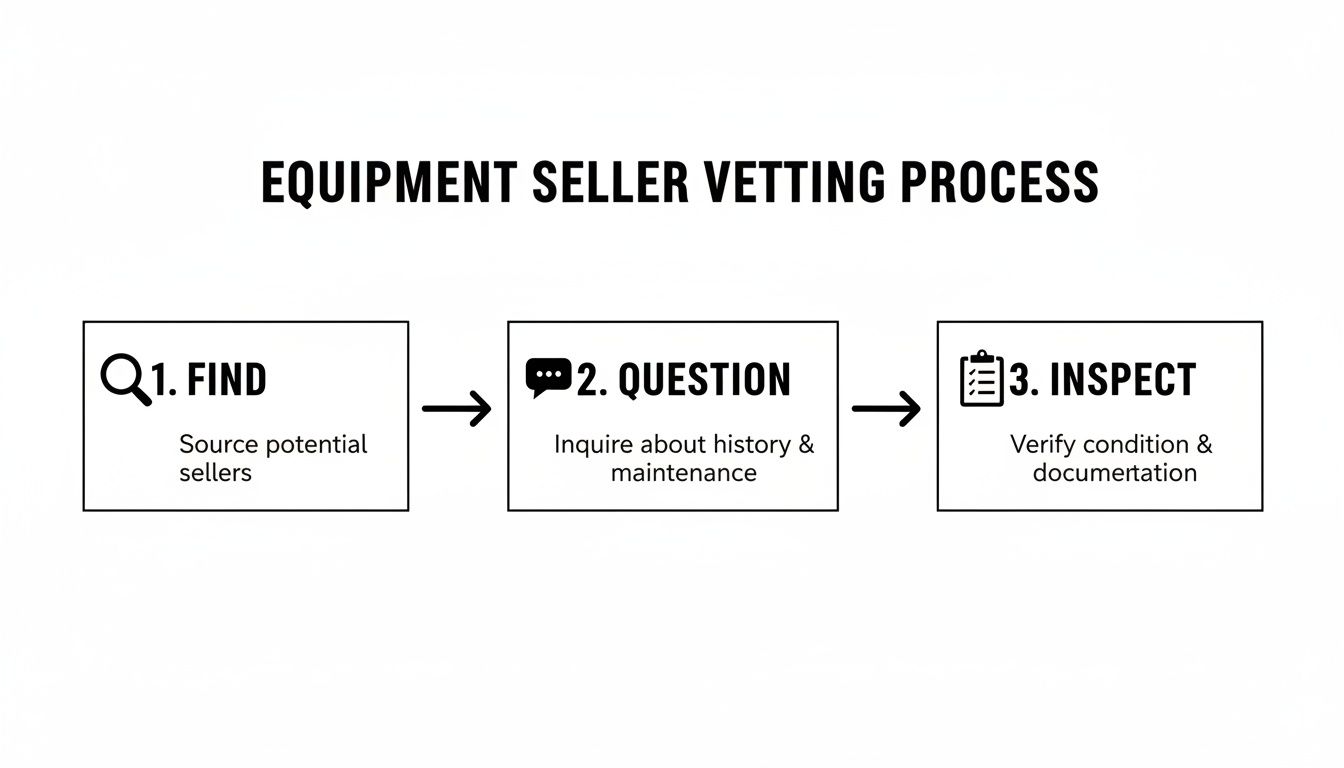
The first two steps are just to get you in the door. The final decision always comes down to what you find during that physical inspection.
Inspecting Commercial Refrigerators
In Las Vegas, your refrigeration isn't just equipment; it's the lifeline of your kitchen, constantly battling the desert heat. A bad unit is a full-blown emergency waiting to happen, so you need to be meticulous here.
Start with the basics: check the door seals and gaskets. Are they cracked, torn, or brittle? A bad seal forces the compressor to work overtime, and you’ll see that reflected on your NV Energy bill.
Then, just listen. Pay close attention to the compressor. A healthy unit will cycle on and off pretty regularly. If it's running nonstop, that's a huge red flag. It could mean low refrigerant or a part that’s about to give out. Also, scan the coolant lines for any oily residue—a dead giveaway of a slow, expensive leak.
If you're looking at a bigger unit, our guide on what to look for in a commercial walk-in refrigerator has even more in-depth tips.
What to Look for in Commercial Freezers
The inspection for a freezer is pretty similar to a fridge, but with its own set of tells. The biggest red flag is a ton of ice buildup. A little frost is one thing, but if you see thick sheets of ice, especially clumped around the door or vents, you're likely looking at a failing defrost system or another bad seal.
You also need to verify it can hold its temperature. Don't just trust the display. I always bring a separate thermometer to double-check. A freezer that can't consistently hold 0°F or below is a liability you can't afford.
A classic mistake I see people make is skipping the small stuff. Give the door hinges a good shake to check for sagging. Look inside for any rust on the shelving, and make sure the lights actually turn on. These little things often tell a bigger story about how well the unit was maintained.
Checking Ice Machines
Ice machines are notorious for being problematic when bought used, so be extra careful here. The first place to look is the evaporator plate—that's where the ice actually forms. If you see a lot of scale buildup or corrosion, walk away. That's going to kill your ice production and quality.
Next, trace all the water lines and connections. You're looking for drips, cracks, or patchwork repairs. Even a tiny leak can lead to serious water damage down the line.
Finally, ask the seller to run the self-cleaning cycle if it has one. This is a great way to see if the whole system works as it should and can expose hidden plumbing problems. If any of these core components fail your inspection, it's an immediate deal-breaker.
The Hidden Costs Of Second-Hand Kitchen Gear
That gleaming stainless steel fryer with an unbelievable price tag can feel like the deal of a lifetime. But that sticker price? It's often just the down payment. For savvy operators hunting for used restaurant equipment in Las Vegas, Nevada, understanding the total cost of ownership is the real secret to avoiding a financial nightmare.
The initial savings get eaten up faster than you can say "check, please."
First, you've got to get it to your kitchen. Moving a heavy, bulky piece of gear from Henderson to your spot downtown isn't free. You're looking at a truck rental, some serious manpower, and maybe even specialized moving equipment. It adds up.
Then comes the installation. We're not talking about just plugging it in. Commercial appliances, especially anything with a gas line or complex wiring, need a licensed professional. This isn't just a suggestion—it's a hard requirement to pass your Southern Nevada Health District inspection.
The Real Price of an Unplanned Failure
The most devastating hidden cost? An unexpected breakdown.
Picture this: it's a packed Saturday night, the orders are flying, and your "bargain" fryer just dies. The immediate fallout is obvious—angry customers, lost tickets, and a kitchen descending into chaos. But the financial bleeding doesn't stop when the rush ends.
Emergency repair calls in Las Vegas are brutal on the wallet, especially after hours or on a weekend. You’ll pay a premium just to get a tech in the door to diagnose an old unit, and there's no guarantee they'll even have the right parts on hand. This means extended downtime, which translates to days of lost revenue that can easily wipe out whatever you "saved" on the initial purchase. It's a similar risk-reward calculation you'd make when looking into the complete breakdown of food truck startup costs, where equipment choices can make or break your venture.
The true cost of used equipment isn't what you pay for it; it's what it costs you when it inevitably fails at the worst possible moment.
A Scenario: The Cheap Fryer That Wasn't
Let's run the numbers on a real-world example. You find a used fryer for $800 and pass on a new, warrantied model that costs $2,000. You feel like a genius.
But then...
- Transportation & Installation: $250
- First Repair (6 months in): $450 for a new thermostat and labor.
- Lost Revenue (1 day offline): $500 in lost sales, easily.
- Second Repair (10 months in): $600 for a failing gas valve.
- Total Cost: A staggering $2,600, and that doesn't include the stress or the hit to your restaurant's reputation.
Suddenly, that $800 "deal" has cost you $600 more than a brand-new, reliable unit that comes with a warranty. This math doesn't even factor in the higher energy bills that come with running an inefficient, older appliance. For more on that, check out our guide on energy-efficient commercial refrigeration.
The restaurant business is a huge part of our economy, but the margins are razor-thin, especially in a competitive town like Vegas. We've seen local spots where post-COVID sales crept up just 3% while their operating costs skyrocketed by over 50%. In that kind of environment, skimping on your most critical gear isn’t saving money—it's gambling with your business's future.
After wading through the murky waters of the used equipment market, it’s easy to see why so many sharp Las Vegas operators are taking a different path. Instead of rolling the dice on a second-hand piece, they’re going straight for new, warranty-backed gear from lean online retailers. It’s a modern approach that gets you "Sin City" pricing on critical equipment by cutting out the bloated overhead of a traditional showroom.
This isn't just about dodging a lemon; it’s about locking in a better value from day one. In a city with a culinary scene as demanding and diverse as ours—from high-end steakhouses on the Strip to the food trucks popping up in Henderson—you simply can't afford a breakdown.
The Guaranteed Peace of Mind
The biggest win with new equipment is guaranteed compliance, hands down. Every new commercial refrigerator, freezer, and ice machine ships with its NSF and ETL certifications right on the unit. That means you’ll breeze through your Southern Nevada Health District (SNHD) inspections without breaking a sweat—a huge weight off any owner’s shoulders.
Beyond the paperwork, modern equipment is actually built to handle the brutal Nevada heat. New, energy-efficient designs can seriously slash your power bills, which is a massive deal when your refrigeration is fighting back against 110°F summer days. It’s a long-term saving that just keeps adding up.
Let’s be real: the most valuable thing in any kitchen is uptime. That manufacturer's warranty isn't just a piece of paper. It’s a promise that a sudden failure won't shut you down and hit you with a four-figure emergency repair bill.
Speed and Accessibility in the Las Vegas Market
Logistics are another game-changer. Hunting down used restaurant equipment in Las Vegas, Nevada can turn into a weeks-long ordeal of searching, haggling, and then figuring out how to move a 500-pound griddle. Modern online suppliers have this down to a science. Fast, free shipping often means your gear shows up in just a few days, getting your kitchen online way faster than you’d expect.
If you're launching a new spot or expanding, that speed is a serious competitive advantage. You can also take a deeper look at sourcing all your other essential bar and restaurant supplies to get your whole space kitted out.
Making New Equipment an Affordable Reality
I get it—the upfront cost of new equipment can feel like a big hurdle. But today, accessible financing options have really leveled the playing field. Many suppliers offer flexible payment plans that put brand-new, reliable equipment within reach, even for a startup watching every penny. This frees up your cash for the things that bring customers in the door, like marketing and a top-notch team.
For a good breakdown, it's worth exploring the benefits of renting versus owning equipment to see which financial strategy truly fits your business model.
This isn’t just a niche trend; it’s the new standard. A recent industry survey found that 68% of operators plan to invest in new equipment for 2025, and 43% are budgeting over $20,000 for it. This shows a huge shift in mindset—operators are prioritizing long-term reliability over a quick, short-term saving. For a lot of us in the Vegas valley, buying new isn't just an alternative anymore. It’s the smarter play for staying in the game.
Your Top Questions About Las Vegas Restaurant Equipment, Answered
Running a restaurant in a city as vibrant and demanding as Las Vegas brings up a ton of questions, especially when outfitting your kitchen. Whether you're on the bustling Strip or in a quiet Henderson neighborhood, every operator is looking for the smartest way to invest their capital. We hear the same questions time and time again, so let's get you some straight answers.
Is It Cheaper To Buy Used Equipment?
On paper, yes. The initial price tag on a used piece of equipment is almost always lower than buying new. But that's not the whole story.
The total cost of ownership can quickly spiral past those initial savings. Think about it: you have to factor in transportation, installation, surprise repairs, and the killer of all profits—downtime. A brand-new commercial refrigerator with a warranty gives you predictability. You know it will work. A used one? That’s a gamble you might not want to take.
What’s the Most Important Equipment for a Las Vegas Kitchen?
In our desert climate, your cold line isn't just important—it's your lifeline. The absolute, non-negotiable essentials are:
- Commercial Refrigerators: These are the workhorses, battling the intense Nevada heat around the clock to keep your inventory safe. You simply can't afford unreliability here.
- Commercial Freezers: Just as crucial, a solid freezer is the only thing standing between your stored goods and costly spoilage.
- Ice Machines: This is Vegas. Between the scorching temperatures and the vibrant nightlife, a dependable ice machine is a must-have for every bar and restaurant.
If any one of these three goes down, your operation grinds to a halt. That’s why they represent the most critical investment for any food and beverage business in this city.
Where Can I Find Used Restaurant Equipment in Las Vegas?
You’ve got a few options for finding pre-owned gear in the valley. Online marketplaces like Craigslist and Facebook Marketplace are common places to start. You’ll also see local restaurant auctions pop up when a place closes or liquidates its assets. Some local dealers might have a small selection of used items, too.
The real challenge isn't finding the equipment; it's knowing what you're actually getting. You have to be ready to thoroughly vet the seller and the condition of the gear before you even think about handing over cash.
Here’s the bottom line: while the market for used restaurant equipment in Las Vegas, Nevada, is active, it’s a world away from the guarantees, warranties, and compliance assurances you get when purchasing new, certified gear.
Even with economic pressures, the demand for quality equipment isn't slowing down. In 2024, top foodservice equipment dealers—including those supplying high-volume hubs like Vegas—reported combined sales of $9.8 billion. That’s a 3.6% jump from the year before, which shows just how many operators are choosing to invest in reliability. You can dig deeper into these industry trends to see what it means for your business. Learn more about the 2025 top dealer report on fermag.com.
If you'd rather skip the risks of the second-hand market, check out the curated selection at Las Vegas Restaurant Equipment. We offer a warranty-backed solution with competitive "Sin City" pricing on new commercial refrigerators, freezers, ice machines, and more—all with fast, free shipping to get your kitchen up and running. https://lasvegasrestaurantequipment.com