

In the high-stakes, fast-paced world of Las Vegas hospitality, your success comes down to the quality and freshness of every single dish you serve. The city boasts a vibrant and diverse array of restaurants catering to every imaginable palate, from massive buffets on the Strip to cozy neighborhood spots in Henderson. There’s one piece of equipment working around the clock that makes it all possible: the commercial walk in refrigerator.
This isn't just a big, cold box. It's the unsung hero, the heart and soul of your kitchen's entire operation.
Your Kitchen’s Most Valuable Player
Think of your walk-in as your restaurant's MVP. Your chefs get the spotlight, but the walk-in is the one making the game-winning plays behind the scenes. It’s tasked with protecting your most critical assets—your ingredients.
A problem here isn’t just a minor headache. It means spoiled inventory, serious financial losses, and a potential hit to your hard-earned reputation. That’s why picking the right unit is one of the most important decisions you'll make as a restaurant owner in Southern Nevada.
The Foundation of a Thriving Las Vegas Kitchen
In a city that truly never sleeps, your equipment can't afford to take a break. The brutal desert heat puts incredible strain on refrigeration systems, making durability and efficiency non-negotiable. Your walk-in, along with its essential teammates—the commercial freezer and the ever-critical ice machine—forms the core foundation of your entire cold storage strategy. A successful Las Vegas kitchen needs this trifecta of restaurant equipment to operate smoothly.
A well-chosen system will have a direct impact on your bottom line and daily operations:
- Inventory Protection: It’s the vault that protects the thousands of dollars you've sunk into prime meats, fresh produce, and delicate dairy. It keeps everything perfect from the moment it’s delivered to the second it hits the plate.
- Menu Consistency: Rock-solid temperature control means your ingredients hold their quality. This allows your kitchen team to deliver that same incredible dish your guests rave about, time and time again.
- Operational Efficiency: A smart layout can completely transform your kitchen's workflow. When your staff can find what they need quickly, service speeds up and the whole operation runs smoother.
- Cost Control: An energy-efficient walk-in is your best defense against sky-high utility bills, especially during our scorching summer months when cooling costs can eat into your profits.
Choosing a commercial walk in refrigerator isn't just buying another piece of equipment. It's a strategic investment in the long-term health and success of your restaurant, ensuring you can consistently meet the world-class standards of this city.
This guide is here to walk you through everything, from figuring out the different types of systems to navigating the unique challenges of installation and maintenance here in Las Vegas. Our goal is simple: to give you the practical knowledge you need to pick the perfect unit for your space, your budget, and your menu.
Decoding the Different Types of Walk-In Systems
Choosing the right commercial walk-in refrigerator is a bigger decision than just picking a size. The first fork in the road is deciding on the fundamental system type and, just as importantly, where this massive piece of equipment will actually live. This choice ripples through everything—your kitchen's workflow, the ambient temperature your staff has to deal with, and even your long-term operating costs.
Think of it like deciding between an attached garage and a detached workshop for your home. Both get the job done, but each has its own set of pros and cons depending on your property and how you plan to use the space.
The two main options for a walk-in are indoor and outdoor, and the market has a clear favorite. A look at the numbers shows that indoor units are the go-to for most restaurants and food businesses. In 2022, the indoor segment snagged over 70.5% of the market share in revenue. This tells us that most operators are prioritizing how to best use their interior space while keeping a laser focus on food quality.
This visual really gets to the heart of how your big-ticket equipment choices are tied to everything else.
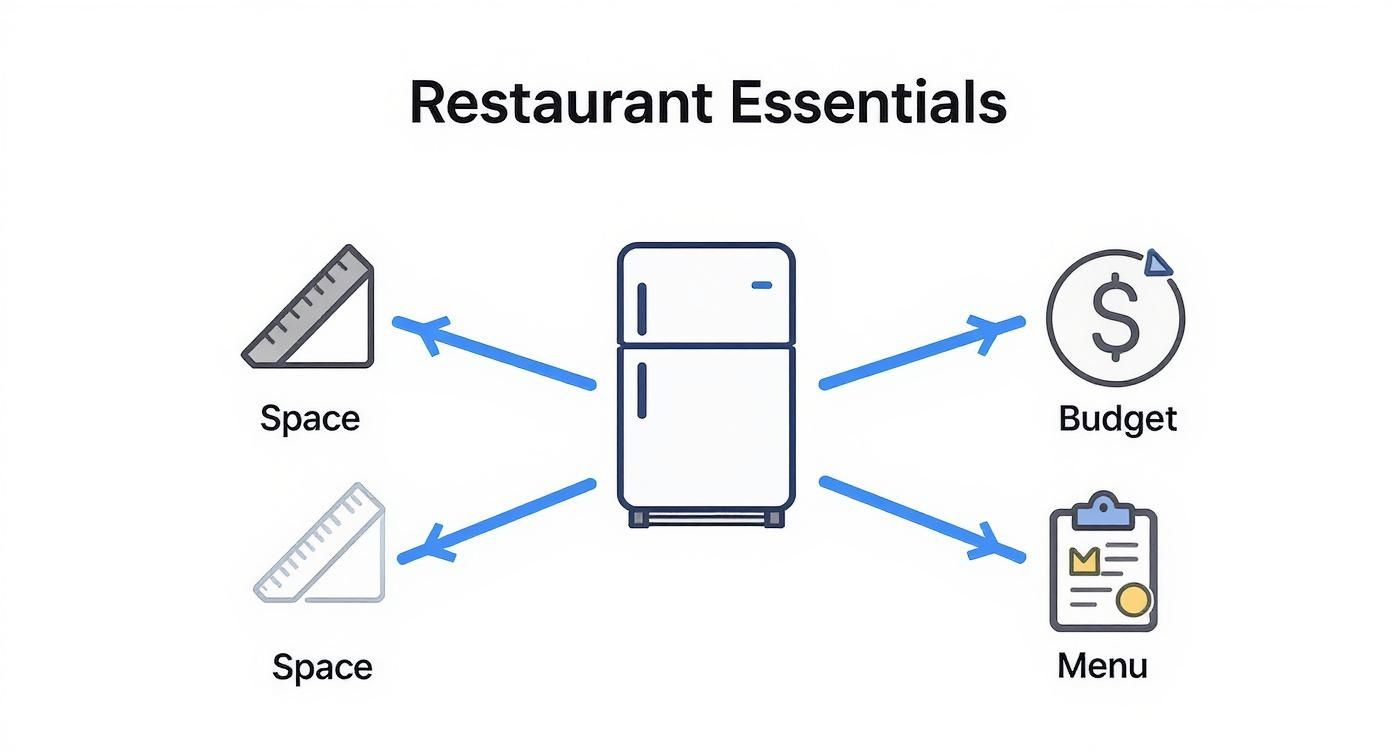
It’s a great reminder that your walk-in isn't just a box; it's a strategic piece of your entire operational and financial puzzle.
Indoor vs. Outdoor Walk-In Refrigerators
An indoor walk-in is like that attached garage—super convenient and always within reach. It sits right inside your kitchen or back-of-house storage area, making it a breeze for your line cooks to grab what they need in a hurry. This setup also shields the unit from the brutal Las Vegas sun and adds a layer of security. The downside? It eats up valuable indoor square footage, which is often pure gold in a tightly packed restaurant.
On the other hand, an outdoor walk-in is your detached workshop. Sticking the unit outside frees up that precious interior real estate for more prep tables, another fryer, or even a few more seats in the dining room. For a smaller kitchen, this can be a lifesaver. The trade-off is that staff have to trek outside to get inventory, and the unit itself needs a serious weatherproof design to handle our extreme desert heat and stay secure.
The Engine Room: Your Refrigeration System
Once you know where your walk-in will go, it's time to pick the engine that powers it. This is where you'll hear terms like "self-contained" and "remote" systems. Getting the difference is critical, especially when you’re trying to manage your kitchen's environment in the middle of a Nevada summer.
A self-contained system is the all-in-one package, kind of like a window A/C unit for a room. The compressor, condenser, and all the mechanical guts are built into a single unit that usually sits right on top or on the side of the walk-in box.
- Pros: They’re simpler and usually cheaper to get installed.
- Cons: That condenser is going to pump heat and noise straight into your kitchen. This drives up the ambient temperature and can make the work environment pretty miserable for your team.
A remote system works more like the central air conditioning in your house. The parts that make all the noise and heat—the condensing unit—are installed somewhere else, completely separate from the walk-in box. We're talking up on the roof or just outside the building.
A remote system is often a total game-changer for Las Vegas kitchens. By pushing all that heat and noise outside, you create a cooler, quieter, and way more efficient kitchen for your crew. That's a huge win when it's 110 degrees outside.
This setup is definitely a more involved installation, requiring a technician to run refrigerant lines from the outdoor unit to the evaporator coil inside the walk-in. The upfront cost might be a bit higher, but the payoff in energy savings and staff comfort is massive. The choice really boils down to your budget, your kitchen's layout, and how much you value a climate-controlled BOH. Taking a look at a wide range of commercial refrigerators can help put all these different cooling options into perspective.
How to Size and Customize Your Walk In Cooler
Picking the right size for a commercial walk in refrigerator is about way more than just measuring a spot on your kitchen floor. Think of it like buying a suit. Sure, an off-the-rack option might fit, but a tailored one? That’s what performs and feels a world apart. Sizing your walk-in is all about tailoring your cold storage to the unique rhythm of your Las Vegas restaurant, making sure it supports your operation instead of becoming a bottleneck.
Your mission is to find that perfect balance. Go too small, and your kitchen crew will be stuck playing a frustrating game of inventory Tetris with every delivery, which leads to damaged product and slower service times. But if you go too big, you’re basically just paying to air-condition empty space—a seriously expensive mistake, especially when the Nevada summer sun is blazing.
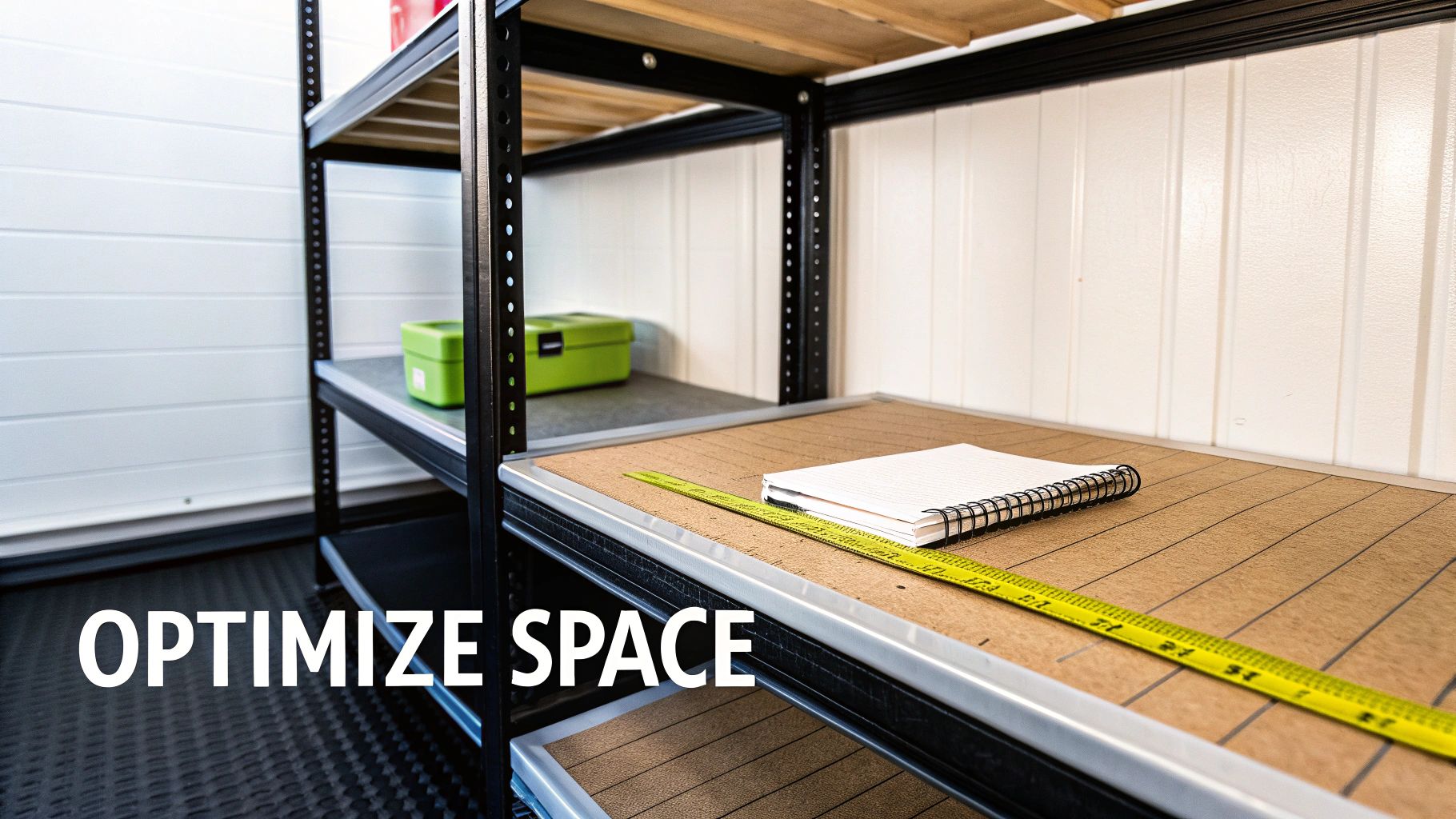
Calculating Your Ideal Walk In Size
To really get a handle on your needs, you have to stop thinking just in square feet and start thinking in cubic feet. You also need to account for a few key operational details that are unique to how you run your business.
Let's look at two classic Las Vegas scenarios, reflecting the city's diverse restaurant scene:
-
The Sprawling Strip Buffet: This place is serving thousands of guests a day from a massive, constantly rotating menu. They get huge food deliveries multiple times a week just to keep up. Their walk-in needs to be absolutely vast, probably 300 square feet or more, with wide aisles designed for rolling carts and pallet jacks to make unloading fast and efficient.
-
The Cozy Henderson Bistro: This is an intimate, farm-to-table joint with a small, curated menu that changes with the seasons. They bank on fresh, local ingredients, which means smaller, more frequent deliveries. A compact 8'x10' walk-in could be absolutely perfect, giving them plenty of space without wasting energy or eating up their limited kitchen real estate.
A great rule of thumb is to plan for roughly 1 cubic foot of storage for every meal you serve per day. So, if you're a bustling downtown spot doing 400 covers a day, you should start your search with walk-ins offering at least 400 cubic feet of usable space.
This simple calculation gives you a solid starting point. From there, you can fine-tune your estimate based on how complex your menu is and your delivery schedule.
To make this even easier, we've put together a quick reference guide for common Las Vegas restaurant types.
Recommended Walk-In Size by Restaurant Type
| Restaurant Type / Seating Capacity | Estimated Daily Covers | Recommended Walk-In Size (Sq. Ft.) | Key Considerations |
|---|---|---|---|
| Small Café / Bistro (30-50 seats) | 75 - 150 | 6'x8' to 8'x10' | Focus on fresh, frequent deliveries. Maximize vertical space. |
| Mid-Size Casual Dining (80-120 seats) | 200 - 350 | 8'x12' to 10'x14' | Balance storage for produce, proteins, and prep. Needs good workflow. |
| Large Restaurant / Steakhouse (150+ seats) | 400 - 600+ | 10'x20' to 12'x24' | Ample space for bulk protein and produce. May need separate zones. |
| High-Volume Buffet / Hotel (500+ seats) | 1000+ | 20'x30' or larger | Requires space for pallet jacks, high-density shelving, and rapid turnover. |
Remember, this table is a starting point. Always factor in your specific menu, delivery frequency, and kitchen layout before making a final decision.
Customizing Your Cooler for Peak Performance
Once you’ve got the size figured out, the real work begins. Customization is what turns your walk-in from a simple cold box into a high-performance workspace that genuinely boosts your kitchen's efficiency and safety. These aren't just fluffy add-ons; they are must-haves for any serious Las Vegas restaurant.
Here are the key customizations for your commercial walk in refrigerator:
-
Strategic Shelving: This is, without a doubt, the most important part of your interior. You absolutely need NSF-certified shelving—it's a non-negotiable for health inspections. Coated wire shelving is fantastic for air circulation, but solid shelves are better for preventing drips from raw meat from contaminating the produce below. Always go for adjustable shelving; it gives you the freedom to adapt as your inventory and menu change.
-
Durable, Non-Slip Flooring: Spills are going to happen. A non-slip floor isn't a luxury; it's a critical safety feature that prevents expensive accidents and keeps your team safe. Look for integrated flooring with coved corners, which makes cleaning a breeze and is often a requirement from the Southern Nevada Health District.
-
Smart Door Configuration: The door is the most-used (and abused) part of your walk-in. A self-closing door with a heavy-duty handle is essential to stop energy loss from a door being left ajar. For kitchens with constant traffic, think about adding strip curtains. They create a secondary barrier, trapping the cold air inside when the door is being opened constantly during a busy service.
A well-designed interior does so much more than just hold food. It creates a smooth workflow, cuts down on your energy bill, and helps you stay compliant with food safety codes. These customizations are investments that pay for themselves many times over through better efficiency and less waste.
5. Mastering Temperature and Energy Efficiency in the Desert
Here in Las Vegas, your utility bill can feel as punishing as the summer sun. For any restaurant owner, keeping operating costs in check is a daily grind, and one of the biggest line items is always energy. Your commercial walk-in refrigerator isn't just a place to store food; it's a massive appliance running 24/7, which means efficiency isn't just a nice-to-have, it's a must.
An inefficient walk-in is like trying to keep a drink cold in a flimsy foam cup on a 110°F day. You’re just fighting a losing battle that costs you money every single minute. The intense heat of Southern Nevada puts a crazy amount of strain on refrigeration systems, so choosing a unit built for this climate is one of the most important financial decisions you'll make for your kitchen.
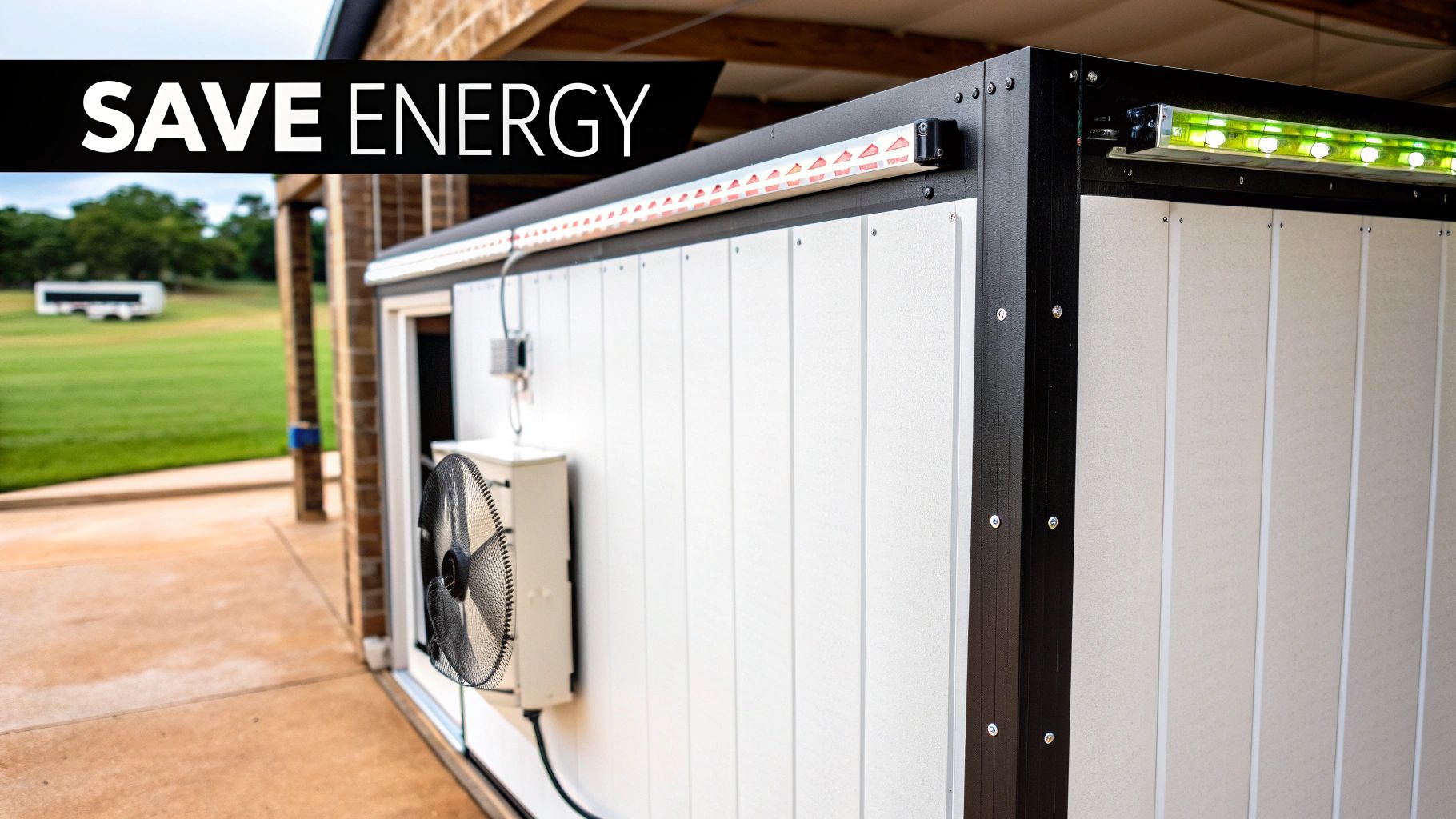
Insulation Is Your First Line of Defense
Think of high-quality panel insulation as the wall of a premium thermos. Its only job is to create an unbeatable barrier between the cool air inside and the scorching heat outside. In Vegas, where kitchen temps can really soar, cheap or thin insulation forces your compressor to work overtime just to hold the temperature.
This constant struggle leads straight to higher NV Energy bills and a much shorter lifespan for your compressor. Spending a bit more upfront on panels with a high R-value (that’s the measure of how well it resists heat) will pay for itself fast through lower bills and fewer frantic repair calls in the middle of a July dinner rush.
Smart Tech That Slashes Your Power Bill
It’s not just about the box itself anymore. Modern commercial walk-in refrigerators are packed with technology designed to cut down on energy use. These aren't just minor tweaks; they're powerful features that actively save you money day in and day out.
Some key energy-saving features to look for are:
- Adaptive Defrost Systems: Older systems just run defrost cycles on a timer, whether they need to or not. Adaptive systems are smarter; they monitor conditions and only run a cycle when it’s actually needed, which saves a ton of energy.
- Variable-Speed Fan Motors: Instead of running at full blast 100% of the time, these motors adjust their speed based on the cooling demand. It’s a much more efficient approach that dramatically cuts down on electricity use compared to old single-speed motors.
- LED Lighting: This one is a no-brainer. Old-school incandescent bulbs not only suck up more electricity but also throw off heat, making your cooler work even harder. Energy-efficient LEDs use a tiny fraction of the power and produce almost no heat—a double win for your bottom line.
Here in the unique climate of Las Vegas, it's absolutely crucial to select a refrigeration system that is properly sized for extreme summer temperatures. An undersized system will fail, period. That leads to equipment burnout and a catastrophic loss of inventory right in the middle of your busiest months.
The demand for reliable, high-performance refrigeration is growing far beyond the restaurant world. The global market for indoor commercial walk-in refrigerators is projected to hit US$10.5 billion by 2030. This growth isn't just from kitchens; sectors like healthcare and pharma are increasingly dependent on specialized cold storage for hospitals and labs, which is driving new innovations across the board.
Knowing how to get the most out of your system is key to keeping costs down. For a deeper dive, check out our guide on energy-efficient commercial refrigeration for practical tips designed for the Vegas market. Getting the right equipment from the start ensures your inventory stays safe, your kitchen runs like a well-oiled machine, and your profits aren't getting eaten up by a sky-high power bill.
Installation and Maintenance for Las Vegas Restaurants
Your investment in a commercial walk in refrigerator doesn't end when you click "buy." In the fast-paced, high-stakes culinary world of Las Vegas, the long-term performance of your unit depends entirely on two things: a solid installation and a smart, proactive care plan.
Getting the installation wrong is a fast track to expensive breakdowns, lost inventory, and a surprise visit from the health inspector. Think of it like laying the foundation for a house—if the ground isn't level or the supports are weak, you're signing up for serious problems down the road. The same logic applies to your walk-in.
Preparing Your Site for Installation
Success starts long before the delivery truck pulls up to your restaurant. Proper site preparation is the first, and most critical, step. From sprawling casino kitchens to tight downtown bistros, every Las Vegas space has its own unique challenges. Your installation crew needs a clean, clear, and level spot to work, but the technical prep is what really counts.
Before anything else, you have to ensure the proper infrastructure is ready and waiting:
- Electrical Hookups: That refrigeration system is a power-hungry beast. You'll need a dedicated circuit with the correct voltage and amperage, and it has to be installed by a licensed electrician who knows the local codes inside and out.
- Drainage Lines: Condensation from the evaporator coil has to go somewhere. A properly installed floor drain is non-negotiable for preventing water from pooling up, which is a major slip hazard and can ruin your flooring.
- Adequate Ventilation: The condenser unit needs to breathe. Whether you've got a remote system on the roof or a self-contained unit inside, it needs clear, unobstructed airflow to get rid of heat. In our desert climate, poor ventilation will force the system to overwork itself into an early grave.
A proactive maintenance plan is your best defense against the costly chaos of an emergency breakdown. Just like a car needs regular oil changes to keep its engine running smoothly, your commercial walk-in refrigerator needs consistent care to protect your investment.
A Proactive Maintenance Plan
Once your unit is professionally installed and humming along, the responsibility shifts to you and your team. This doesn't mean you need to become a refrigeration technician overnight. It just means putting a simple, routine maintenance schedule in place. It's the key to protecting your unit, staying compliant with Southern Nevada Health District (SNHD) codes, and keeping your other vital equipment, like commercial freezers and ice machines, running reliably.
A great plan is built on simple daily, weekly, and monthly tasks that anyone on your staff can handle.
Daily and Weekly Staff Tasks:
- Clean Up Spills Immediately: Don't let messes sit. Quick cleanups prevent sticky grime from building up and causing contamination issues.
- Check Door Seals: Make sure the gaskets are clean and creating a tight seal. A leaky door lets cold air pour out, forcing the compressor to run nonstop.
- Keep Vents Clear: Check that nothing is blocking airflow to the evaporator or condenser fans. Good circulation is everything for efficiency.
- Listen for Unusual Noises: If you hear grinding, squealing, or rattling, that’s an early warning sign. Don't ignore it.
When to Call a Professional Technician:
While your team can handle the day-to-day, some jobs are best left to an expert. You should schedule professional service at least twice a year for the heavy lifting, like checking refrigerant levels, inspecting electrical connections, and deep cleaning the condenser coils. Taking these steps will help you dodge expensive emergencies and ensure your equipment runs efficiently for years to come.
How to Finance and Source Your Walk-In
Let's be real: a commercial walk in refrigerator is a massive investment. But for any serious restaurant in Las Vegas, it's not a "nice to have"—it's an absolute necessity. Once you’ve figured out what you need alongside other big-ticket items like commercial freezers and ice machines, the next big question is always, "How are we going to pay for this?" In a town as competitive as Vegas, smart financial planning is what separates the winners from the rest.
You’ve got a few different ways to tackle this purchase, and each has its own set of pros and cons. The key is to pick the path that lines up best with your restaurant's cash flow and overall game plan, whether you're just starting out or you're a household name on the Strip.
Exploring Your Financing Options
There’s no magic bullet here. The right choice really comes down to your capital on hand, your credit history, and where you see your business going in the next few years.
-
Direct Purchase: The most straightforward route. You buy it, you own it, no strings attached. No monthly payments or interest eating into your profits. The big catch? It ties up a huge chunk of cash upfront that you might need for things like payroll, inventory, or a last-minute marketing push.
-
Equipment Loans: This is the classic approach for a reason. You get to own the equipment from day one but spread the cost out over a few years. It keeps your working capital free for the day-to-day grind. You’ll pay interest, of course, but it makes a five-figure purchase feel a lot more manageable.
-
Leasing: Think of it like a long-term rental. You'll have lower monthly payments, and when the term is up, you usually have the option to buy the unit, upgrade to a newer model, or just return it. Leasing gives you flexibility and doesn't lock you into a long-term commitment. To dive deeper into payment plans and see what fits your books, check out our guide on restaurant equipment financing.
Selecting a Reputable Las Vegas Supplier
Finding the right local supplier is just as crucial as picking the right walk-in. A great partner does more than just drop a box at your back door; they become a genuine resource for your business, ready to help long after the installation is done and dusted.
When you're vetting a supplier, you need someone who gets Las Vegas. They need to understand the brutal summer heat, the ins and outs of Southern Nevada Health District codes, and the pace of this city. That kind of local expertise is priceless.
Globally, the market for walk-in refrigerators is booming, expected to hit around $15 billion by 2025. That number just proves how vital these systems are, especially for the high-volume food scene here in North America. You can get more details on the market's growth in the full walk-in refrigerator market report.
Ultimately, you want a supplier who stocks reliable, warranty-backed brands built to withstand the pressure of a 24/7 Las Vegas kitchen. They’ll know exactly what works—and what doesn’t—in this town.
Got Questions? We've Got Answers.
When you're in the thick of running a restaurant in Las Vegas, you've got enough on your plate without having to decode the specs on a new walk-in. We get a lot of the same questions from kitchen managers and owners trying to make the right call. Here are some straightforward answers to the most common ones.
What Does the Southern Nevada Health District Actually Require?
The Southern Nevada Health District (SNHD) doesn't mess around when it comes to food safety, and their rules are pretty clear. The big one is temperature: your walk-in absolutely must hold product at 41°F or lower, period.
But it’s not just about the cold. They also have specific rules for how the box itself is built. You’ll need to make sure your unit has:
- Smooth, non-absorbent flooring that’s a breeze to clean.
- Coved bases where the walls meet the floor. That curve is non-negotiable because it stops grease and grime from building up in the corners.
- NSF-certified shelving made of something that won’t rust.
- Properly shielded lighting so the inside is bright and safe.
Before you buy, it’s always smart to double-check the latest SNHD food establishment regulations. It’ll save you a world of headaches down the road.
What's the Real Cost for a Walk-In Cooler in Las Vegas?
The price tag can swing pretty wildly depending on what you need—size, the kind of refrigeration system you choose, and any custom touches. As a ballpark, a standard 8'x8' indoor cooler with a simple, self-contained system will probably run you somewhere between $7,000 and $15,000.
Now, that’s just for the box and the cooling unit. Getting it installed by a pro here in Vegas will add another $2,000 to $5,000 to the bill. That cost depends on how tricky your location is, if you need new electrical lines run, and whether it’s going inside or out back. If you're looking at a bigger custom unit, an outdoor model built for our desert climate, or a freezer, that final number is going to climb.
Should I Just Buy a Used Walk-In?
Look, buying used can seem like a great way to save a buck upfront. But for a piece of equipment this critical, it’s a gamble that many seasoned Las Vegas operators won't take. That initial savings can vanish in a hurry when something goes wrong.
A used walk-in almost never comes with a warranty. When—not if—something breaks, that repair bill is 100% on you. You could also end up with an energy hog that doesn't meet today's efficiency standards or, worse, fails a health inspection, costing you more in utilities and fines.
If you’re dead set on going the used route, you absolutely must hire a qualified refrigeration tech to inspect it from top to bottom. Have them check the panels, the door seals, the compressor, everything. Without that expert sign-off, you’re likely just buying someone else’s expensive problem.
Outfitting your Las Vegas kitchen with the right gear is the first step to success. At Las Vegas Restaurant Equipment, we focus on new, warranty-backed commercial walk-in refrigerators, freezers, and ice machines that are built to survive the desert heat. Check out our selection online and get the dependable cold storage your operation needs, delivered fast. Find your perfect unit at https://lasvegasrestaurantequipment.com.