

Getting your Las Vegas operation kitted out is about so much more than just a shopping list. It’s a strategic game. The bar and restaurant supplies you choose—from the walk-in cooler that becomes the heart of your kitchen to the specific jiggers your bartenders prefer—are the tools that empower your team to deliver that only-in-Vegas experience, night after night.
Your success story starts here, by building a foundation of efficiency, durability, and smarts from day one.
Setting the Stage for Your Las Vegas Venture
Welcome to the real-deal guide on outfitting your Las Vegas bar or restaurant. In a town where every experience has to be unforgettable, the right equipment isn't just nice to have—it's everything. Think of this as your roadmap, cutting through the noise to give you practical advice on the gear that truly matters.
We’re not just filling an empty space. We’re building the engine for your profitability and guest satisfaction. Let's dig into how to think about your concept, your menu, and your budget to make the right calls from the jump.
Understanding the Las Vegas Grind
Las Vegas is a unique beast. This vibrant city is home to a diverse array of restaurants that cater to every palate imaginable, from high-roller steakhouses on the Strip to hidden gems in Summerlin and Henderson. In this town, your concept has to be dialed in and your execution has to be flawless, because the competition is world-class.
Your equipment choices are a direct reflection of that ambition. A grab-and-go café has a completely different shopping list than a fine-dining spot with a seven-course tasting menu. But the one thing they both need? Gear that works under extreme pressure.
This local hustle is part of a much bigger picture. The global commercial bar supplies market is on a massive upward trend, projected to hit USD 47,256.8 million by 2035, growing at a rate of 6.5% annually. That boom, especially in beverage service supplies, shows a global demand for quality. It tells you that operators everywhere are realizing that good tools are a good investment.
The Must-Have Equipment Categories
To succeed, you must master the core equipment categories. These workhorses keep the lights on and the food moving, especially in our demanding desert climate. Among these, certain restaurant equipment is essential for success, including powerful commercial refrigerators, reliable commercial freezers, and high-capacity ice machines.
We've broken down the essential categories that form the backbone of any successful Las Vegas food and beverage operation.
Essential Equipment at a Glance for Las Vegas Venues
| Equipment Category | Primary Function | Key Las Vegas Considerations |
|---|---|---|
| Refrigeration | Preserving ingredient quality and safety. | High ambient heat means you need units with powerful compressors and excellent insulation. |
| Cooking Line | Executing your menu. | Your equipment must match your menu's complexity and volume. Gas vs. electric is a big decision. |
| Ice Machines | Providing ice for beverages and service. | An absolute non-negotiable. Needs to handle extreme demand and hard water conditions. |
| Prep Tables | Creating efficient workflow space. | Stainless steel is standard. Consider refrigerated bases to keep ingredients close at hand. |
| Dishwashing | Sanitation and turning over serviceware. | A high-temp machine is crucial for fast drying and sanitizing during peak hours. |
| Bar Refrigeration | Storing bottles, kegs, and garnishes. | Back bars, direct-draw systems, and glass frosters are key for speed and presentation. |
| Merchandisers | Displaying grab-and-go items. | Glass-door units are perfect for showcasing drinks and snacks, encouraging impulse buys. |
| Smallwares | The essential tools of the trade. | From pans and tongs to shakers and strainers—don't skimp on quality here. |
| Glassware/Dinnerware | The guest-facing presentation pieces. | Durability is key, but the style must match your brand's aesthetic. |
This table is just the starting point, but it helps frame the conversation around what you truly need to operate effectively in this city.
I can't tell you how many times I've seen a new operator try to save a buck by under-buying on cold storage. One busy Saturday night and their lowboy refrigerators are empty, the kitchen line grinds to a halt, and service completely falls apart. Plan for your busiest day, not your average one.
As you're planning all this, don't forget about building a loyal following from the get-go. Exploring different loyalty applications for restaurants can be a game-changer for getting those first-time guests to become regulars.
Consider us your partner in this. We’re here to help you source, plan, and install the perfect setup of bar and restaurant supplies so you can do more than just survive in the world's toughest hospitality market—you can actually thrive.
Mastering Cold Storage in the Desert
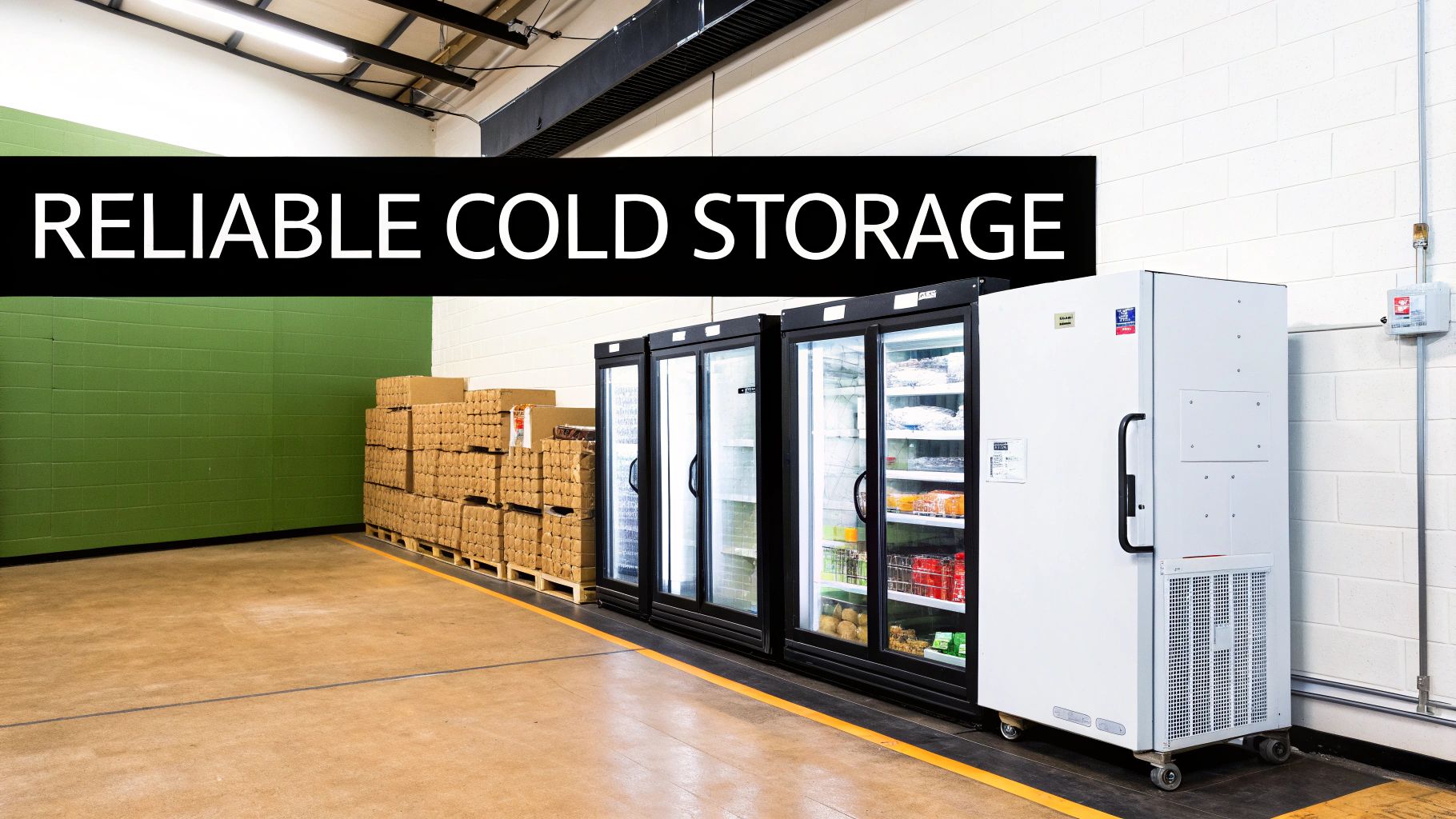
In the middle of a Las Vegas summer, your cold storage isn't just another piece of equipment—it's the heart of your operation. When the heat outside is relentless, the strain on your bar and restaurant supplies, especially refrigeration, is massive. Picture a compressor failing during a July dinner service. It’s not a minor headache; it's a disaster that means lost inventory and lost revenue.
Whether you're running a fine-dining spot on the Strip or a packed bar on Fremont East, solid cold storage is the bedrock of your business. This means choosing commercial refrigerators, commercial freezers, and ice machines built to handle the brutal desert climate. These units are a strategic investment in food safety, quality, and consistency.
Choosing Your Commercial Refrigerators and Freezers
Your first big call is deciding between a giant walk-in cooler or spreading out your cold storage with several smaller reach-in units. The right answer comes down to your concept and how your kitchen flows. A steakhouse getting huge weekly deliveries of prime cuts absolutely needs a walk-in. It’s the only way to protect that expensive inventory and make receiving a smooth process.
On the other hand, a busy tapas spot might get more mileage out of several reach-in and undercounter units placed right on the line. This setup puts key ingredients right where chefs need them, speeding up ticket times and cutting down on kitchen chaos. You're designing a system that works for your menu and your team.
And for a Las Vegas bar, the right gear can completely change a tight space.
- Undercounter Freezers: Perfect for frozen garnishes, purees, or specialty ice, these slide right under the bar to save critical floor space.
- Back Bar Coolers: These aren't just for chilling drinks. The glass doors act as a visual menu, tempting customers to upgrade to that premium craft beer or bottle of wine.
- Direct Draw Beer Dispensers: If you're serious about draft beer, this is non-negotiable. It guarantees every pint is poured at the perfect temp with just the right amount of head.
The real test for any refrigeration unit in Las Vegas is its ambient temperature rating. Standard units are designed to operate in environments up to 85°F. You need a unit rated for high-ambient conditions, typically up to 100°F or more, to guarantee it won't fail you when you need it most.
Making the right call here also affects your utility bills for years to come. It’s worth digging into the long-term savings of energy-efficient commercial refrigeration.
The Critical Role of Ice Machines
Here in Vegas, ice is more than just a cooler—it’s a core ingredient. Skimping on your ice machine is one of the most common and painful mistakes a new operator can make. When you run out of ice on a busy night, you're sending a staff member on a mad dash to the store. It kills your momentum and your profits.
Don't guess how much you need; do the math. A good starting point is 1.5 pounds of ice per customer, but that can easily jump to over 3 pounds per person in a high-volume cocktail bar. You have to account for everything: cocktails, sodas, water glasses, and even back-of-house uses like filling a seafood display.
The type of ice you make also says a lot about your beverage program.
- Cubed Ice (Full or Half Dice): This is your all-around workhorse. It melts slowly, so it’s perfect for most drinks where you don't want to water things down.
- Nugget Ice ("Sonic Ice"): People love this stuff. It's soft, chewable, and fantastic for sodas, iced teas, and cocktails like mint juleps.
- Flake Ice: This is what you see in seafood cases and salad bars. It's also great for blended frozen cocktails where you want a super smooth texture.
At the end of the day, mastering cold storage in this town means picking tough, high-performance gear that fits how you actually run your business. Your refrigerators, freezers, and ice machines are the unsung heroes working 24/7 to protect your investment and keep customers happy.
Building Your Commercial Kitchen Cook Line
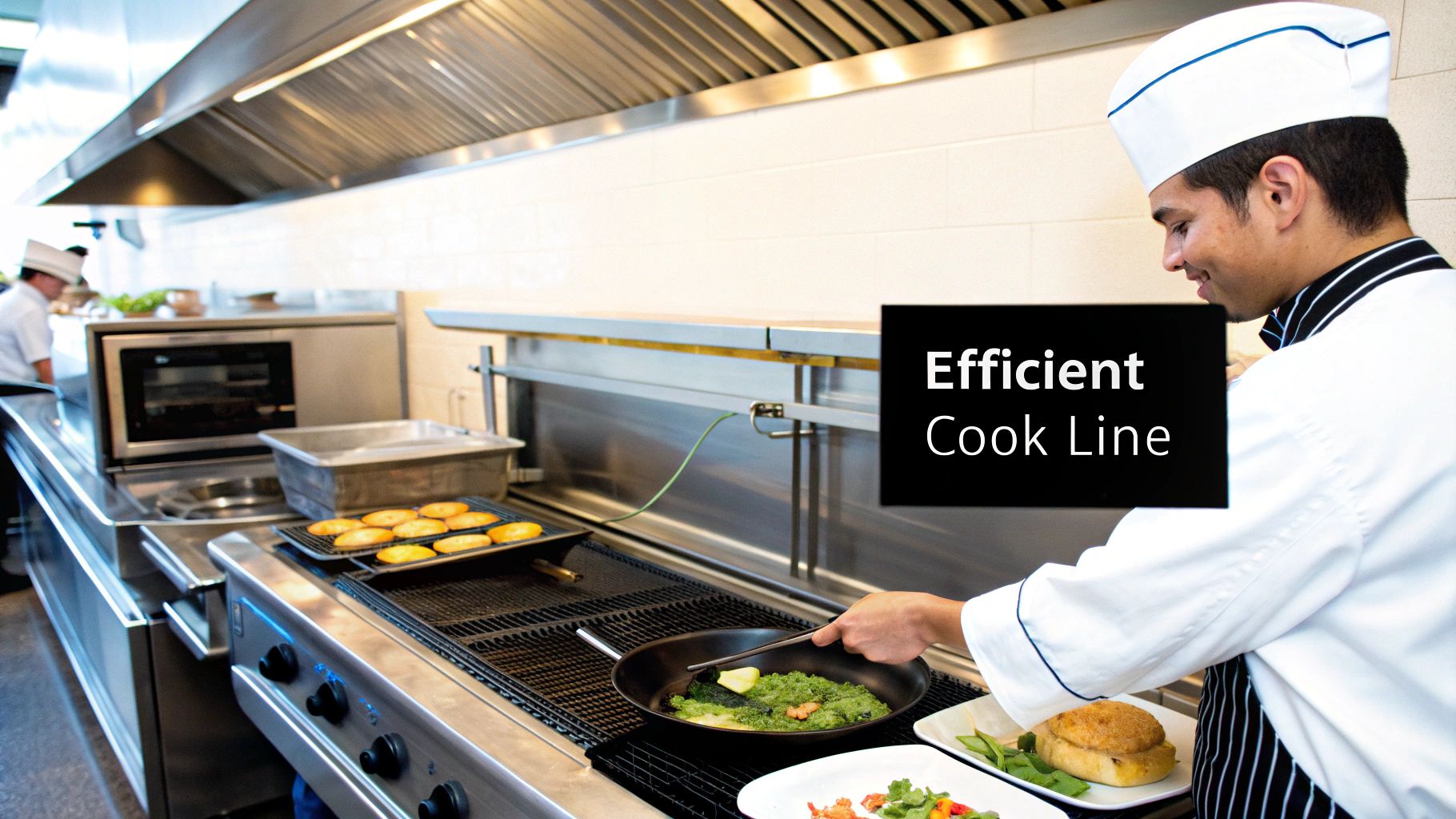
If your cold storage is the heart of your kitchen, the cook line is its soul. This is where the magic happens, where your menu goes from words on paper to an incredible experience for your guests. Choosing the right commercial cooking equipment is about more than just filling space; it’s about crafting a workflow that lets your chefs execute your vision perfectly, night after night.
The right bar and restaurant supplies for your cook line will make or break your kitchen's speed, consistency, and even your staff's mood. A poorly planned line creates choke points and frustration. A smart one, however, becomes an extension of your team's talent. This is especially true here in Las Vegas, where diners show up expecting nothing less than the best.
Matching Your Equipment to Your Menu
Every restaurant in Las Vegas has its own vibe, and the cook line has to match. The gear a high-end steakhouse on the Strip needs is completely different from what a busy brunch spot in Henderson requires. A classic mistake is buying standard pieces without truly thinking through your specific menu.
Think about it: a prime steakhouse absolutely needs a powerful charbroiler to get that perfect sear, plus a high-BTU range for finishing complex sauces. Recovery time—how fast a fryer or griddle gets back to temp after you drop in cold food—is everything. Slow recovery means greasy food and tickets that take forever. On the flip side, a brunch place churning out hundreds of pancakes and omelets needs a massive griddle and rock-solid convection ovens for their baked goods.
The best kitchens I've seen map their equipment layout directly to their menu's workflow. The fryer goes next to the appetizer station. The range is positioned close to the prep area for easy access to fresh ingredients. Every single step you can save your cooks adds up to faster service and better food.
Core Components of a High-Performance Cook Line
While your menu is the ultimate guide, almost every commercial kitchen is built around a few essential workhorses. Picking the right models and sizes here is non-negotiable.
- Commercial Ranges: The centerpiece of it all. Do you need a 6-burner with a standard oven base, or would a combination of burners and a flat-top griddle better serve your menu?
- Convection Ovens: You can't live without these for baking, roasting, and finishing dishes with consistent, even heat. The fans inside circulate hot air, cooking food up to 25% faster than a regular oven.
- Commercial Fryers: A must for everything from fries to calamari. Think about the size of the fry pot (measured in pounds of oil) and base it on your projected volume.
- Griddles and Charbroilers: These are your go-to for burgers, steaks, breakfast, and grilled veggies. Whether you need a flat-top griddle or a grooved charbroiler comes down to the flavor profile and look you're going for.
For kitchens tight on space, a countertop commercial convection oven can be a real game-changer, giving you powerful performance in a small footprint. To see if this versatile piece of equipment is right for you, you can learn more about how to choose a countertop commercial convection oven in our detailed guide.
The Overlooked Essential: Ventilation
You can buy the most expensive cooking equipment in the world, but if you don't have proper ventilation, your kitchen will be a miserable and dangerous place to work. Your commercial hood system is not the place to cut corners. It’s the critical piece of infrastructure that pulls heat, smoke, and greasy air out of your kitchen.
Here in Las Vegas, a powerful and correctly installed hood system is an absolute must. It has to meet all the local health and fire codes, but it's about more than just compliance. A good system makes the kitchen more comfortable for your staff, cutting down on heat stress and improving air quality. That has a direct impact on productivity and helps you keep good people—a massive advantage in this town's tight labor market. When you're budgeting for your cook line, always account for the significant cost of a professionally installed and balanced ventilation system.
Equipping Your Bar for Peak Performance
In Las Vegas, a truly memorable night often begins—and ends—at the bar. It’s the engine of your hospitality experience, where a skilled bartender becomes a performer and a perfectly made drink sets the entire mood.
To stand out in this city's cutthroat restaurant scene, your bar needs more than just a great liquor selection. It needs specialized bar and restaurant supplies that are built for speed, style, and brutal efficiency.
Every single piece of equipment behind your bar says something about your brand's commitment to quality. From the frosty chill on a glass to the perfect pour from a beer tap, these tools are what allow your team to create those exceptional guest experiences that keep people coming back. When you invest in high-quality, ergonomic equipment, you're not just making your bartenders' lives easier; you're reinforcing the premium feel your customers expect.
Essential Bar Refrigeration
Just like in the kitchen, cold storage behind the bar is non-negotiable. But here, it has to do two jobs at once: preservation and presentation. Your bar refrigeration has to work hard, look fantastic, and keep everything within a quick grab for your team during a chaotic Saturday night rush.
The whole point is to create a seamless workflow where every bottle, garnish, and keg is perfectly chilled and ready to go.
These are the workhorses you can't live without:
- Back Bar Coolers: Think of these glass-door units as your silent salespeople. They keep bottled beers, wines, and mixers at the ideal serving temperature while putting your high-margin drinks right in the customer's line of sight. A well-lit, organized back bar cooler is an invitation for guests to try something new.
- Direct Draw Beer Dispensers: If you're serious about serving draft beer, a good kegerator is an absolute must. It makes sure every single pint is poured at a consistent, ice-cold temperature with the perfect amount of head, protecting the beer's flavor and carbonation.
- Glass Chillers/Frosters: A frosted mug or a chilled martini glass is such a simple touch, but it immediately signals "premium" to a guest. This small detail can make a huge difference in how people perceive your entire beverage program.
In the United States, the commercial bar supplies market is a powerhouse, driven by a sophisticated hospitality landscape. A key driver is the bar glassware and drinkware category, which holds the largest market share due to constant demand. With U.S. alcoholic beverage sales hitting $259.8 billion in 2022, the craft cocktail movement has transformed bars into hubs of experience, requiring specialized tools like quality shakers and chilled dispensers to meet guest expectations. You can read more about the growth of the commercial bar supplies market on MarketReportAnalytics.com.
The Heartbeat of the Bar: Smallwares and Ice
While the big refrigeration units are the backbone, the smallwares are the true heart of your bar's day-to-day operation. These are the tools your bartenders have in their hands all night long, and their quality has a direct impact on both speed of service and the final drink. Skimping on smallwares is a recipe for frustrated staff, slower ticket times, and inconsistent cocktails.
Think of it as an investment in your team's performance.
- Shakers and Strainers: You need high-quality Boston shakers that create a perfect seal every time and Hawthorne strainers that fit snugly for quick, clean pours without any mess.
- Jiggers and Pourers: Consistency is everything for managing your pour costs and delivering a perfectly balanced cocktail. Accurate jiggers and reliable free-flow pour spouts are fundamental.
- Glassware: Your choice of glassware—from sturdy rocks glasses to elegant coupes—has to match your brand's vibe. It's the first thing a customer touches, and it's a huge part of the drink's presentation.
Finally, whatever you do, don't underestimate your ice. Just like the main kitchen, the bar needs a dedicated, reliable source of clean, fresh ice. An undercounter ice machine is usually a smart move to keep bartenders from having to leave their station during a rush.
Proper maintenance is also critical to make sure your ice is crystal clear and doesn't have any weird flavors. For more on keeping this vital piece of equipment in top shape, check out our guide on essential commercial ice maker maintenance.
By focusing on these essential bar supplies, you give your team the power to perform at their best and create the unforgettable experiences that define Las Vegas hospitality.
Making Smart Investments That Last
Making it in the restaurant business, especially in a dog-eat-dog market like Las Vegas, comes down to making smart, forward-thinking decisions. This is where we get into the real money talk of buying bar and restaurant supplies. It’s not about finding the cheapest option; it’s about investing in gear that will be a workhorse for your business for years to come.
Your budget is more than just a number—it's your battle plan. It dictates your capacity and efficiency right from day one. When you map out a realistic budget, you can finally make informed calls on whether to buy new or used, what financing makes sense, and what each piece of equipment will truly cost you over its lifetime.
Calculating the True Cost of Ownership
The sticker price is just the tip of the iceberg. The number you really need to care about is the total cost of ownership. This includes the purchase price plus all the ongoing costs to keep that machine running.
Sure, that cheap commercial refrigerator might look like a great deal today, but it could bleed you dry with high electricity bills and constant repair calls. Before you buy anything, run the numbers on these factors:
- Energy Consumption: Always look for the ENERGY STAR® rating. An efficient unit can shave a surprising amount off your monthly utility bills.
- Maintenance and Repairs: How much do replacement parts cost, and can you even get them quickly? A more reliable brand might have a higher upfront cost but will save you headaches and money in the long run.
- Lifespan: A top-tier commercial freezer might give you a solid 10-15 years of service. A budget model? You might be shopping for its replacement in half that time.
- Warranty: Think of a strong warranty as your safety net. It covers expensive, unexpected repairs and gives you some much-needed peace of mind.
Thinking this way changes the game. It turns a simple purchase into a strategic investment. This mindset is just as critical for your tech. When you're ready, take the time to compare restaurant POS systems to find one that truly fits your operation and won't hold you back.
When weighing your options, deciding between new and used equipment is a common crossroads for many operators. This table breaks down the key considerations to help guide your decision.
New vs. Used Equipment Decision Matrix
| Factor | New Equipment | Used Equipment |
|---|---|---|
| Initial Cost | Higher upfront investment. | Significantly lower initial cost. |
| Warranty | Comes with a manufacturer's warranty. | Typically sold "as-is" with no warranty. |
| Lifespan | Full expected lifespan from day one. | Shorter remaining lifespan; unknown history. |
| Energy Efficiency | Modern models are highly efficient (e.g., ENERGY STAR®). | Older models are often less energy-efficient. |
| Reliability | Highest reliability and latest technology. | Higher risk of breakdowns and repairs. |
| Financing | Easier to secure financing options. | More difficult to finance; often requires cash. |
Ultimately, your budget, risk tolerance, and business plan will determine the right path. For mission-critical items like your walk-in cooler, new is often the safer bet. For less critical prep tables or shelves, used can be a smart way to save.
Why Certifications Are Non-Negotiable
When you see those NSF (National Sanitation Foundation) or ETL (Intertek) marks on a commercial ice machine or prep table, don't just glance past them. Those little logos are your proof that the equipment meets incredibly strict standards for public health and safety.
For any restaurant in Las Vegas, these are absolutely non-negotiable.
Health inspectors live to find these marks, and operating without them can get you hit with hefty fines or even a shutdown order. These certifications guarantee the equipment is made from non-toxic materials, is designed to be cleaned easily, and won't become a breeding ground for bacteria.
Embracing Energy Efficiency
Diners today, especially in a city as conscious as Las Vegas, care about where their money goes. Choosing energy-efficient appliances does a lot more than just lower your NV Energy bill—it sends a clear message to your customers that you're a responsible business owner.
Investing in ENERGY STAR® certified commercial freezers and ice machines can save a business hundreds, if not thousands, of dollars per year on energy costs. It's one of the easiest ways to boost your bottom line while also reducing your environmental footprint.
This simple flowchart can help you think through whether your bar concept is built for speed or for craft, which directly impacts your equipment choices.
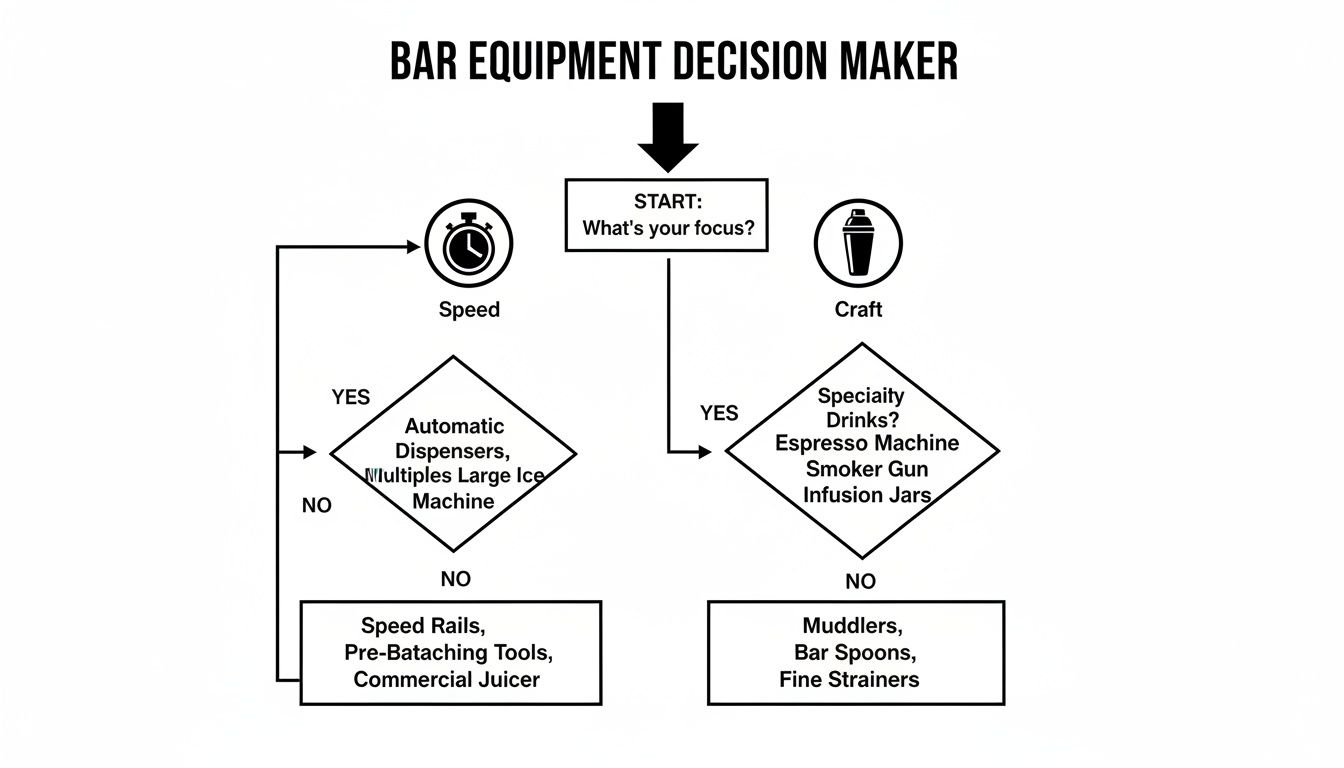
As you can see, the path you choose—banging out drinks quickly or taking the time for detailed craft cocktails—will completely change the list of equipment you need to perform at your best.
Your Restaurant Supply Questions Answered
When you're setting up a restaurant or bar in a town like Las Vegas, you're going to have questions. It's just part of the process. With so many different concepts, from high-end spots on the Strip to cozy neighborhood bistros, there's no one-size-fits-all answer. The equipment that will make or break your business depends entirely on your menu, your expected volume, and your overall vision.
Getting this right from day one really comes down to asking the right questions. We'll walk through some of the most common challenges and decisions you'll be facing, giving you practical answers to help you buy your bar and restaurant supplies with confidence.
Sizing Up Your Refrigeration Needs
One of the first things every operator in Vegas asks is, "How big of a commercial refrigerator do I actually need?" Figuring out your cold storage isn't guesswork; it's a simple calculation based on what you cook, how often you get deliveries, and how many people you can serve.
Take a hard look at your menu. If you’re heavy on fresh fish, produce, and house-made sauces, you’ll need way more space than a place that relies on pantry staples. Then, think about your supply chain. Getting daily deliveries? You might get by with a few smaller reach-in coolers. But if you’re only getting meat and produce drops once a week, a walk-in cooler is absolutely essential.
As a solid rule of thumb, plan for 1.5 to 2.5 cubic feet of refrigeration for every seat in your restaurant. So, if you have a 100-seat spot, you're looking at needing 150-250 cubic feet of cold storage. It's always a smart move to aim a little higher to handle busy seasons and any future menu expansions.
Equipping Your Bar With Essential Smallwares
Another question that comes up all the time is what smallwares are truly necessary for a new bar. A great bar program is built on having the right tools. Investing in quality gear right from the start is one of the easiest ways to save money and keep your bartenders from getting bogged down during a rush.
Here are the absolute non-negotiables for any serious bar:
- Shakers and Strainers: You'll want several sets of durable Boston shakers, plus a few Hawthorne and julep strainers. This lets you build different styles of cocktails quickly and cleanly.
- Measuring Tools: Get precise jiggers with multiple measurements (from 0.5 oz to 2 oz). This is non-negotiable for keeping your drinks consistent and your liquor costs in check.
- Bar Spoons and Knives: Long-handled bar spoons are a must for stirred cocktails, and you'll need sharp, dedicated knives and cutting boards just for garnishes.
- Organization and Safety: Don't forget pour spouts for all your liquor bottles, several ice scoops (and a strict "never use a glass to scoop ice" rule), and rubber bar mats to keep the workspace safe and dry.
Special Considerations For The Las Vegas Climate
This might be the most important question of all: Does the crazy Las Vegas climate require special equipment? The answer is a huge "yes." The desert heat puts a massive strain on your gear, especially anything that has to stay cold, like commercial freezers and ice machines.
You absolutely have to look for equipment that is specifically rated for high-ambient temperatures. These machines are built tougher, with beefier compressors, better insulation, and bigger condensers that are designed to keep running when it's over 100°F outside. A standard unit will just work itself to death, run up your power bill, and fail right when you need it most.
Ventilation is just as critical. Make sure every piece of equipment that generates heat has plenty of room to breathe. Shoving a refrigerator or ice machine into a cramped, hot closet is basically asking for it to die on a busy Saturday night in July. You also have to be proactive with maintenance, especially cleaning dust off the condenser coils. In a dusty climate like ours, that simple task can mean the difference between a smooth service and a total meltdown.
Ready to outfit your Las Vegas restaurant with reliable, high-performance gear that can handle the desert heat? Las Vegas Restaurant Equipment has a handpicked selection of new, warranty-backed commercial refrigerators, ice machines, cooking equipment, and more—all without the showroom markup. Check out our inventory and get free shipping in the Las Vegas area at https://lasvegasrestaurantequipment.com.