

In the high-stakes, high-turnover world of Las Vegas hospitality, every decision you make impacts your bottom line. Finding quality used restaurant equipment isn't just about saving a buck; it's a strategic play that can free up tens of thousands of dollars for your launch or remodel.
Think about it. That cash can go straight into your menu development, your marketing, or your front-of-house team—the things that directly shape your customer's experience. This isn't about being cheap; it's about being smart.
The Smart Restaurateur's Edge in Las Vegas
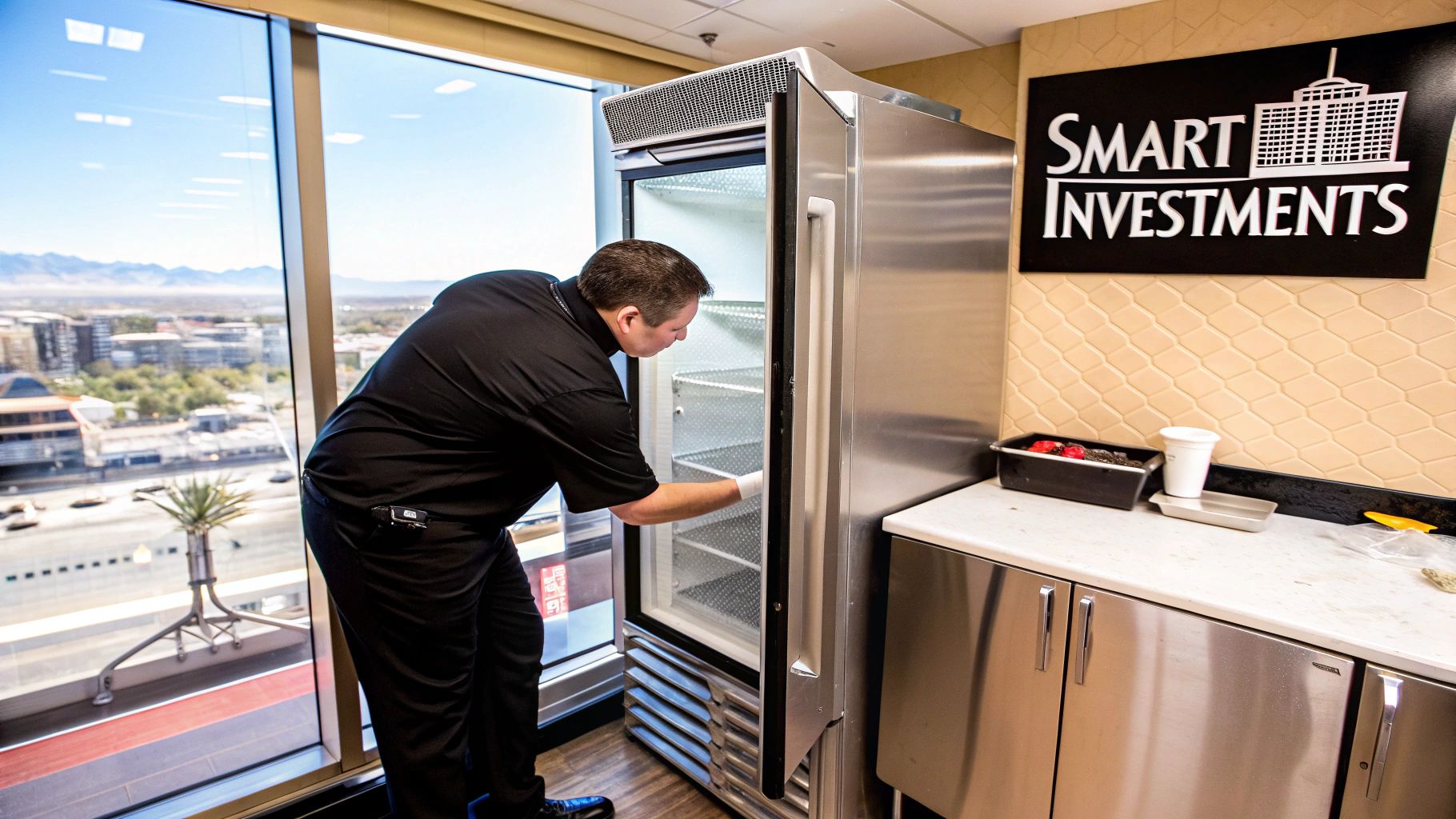
In a town defined by razor-thin margins and sky-high expectations, you have to make every dollar count. Las Vegas is a pressure cooker, home to a vibrant and diverse array of restaurants catering to every palate imaginable—from celebrity chef spots on the Strip to killer local joints in Summerlin and the Arts District. The one thing they all have in common? They need reliable, workhorse kitchen gear to survive.
For anyone trying to make their mark here, balancing upfront costs with the need for quality equipment is the name of the game. Choosing used isn't a compromise; it's a calculated move to get the best possible return on your investment, fast.
Core Equipment for Vegas Kitchens
While every kitchen has its own unique needs, a few pieces are the absolute non-negotiables, especially in our desert climate. These are the essentials for success; if they go down, you're dead in the water.
- Commercial Refrigerators: This is the heart of your operation, plain and simple. It's holding thousands of dollars of your inventory hostage. A solid reach-in or walk-in cooler is your first line of defense for food safety and quality.
- Commercial Freezers: From your bulk protein orders to your prepped desserts, a dependable freezer is what stands between you and a massive, costly spoilage nightmare.
- Ice Machines: Let's be real, in Las Vegas, ice isn't just a utility—it's a critical part of the experience. A high-capacity, bulletproof ice machine is essential for any bar, cafe, or restaurant serving cold drinks.
Sourcing these big-ticket items pre-owned can slash your initial spending. That financial breathing room is a godsend when you're just getting off the ground. If you're still in that early phase, our guide on how to start a restaurant business can help you build out the rest of your plan.
The Financial Impact of Buying Used
The numbers don't lie. Going with pre-owned equipment is one of the single biggest cost-saving moves you can make. Industry data shows restaurants can chop their upfront appliance costs by 30–60% just by choosing used or refurbished gear.
For example, a restaurateur here in Vegas could easily find a certified, refurbished commercial refrigerator for $2,500–$4,000. That’s a savings of up to 70% compared to buying the same unit brand new. This isn't pocket change; it's a game-changer in a market where 43% of operators say rising costs are their biggest challenge.
Where to Find Quality Used Kitchen Equipment in Las Vegas
If you're outfitting a kitchen in Las Vegas, you need to know where to hunt for the good stuff. This town's constant churn of restaurant openings and closings means there’s a steady stream of quality, pre-owned equipment hitting the market. The trick is knowing where to find it.
You've got a few different avenues, from professional dealers to online marketplaces, and each has its own quirks. Knowing the pros and cons of each one is the key to stocking your kitchen without blowing your budget.
Local Dealers and Refurbishment Specialists
Your first stop—and often the safest bet—should be the local dealers who specialize in refurbished gear. These guys are the pros. They get their hands on equipment from restaurant closures, drag it back to their shop, and give it a complete overhaul. They clean it, test everything, and swap out any parts that are worn down before it ever hits their showroom floor.
Going this route gives you something incredibly valuable: peace of mind. Sure, you'll pay a bit more than you would buying directly from another owner, but you almost always get a short-term warranty, typically for 30-90 days on parts and labor. For a critical piece of equipment like a commercial refrigerator or a walk-in freezer, that warranty can be a complete lifesaver.
When you're talking to a dealer, always ask them to walk you through their refurbishment process and get the warranty details in writing.
Restaurant Auctions and Liquidators
Auctions are where the real bargains live, especially when a massive hotel or a big-name restaurant liquidates its entire kitchen. These are fast-paced events, and you have to show up prepared. Get the auction catalog ahead of time, circle the items you need, and if they have a preview day, go. You need to see this stuff in person.
Pro Tip: Don't forget to factor in the "buyer's premium" when you're deciding on your max bid. It's an extra percentage tacked onto your winning bid, and it can sting if you're not expecting it. Also, think about logistics. That amazing deal on a giant range isn't so amazing after you pay a small fortune to have it professionally moved and installed.
Online Marketplaces and Private Sellers
You can find some absolute gems on platforms like Facebook Marketplace, Craigslist, and OfferUp. This is where you'll find other local restaurant owners selling off individual pieces directly. The magic word here is diligence. You are buying everything "as-is," with no warranty and absolutely no guarantees.
To make this work, you have to be hands-on. Inspect every inch of the equipment and, most importantly, insist on seeing it run before any cash leaves your wallet. If they can't plug it in for you, walk away.
Here’s a quick breakdown to help you decide where to start your search:
Las Vegas Used Equipment Sourcing Comparison
When you're on the hunt for used equipment in Vegas, each channel offers a different experience. This table breaks down what you can generally expect from local dealers, auctions, and online marketplaces, helping you match your needs and risk tolerance to the right source.
| Sourcing Channel | Best For | Potential Pros | Potential Cons |
|---|---|---|---|
| Local Dealers | Mission-critical items (refrigerators, ovens, freezers) and buyers wanting peace of mind. | Professionally inspected, cleaned, and repaired. Often includes a short-term warranty (30-90 days). | Higher price point compared to private sales or auctions. |
| Auctions/Liquidators | Outfitting an entire kitchen on a tight budget or finding high-end equipment at a discount. | Potential for incredible bargains and access to a wide variety of items at once. | High-pressure, fast-paced environment. Includes extra fees (buyer's premium). High risk—items are sold "as-is." |
| Online Marketplaces | Finding specific, smaller items or getting the lowest possible price directly from sellers. | Direct negotiation with sellers. Can find unique or hard-to-find pieces. | Highest risk. No warranties or guarantees. Requires thorough personal inspection and testing. |
Ultimately, a smart strategy often involves a mix of all three. You might get your mission-critical refrigeration from a dealer with a warranty, snag your prep tables and shelving at an auction, and find a great deal on a used mixer from another local owner on Marketplace.
Speaking of shelving, as you plan your layout, don't forget the basics. Thinking through your food service shelving solutions early on will help you figure out exactly what size refrigerators and prep stations you have room for. And for a full look at everything you'll need, our guide on essential bar and restaurant supplies can help you fill in the gaps.
Your Essential Pre-Purchase Inspection Checklist
So you’ve found a promising piece of used restaurant equipment here in Vegas. That’s the easy part. The real work—the part that saves you from a mountain of repair bills and a failed health inspection—is what comes next: the hands-on inspection. This is no time to be timid. You need to get in there, plug it in, and know exactly what you’re looking at.
I can’t stress this enough: Never, ever agree to buy equipment without seeing it powered on and running. It’s the golden rule. If a seller hits you with an excuse like, "it just needs a little Freon," or "the outlet over here is on the fritz," treat it as a giant red flag and walk away. A few minutes of being thorough now can literally save you thousands down the road.
The process of finding a deal can start in a lot of places, but it always ends with you standing in front of the machine, making a critical decision.
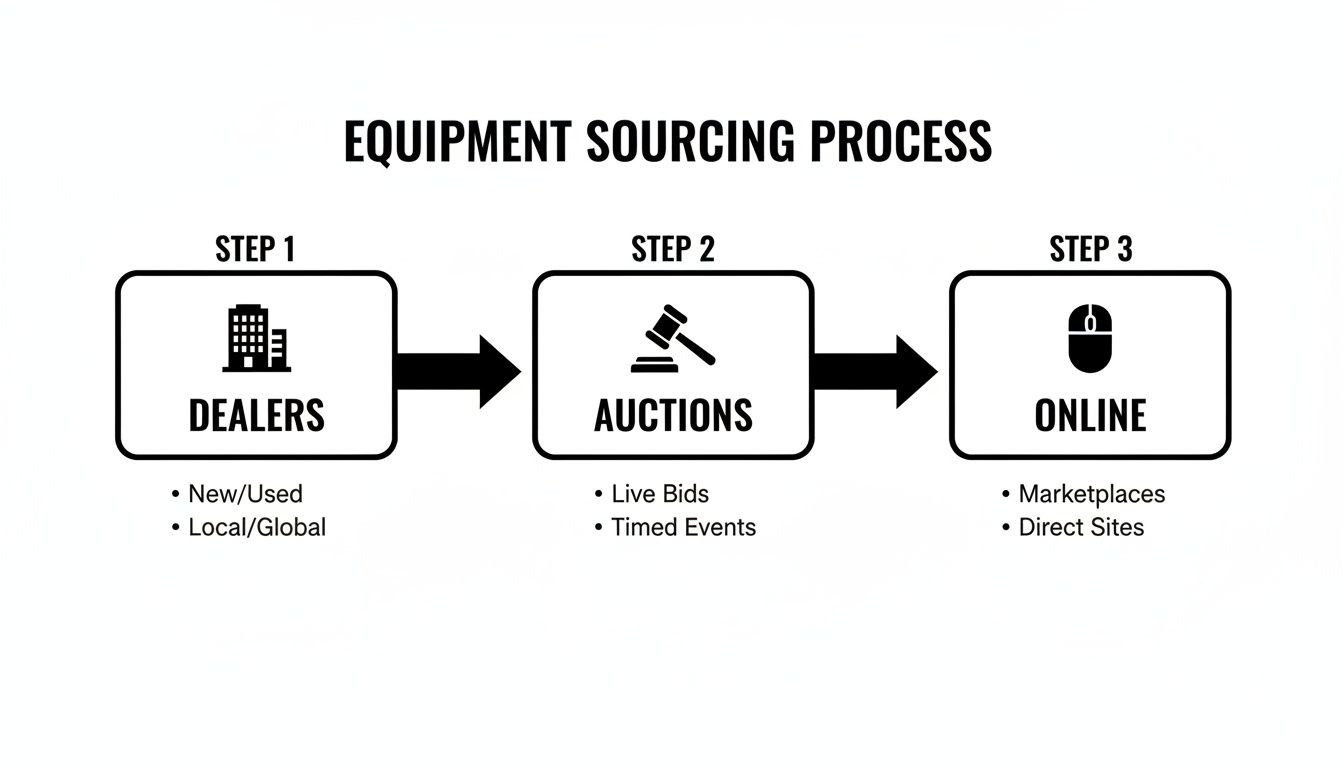
As you can see, whether you're working with a dealer, hitting an auction, or scrolling through online listings, the path always leads to that crucial in-person check. Let's break down what that inspection looks like for your cooling systems.
Inspecting Commercial Refrigerators and Freezers
Your refrigeration units—your commercial refrigerators and commercial freezers—are the heart of your kitchen. They’re safeguarding thousands of dollars in inventory 24/7. When you’re looking at a used unit, your focus needs to be on its core components and its overall structural health. Don't show up empty-handed—bring a simple, reliable thermometer to get a true reading.
First, check the exterior. Look for excessive rust, big dents that could mess with the insulation, or any damage to the frame. These aren't just cosmetic flaws; they’re often signs of deeper neglect that will kill its efficiency.
Next, swing the doors open and get a good look at the gaskets—those rubber seals running along the edges. They need to be flexible, clean, and form a tight seal. If they’re cracked, brittle, or have mold growing on them, they’ll have to be replaced. That's an extra cost, but it's also a great bargaining chip.
A simple trick I always use is the "dollar bill test." Close the door on a dollar bill. If you can slide it out with zero resistance, the seal is shot. It’s leaking cold air, forcing the compressor to work overtime and run up your power bill.
Finally, and most importantly, listen to the compressor. It should cycle on and off with a consistent, low hum. Any loud clanking, grinding, or if it just runs and runs without shutting off—that’s a unit on its last legs. Let it run for at least 30 minutes, then check your thermometer. A refrigerator should hold steady between 35-40°F, and a freezer needs to be at 0°F or below. For bigger units, you can get more detailed advice from our guide on inspecting commercial walk-in refrigerators to make sure every part is ready for service.
What to Look for in a Used Ice Machine
In the Vegas heat, a working ice machine isn't a luxury, it's a lifeline. Used machines can be a steal, but you have to inspect them carefully. Poor maintenance on these things leads to gnarly sanitation issues and very expensive repairs.
The first thing you’re looking for is scale buildup. Pop the front panel off and inspect the evaporator plates and water lines. If you see a chalky white or pinkish residue, that’s limescale or slime. It’s a dead giveaway the machine wasn't cleaned and descaled regularly, which isn't just bad for performance—it’s a major health code violation waiting to happen.
If it looks relatively clean, ask the seller to run it through a full harvest cycle.
- Watch the water flow: Make sure water is cascading evenly over the evaporator plates.
- Listen for the harvest: You should hear a distinct click or hiss. That's the hot gas valve opening up to release the sheet of ice.
- Check the ice: The cubes should come out clear and solid. If they’re cloudy or slushy, you’ve likely got a problem with the refrigeration system.
A single harvest cycle can take anywhere from 15-30 minutes, so be patient. Rushing this step could mean buying a machine that costs you more in service calls than you ever saved upfront. A well-maintained used ice machine is a brilliant buy; a neglected one is just a headache you don’t need.
How to Negotiate a Fair Price and Seal the Deal

Alright, you've inspected the equipment and it passed your tests. Now for the delicate dance of negotiation. In a market as fast as Vegas, showing up prepared is half the battle. You want to walk in with confidence, armed with real numbers and a solid understanding of what that piece is actually worth.
Before you even think about throwing out a number, do your homework. A quick search for the make and model will tell you its price tag when brand new. That number is your anchor point. Your goal is to pay a fraction of that, depending on its age and condition. Knowing the new price gives you a ton of leverage and a realistic starting point for the conversation.
Using Your Inspection as Leverage
Remember that detailed inspection you just did? Every little imperfection you noted is now your best friend in this negotiation.
Those cosmetic scratches, the slightly worn gasket, or that bit of surface rust you spotted are all perfectly valid reasons to ask for a better price. It’s not about being picky; it’s about being realistic.
The key is to frame it respectfully. Instead of saying, "This thing is pretty beat up," try a softer approach: "I noticed the door seals will probably need replacing in the next year, which is an extra cost I'll have to factor in." This shows you're a serious, reasonable buyer who has identified legitimate future costs, making your lower offer feel completely justified.
A fair offer is one where everyone walks away feeling like they got a good deal. You get a solid piece of equipment at a serious discount, and the seller gets a fair price for something they no longer need. The goal isn't to lowball them into oblivion, but to agree on a price that truly reflects the unit's real-world condition.
Finalizing the Purchase and Logistics
Once you’ve shaken hands on a price, don't let the excitement of a good deal make you rush the final, crucial steps. This is where you protect your investment and make sure your new-to-you equipment gets back to your kitchen in one piece.
First thing’s first: get everything in writing. A simple bill of sale is non-negotiable. Seriously, don't skip this. It should include:
- The full names and contact info for both you and the seller.
- A clear description of the item, including the model and serial number.
- The final, agreed-upon price.
- A line stating the equipment is sold "as-is," if that's the deal.
This simple piece of paper is your proof of ownership and protects both you and the seller from any future misunderstandings.
Next, you need to figure out how to get it home. We’re not talking about something you can just toss in the back of a pickup. A commercial freezer or a six-burner range is a beast. You'll likely need to hire professional movers who specialize in heavy appliances to avoid injury or, worse, damaging your new gear. Get a quote for this before you finalize the deal so you can factor that cost into your total investment. The last thing you want is a fantastic deal to turn into a nightmare because the unit got dropped off a truck.
When Buying New Is the Smarter Investment
Hunting for deals on used restaurant equipment in Las Vegas is a fantastic strategy, but it’s not always the right play. Sometimes, the smartest thing you can do for your business—and your sanity—is to buy a brand-new unit. This is especially true for the absolute workhorses of your kitchen, the gear where failure simply isn't an option.
We're talking about playing the long game here, prioritizing rock-solid reliability over a quick upfront saving.
Think about the most critical pieces of equipment in your entire operation. Is it the main walk-in cooler for your high-volume steakhouse on the Strip? Or maybe it's the ice machine that has to churn out hundreds of pounds an hour for a packed casino floor on a blistering Saturday night. When these mission-critical pieces go down, you’re not just looking at a repair bill. You're losing revenue every single minute.
The Value of Warranties and Peace of Mind
The single biggest reason to buy new? The manufacturer's warranty. This isn't just a piece of paper; it's a genuine insurance policy for your kitchen's stability. A typical commercial warranty will cover parts and labor for one to three years, and it often extends to five or even seven years for a crucial component like a refrigerator’s compressor.
If that brand-new, warrantied freezer dies, a technician gets dispatched to fix it, usually at no cost to you. But if that used unit you bought "as-is" gives up the ghost, that emergency service call is coming straight out of your pocket. That can easily run into hundreds, if not thousands, of dollars. In the grueling Las Vegas heat where equipment is pushed to its absolute limits, that peace of mind is priceless. When you're making a big purchase, you need to evaluate if repairing or replacing appliances is the best choice for your restaurant's budget and long-term health.
Long-Term Efficiency and Compliance
Newer equipment almost always trounces older models on energy efficiency. A new ENERGY STAR-rated commercial refrigerator or freezer can use 10-20% less energy than a standard model. That translates directly into real savings on your monthly NV Energy bill. Over the life of the appliance, those savings can make a serious dent in the higher initial cost.
Another huge factor is guaranteed compliance. When you unbox a new piece of equipment, you know it meets all current NSF (National Sanitation Foundation) and ETL (Intertek) standards. There's zero guesswork. You don’t have to cross your fingers and hope it will pass your Southern Nevada Health District inspection—it’s certified right out of the box.
At the end of the day, the choice between new and used is a simple risk-versus-reward calculation. For secondary items or equipment that won't bring your entire operation to a screeching halt if it fails, used is a brilliant way to go. But for the core, indispensable machinery that powers your Las Vegas restaurant, investing in new is an investment in stability, efficiency, and your own peace of mind.
Got Questions? We've Got Answers
Stepping into the world of used restaurant equipment in Las Vegas can bring up a lot of questions. It’s a fast-moving market with its own set of rules, and you want to make sure you get it right. To help you out, we’ve put together the questions we hear most often from local restaurant owners, along with some straight-shooting advice.
What’s the Deal with Southern Nevada Health District Requirements?
This is the big one. In Clark County, every single piece of equipment that touches food must be NSF-certified or carry an equivalent sanitation mark, like ETL.
When you're looking at a used piece, the very first thing to do is find its data plate. Check for that NSF or ETL logo. If it's not there, or if it's been scratched off or is unreadable, walk away. That unit will fail your health inspection, period. It’s a non-negotiable rule, and buying non-compliant gear is just asking for a last-minute scramble and a huge, unexpected bill from your inspector.
Can I Get a Warranty on Used Equipment in Las Vegas?
It really depends on where you're shopping.
If you’re scrolling through Facebook Marketplace or Craigslist and buying from another restaurant owner, it’s almost always an “as-is” deal. That means once the cash changes hands and you haul it off, it's 100% your problem if it breaks the next day.
On the other hand, established local dealers who refurbish and resell equipment often provide a little peace of mind. Many offer a limited 30 to 90-day warranty on parts and labor. This is huge, especially for critical items like your walk-in cooler or commercial freezer. Always ask about the warranty upfront and, more importantly, get it in writing on the bill of sale.
How Do I Get a Giant Commercial Freezer to My Restaurant?
Whatever you do, don't try to move a 400-pound freezer with just a couple of buddies and a pickup truck. It’s a classic recipe for a thrown-out back or a seriously damaged piece of equipment.
The smart play is to hire professional movers who specialize in commercial appliances. These crews show up with the right gear—heavy-duty dollies, lift-gate trucks, and proper straps—to move your new-to-you equipment safely. When you're budgeting for a used item, always set aside a few hundred bucks for professional delivery in the Vegas valley. Think of it as insurance for your investment.
Is Buying a Used Gas Fryer a Good Idea?
It can be a fantastic way to save a chunk of change, but you have to be extra careful. With any used gas appliance—be it a fryer, a range, or a charbroiler—you absolutely need a qualified technician to give it a thorough inspection before you buy.
They'll check the gas lines, valves, and all the safety mechanisms for any leaks or potential failures. A faulty gas line isn't just a repair headache; it's a massive fire hazard. The installation also has to be done by a licensed pro to meet local fire and building codes. Cutting corners here is a gamble that could cost you far more than you saved.
At Las Vegas Restaurant Equipment, we take the guesswork out of outfitting your kitchen. We specialize in providing brand-new, warranty-backed commercial equipment at competitive prices, delivered directly to your door. From high-performance commercial freezers to reliable ice machines built for the Vegas heat, we have the NSF and ETL-certified gear you need to pass your inspection with flying colors.
Explore our full catalog online and get the peace of mind that comes with reliability and a full manufacturer's warranty. Visit us today at https://lasvegasrestaurantequipment.com to equip your kitchen for success.