

Let's be honest, talking about food waste isn't just about being green—it's about protecting your bottom line. I've seen countless operators in Las Vegas, a city with a vibrant and diverse array of restaurants catering to every palate, treat waste as a side issue. But the real pros know it's a significant financial drain. Shifting your mindset to see every bit of wasted inventory as cash in the trash is the first step to plugging that leak.
The Real Cost of Food Waste in Las Vegas
In a 24/7 town like Vegas, the pressure is always on. You're running sprawling buffets, intimate bistros, and everything in between, trying to keep a massive inventory fresh for guests from all over the world. But this constant churn creates the perfect storm for food waste to spiral out of control, quietly bleeding your profits dry.
The numbers are staggering. Across the U.S., restaurants are throwing away $25 billion in food every year, and that food makes up 15% of what ends up in our landfills. Here in Vegas, where food costs can easily eat up 28% to 35% of your sales, every single ingredient you toss out matters. The good news? Getting a handle on this is one of the best ROIs you can get.
From Back-of-House to Bottom Line
Waste isn't just what's left on a customer's plate. It starts way before that—with over-ordering from your supplier, produce wilting in a poorly organized walk-in, or inefficient habits on the prep line. In our desert climate, these problems get amplified. A walk-in cooler that can’t hold its temp or an ice machine that quits on a Saturday night can cost you thousands in spoiled proteins and produce before you even know what hit you.
This is where your essential restaurant equipment stops being an expense and starts being a strategic asset for success.
- Commercial Refrigerators: A top-notch commercial refrigerator that holds a precise, stable temperature is your best defense against the desert heat. It's what keeps delicate greens from wilting and expensive proteins safe, extending their shelf life and saving you money.
- Commercial Freezers: For your bulk inventory, a reliable commercial freezer isn't a "nice-to-have"—it's a necessity. It locks in the value of what you've purchased and prevents the kind of spoilage that can decimate your budget.
- Ice Machines: A steady supply of ice is crucial for everything from drink service to keeping a buffet line fresh. A dependable ice machine prevents service headaches that often lead to other kinds of waste.
When you reframe waste reduction as a core financial strategy, you start to see opportunities everywhere. Every vegetable scrap you turn into stock and every ingredient you save from spoiling goes straight to your restaurant's bottom line.
Getting the right tools in place is the first move. If you want to dig deeper into the bigger picture, check out this a comprehensive guide to reducing food waste in restaurants. And if you're thinking about hardware upgrades, our guide on energy-efficient commercial refrigeration shows how the right equipment can cut both waste and your power bill.
Conducting a Practical Food Waste Audit
Before you can start cutting down on food waste, you have to know exactly what—and how much—you’re actually tossing out. Forget about complicated software or bringing in pricey consultants for now. A real, practical food waste audit is something any Las Vegas kitchen can kick off today with nothing more than a few designated bins and a daily log sheet.
The whole point isn’t just to measure your trash. It’s to gather some hard data that tells the real story of what’s happening in your operation.
This process shines a bright light on all those little inefficiencies that are quietly eating away at your bottom line. Once you start breaking down your waste, you'll spot patterns you never would have noticed otherwise. Maybe it’s a prep cook who’s a bit too heavy-handed with the trimming, or a popular-sounding dish that consistently comes back to the kitchen half-eaten. This is the intel you need to make smart, targeted changes.
The infographic below really nails down the path from identifying waste to building a strategy and actually seeing a boost in your profits.
It’s a clear visual of how tackling waste head-on isn't just about being sustainable—it turns a major expense into a real financial win.
Pinpointing Your Waste Streams
To get a truly clear picture, you need to sort your waste into three main categories. This separation is crucial because the fix for each one is completely different. Just set up three separate, clearly labeled bins in the kitchen where your team can easily sort items as they go.
- Spoilage Waste: This is any ingredient that goes bad before you even get a chance to use it. We're talking about wilted greens in the walk-in, expired dairy, or that case of avocados that ripened too fast. This kind of waste is a red flag for issues with your ordering, inventory rotation (first-in, first-out!), or even a commercial freezer that isn't holding temp.
- Preparation Waste: These are all the trimmings, peels, and scraps from prep. Of course, some of this is unavoidable. But if the prep waste bin is consistently overflowing, it might signal a need for better knife skills training. It could also be a missed opportunity to turn those scraps into house-made stocks, sauces, or creative garnishes.
- Post-Consumer (Plate) Waste: This is everything your customers leave behind on their plates. If you keep seeing the same side dish or half-eaten entrée coming back to the dish pit, that’s a massive signal. It could be anything from portion sizes being too large to a recipe that’s just not hitting the mark with your diners.
If you're looking for more great ideas, check out this A Practical Guide to Reducing Food Waste in Restaurants for a deeper dive.
From Measurement to Meaningful Action
Collecting the data is just the first step. The real magic happens when you turn those numbers into a concrete action plan. At the end of every shift, have a manager or lead weigh the contents of each bin and jot down the details on a simple log sheet. This gives you a baseline to measure all your future efforts against.
The most eye-opening part of a waste audit is calculating its true cost. It's not just the price of the thrown-away ingredient; it's also the labor, energy, and water that went into storing, prepping, and cooking it. When you show your team that a single pan of wasted lasagna cost $50 in total resources, the need for change becomes undeniable.
A basic tracking sheet is all you need to get started. Use this template to track daily food waste by category, helping you pinpoint high-impact areas for improvement.
Simple Food Waste Audit Tracking Sheet
| Date | Item Wasted | Waste Category (Spoilage, Prep, Plate) | Weight (lbs) | Reason for Waste | Estimated Cost |
|---|---|---|---|---|---|
Stick with it for one or two weeks straight. That's usually enough time to gather the data you need to see clear patterns emerge.
Once you have that data, you can start asking the right questions. Constantly throwing out bell peppers? Maybe it’s time to dial back your order or find another way to work them into the menu. Is the ribeye always coming back with a few bites left? Perhaps the portion size is just a bit too big for the average guest. This simple, hands-on audit gives you the hard evidence you need to make smarter, more profitable decisions that will cut waste and seriously boost your bottom line.
Mastering Inventory and Smart Storage Solutions
Your walk-in cooler and dry storage areas are the first line of defense in the battle against food waste. It doesn’t matter if you’re running a high-volume Strip buffet or a cozy neighborhood bistro in Summerlin—what happens in these spaces has a direct line to your profitability. This isn't just about back-of-house chores; mastering inventory and storage is a core strategy.
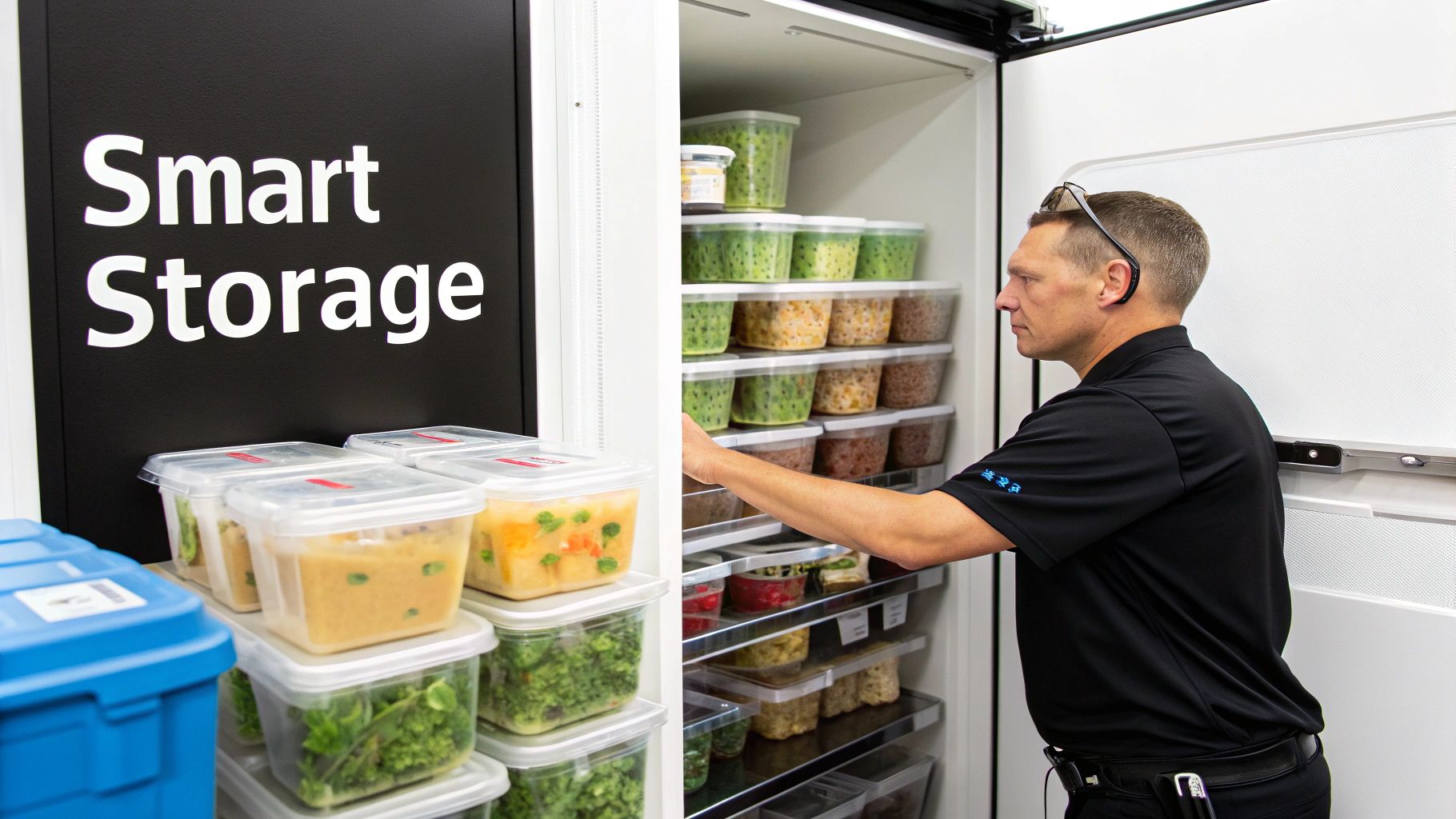
We all know the "First-In, First-Out" (FIFO) rule, but that’s just the start. You need a living system that your entire team understands and can execute flawlessly, even during a slammed Saturday night service. A disorganized walk-in is where profits go to die. Cases of produce get lost in the back, proteins expire unnoticed, and over-ordering becomes the norm because nobody really knows what you have.
The Power of High-Performance Refrigeration in Vegas
In the brutal Las Vegas heat, your commercial refrigeration is doing some serious heavy lifting. Standard-issue equipment often struggles against the high ambient temperatures, causing fluctuations that speed up spoilage. This is where investing in high-performance commercial refrigerators and commercial freezers isn't an expense—it's a direct waste-reduction strategy.
These units are built to maintain precise, stable temperatures, which is exactly what you need to extend the life of your most expensive inventory. Think about those delicate microgreens that wilt in a day or the prime cuts of steak you can’t afford to lose. Consistent cold is what protects that investment.
A reliable commercial freezer that holds its temperature without fail isn't just a piece of equipment; it's an insurance policy against thousands of dollars in potential spoilage. In a city that operates 24/7, you can't afford the downtime or the inventory loss from a failing unit.
This focus on reliable equipment also extends to your service line. A dependable ice machine is non-negotiable, ensuring buffets stay fresh and drinks are served perfectly, preventing service issues that lead to other forms of waste and unhappy customers.
Creating an Airtight FIFO System
Making FIFO a reality takes more than just a memo taped to the cooler door. You need a clear, visual system that's second nature for everyone. This all comes down to meticulous organization and labeling.
- Clear Date Labeling: Every single item that comes through the door needs to be immediately tagged with the delivery date and a "use-by" date. A color-coded system—like a different color for each day of the week—makes it instantly obvious what needs to be used first.
- Designated Storage Zones: Give everything a home. Assign specific shelves for specific food categories (dairy here, poultry there, produce over there). This prevents cross-contamination and lets you see inventory levels at a glance, which helps kill the habit of over-ordering.
- Daily Inventory Checks: A quick, daily walkthrough of your walk-in and freezers by a shift lead can catch potential spoilage before it’s too late. This simple habit keeps your inventory top-of-mind and creates accountability.
Of course, great organization relies on the right tools. For a deeper look at what to use, check out our guide on restaurant food storage bins. Getting the right containers is essential for keeping a system that actually works.
Linking Inventory to Purchasing
Your inventory system should be the brain behind your purchasing decisions. A common mistake is ordering based on habit rather than what the numbers are actually telling you. That’s how you end up with a surplus of perishable items that you have no chance of using before they turn.
To break this cycle, you need to tie your purchasing directly to your usage data. It sounds complex, but it can be as simple as a shared spreadsheet or a feature already built into your POS system.
Start by tracking the usage of key ingredients every single day. This gives you a clear picture of how fast you're moving through high-cost items.
Next, based on your sales data, set par levels—a minimum and maximum quantity—for each item. This ensures you have what you need to meet demand without sitting on excess stock.
When it's time to place an order, you're no longer guessing. You're simply replenishing items to meet their established par levels, which dramatically cuts down on spoilage from over-ordering. By combining a disciplined, visual storage system with data-driven purchasing and the right equipment, you stop reacting and start proactively managing your inventory.
Designing Menus That Minimize Waste
Your menu is so much more than a list of food. Think of it as the strategic blueprint for your entire kitchen operation. In a town like Las Vegas, with its insane culinary diversity and sky-high diner expectations, a poorly planned menu can silently bleed profits right into the trash can.
Smart menu engineering is your best defense. By being strategic with your offerings, you create a menu that not only wows your guests but also fiercely protects your bottom line.
It all starts by marrying the hard data from your POS system with the real-world insights from your food waste audit. Your sales numbers tell you what’s selling, sure. But the audit tells you the true cost of every dish. That "chef's special" might look good on paper, but if its unique, pricey ingredients are consistently dying in the walk-in, it’s a dog.
Using Data to Trim the Fat
In the hyper-competitive Las Vegas market, every single dish has to earn its spot on the menu. The first, most crucial step is to identify your underperformers—those items that contribute more to your waste bin than your bank account.
Be ruthless. Hunt for dishes with low sales that demand single-use, perishable ingredients. A perfect example is that fancy fish dish that requires a specific sauce and a unique garnish you don't use anywhere else. If it only sells a handful of times a night, you're practically guaranteed to be tossing a chunk of those expensive, dedicated ingredients.
This is where you make the tough calls that save you real money. You've got a few options:
- Kill the Dish: If an item isn't selling and it’s a waste magnet, the simplest fix is often the best one. Just cut it.
- Rework the Recipe: Can you swap out that high-waste ingredient for something you already fly through for a more popular dish? Get creative.
- Run It as a Limited-Time Offer: This creates a sense of urgency for guests and lets you buy ingredients in smaller, more manageable batches, slashing your spoilage risk.
Focusing your menu on popular, efficient dishes simplifies your inventory, makes prep a breeze, and directly attacks a major source of spoilage.
The Power of Cross-Utilization
Cross-utilization is just a fancy term for using the same ingredients across multiple menu items. It’s also one of the single most powerful tactics for cutting down food waste. For a Vegas kitchen cranking out hundreds of covers, this isn't about stifling creativity—it's about squeezing every last drop of value from your inventory.
Instead of ordering a case of beautiful asparagus for one lonely side dish, engineer it into a soup, a salad, and a key component in a best-selling entrée. This approach creates high velocity, ensuring ingredients get used up fast, long before they have a chance to go bad. This is especially critical for pricey proteins and delicate produce with a short shelf life.
A brilliantly designed menu works like a finely tuned engine. Every ingredient has multiple jobs, keeping the whole system running without a hitch. This dramatically cuts your spoilage risk because your inventory is constantly moving from the commercial refrigerator to the line.
Nailing Down Portion Control
Consistency is king in this business, and portion control is the foundation of that kingdom. It’s how you guarantee every guest gets the exact same quality experience, and it's how you protect your food costs from creeping up plate by plate. If you’re seeing a lot of food coming back to the dish pit, oversized portions are almost always the villain.
Getting portion control right isn't complicated:
- Standardize Your Tools: Get portion scales, measured scoops, and specific ladles on the line. Take the guesswork out of plating.
- Create Visual Guides: Use plating diagrams or photos right on the line. Show your team exactly what every finished dish should look like.
- Train, Train, Train: Hammer home the importance of portioning. It's not about being cheap; it's a non-negotiable part of quality control.
In a city where presentation is everything, proper portioning ensures your food is not only delicious but consistently profitable. It's a simple discipline that pays you back every single service by slashing plate waste and delivering the predictable, high-quality experience that turns first-timers into regulars.
Creating a Culture of Waste Reduction
Let's be real—the best menu strategies and slickest storage systems on earth will fall flat if your team isn't on board. Reducing food waste isn’t some top-down mandate you can just enforce. It’s a culture, built from the ground up, and it all starts with leadership and clear communication. In a town like Vegas, where the pace is relentless and staff turnover is a constant battle, getting everyone invested is the real secret ingredient.
It all starts with the why. You have to move beyond just telling your team what to do. When a prep cook understands that an overflowing trim bin isn't just trash but cash—money that impacts the restaurant's bottom line and, ultimately, everyone's job security—their whole perspective changes. This isn't about pointing fingers; it's about giving them ownership.
Fostering Team Buy-In and Accountability
Your crew—from the line cooks to the servers and dishwashers—are your eyes and ears on the floor. They see the day-to-day realities of waste in a way management often can't, so you have to tap into their insights.
Start making waste reduction a regular topic in your pre-shift huddles. Instead of just announcing a new policy, share the hard numbers from your waste audit. Put it on the table as a team challenge: "Heads up, team. Last week we tossed $300 in spoiled produce from the walk-in. What are we seeing? How can we fix this together?" This simple shift turns them from staff following orders into a team of active problem-solvers.
- Appoint Waste Champions: Designate a "waste champion" for each shift. This isn't another manager, but a peer who can rally the team, encourage proper sorting, and spot inefficiencies.
- Reward the Wins: Tie your waste reduction goals to team-based incentives. If the kitchen hits its monthly target for cutting spoilage, celebrate! Buy a round, order a staff meal, or offer a small bonus.
- Give Them the Right Tools: You can't expect results without the right gear. That means having commercial refrigerators that hold temp without fail and enough commercial freezers to properly store bulk buys. Good equipment takes the pressure off your fresh inventory and sets your team up for success.
Responsible Solutions for Unavoidable Surplus
Look, no matter how tight your operation is, some surplus is going to happen. Having a smart, responsible plan for that food is what separates a good waste-reduction program from a great one. And in a city with the resources of Las Vegas, there's no excuse for letting good food hit the landfill.
Partnering with local food rescue organizations is a fantastic first move. These groups are pros, working with restaurants all over the valley to safely collect perfectly good surplus food and get it to people who need it. This doesn't just cut your disposal fees; it shows the community you care.
Partnering with a food rescue organization transforms a potential loss into a community gain. It’s a clear demonstration that your restaurant's values extend beyond its four walls, enhancing both staff morale and public perception.
For everything else—the vegetable trimmings, plate scrapings, and other scraps not suitable for donation—composting is the answer. It’s easier than ever to get set up with a local composting service. They’ll drop off designated bins and handle regular pickups, turning your organic waste into healthy soil instead of harmful methane gas.
Building this kind of mindful culture doesn't happen overnight. It takes consistent communication, celebrating the small victories, and making sure your team has the knowledge and equipment—like a dependable ice machine that keeps service running smoothly—to make waste reduction just part of the daily routine. When everyone feels responsible, you don't just cut costs. You build a stronger, more resilient, and more respected restaurant.
Essential Equipment for a Leaner Operation
You can have the best food waste strategies in the world—meticulous audits, brilliant menu engineering, a perfectly trained team—but it all falls apart without the right foundation. That foundation is your kitchen equipment. In a high-stakes, high-volume town like Las Vegas, your tools aren't just for cooking; they're the bedrock of a leaner, more profitable restaurant.
Investing in solid, high-performance gear is what turns your waste reduction plan from a good idea on paper into a daily, money-saving reality.
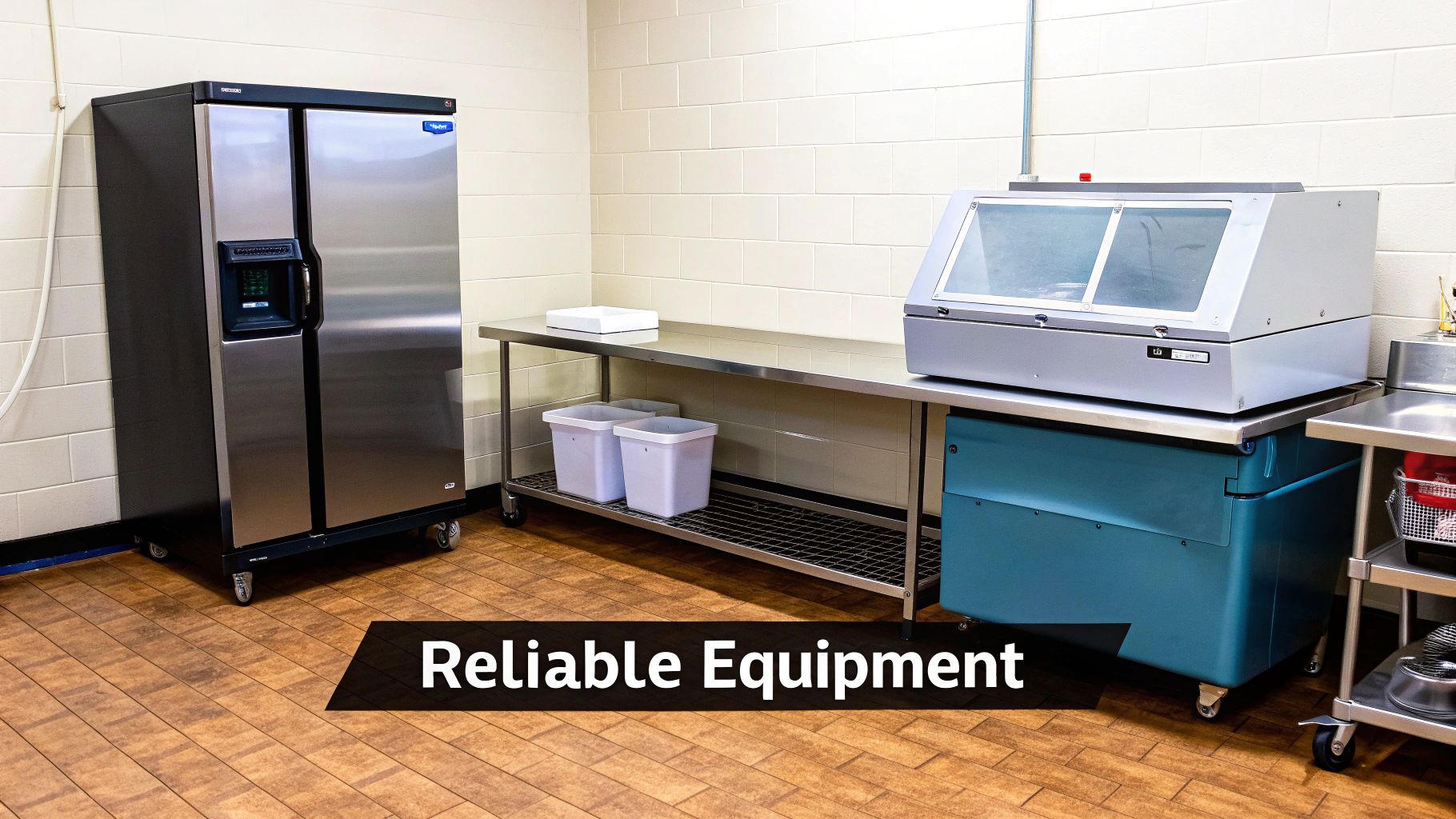
Think of your equipment as the ultimate insurance policy against spoilage. For every kind of kitchen in Vegas, from a sprawling Strip buffet to a cozy neighborhood spot, consistency is everything. The second a crucial piece of equipment fails, you can watch the dominoes fall right across your inventory. It's a devastating and costly chain reaction.
The Core Trio for Waste Prevention
Every successful waste-reduction program I've seen is built on three dependable kitchen workhorses. These are the pieces that have a direct, daily impact on your ability to preserve food, maintain quality, and keep service running smoothly.
- Commercial Refrigerators: This is your first line of defense. A high-quality commercial refrigerator maintains precise, stable temperatures, which is absolutely non-negotiable for extending the shelf life of expensive proteins and delicate produce. This prevents the kind of spoilage that quietly eats away at your profits.
- Commercial Freezers: A reliable freezer is your inventory’s safety net. It locks in the value of those bulk purchases and lets you safely store ingredients for much longer. A good one prevents thousands of dollars in potential losses from temperature swings or an unexpected breakdown.
- Ice Machines: People often overlook ice machines in waste discussions, but a dependable unit is critical. It keeps food on display fresh and safe, and—just as important—prevents service disruptions that lead to other kinds of waste and unhappy customers.
Investing in energy-efficient, NSF-certified equipment isn't an expense; it's a direct strategy for building a more resilient and sustainable business. It’s the final piece of the puzzle, ensuring that every dollar you spend on quality ingredients is protected.
Ultimately, these core tools enable every other waste-reducing effort you make. Efficient prep tables make portion control easier, minimizing costly mistakes on the line. And for kitchens looking to get really serious about preservation, understanding the benefits of a commercial blast chiller can open up entirely new ways to extend the life of prepped foods.
By equipping your kitchen for success, you're not just buying metal—you're building a stronger, more profitable restaurant ready to thrive in the fiercely competitive Las Vegas market.
Your Questions Answered
When you're running a busy kitchen, starting a new initiative can feel like a lot. Let's tackle some of the most common questions Las Vegas operators have when they start getting serious about cutting food waste.
How Much Can a Restaurant Realistically Save?
The numbers here are pretty staggering. For every single dollar you put into a food waste program, you can expect to see a return of about $14. It sounds wild, but it's true.
In a market as busy as Las Vegas, that adds up fast. Think about it: your food costs likely hover somewhere between 28-35% of your total sales. Trimming that down, even a little bit, translates directly into thousands of dollars back in your pocket each year.
How Can I Implement Changes Without Overwhelming My Staff?
The key is to not try and boil the ocean. Start small and be completely transparent with your team.
Kick things off with a single, high-impact project, like a one-week waste audit focused only on produce or protein. Use what you learn from that to introduce just one new process, like a better FIFO labeling system for the commercial refrigerators.
When you explain how these changes keep the business healthy—which means more job security and a better workplace for everyone—you get real buy-in. It stops being just another rule and starts feeling like a team goal.
Is Upgrading My Commercial Refrigeration Really Worth the Cost?
In a word: absolutely. Especially with the kind of heat we get here in Vegas. Your older, less efficient coolers and freezers are fighting a losing battle, struggling to keep consistent temps. That inconsistency leads directly to spoiled food and money in the trash.
Modern commercial refrigerators and commercial freezers give you the tight temperature control you need to protect your most expensive inventory, making everything from prime cuts to delicate produce last longer. The initial cost is easily balanced out by what you save on wasted food and lower energy bills. Even a solid ice machine plays a role by preventing service hiccups that can cause other kinds of waste. It all works together to make your operation leaner and more profitable.
Ready to get your Las Vegas kitchen geared for success? Las Vegas Restaurant Equipment has the reliable, high-performance refrigeration and kitchen tools you need to build a stronger bottom line. Check out our full catalog and start saving at https://lasvegasrestaurantequipment.com.