

So, you’re thinking about starting a catering business. It’s more than just cooking great food—it's a journey that takes you through local licensing, outfitting a commercial kitchen, nailing down a profitable menu, and launching a marketing plan that actually gets you clients. You have to plan every detail, from how you structure your business to the moment you sign your first contract.
Launching Your Catering Business in Las Vegas
Welcome to the wild, wonderful world of Las Vegas food. This city runs on celebrations and corporate events, which means there’s a constant, hungry demand for top-notch catering. This isn't just about putting food on a plate; it's about carving out a space for yourself in one of the most competitive culinary landscapes in the country.
From glittering galas on the Strip to backyard parties in Summerlin, the opportunities are everywhere. This guide is your real-world playbook, built specifically for the unique hustle of this city.
The potential is massive. The global catering market is expected to balloon by an incredible $73.2 billion between 2025 and 2029, and corporate gigs are a huge slice of that pie. You can read more about the booming catering services market on PR Newswire.
Setting the Stage for Success
Before you start dreaming up menus, let's talk about the foundation. Your entire business depends on having the right infrastructure to handle the heat—both in the kitchen and in the market.
- A High Bar for Food: Las Vegas is a vibrant city packed with an unbelievable variety of restaurants that cater to every palate, from celebrity chef hotspots to beloved neighborhood joints. This sets the bar high for quality and creativity. You need to find a unique niche to stand out from the crowd.
- Built for the Desert: The climate here is no joke, making high-performance equipment an absolute must. Your business will live or die by gear that can keep ingredients safe and your operation running smoothly, even when it’s scorching outside.
Core Equipment Investments
The first big checks you write will likely be for kitchen hardware. This is not the place to cut corners. Cheap equipment can lead to food safety nightmares, service breakdowns, and repair bills that will bleed you dry.
A reliable commercial kitchen is the heart of any catering operation. Without the right tools, even the most talented chef will struggle to deliver consistent, high-quality results for every event.
There are three foundational pieces of equipment where you simply cannot compromise:
- Commercial Refrigerators: These are the workhorses of your kitchen. They are absolutely essential for keeping produce, meats, and prepped food at safe temperatures.
- Commercial Freezers: For long-term storage and managing inventory, a dependable freezer is your key to controlling food costs and minimizing waste.
- Ice Machines: In Las Vegas, a high-capacity ice machine is a non-negotiable for beverage service and food presentation. You never, ever want to run short during an event.
Getting a handle on the full financial picture is critical from day one. To get a better sense of what you’re up against, check out our guide on the complete restaurant startup costs breakdown.
Navigating Clark County Licensing and Health Permits
Before you can plate a single canapé, you've got to deal with the legal side of things here in Las Vegas. Getting the right permits and licenses isn't just a suggestion—it's non-negotiable. In Southern Nevada, that means getting the green light from both the state and, more importantly, the Southern Nevada Health District (SNHD).
This video does a great job breaking down the local requirements and some of the common hangups new business owners run into when they're just getting started.
This whole process is more than just getting a business license; it’s a specific sequence of approvals designed to make sure you're operating safely and above board. One of the first forks in the road you'll hit is deciding on your business structure.
LLC vs. Sole Proprietorship: A Critical First Step
How you decide to structure your company makes a huge difference in your personal liability down the road.
A sole proprietorship is the simplest way to go. It essentially blends your personal and business finances. While it’s quick to set up, it means that if your business gets sued, your personal assets—like your house or your car—could be on the line.
An LLC (Limited Liability Company), on the other hand, puts a legal wall between you and your business. This structure is designed to protect your personal assets from business debts and lawsuits, which is a massive relief in the food service world. It takes a bit more paperwork and a small filing fee, but that protection is priceless for anyone serious about building a lasting catering business.
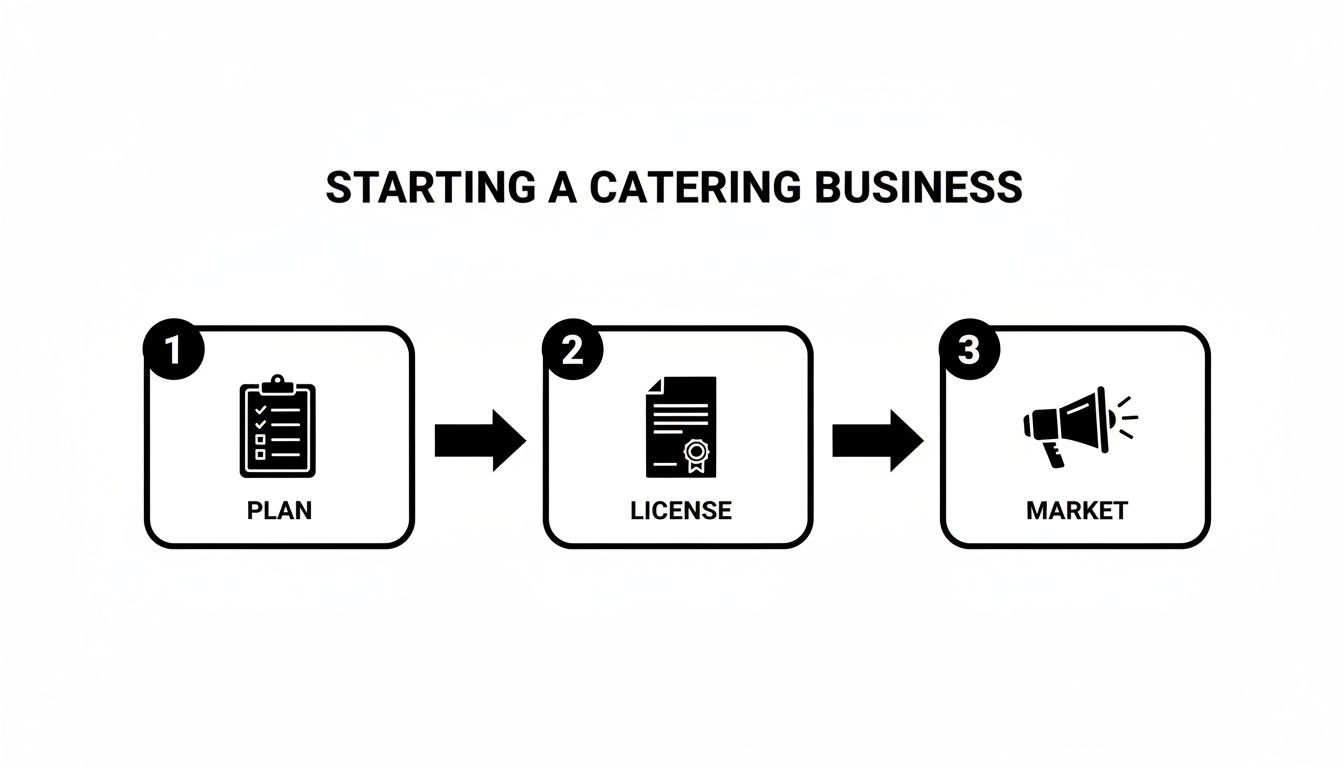
This flowchart really simplifies the journey. As you can see, getting licensed is that crucial middle step that takes you from a great idea to actually serving your first client.
The Official Filing Sequence in Clark County
Once you've picked your business structure, you have to follow a very specific order to get fully licensed. Trust me, trying to do these steps out of order will only lead to headaches and delays.
- Nevada State Business License: First things first, head over to the Nevada Secretary of State's SilverFlume portal. This is where you’ll register your business name and choose your entity type (LLC, sole proprietorship, etc.).
- Clark County Business License: After your state license is sorted, you'll apply for a county-level license. You need this to operate anywhere in Clark County, which covers Las Vegas, Henderson, and North Las Vegas.
- Southern Nevada Health District (SNHD) Permit: This is the big one. The SNHD oversees all food operations and has incredibly strict requirements for your commercial kitchen. Your business cannot legally serve a single bite of food without their approval.
Passing your SNHD inspection is the ultimate green light. Inspectors are meticulous and focused on public safety, so being over-prepared is the only way to approach it. Don't think of it as a hurdle, but as a validation of your professional standards.
Meeting SNHD Commercial Kitchen Requirements
The SNHD has a detailed playbook of what they expect to see in a commercial kitchen, and your success really hinges on meeting these standards from day one. Inspectors have a keen eye for the big-ticket items and core infrastructure.
Here are a few things you absolutely must have:
- Three-Compartment Sink: This is mandatory for the classic wash, rinse, and sanitize process for all your dishes.
- Handwashing Sinks: You need dedicated sinks just for handwashing, completely separate from your food prep and dishwashing areas.
- Grease Trap: A correctly installed and sized grease interceptor is required to keep your plumbing clear and stay compliant.
- NSF-Certified Equipment: This is a huge deal. All your major equipment needs to be NSF-certified, which means it meets public health and safety standards. This goes for your commercial refrigerators, commercial freezers, and stainless steel prep tables. Showing up with residential-grade gear is an automatic fail.
Failing an inspection can set you back weeks and hit your wallet with re-inspection fees. To make sure you’re ready, check out this comprehensive restaurant health inspection checklist to see exactly what inspectors are looking for.
Equipping Your Commercial Kitchen for Success
Your commercial kitchen is the heart and soul of your catering operation. Here in Las Vegas, where performance is demanded 24/7, your kitchen has to be an absolute powerhouse—especially when the summer heat blasts past 110°F. This isn't just about finding a space to cook. It's about outfitting it with workhorse equipment that keeps your business running, protects thousands of dollars in inventory, and guarantees every plate you send out lives up to this city's sky-high standards.
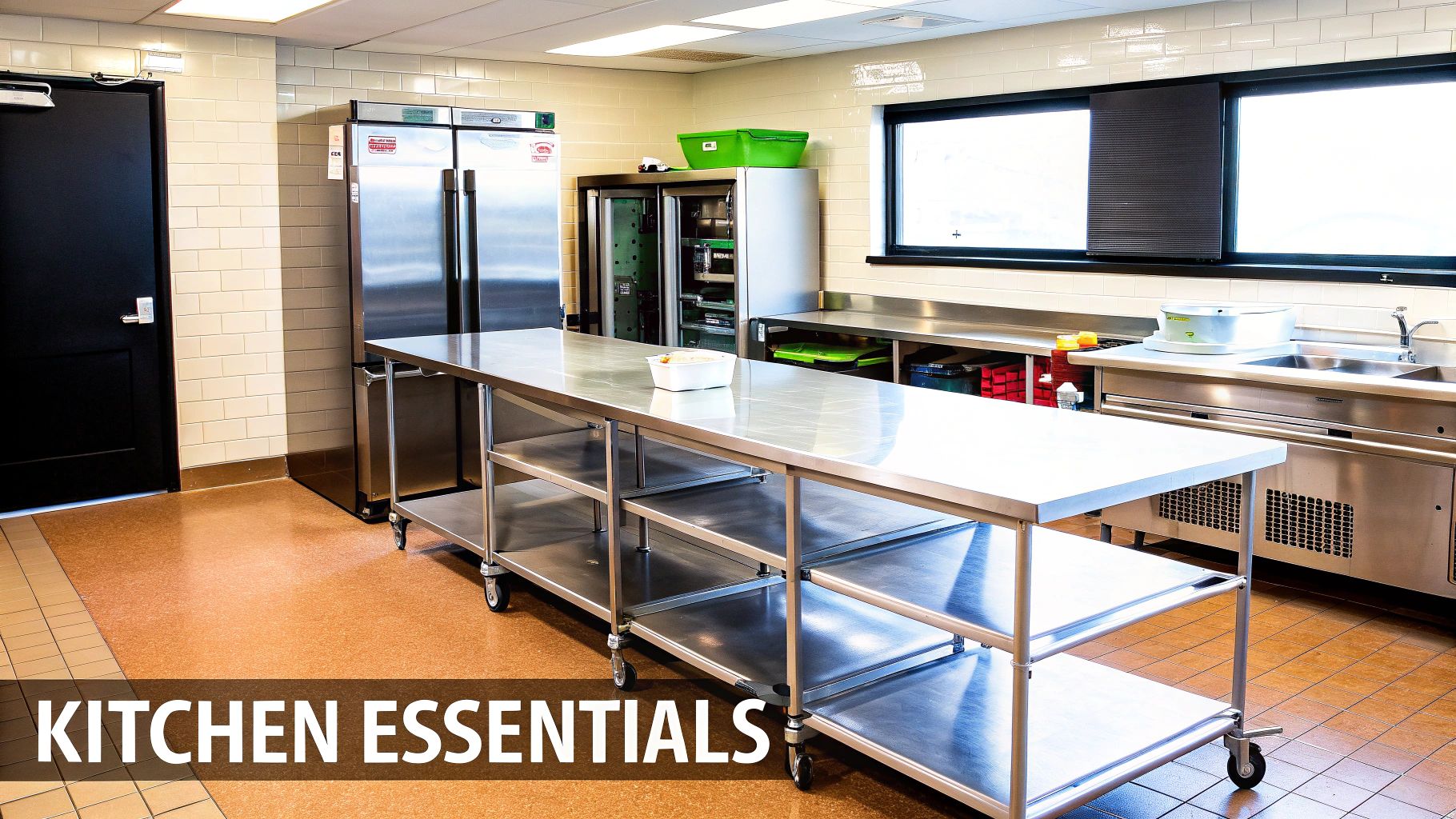
The culinary scene in Las Vegas is incredibly diverse, with a vibrant array of restaurants that cater to every palate. That variety sets a high bar. Your kitchen has to be ready to execute a wide range of menus flawlessly, from delicate canapés for a corporate mixer to hundreds of perfectly cooked entrees for a wedding. Your equipment is what makes that possible.
The Non-Negotiable Trio: Cold Storage and Ice
Before you even think about firing up an oven, you need a bulletproof plan for temperature control. In our desert climate, food safety isn't a suggestion; it's everything. Exploring the essential restaurant equipment needed for success starts with cold storage, your first and most important line of defense against spoilage and foodborne illness.
A reliable commercial refrigerator is where your fresh ingredients will live. You need a unit with a powerful compressor that can hold its temperature even when your staff is opening and closing the doors a hundred times during a busy prep session. A high-capacity commercial freezer is just as critical for managing inventory and buying in bulk to keep your food costs down.
And let's not forget the unsung hero of any Las Vegas event: the ice machine. Between chilling drinks, packing coolers for transport, and creating elegant seafood displays, you will burn through an incredible amount of ice. A commercial-grade machine that keeps up with demand isn't a luxury—it's a necessity. Running out of ice mid-event is a rookie mistake you simply can't afford to make.
Don't ever skimp on your refrigeration. Investing in top-tier cooling and ice production isn't just another expense; it's insurance for your inventory and your reputation. In a city where standards are this high, equipment failure is not an option.
Power and Precision in Your Cooking Line
Once your cold chain is secure, it's time to bring on the heat. For most caterers, a high-quality convection oven is the single most important piece of cooking equipment you'll buy. It’s the engine of your kitchen.
- Convection Ovens: Their internal fans circulate hot air, cooking food faster and, more importantly, evenly. This consistency is a game-changer, whether you're baking a hundred delicate pastries or roasting prime rib for a 200-person gala. The ability to get reliable results every single time is what separates the pros from the amateurs.
- Stainless Steel Prep Tables: Trust me, you can never have enough workspace. Durable, NSF-certified stainless steel tables give you a sanitary and tough surface for everything from chopping vegetables to plating the final dishes. They're easy to scrub down and can handle the daily abuse of a commercial kitchen.
To make sure you don't miss anything, from the big-ticket items down to the smallwares, use a solid catering equipment checklist to keep yourself organized.
Smart Sourcing: New vs. Used and Financing Options
Outfitting a commercial kitchen is a major investment. While it’s tempting to buy everything shiny and new, a smart mix of new and used equipment can save you a ton of cash without sacrificing quality.
Here’s a practical guide to help you decide what's essential for your Las Vegas catering operation.
Essential Equipment for Your Las Vegas Catering Kitchen
| Equipment Category | Primary Catering Function | Key Feature for Las Vegas |
|---|---|---|
| Refrigeration | Holding perishable inventory safely. | Heavy-duty compressor that can recover quickly in extreme ambient heat. |
| Freezers | Long-term storage, bulk purchasing. | Excellent seals and insulation to prevent temperature fluctuations and energy waste. |
| Ice Machine | Beverage service, food transport, displays. | High-volume production that can keep up with intense demand during peak season. |
| Convection Oven | Roasting, baking, re-heating large batches. | Even heat distribution for consistent results on high-volume orders. |
| Prep Tables | Chopping, mixing, plating, assembly. | NSF-certified stainless steel for durability and easy sanitization. |
Making smart choices on where to spend and where to save is crucial for your startup budget.
Don't let the upfront cost of new equipment drain all your startup capital. Many suppliers offer financing and leasing options that let you get top-tier, reliable gear for a predictable monthly payment. This keeps your cash free for other critical expenses like marketing, payroll, and insurance. For a complete rundown of everything you might need, our comprehensive commercial kitchen equipment checklist is a fantastic starting point.
Designing a Menu That Sells Itself
In a town like Las Vegas, with its vibrant array of restaurants that cater to every palate, your menu is everything. It's not just a list of what you can cook; it's your most critical marketing tool. Think of it as your business card, sales pitch, and brand promise all rolled into one. A truly great catering menu is profitable, scalable, and built to travel—those are the three pillars that will hold up your entire business.
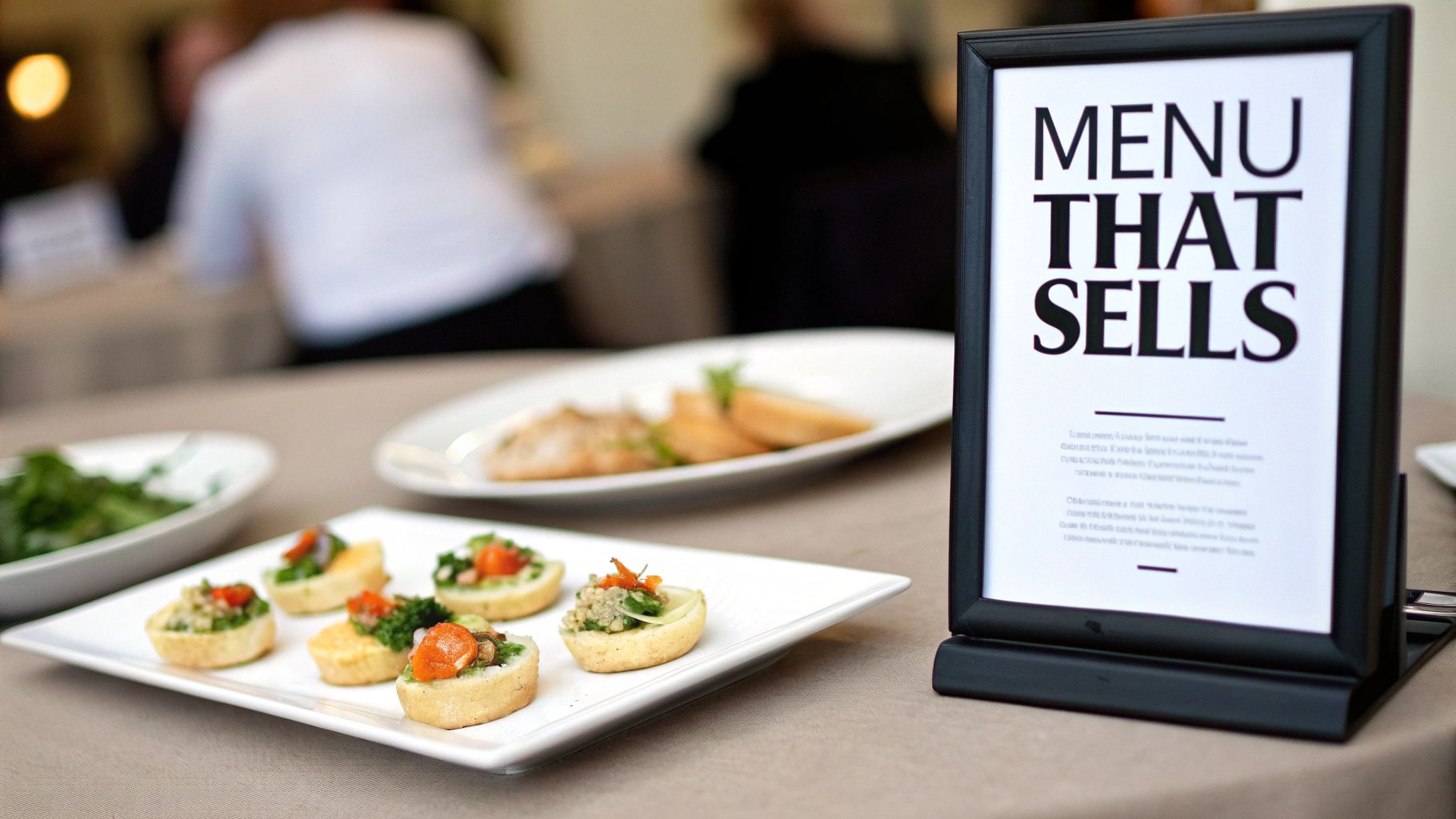
The trick is to stop thinking about what you like to cook and start focusing on what the Las Vegas market actually wants to buy. This city’s wild mix of clients creates some amazing opportunities if you know where to look.
Finding Your Profitable Niche in Las Vegas
Before you even think about costing out a single ingredient, you need to know exactly who you're selling to. Are you going after the high-end corporate crowd in Summerlin? Or maybe the more casual backyard weddings in Henderson? The Vegas scene is wide open.
- Corporate Power Lunches: This is a big one. Think fresh, healthy, and maybe even individually packaged meals for law firms and tech companies. For these clients, being on time with a flawless presentation is non-negotiable.
- Gourmet Vegan Platters: The demand for plant-based food isn't just a trend; it's a huge and growing market. If you can specialize in creative, upscale vegan cuisine, you could become the go-to caterer for a whole segment of the city.
- Classic Comfort Food: Never underestimate the power of nostalgia. For private parties and family get-togethers, you can't go wrong with hearty, familiar dishes like slow-roasted meats or a killer gourmet mac and cheese.
- Themed Event Buffets: This is where you can really let your creativity shine. From luaus to Tuscan feasts, themed menus for special events are a fantastic way to stand out and justify premium prices.
Picking a niche makes everything easier. It sharpens your marketing, simplifies your kitchen workflow, and helps you build a name as the expert in a specific style of catering.
The Foundation of Profitability: Food Costing
Okay, you’ve picked your niche. Now it's time to get serious with your numbers. Just guessing at prices is the fastest way I've seen caterers go under. You need a solid food costing system to set prices that are both competitive and actually make you money.
Your menu prices have to cover every single thing that goes into a dish—not just the steak or the salmon. You need to factor in the cost of every herb, the labor to prep and cook it, and even a piece of your overhead like the kitchen rent and insurance. A good target to aim for is keeping your food cost at or below 28-35% of the menu price.
So, if a dish costs you $10 in total ingredients to make, you should be charging somewhere between $28 and $35 for it. Hitting that margin is what separates the businesses that thrive from the ones that are always struggling.
Structuring Packages to Guide Client Choices
Here’s a pro tip: never just give a client a single, flat price. You need to use a little psychology by offering tiered packages. By creating a few options—call them Silver, Gold, and Platinum, for example—you give the client a sense of control while subtly pointing them toward the choices you want them to make.
You'll find that most clients naturally drift toward the middle "Gold" option; it feels like the best balance of value and features. This little trick often makes your most profitable package your most popular one. It’s a simple but incredibly powerful strategy that makes your proposals more compelling and bumps up your average sale.
The U.S. catering market was a $72 billion industry in 2023, and corporate catering made up a massive 60% of that pie. For anyone starting out, that's where the real opportunity is. The most successful caterers I know maximize their profits by using CRM tools, which can boost revenue by up to 41% by keeping clients coming back. And those loyal customers are pure gold—their repeat orders can surge by an incredible 286%. You can dig into more catering industry statistics to see just how much potential there is for growth.
Marketing Your Catering Service in Las Vegas
Alright, your kitchen is stocked and your menu is dialed in. Now for the hard part: getting paid. When it comes to marketing a catering business here in Las Vegas, you can’t just throw things at the wall and see what sticks. This is a city built on relationships and looking the part, so your strategy has to match.
Forget what you’ve read in generic business guides. We’re going to focus on what actually gets you clients in this town.

Your game plan has two critical halves. You need a slick digital presence to catch people searching online, and you need to pound the pavement with some good old-fashioned networking to build a referral machine. Let's break down how to do both right.
Building Your Digital Foundation
In a city as flashy as Las Vegas, your online presence is your storefront. It needs to look professional, make people hungry, and be dead simple for potential clients to find you.
- A Website That Sells: Think of your website as your digital brochure. It absolutely must have high-quality, professional photos of your food. Showing off your best plated dishes is non-negotiable. If you skimp here, you're dead in the water.
- Get on Instagram, Yesterday: Instagram was made for food businesses. Use it to post drool-worthy photos and short videos of your food, behind-the-scenes prep, and happy clients (just make sure you get their permission first).
- Master Hyper-Local SEO: When a corporate planner searches for "corporate caterer Summerlin" or "event catering Henderson," you have to show up. Loading your website with these local keywords is how you get in front of clients who are ready to book.
Your main goal here is to build a brand that screams "premium" and "trustworthy." Use client testimonials, a killer portfolio, and a polished website to lock in those lucrative, recurring corporate contracts. Those are the gigs that will become the financial backbone of your entire business.
Mastering Old-School Networking
As important as your online game is, the biggest and best catering contracts in Las Vegas are almost always won through real-world connections. This city runs on who you know. If you can build genuine relationships with the right people, you'll have more business than you can handle.
Start by figuring out who is in a position to hire you or send clients your way.
- Event Planners: These are your best friends. A solid relationship with just one busy event planner can feed you a steady stream of high-quality gigs for years.
- Corporate HR Managers: These are the gatekeepers to the golden goose of corporate catering—we’re talking office lunches, holiday parties, and high-dollar client meetings.
- Wedding Venues: Find venues that don't have their own in-house catering and get cozy with them. Getting on their preferred vendor list is like striking gold.
Focusing on corporate catering is probably the smartest way to start. This slice of the market holds a massive 36.9% market share and it's only getting bigger, especially with the demand for fresh, healthy meals at the office. The real prize, though, is repeat business. Data shows high-frequency corporate orders have shot up 286% year-over-year. A decent CRM and an online ordering system can boost your revenue by up to 41%.
Creating a Brand That Attracts Repeat Business
At the end of the day, marketing isn't just about landing your first client. It's about building a brand that keeps them coming back for more. Loyalty is the secret sauce for long-term stability and profit.
To keep clients happy and attract new ones, it's worth checking out some of the best loyalty programs for restaurants for ideas. A simple system that rewards repeat orders can easily turn a one-time event into a lasting partnership.
Got Questions About Starting a Catering Business?
Jumping into the catering world, especially in a place as non-stop as Las Vegas, always brings up a lot of questions. I hear them all the time from folks just starting out. Getting a handle on everything from health codes to finding your first clients can feel overwhelming, but knowing the answers upfront will save you a world of headaches. Let’s walk through the big ones.
Do I Really Need a Commercial Kitchen in Las Vegas?
This is non-negotiable: yes, you absolutely do. I can't stress this enough. The Southern Nevada Health District (SNHD) has a zero-tolerance policy for making food for sale in a home kitchen. You are legally required to work out of a licensed commercial kitchen or a shared-use space, often called a commissary kitchen.
These places are built to meet health codes, with essentials like three-compartment sinks, proper ventilation, and grease traps that your home kitchen just doesn't have. For most new caterers in Vegas, renting space in a shared kitchen is the smartest way to start. It gets you compliant from day one without the massive cost of building out your own spot.
What’s a Realistic Startup Budget?
This is a "how long is a piece of string?" question, but I can give you a ballpark. Your startup costs can swing wildly, from as little as $10,000 if you’re lean and renting kitchen space, to well over $100,000 if you're building your own facility. No matter which route you take, your biggest single expense will almost always be the equipment.
My advice? Don't drain your cash reserves on equipment. Seriously look into financing your big-ticket items. Getting a loan for your commercial refrigerators, commercial freezers, and ovens lets you get new, reliable gear with a warranty. Better yet, it gives you a predictable monthly payment and keeps your cash free for all the other stuff you’ll need—licenses, insurance, and that all-important initial marketing push.
What Are the Most Profitable Catering Niches in Vegas?
Everyone immediately thinks of big, glamorous weddings, and while they can be great, the real bread and butter of the Las Vegas catering scene is corporate. Hands down, corporate catering is the most consistent and profitable game in town, making up more than half of the local demand. The bar is high—this vibrant city has a ton of amazing restaurants, so corporate clients expect the best—but the payoff is huge if you can deliver.
Think about it: businesses all over the valley, from Henderson to Summerlin, are constantly holding client meetings, team lunches, and company parties. This creates a steady flow of weekday orders, which is the kind of recurring revenue that will keep your business stable. It perfectly balances out the seasonal ups and downs of private parties and weddings. If you focus your early efforts on building relationships with corporate clients, you're setting yourself up for long-term success.
In a town that moves as fast as Vegas, reliability is currency. Corporate clients need a caterer they can set their watch to. Show up on time, every time, with a flawless setup, and you'll turn a one-off lunch order into a lucrative long-term contract.
How Do I Transport Food Safely?
Food safety doesn't stop once the food comes out of the oven. Getting it to the event site safely is just as critical. The SNHD has very strict rules: hot food has to stay above 135°F, and cold food needs to be kept below 41°F. There’s no wiggle room on this.
You’ll need to invest in high-quality insulated food carriers (most of us just call them "cambros"). They're an absolute must-have for keeping food at a safe temperature while you're on the road.
Here’s the process we live by:
- First, make sure all your food hits the right temperature before it even thinks about leaving the kitchen. This starts with having dependable commercial freezers and refrigerators.
- Next, use a good, calibrated digital food thermometer to check and log the temps right before you pack the food into the carriers.
- Pack the carriers snugly in your vehicle so they don’t slide around and spill.
- As soon as you arrive at the venue, do one last temperature check before you set up to serve.
Following these steps isn't just about compliance; it’s about protecting your clients, your reputation, and your business.
Ready to gear up your Las Vegas catering kitchen with reliable, warranty-backed equipment? At Las Vegas Restaurant Equipment, we’ve got everything you need, from commercial refrigerators and freezers to high-capacity ice machines, all at showroom-free prices. Check out our full catalog and financing options at https://lasvegasrestaurantequipment.com.