

Figuring out your restaurant startup costs can feel like trying to hit a moving target. The truth is, the final number can land anywhere from $95,000 for a small, scrappy quick-service joint to well over $2 million for a high-end, full-service restaurant in a prime location. Your concept, your address, and your scale will dictate everything.
This guide will break down those numbers, with a special focus on what it takes to make it in the vibrant, one-of-a-kind Las Vegas market, a city with a diverse array of restaurants that cater to every palate.
Your Essential Las Vegas Restaurant Startup Costs Checklist
Opening a restaurant is like putting together a high-stakes puzzle; every single piece, from the security deposit on your lease to the very last teaspoon, has a price tag. In a city as fast-paced as Las Vegas, seeing the full picture is the only way to build a business that lasts. Whether you're dreaming of a dazzling spot on the Strip or a beloved neighborhood eatery in Henderson, your financial plan is the bedrock of it all.
The costs to get a restaurant off the ground swing wildly based on the concept. Recent industry data shows averages from $95,000 for a bare-bones operation to over $2 million for luxury dining in sought-after areas—which gives you a pretty good idea of the landscape for Nevada's bar, hotel, and food truck scenes.
The median cost across the U.S. hovers around $375,000, covering all the big-ticket items like equipment, licensing, and your first big inventory order. For a little perspective on how things have changed, the SBA's 2018 benchmark was just $75,000—that’s a 400%+ jump when you adjust for inflation, showing just how much the post-pandemic recovery has impacted costs. You can find more details about these industry statistics to get a sharper pencil on your own budget.
To make sense of it all, let's pull these numbers apart.
Before we dive deep into specific line items, it's helpful to see the big picture. Here’s a quick overview of what you can expect for a mid-size restaurant in the Las Vegas area.
Average Restaurant Startup Costs A Quick Overview
| Cost Category | Estimated Cost Range (One-Time) | Estimated Cost (Monthly Recurring) |
|---|---|---|
| Lease & Real Estate | $10,000 - $120,000 (Security Deposit, Fees) | $5,000 - $20,000 |
| Kitchen & Bar Equipment | $100,000 - $300,000 | $1,000 - $3,000 (Leasing, Maintenance) |
| Construction & Build-Out | $75,000 - $400,000+ | N/A |
| Licenses & Permits | $5,000 - $50,000 | $500 - $2,000 (Renewals) |
| Initial Inventory | $10,000 - $30,000 | $15,000 - $40,000 |
| Staffing & Training | $15,000 - $40,000 (Pre-Opening) | $30,000 - $100,000+ |
| Marketing & Grand Opening | $10,000 - $30,000 | $3,000 - $10,000 |
| POS & Technology | $5,000 - $25,000 | $300 - $1,500 |
| Utilities & Insurance | $2,000 - $5,000 (Deposits) | $4,000 - $8,000 |
| Working Capital | $25,000 - $100,000 | N/A |
Keep in mind these are just ballpark figures. Your final numbers will hinge on your specific concept, location, and negotiations with vendors and landlords.
One-Time vs. Recurring Investments
Every dollar you spend will fall into one of two buckets: one-time capital expenditures and ongoing operational costs. Think of it this way: buying a car is the one-time hit, but the gas, insurance, and oil changes are the recurring expenses that keep you on the road.
A classic rookie mistake is underestimating those recurring costs. It’s not just about having enough cash to survive the grand opening; it’s about having the cash flow to thrive for the next six months and beyond.
For any Las Vegas restaurant, getting this distinction right is everything. Your big one-time costs are going to be things like:
- Commercial Kitchen Equipment: This is a huge chunk of your budget, covering everything from your cooking line to the heavy-duty cooling systems you absolutely need to fight the desert heat.
- Build-Out and Renovations: This is where you transform an empty shell into your vision, making sure it meets all the local health and building codes.
- Licenses and Permits: Getting all the legal permissions to operate, including the all-important (and often expensive) liquor licenses.
Core Equipment for the Vegas Climate
Here in Las Vegas, where summer temperatures are no joke, some equipment is simply non-negotiable. Your refrigeration and ice makers are the absolute lifeblood of your kitchen. They guarantee food safety and meet the constant customer demand for ice-cold drinks.
You have to get these three pieces right:
- Commercial Refrigerators: Essential for keeping your ingredients fresh, safe, and up to code.
- Commercial Freezers: A must-have for long-term storage and locking in the value of your bulk inventory.
- Ice Machines: A high-capacity, reliable ice machine is critical for any spot in this town, especially for bars and full-service restaurants where the drinks never stop flowing.
Putting your money into solid, high-performance models for these three categories is one of the smartest financial moves you can make right out of the gate.
Breaking Down Your One-tIme Capital Expenditures
Before you hear the first sizzle from the grill or the happy clink of glasses, you've got to get real about your one-time capital expenditures. These are the big, upfront checks you'll write to turn an empty shell into a living, breathing restaurant. Think of it like building the foundation of a house—every dollar is a brick, and it needs to be placed just right.
In a city as competitive and dazzling as Las Vegas, these costs hit different. You're not just opening another eatery; you're launching an experience in a town that practically invented high-end dining and entertainment. That means every single line item, from the construction dust to the walk-in cooler, has to live up to that sky-high standard.
Securing and Building Out Your Location
Your physical space is almost certainly going to be the biggest check you write, period. In Vegas, your rent is all about location, location, location. Being anywhere near the Strip or in a hot spot like Downtown Summerlin sends lease prices soaring. Just to get the keys, you'll need a hefty security deposit, often equal to several months of that precious rent.
Once the space is yours, the real work begins. The build-out phase covers everything from knocking down walls and running new plumbing to slapping on that perfect coat of paint and laying the floors. In a town like Vegas, "good enough" doesn't cut it; you need a space that pops, which can easily bloat the budget. The design that works for a quiet suburban bistro simply won't survive in the high-energy pulse of the city's nightlife.
Essential Equipment: The Heart of Your Operation
If your restaurant is a body, the kitchen is its engine. And that engine needs powerful, reliable machinery to keep everything moving. For any spot in Las Vegas, fighting the relentless desert heat makes some pieces of equipment completely non-negotiable. Your refrigeration and cooling systems aren't just a nice-to-have; they are your lifeline for food safety and operational survival.
This is where you absolutely must invest wisely. These are your core assets:
- Commercial Refrigerators: These are the workhorses that stand between you and thousands of dollars in spoiled inventory. In a city where fresh, high-quality ingredients are everything, a top-notch refrigerator is your first and best line of defense.
- Commercial Freezers: For locking in the quality of your high-cost items and managing bulk inventory, a high-performance freezer is critical to keeping your food costs under control.
- Ice Machines: Let's be honest, this is a bar town with scorching summer days. An industrial-grade ice machine isn't a luxury—it's a core utility. If it goes down, your entire beverage program grinds to a halt.
As you plan these huge one-time purchases for equipment and the build-out, don't forget to look into tax advantages like bonus depreciation strategies. They can offer some serious financial relief. To make your capital go even further without compromising on quality, it’s smart to explore all your options, including both new and used restaurant equipment in Las Vegas.
Navigating Permits and Professional Fees
Welcome to the wonderful world of Las Vegas bureaucracy. The regulatory environment here is complex, to put it mildly. You'll need to budget for a laundry list of licenses and permits—business licenses, health permits, and of course, the notoriously pricey liquor license you'll need to cash in on the city's booming bar scene. These fees alone can easily climb into the tens of thousands.
Don't overlook the "soft costs" that come with opening. You'll need money for lawyers, accountants, architects, and consultants. These fees are your insurance policy against making catastrophic mistakes with contracts or regulations, ensuring you start on solid ground.
Think of these professional fees as an investment, not just an expense. Lastly, your initial marketing and grand opening budget is a capital cost, too. In a city with a million dining choices, you have to make a splash. A strong launch is absolutely essential for grabbing attention and building the momentum you need to survive from day one.
Back in 2018, the Small Business Administration estimated the median cost to launch a restaurant was $75,000, but those days are long gone. Today, just your pre-opening expenses can run from $10,000 to $50,000, with the total startup bill landing anywhere between $175,500 and $750,000, depending on your concept.
Equipping Your Commercial Kitchen For Success
Welcome to the heart and soul of your entire operation—the kitchen. This is where your culinary dream becomes a reality, but it's also where you'll make some of the biggest financial decisions for your business. Outfitting a kitchen isn't just about buying a bunch of shiny appliances; it's a serious investment in the engine that will power your restaurant day in and day out.
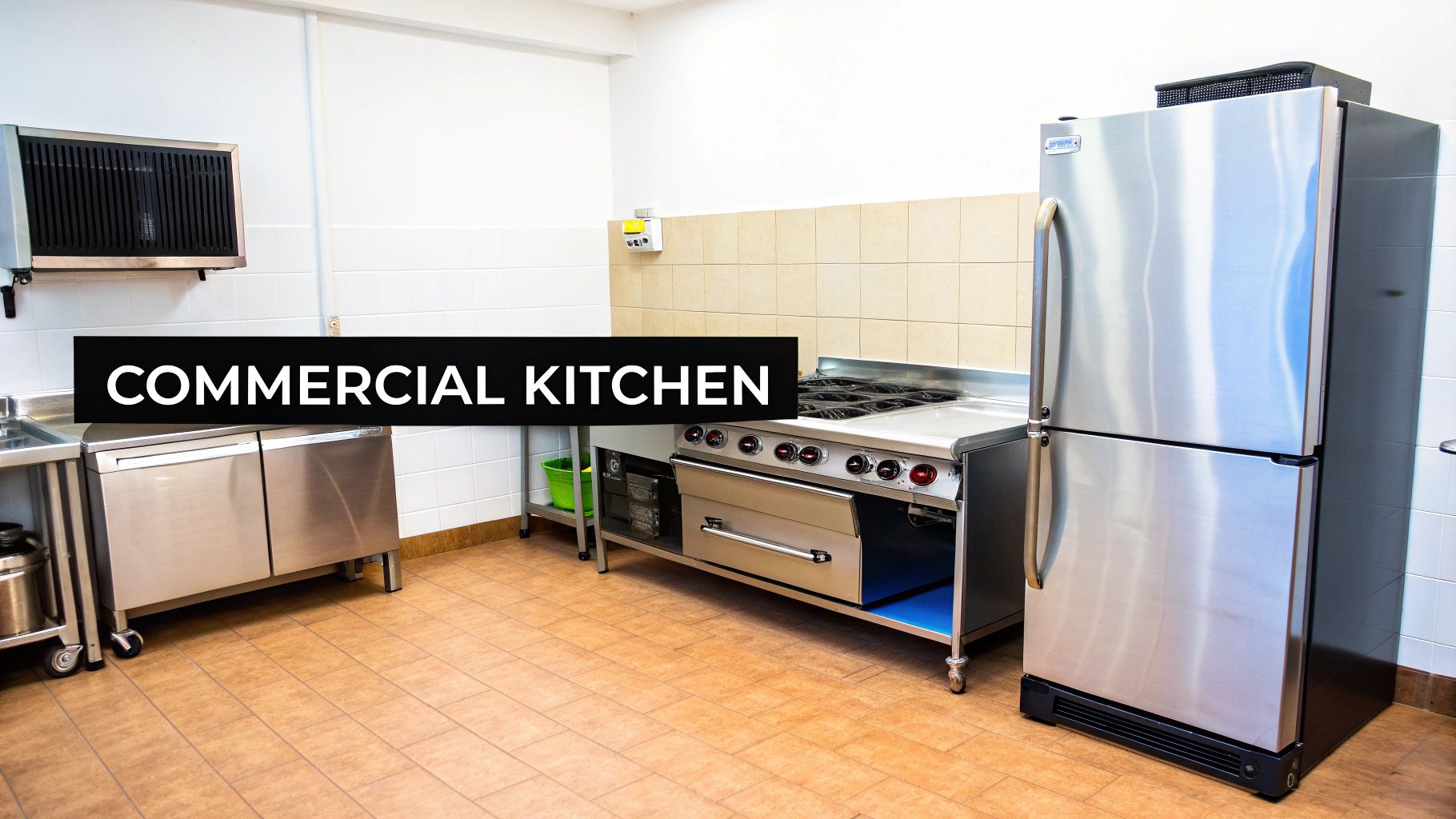
This chunk of your restaurant startup costs breakdown is absolutely critical. The choices you make here will directly affect your daily workflow, food safety, and ultimately, your bottom line. A kitchen with the right gear runs like a well-oiled machine, but one with unreliable equipment is a recipe for service nightmares, spoiled food, and a stressed-out team.
The Big Three: What Your Las Vegas Kitchen Can't Live Without
Here in the scorching Nevada heat, some equipment isn't just nice to have—it's the absolute lifeblood of your restaurant. Sure, you need ranges and fryers, but the real MVPs in any Las Vegas kitchen are the machines that keep everything ice-cold.
- Commercial Refrigerators: Think of these as the workhorses of food preservation. A top-notch commercial refrigerator is your first line of defense, keeping ingredients fresh and safe while meeting the tough standards of the Southern Nevada Health District.
- Commercial Freezers: Las Vegas runs on volume. A dependable commercial freezer lets you lock in the quality of bulk ingredients, from prime rib to specialty desserts. This is key to managing food costs and cutting down on waste.
- Ice Machines: In a city famous for its sizzling afternoons and bustling nightlife, a high-capacity ice machine is completely non-negotiable. If it breaks down, your entire bar program comes to a dead stop—a total disaster for any restaurant, bar, or nightclub.
Putting your money into new, warranty-backed models for these three categories is a smart play. It gives you peace of mind, keeps you compliant, and saves you from the emergency repair bills that always seem to hit operators who try to cut corners. For a full rundown, it helps to use a detailed commercial kitchen equipment checklist so you don’t forget anything important.
Budgeting for Your Kitchen Arsenal
So, what’s this all going to cost? When you dive into the equipment slice of your startup costs, you’ll find it can easily eat up 15-30% of your total budget. For a mid-sized spot in a competitive market like Vegas, that often lands somewhere between $50,000 and $200,000.
The big-ticket items are usually commercial refrigerators, ice makers, prep tables, fryers, and convection ovens. Going with energy-efficient, NSF-compliant units isn't just a good idea; it's essential for passing your inspections.
Your kitchen equipment is an asset, not just an expense. Choosing durable, energy-efficient models may cost more upfront, but they pay you back over time through lower utility bills and fewer breakdowns—a crucial advantage when dealing with Las Vegas's high energy costs.
To give you a clearer picture, here’s a general look at what new equipment might cost you.
Essential Commercial Kitchen Equipment Cost Estimates
This table breaks down the average price ranges for new, essential kitchen equipment. Keep in mind that these are estimates, and costs can vary based on brand, size, and features.
| Equipment Category | Key Items | Estimated Price Range (New) |
|---|---|---|
| Refrigeration & Storage | Walk-In Cooler, Reach-In Refrigerator, Freezer | $15,000 - $50,000+ |
| Cooking Line | Commercial Range, Griddle, Fryers, Charbroiler | $10,000 - $45,000 |
| Preparation | Prep Tables, Mixer, Slicer, Food Processor | $5,000 - $20,000 |
| Warewashing | 3-Compartment Sink, Dishwasher, Glasswasher | $4,000 - $25,000 |
| Ventilation & Safety | Commercial Hood, Fire Suppression System | $8,000 - $30,000 |
These numbers show just how quickly the investment can add up, making smart sourcing and financing crucial parts of your plan.
Smart Sourcing for a Competitive Edge
How you get your equipment is just as important as what you get. In a fast-paced city like Las Vegas, you can’t afford to wait around for weeks on end. Finding a supplier that offers fast, free shipping can get your kitchen up and running way ahead of schedule, saving you from burning through cash while your space sits empty.
More importantly, make sure any equipment you buy is NSF/ETL certified. This isn't just a friendly suggestion—it's a hard requirement for passing your health inspections. These certifications are your guarantee that the gear is built for commercial use, is easy to clean, and is safe for handling food. Investing in compliant, warranty-backed equipment isn't just about following rules; it's about building a reliable, professional, and successful kitchen right from the start.
Managing Your Recurring Operational Costs
Alright, you’ve survived the massive upfront investment, and the doors to your Las Vegas spot are finally open. Now the real game begins. The financial focus flips entirely, moving away from those big, one-time checks to managing the daily, weekly, and monthly expenses that keep the lights on and the food coming out.
Think of it this way: you’ve finished building your dream race car. Now you have to worry about the cost of fuel, tires, and the pit crew for every single lap, day in and day out. This is your operational "burn rate," and in a city that never sleeps, it’s relentless. Getting a handle on these numbers is what separates the winners from the restaurants that quietly disappear.
The Big Three You Can't Ignore
When you look at your monthly budget, three line items will always be staring back at you, demanding the most attention: your food costs, your labor, and your rent. In the industry, we call these "prime costs," and they're the vital signs of your restaurant's financial health.
- Cost of Goods Sold (COGS): This is just a fancy term for what you pay for every ingredient and beverage that goes into a dish or a drink. For most restaurants, you want this number to hover somewhere between 25% and 40% of your food sales. The only way to keep COGS in line is through smart ordering, aggressive waste reduction, and building solid relationships with your suppliers.
- Labor and Payroll: This isn't just hourly wages. It’s a beast that includes management salaries, payroll taxes, and any benefits you offer. Labor costs will likely eat up around 30% of your revenue. In a 24/7 town like Vegas, you have to get creative with scheduling to cover those late-night rushes without letting your labor percentage explode.
- Rent and Utilities: Your lease is a fixed, predictable cost. Your utilities? Anything but. The brutal Nevada heat means your air conditioning, commercial refrigerators, commercial freezers, and ice machines are fighting a constant battle, especially in the summer. That means your electricity bills can swing wildly and hit you hard if you're not prepared.
Here's a critical rule of thumb: If your combined COGS and labor costs start creeping over 60-65% of your total revenue, your restaurant is in the danger zone. You have to watch this number like a hawk.
The Other Monthly Bills That Add Up
Beyond the big three, a whole bunch of other recurring costs need to be factored into your monthly budget. It’s easy to overlook these, but they can silently drain your profits if you don’t account for them.
Marketing and Tech Subscriptions
In a city with this many dining options, you can’t just stop marketing after your grand opening. You need a consistent budget set aside for things like social media ads, local foodie collaborations, and promotions to keep your name out there.
And don't forget your technology. That slick Point of Sale (POS) system, reservation platform, and accounting software all have monthly subscription fees. They’re essential for running an efficient operation, but the costs add up fast.
- Monthly Marketing: Plan on spending 3-6% of your sales to keep customers coming in the door.
- Software Fees: This can run you anywhere from $300 to $1,500+ a month, depending on how many tools you're using.
Insurance, Maintenance, and the "Everything Else" Fund
Finally, you have the costs that act as your business's safety net. Insurance is non-negotiable; it protects you from liability, property damage, and a thousand other things that can go wrong. Regular equipment maintenance is another one—paying for a service call on your oven is way cheaper than having it die in the middle of a packed Saturday night dinner service.
You also have to budget for all the little things: linen services, cleaning supplies, pest control, and those pesky credit card processing fees that skim 2-3% off every single transaction. These smaller expenses might seem minor, but they are a constant, steady drain on your cash flow. Forecasting every single one of these items is the only way to get a true picture of what it really costs to run a profitable restaurant in the Las Vegas pressure cooker.
Funding Your Restaurant and Saving on Costs
Turning your dream restaurant into a brick-and-mortar reality really boils down to one thing: getting the funding right. In a place as electric and competitive as Las Vegas, you need a rock-solid financial game plan before you even think about your grand opening. This is the moment you switch from being a chef to an entrepreneur, making the kind of smart money moves that will keep your doors open for years to come.
There's no single "right" way to get funded. The path you take will define your restaurant's financial health, so it’s critical to weigh your options. From old-school bank loans with their notoriously strict requirements to newer, more flexible solutions, each one has its own quirks.
Exploring Your Financing Avenues
For most first-time restaurateurs, traditional bank loans and Small Business Administration (SBA) loans are the first things that come to mind. SBA loans are especially popular because the government guarantees a portion of the loan, which can get you better terms and a lower down payment—sometimes as little as 10%. The trade-off? Both options usually involve a mountain of paperwork and a waiting game for approval.
In a market that moves as fast as Las Vegas, time is money. Getting bogged down in a lengthy loan process can mean losing out on that perfect location or blowing your opening timeline. That’s why it’s worth looking into faster, more specialized financing options.
This is where alternative funding can be a game-changer. Grants, for instance, are basically free money you don't have to pay back, which can be a massive help with those initial costs. Resources like OpenGrants are a great place to start your search, and their guide on Startup Grants: Your Complete Guide to Winning Free Money is a fantastic primer. Then there’s another powerful tool for tackling the big-ticket items: equipment financing.
The Strategic Edge of Equipment Financing
Take a look at any restaurant startup costs breakdown, and you'll see kitchen equipment is one of the biggest line items. That's especially true here in Vegas, where you need high-performance gear to keep up. The workhorses of your kitchen—powerful commercial refrigerators, dependable commercial freezers, and high-volume ice machines—add up to a huge upfront expense.
Instead of burning through your startup cash to buy them outright, equipment financing lets you get top-of-the-line, brand-new gear for a manageable monthly payment. This keeps your cash free for the things that keep you running day-to-day, like payroll, marketing, and inventory. You can learn more about how restaurant equipment financing works and see if it's a good fit for you.
Going this route has some serious advantages:
- Preserves Capital: Keep your cash for operating expenses, not tied up in metal.
- Access to Better Equipment: Get the reliable, efficient models you really want, without compromising.
- Tax Advantages: Those lease payments can often be written off as a business expense.
Smart Strategies to Lower Your Startup Costs
Getting the money is one thing; spending it wisely is another. Every dollar you can shave off your initial budget is a dollar you can reinvest in growing the business. Here are a few practical ways to cut costs without cutting corners.
- Design a Lean Menu: A tight, focused menu means less inventory to manage, less food waste, and fewer pieces of specialized equipment cluttering your kitchen.
- Lease Non-Critical Items: While you want to own your core money-making equipment (like your ovens and refrigerators), consider leasing things like dishwashers or linen services to keep initial costs down.
- Negotiate with Suppliers: Don't just go with the first quote. Build relationships with a few different vendors to make sure you're getting the best possible prices on everything from produce to cleaning supplies.
- Buy New, Energy-Efficient Equipment: It’s tempting to buy used gear to save a buck, but new, warranty-backed equipment almost always saves you more in the long run. You'll spend less on repairs and have lower utility bills—a huge deal in the sweltering Las Vegas heat.
Comparing Startup Costs for Different Restaurant Types
It’s no secret that not all restaurants are created equal, and neither are their startup budgets. A high-end steakhouse with panoramic views of the Las Vegas Strip is playing in a completely different financial league than a nimble food truck serving loyal locals out in Summerlin. Getting this distinction right is the first step to building a realistic restaurant startup costs breakdown that actually fits your vision.
The Las Vegas culinary scene gives us perfect real-world examples of how different concepts demand wildly different investments. A full-service dining destination requires a massive outlay for a prime location, an elaborate interior, and a large, highly-trained staff. On the flip side, a fast-casual spot is all about efficiency, operating with a smaller footprint and a simpler model that keeps those initial costs way down.
Full-Service Dining vs Fast-Casual Concepts
For a full-service restaurant trying to compete in a market like Las Vegas, you could easily be looking at an initial investment of $750,000 to over $2 million. What drives that number so high? Think high-rent locations, extensive build-outs, and a deep roster of staff. The kitchen alone needs a huge array of equipment to pull off a complex menu—we're talking multiple cooking stations, tons of refrigeration, and sophisticated bar setups.
In contrast, a fast-casual restaurant might get off the ground for $200,000 to $500,000. These concepts thrive on smaller real estate, simplified menus, and counter service, which dramatically cuts down on labor costs. Their equipment needs are much more focused; they might spend big on a specific type of oven or grill but need far less gear overall than their full-service cousins.
Food Trucks vs Bars and Nightclubs
The food truck model is definitely the most accessible entry point, with startup costs often falling between $50,000 and $150,000. The biggest ticket item is the truck itself, plus the compact, specialized equipment you can fit inside. While the day-to-day costs are lower, your success really hinges on locking down permits for profitable locations and building a killer social media following to bring people to you.
Then you have the other end of the spectrum: a Las Vegas bar or nightclub. This is a seriously capital-intensive venture, often running from $500,000 to well over $3 million. The budget gets eaten up by high-end interior design, advanced sound and lighting systems, massive liquor licensing fees, and extensive security.
The biggest equipment difference is refrigeration, hands down. A nightclub’s entire operation depends on a massive lineup of bar refrigeration—multiple high-capacity ice machines, back bar coolers, and kegerators are non-negotiable for serving drinks at lightning speed. That investment alone dwarfs the refrigeration needs of any other restaurant type.
To cover these initial costs, owners usually explore a few common funding paths, as shown below.
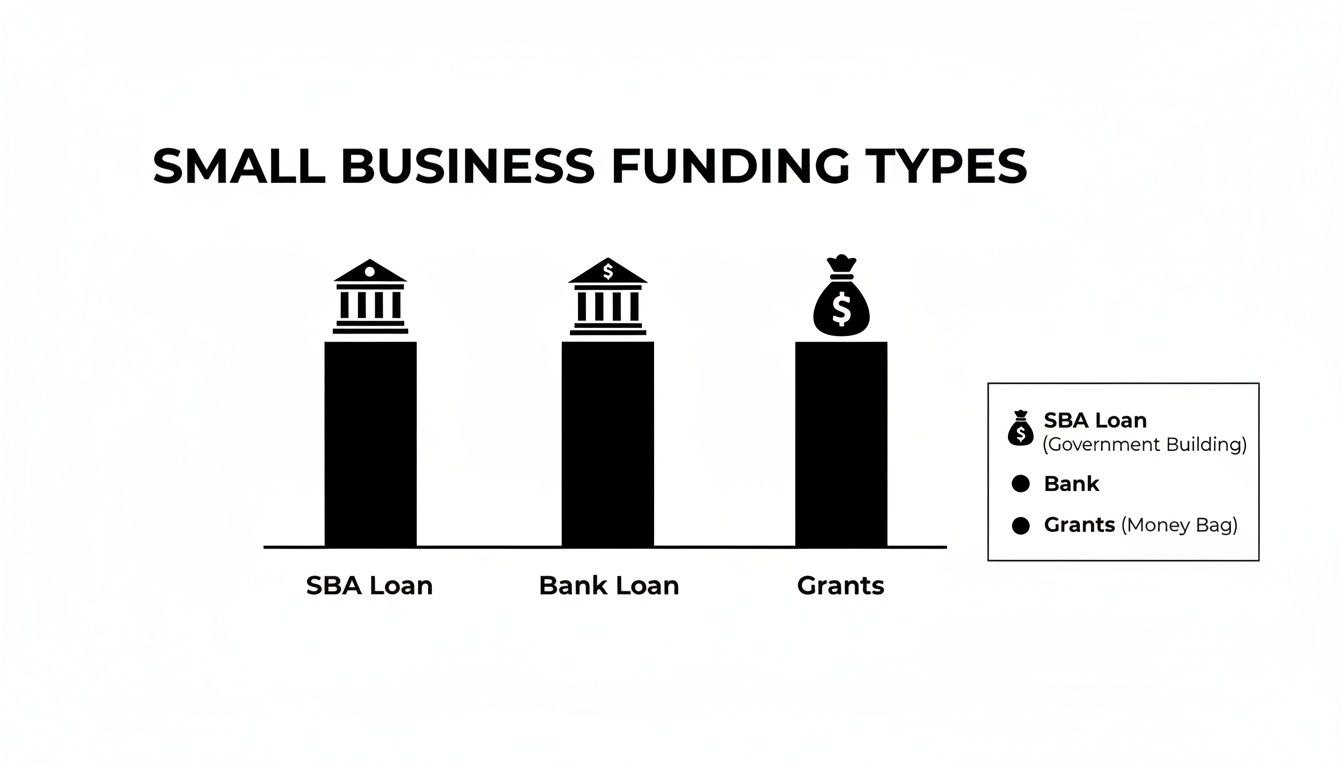
This just goes to show that while traditional loans are a popular route, options like grants can provide that crucial, non-repayable capital every new restaurateur dreams of. The concept you choose will really steer which funding sources make the most sense for your budget.
Got Questions About Vegas Restaurant Startup Costs? Let's Clear Them Up.
Trying to wrap your head around the finances of opening a restaurant in Las Vegas can feel like you're trying to solve a puzzle in the dark. So, let's flip the lights on. Here are some straightforward answers to the big questions that keep new restaurateurs up at night.
How Much Cash Should I Keep on Hand After Opening?
Here's the rule of thumb most veterans swear by: have at least 3 to 6 months of your total operating expenses sitting in the bank. In a market as cutthroat as Las Vegas, you'll sleep a lot better aiming for that six-month cushion. This isn't just "extra" money; it's your survival fund. It pays the staff, covers the rent, keeps the lights on, and buys your inventory while you get your feet under you.
Is It Cheaper to Buy an Existing Restaurant?
It can be, but don't count on it being a magic bullet. Taking over an existing spot can save you a mountain of cash and headaches on construction and permits. The flip side? You might be inheriting someone else's problems—think ancient kitchen equipment, a lease in a dead zone, or a bad reputation you'll have to work twice as hard to fix. Starting fresh gives you total control, but you'll pay for it in both time and money.
A huge piece of this puzzle is the condition of the kitchen. That "great deal" on a turnkey restaurant can quickly become a nightmare if the commercial refrigerator is on its last legs or the ice machine dies mid-shift. Suddenly, you're bleeding money on emergency repairs and spoiled food.
What Are the Biggest Hidden Costs in Las Vegas?
Everyone budgets for rent and food. It’s the Vegas-specific curveballs that really sting. Keep an eye out for these.
- Serious Liquor License Fees: This isn't just a piece of paper. In a city that runs on nightlife, getting the right to pour drinks can be a massive and complicated line item on your budget.
- Pre-Opening Hype: You can't just open your doors and hope for the best. In a city with a million dining options, you need a real marketing budget just to get on people's radar before you even serve your first customer.
- Hefty Utility Deposits: Power companies here know what a commercial kitchen in the desert heat consumes. They often require a big deposit upfront to cover that massive energy draw.
- World-Class Staff Training: The service expectations in Las Vegas are sky-high. You're not just hiring cooks and servers; you're investing heavily in training them to deliver a top-tier hospitality experience from day one.
Ready to build a kitchen that can handle the Vegas heat? Las Vegas Restaurant Equipment has the new, warranty-backed gear you need to get started right. We offer unbeatable prices and fast, free shipping on commercial refrigerators, freezers, ice machines, and everything else on your list. Check out the full lineup and get the tools you need to win at https://lasvegasrestaurantequipment.com.