

In the high-stakes culinary world of Las Vegas, a health inspection isn't just a routine check; it's a critical moment that can define a restaurant's reputation and its bottom line. From bustling casino buffets on the Strip to trendy bistros in Downtown Summerlin, every food and beverage establishment, catering to a diverse array of palates, must meet the rigorous standards set by the Southern Nevada Health District. Passing with an 'A' grade requires more than just a last-minute scramble; it demands a systematic, proactive approach built into your daily operations.
This comprehensive restaurant health inspection checklist is your definitive guide to achieving and maintaining compliance in the vibrant Las Vegas environment. We will break down the eight most critical areas inspectors scrutinize, providing actionable steps and real-world examples to ensure your team is always prepared. This isn't just about avoiding violations; it's about embedding a culture of food safety that protects your guests and your business.
Whether you're outfitting a new kitchen with essential restaurant equipment like commercial refrigerators, commercial freezers, and high-capacity ice machines capable of handling the desert heat, or refining procedures in an established venue, this guide provides the structure you need. We'll cover everything from precise temperature control and cross-contamination prevention to pest control and proper documentation. Think of this as your playbook for turning inspection anxiety into confident readiness, ensuring you're always ready to impress both inspectors and the millions of diners who flock to Las Vegas.
1. Food Storage Temperature Control & Refrigeration Equipment
Controlling temperature is arguably the most critical component of any restaurant health inspection checklist. Inspectors will meticulously verify that all refrigeration units, including commercial refrigerators and freezers, maintain proper temperatures to prevent the growth of harmful bacteria. For cold storage, the FDA Food Code mandates a temperature of 41°F or below, while freezers must be kept at 0°F or below.
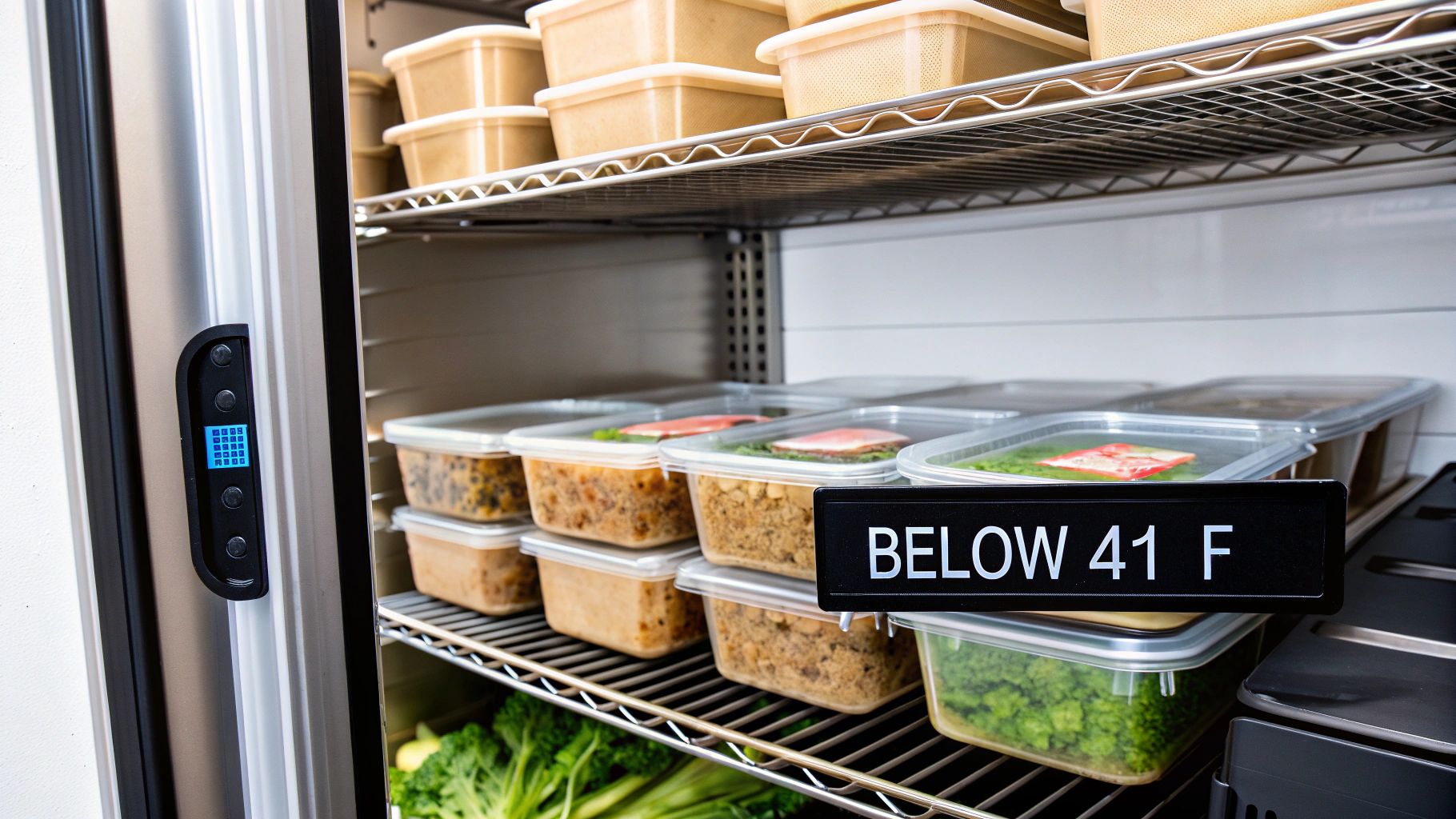
In Las Vegas, where extreme desert heat puts constant strain on cooling systems, this is a non-negotiable priority. A failing unit can quickly lead to thousands of dollars in spoiled inventory and a failed inspection. To prevent bacterial growth and ensure food safety, implementing effective refrigerating practices is paramount, ensuring all food items are stored at their correct temperatures. High-volume operations, like those found in Strip hotels and casinos, rely on NSF/ETL certified restaurant equipment, such as Atosa stainless steel refrigerators, high-capacity reach-in commercial freezers, and industrial ice machines to manage 24/7 service demands and comply with Southern Nevada Health District regulations.
Key Actions for Compliance
- Thermometer Placement: Install a calibrated thermometer in the warmest part of each unit, typically near the door. Do not rely solely on the built-in digital display.
- Regular Logging: Schedule and document temperature checks at least twice daily. This log is the first thing an inspector will ask to see as proof of due diligence.
- Equipment Maintenance: Keep condenser coils and fans free of dust and grease. In the dusty Las Vegas climate, this should be a monthly task. Ensure at least six inches of clearance around units for proper airflow.
- Smart Storage: Use shallow pans and avoid overcrowding shelves to promote even air circulation. This helps prevent dangerous hot spots inside the unit.
Maintaining a robust temperature control program is fundamental. For large-scale operations requiring extensive cold storage, understanding the specifications of different units is crucial. You can explore a variety of commercial walk-in refrigerators to see how these larger systems support high-volume food service needs.
2. Food Handler Hygiene & Personal Cleanliness Standards
Beyond restaurant equipment and storage, the human element is a central focus of any restaurant health inspection checklist. Inspectors will rigorously evaluate employee hygiene, from proper handwashing techniques to the maintenance of clean uniforms. In a high-traffic environment like Las Vegas, where a single food handler can serve hundreds of guests in a shift, enforcing strict personal cleanliness standards is non-negotiable for preventing cross-contamination and the spread of foodborne illnesses.
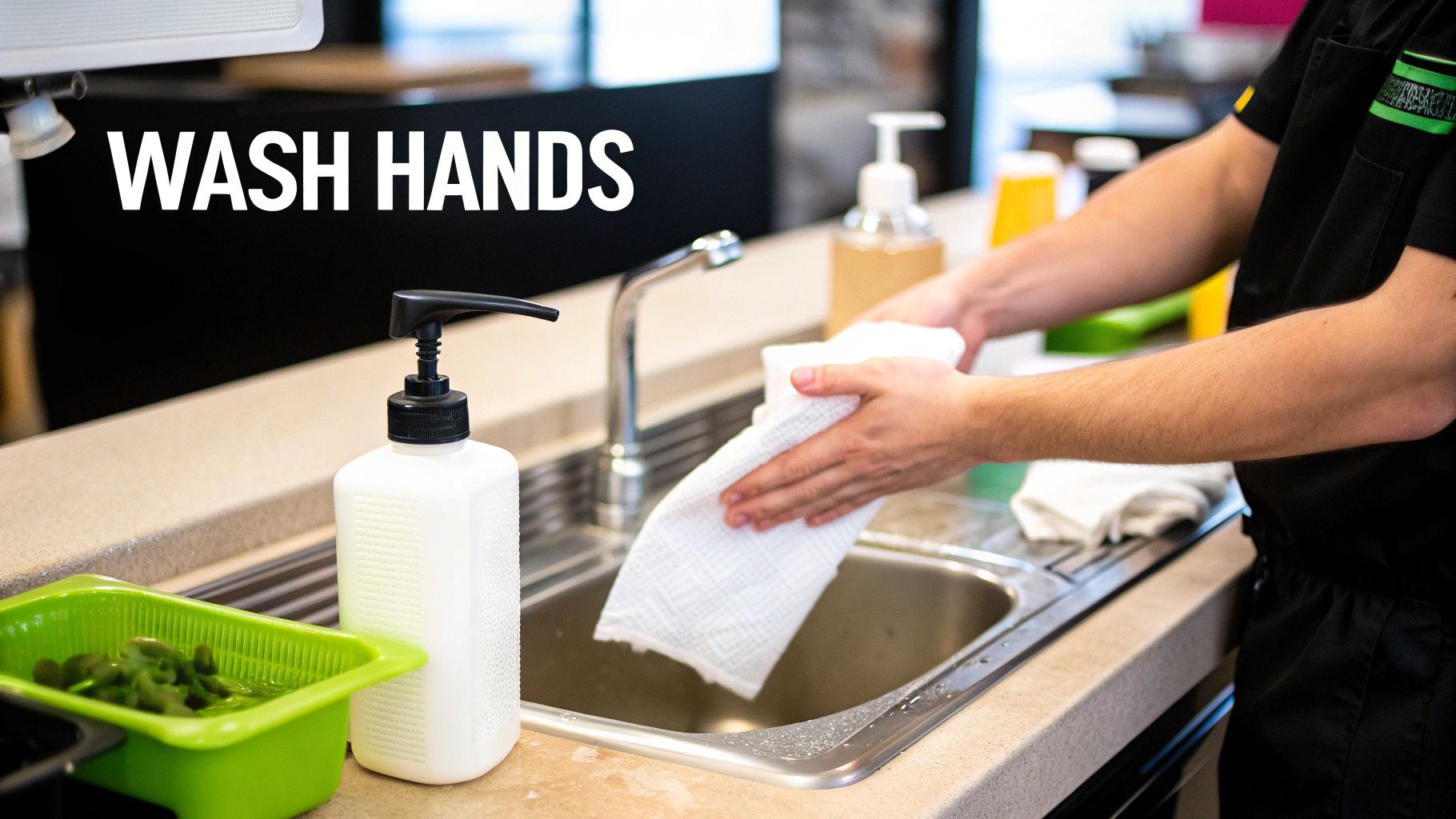
From large-scale casino buffets to intimate Fremont Street eateries, the Southern Nevada Health District mandates clear protocols. This includes staff wearing proper hair restraints (hats or hairnets), keeping fingernails trimmed, and removing jewelry from hands and arms. Essential for ensuring every team member meets these standards, robust food handler certificate training provides the foundational knowledge needed for safe food preparation and service. Many successful Strip hotel kitchens conduct daily pre-shift hygiene briefings, a practice that reinforces these critical behaviors and sets a professional tone for service.
Key Actions for Compliance
- Accessible Handwashing Stations: Ensure every handwashing sink is fully stocked with soap, paper towels, and a trash receptacle. Sinks must be dedicated solely to handwashing and cannot be obstructed.
- Documented Training: Conduct regular, documented training sessions on hygiene protocols. A sign-in sheet is crucial evidence for an inspector that you are proactive about compliance. Require all new hires to obtain their Food Handler card within 30 days.
- Enforce Uniform and Hair Restraint Policies: Managers should perform a quick uniform check at the start of every shift. Clean aprons, proper footwear, and effective hair restraints are easy-to-spot indicators of a well-run kitchen.
- Implement a Strict Illness Policy: Staff must understand the requirement to report symptoms like vomiting, diarrhea, or fever to management immediately. A clear 'no work when sick' policy, with defined procedures, is a critical control point.
Properly equipped and accessible handwashing stations are the cornerstone of a strong hygiene program. For a detailed guide on setting up compliant stations, you can learn more about the specific requirements for a hand washing station to ensure your facility is prepared for inspection.
3. Cross-Contamination Prevention & Proper Food Separation
A key focus of any restaurant health inspection checklist is the prevention of cross-contamination, the process by which harmful bacteria are transferred from one food item to another. Inspectors will rigorously check that physical and procedural barriers are in place, particularly between raw proteins and ready-to-eat (RTE) foods. This means ensuring that raw meat, poultry, and seafood are stored and handled completely separately from items like salads, cooked foods, and fresh produce.
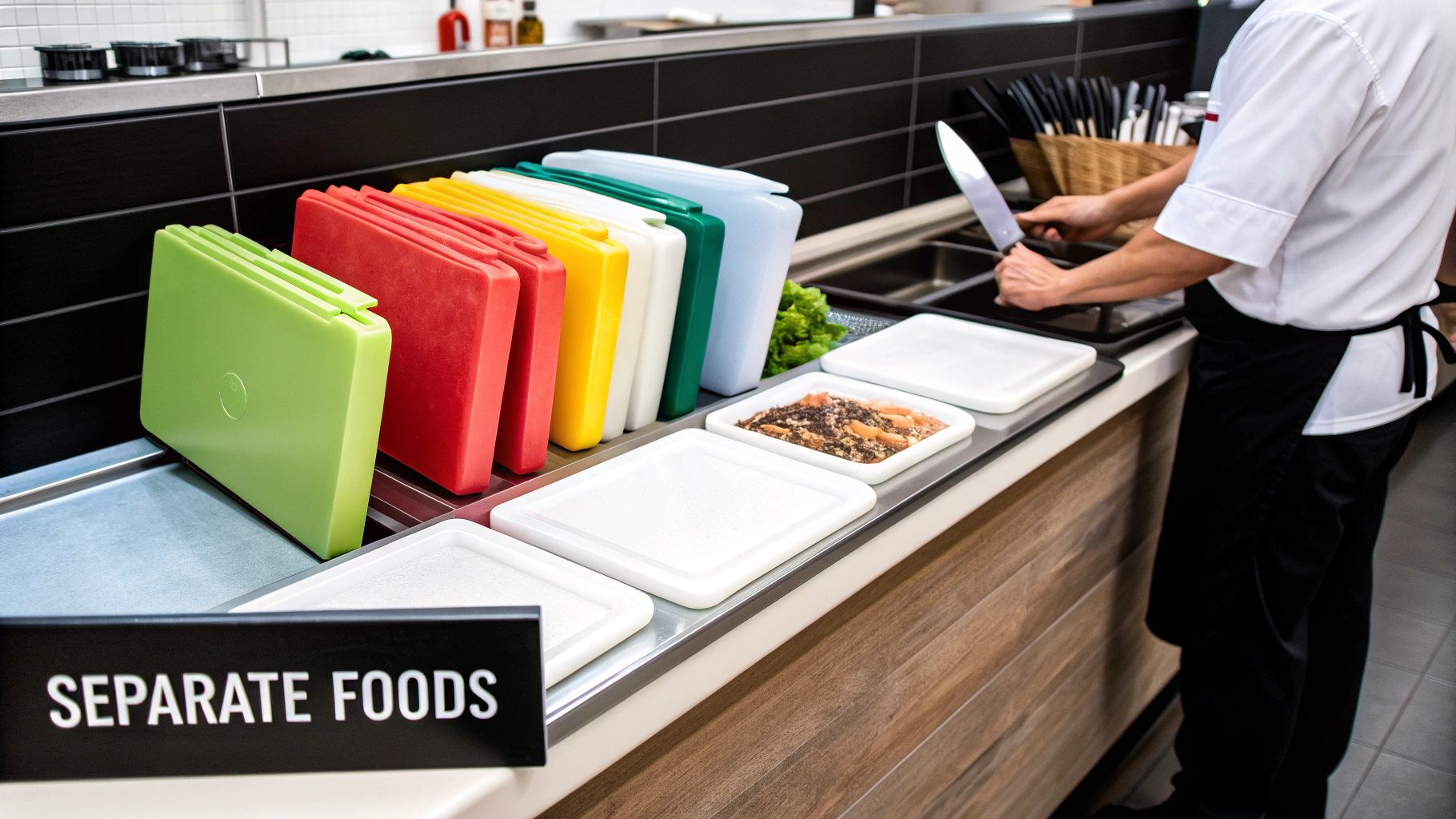
In the high-speed kitchens of Las Vegas, from bustling Strip resort catering departments to fast-paced food trucks, maintaining this separation is a critical food safety protocol. A Southern Nevada Health District inspector will look for clearly defined systems, such as designated prep areas for different food types and proper storage hierarchy inside commercial refrigerators. Using restaurant equipment like pizza and sandwich prep tables with built-in, separated ingredient compartments is an effective way to physically prevent a violation before it happens.
Key Actions for Compliance
- Implement a Color-Coding System: Designate specific colors for cutting boards, knives, and utensils for different food categories (e.g., red for raw meat, green for produce, yellow for poultry, blue for seafood). Post visual charts to reinforce this non-negotiable rule.
- Proper Refrigerator Storage: Always store raw proteins on the lowest shelves of your commercial refrigerators and walk-in coolers, below any ready-to-eat foods. This prevents raw juices from dripping onto and contaminating other products.
- Dedicated Prep Stations: If space allows, establish separate prep areas for raw and cooked foods. In smaller kitchens, like those in many off-Strip restaurants or food trucks, a strict "clean, sanitize, and then switch" policy between tasks is mandatory.
- Staff Training and Reinforcement: Continuously train staff on the importance of handwashing after handling raw meat and the correct sanitation procedures for surfaces and equipment. During an inspection, having your color-coded board sets clean and readily available demonstrates a commitment to safety.
4. Equipment Cleanliness, Maintenance & Sanitation Standards
Beyond proper temperatures, the physical condition and cleanliness of your restaurant equipment are scrutinized heavily during a health inspection. Inspectors will conduct detailed evaluations of all food-contact and non-food-contact surfaces, checking for buildup of grease, food debris, rust, and grime. This includes the interior and exterior of refrigerators, freezers, prep tables, fryers, griddles, and ice machines. Clean, well-maintained equipment is a cornerstone of any effective restaurant health inspection checklist.
In Las Vegas, the hot and dusty desert environment accelerates the accumulation of debris on restaurant equipment, particularly on condenser coils and air intakes. Furthermore, Nevada’s notoriously hard water leads to rapid scale buildup in ice machines and dishwashers if not regularly descaled. For high-volume establishments on the Strip, using NSF-certified equipment like Atosa commercial freezers with stainless steel construction is not just about performance; it’s about choosing surfaces that are durable and easier to sanitize. Proper cleaning is also essential for specialized gear; you can find more information by exploring the latest in restaurant dishwashing equipment.
Key Actions for Compliance
- Implement Cleaning Schedules: Create and post detailed daily, weekly, and monthly cleaning checklists for each piece of equipment. Assign specific tasks to staff members to ensure accountability.
- Maintain Detailed Logs: Keep a dedicated binder with all equipment maintenance logs, service records, and warranty information. An inspector will appreciate this level of organization and due diligence.
- Use Appropriate Cleaners: For stainless steel surfaces, use alkaline-based cleaners to combat water spotting and mineral deposits from Las Vegas's hard water, preserving the equipment's condition and cleanability.
- Prioritize Preventive Maintenance: Schedule professional servicing for critical equipment like commercial refrigerators and ice machines before they fail, especially ahead of the brutal Las Vegas summer. A proactive approach prevents costly emergency repairs and inspection violations.
- Focus on 'Hidden' Areas: Train staff to clean underneath, behind, and inside equipment. Gaskets on cooler doors, fryer filter pans, and oven interiors are common problem spots that inspectors check first.
5. Pest Control & Exclusion Measures
A pest-free environment is a non-negotiable standard for food safety, making it a major focus on any restaurant health inspection checklist. Inspectors are trained to spot any evidence of pest activity, including droppings, gnaw marks, or live insects and rodents. They will verify that the facility has a proactive, documented pest control program and that physical barriers are in place to prevent pests from entering in the first place.
In Las Vegas, the unique desert environment creates persistent pressure from pests like rodents, scorpions, and cockroaches seeking food, water, and shelter from the heat. A lapse in vigilance can lead to an immediate shutdown by the Southern Nevada Health District. Successful establishments, from large Strip casinos to local food trucks, integrate comprehensive pest management into their daily operations. This includes maintaining contracts with licensed professionals who specialize in desert pest management and ensuring all staff are trained to identify and report potential issues.
Key Actions for Compliance
- Professional Contracts & Documentation: Maintain an active contract with a licensed pest control company. Keep all service records, reports, and chemical logs in an accessible binder that can be presented to an inspector upon request.
- Seal Entry Points: Meticulously inspect the building's exterior and interior for any gaps or cracks. Seal openings around pipes, vents, and utility lines, as even a dime-sized hole is large enough for a mouse to enter.
- Install Physical Barriers: Ensure all exterior doors are self-closing and equipped with tight-fitting door sweeps. Keep windows and vents screened and in good repair to block flying insects.
- Proper Waste Management: Use trash receptacles with tight-fitting lids and empty them frequently. Keep dumpster areas clean and free of spills or overflow, as this is a primary attractant for pests.
- Sanitary Storage Practices: Store all food products in sealed, food-grade containers at least six inches off the floor and away from walls. This eliminates food sources and makes it easier to spot signs of pest activity during routine checks.
6. Proper Cooling & Reheating of Foods to Safe Temperatures
Beyond cold storage, inspectors rigorously check the entire temperature lifecycle of your food, from cooking to cooling and reheating. This process, often called "passing through the danger zone" (41°F to 135°F), is a critical control point for preventing foodborne illness. Health inspectors will use their own calibrated thermometers to verify that your staff is cooking foods to the correct minimum internal temperatures and following strict cooling protocols.
In Las Vegas, where high-volume banquet and buffet services are the norm, mastering the two-stage cooling process is essential. The Southern Nevada Health District mandates that food must be cooled from 135°F to 70°F within two hours, and then from 70°F to 41°F within an additional four hours. Large hotel kitchens often utilize commercial blast chillers to rapidly and safely cool large batches of soups, sauces, and proteins, ensuring compliance and preserving food quality. Similarly, reheating must bring the food's internal temperature to 165°F for 15 seconds to eliminate any potential bacterial growth.
Key Actions for Compliance
- Temperature Logging: Maintain meticulous and accurate time and temperature logs for all cooked and cooled Time/Temperature Control for Safety (TCS) foods. An inspector will always review these logs.
- Invest in Thermometers: Equip every station with accurate, instant-read food thermometers. Calibrate all thermometers at least weekly using both the ice-point method (32°F) and boiling-point method to ensure precision.
- Proper Cooling Techniques: Utilize shallow pans (no deeper than two inches) to increase surface area and accelerate cooling. For large batches, use an ice bath, ice wands, or a blast chiller, and stir the product frequently to distribute heat.
- Staff Training: Train all kitchen staff on minimum internal cooking temperatures for different foods (e.g., poultry 165°F, ground meat 155°F). Reinforce the importance of measuring temperatures in the thickest part of the food, avoiding bones and the pan.
7. Proper Labeling, Dating & FIFO Inventory Management
An inspector can spot an inventory management failure from across the room. Proper labeling, dating, and a strict First-In, First-Out (FIFO) system are foundational elements of a successful restaurant health inspection checklist. Inspectors will verify that every container of prepared food, opened ingredient, and stored leftover is clearly marked with its contents and preparation or "use-by" date. This system is non-negotiable for preventing the use of expired products and minimizing the risk of foodborne illness.
In Las Vegas, where kitchens in major casinos and resorts manage thousands of individual food components daily, a robust FIFO system is the only way to maintain control. Southern Nevada Health District inspectors look for systematic implementation, not just a few haphazardly placed labels. For example, a catering business might use a color-coded day-of-the-week system (e.g., Monday is blue, Tuesday is green) for quick visual identification, while a high-volume Strip buffet will have all its walk-in refrigerators and freezers organized so that new products are placed behind older ones, ensuring nothing gets lost or forgotten. This discipline not only ensures compliance but also drastically reduces food waste and protects profit margins.
Key Actions for Compliance
- Standardize Label Information: All labels must include the product name, the preparation date, and a clear "use-by" or discard date. Consistency is crucial for kitchen staff to follow the system effectively.
- Implement the FIFO Method: Train all staff to place new inventory behind existing stock. This simple rule ensures that older, yet still safe, products are used first. This applies to dry storage, commercial refrigerators, and walk-in freezers.
- Use Water-Soluble Labels or Tape: Use labels that wash off easily to prevent a sticky buildup of old adhesive, which can harbor bacteria and create a "non-cleanable surface" violation.
- Daily Line Checks: Before each service, a manager should walk the line, checking every prep table and reach-in cooler. Verify that all ingredient containers, like those for pizza toppings or sandwich fillings, are correctly labeled and within their safe-use window.
8. Waste Disposal & Wastewater Management
Effective waste and wastewater management is a cornerstone of a sanitary restaurant environment, and a key focus area on any restaurant health inspection checklist. Inspectors will scrutinize how your establishment handles everything from daily trash to greasy wastewater. This involves checking for adequate, lidded trash receptacles, clean dumpsters, and properly functioning drainage systems, including the critical grease trap or interceptor.
In Las Vegas, where strict municipal water regulations and desert environmental concerns are paramount, this is a non-negotiable. Improper disposal of fats, oils, and grease (FOG) can lead to severe plumbing blockages and hefty fines from the Southern Nevada Health District and local water authorities. High-volume operations, especially those with numerous commercial fryers and griddles like a busy Strip casino kitchen, must have a robust system to prevent FOG from entering the sewer system. This requires a properly sized and professionally maintained grease trap to handle the relentless output.
Key Actions for Compliance
- Document Grease Trap Service: Schedule regular, professional cleanings for your grease trap. High-volume kitchens, especially those specializing in fried foods, may need monthly or even weekly service. Keep all service invoices and records readily available, as inspectors will demand proof of maintenance.
- Proper Trash Receptacles: Ensure all indoor and outdoor trash cans have tight-fitting lids and are emptied frequently to prevent overflow, pests, and odors. Dumpster areas must be kept clean with lids closed to deter vermin.
- Staff Training: Train your team to never pour cooking oil or grease directly down any drain. Use clear, bilingual signage (English/Spanish) above sinks and floor drains to reinforce this critical rule. All grease must be directed into the designated rendering bin or grease trap system.
- Monitor System Performance: Don't wait for a backup or foul odor to act. Visually monitor grease accumulation in your interceptor and keep an eye on drainage speed in your kitchen. Slow drains are an early warning sign that service is needed immediately. Using a Las Vegas-area approved grease disposal contractor ensures compliance with local codes.
8-Point Restaurant Health Inspection Comparison
| Item | Implementation Complexity 🔄 | Resource Requirements ⚡ | Expected Outcomes 📊 | Ideal Use Cases 💡 | Key Advantages ⭐ |
|---|---|---|---|---|---|
| Food Storage Temperature Control & Refrigeration Equipment | High 🔄: installation, calibration, airflow and backup power needs | High ⚡: capital for NSF/ETL units, energy costs, maintenance contracts | High 📊: consistent safe temps, reduced spoilage, inspection compliance | Hotels, high-volume kitchens, desert/heat-exposed locations | Prevents illness; reduces waste; energy-efficient models pass inspections ⭐ |
| Food Handler Hygiene & Personal Cleanliness Standards | Moderate 🔄: policy creation, training, enforcement and monitoring | Low–Medium ⚡: handwashing stations, signage, recurring training time | High 📊: fewer contamination events, better customer confidence | All foodservice operations, especially high-turnover staff environments | Direct reduction of contamination risk; lowers liability and builds reputation ⭐ |
| Cross-Contamination Prevention & Proper Food Separation | Moderate 🔄: workflow redesign, zoning, staff discipline | Medium ⚡: color-coded boards, extra utensils, dedicated storage space | High 📊: decreased pathogen transfer, clearer prep workflows | Multi-station kitchens, pizza/sandwich lines, catering services | Eliminates primary contamination vector; simplifies staff training ⭐ |
| Equipment Cleanliness, Maintenance & Sanitation Standards | Moderate–High 🔄: scheduled cleaning, recordkeeping, periodic deep service | Medium ⚡: cleaning supplies, staff time, professional service costs | High 📊: compliant inspections, longer equipment life, fewer failures | All kitchens, especially dusty/desert environments like Las Vegas | Preserves equipment, improves appearance, prevents emergency repairs ⭐ |
| Pest Control & Exclusion Measures | Moderate 🔄: facility sealing, monitoring, contractor coordination | Medium ⚡: licensed pest contracts, exclusion materials, service records | High 📊: early detection, reduced infestations, contamination prevention | Older buildings, outdoor storage areas, desert rodent/insect-prone sites | Protects food supply and reputation; regulatory compliance ⭐ |
| Proper Cooling & Reheating of Foods to Safe Temperatures | Moderate 🔄: documented procedures, thermometer calibration, staff training | Medium ⚡: calibrated thermometers, ice baths; blast chillers for high volume | High 📊: safe internal temps, reduced bacterial growth, documented compliance | Banquets, casinos, catering, high-batch production kitchens | Ensures pathogen control; enables safe advance prep and holding ⭐ |
| Proper Labeling, Dating & FIFO Inventory Management | Low 🔄: simple routines and shelving discipline | Low ⚡: labels, markers, organizational fixtures | Medium–High 📊: reduced waste, traceability, faster inspections | High-volume prep stations, multi-item kitchens, catering | Reduces waste, simplifies audits, supports recalls ⭐ |
| Waste Disposal & Wastewater Management | Moderate 🔄: grease trap maintenance, drainage compliance, scheduling | Medium–High ⚡: grease service contracts, disposal logistics, space for bins | High 📊: prevents clogs/fines, reduces odors and pest attraction | Fryer-heavy restaurants, hotels, food trucks with onsite disposal | Prevents regulatory fines, plumbing failures, and environmental harm ⭐ |
Building a Culture of Compliance and Quality in Your Kitchen
Navigating the rigorous standards of a health inspection can feel like preparing for a final exam. You’ve studied the material, drilled the processes, and organized your notes. This comprehensive restaurant health inspection checklist serves as your ultimate study guide, breaking down the complex requirements of the Southern Nevada Health District into manageable, actionable steps. We've covered the non-negotiables: precise temperature control, impeccable personal hygiene, robust cross-contamination protocols, and diligent equipment maintenance.
However, the true secret to consistently earning and maintaining that coveted 'A' grade isn't about cramming the night before an inspector arrives. It's about fundamentally changing the way your kitchen operates. The goal is to shift from a mindset of passing an inspection to one of embodying excellence every single day. This transformation occurs when the principles outlined in this guide-from proper food labeling to integrated pest management-become second nature to every member of your team.
From Checklist to Culture: The Daily Commitment to Excellence
The most successful restaurants in Las Vegas, from bustling Strip resort kitchens to beloved local diners in Henderson, don't view health and safety protocols as a burden. They see them as the very foundation of their reputation and success. A checklist is a static tool; a culture is a living, breathing system of shared values and responsibilities.
Think of it this way:
- Food Storage and Temperature Control: This isn't just about logging temperatures. It's about a deep-seated respect for the ingredients and the well-being of your guests, supported by reliable commercial refrigerators and freezers that are up to the task.
- Hygiene and Sanitation: This is more than a handwashing policy. It's a collective commitment to cleanliness that is visible in every corner of your operation, from the line cook to the dishwasher.
- Cross-Contamination Prevention: This goes beyond color-coded cutting boards. It's an ingrained spatial awareness and a systematic workflow that protects every dish you serve.
When your team internalizes these principles, compliance ceases to be a chore and becomes a point of professional pride. The checklist transitions from a list of rules to a reflection of your kitchen's high standards.
The Las Vegas Advantage: The Right Tools for a Demanding Climate
Operating in the unique environment of Southern Nevada presents specific challenges, particularly concerning temperature and equipment strain. The intense desert heat means that your refrigeration and ice production systems work harder than almost anywhere else. This is where strategic investment in essential restaurant equipment becomes a critical component of your compliance strategy.
Key Insight: Your equipment is not just a capital expense; it is your first line of defense in food safety. Investing in high-quality, NSF-certified units is an investment in your A-grade, your reputation, and your bottom line.
Choosing dependable commercial freezers, walk-in coolers, and ice machines designed for high-volume, high-temperature environments is non-negotiable. Equipment that can maintain consistent, safe temperatures even during the busiest dinner rush on a 115-degree day simplifies your team's job and drastically reduces the risk of common temperature-related violations. Reliable restaurant equipment removes the element of chance, allowing your staff to focus on process and quality, confident that their tools will not fail them.
Ultimately, this restaurant health inspection checklist is your roadmap. It provides the structure, the details, and the critical points of focus needed to satisfy any health inspector. But the journey to a consistent A-grade is one of continuous effort, team-wide dedication, and a deep-seated commitment to quality. By fostering a culture where every employee is an agent of food safety, you're not just preparing for an inspection. You are building a resilient, trusted, and thriving Las Vegas culinary establishment.
Ready to fortify your kitchen with equipment that makes compliance easier? At Las Vegas Restaurant Equipment, we provide top-tier, NSF-certified commercial refrigerators, freezers, and ice machines built to meet and exceed local health standards. Explore our inventory at Las Vegas Restaurant Equipment and build a foundation of quality that will have inspectors and customers returning with confidence.