

Knowing how to properly clean a Manitoworoc ice machine isn't just another chore on the maintenance list—it's a core business strategy. The routine is straightforward: you run the machine's automated cleaning cycle with a descaling solution, follow it with a separate sanitizing cycle for food safety, and then toss the first couple of batches of ice. This simple process is absolutely essential for performance, a long machine life, and keeping the health inspector happy.
Why Clean Ice Machines Are Non-Negotiable in Las Vegas
In the vibrant city of Las Vegas, where you'll find a diverse array of restaurants that cater to every palate, a reliable Manitowoc ice machine is the unsung hero of your beverage service. Whether you're running an upscale cocktail lounge on the Strip or a busy downtown diner, the quality of every single drink starts with clean, pure ice. This isn't just about looking good; it's about protecting your bottom line.
The Las Vegas environment throws some unique challenges at our equipment. We've got incredibly hard water that causes scale buildup at a dizzying pace, and high ambient temperatures that put a ton of strain on essential restaurant equipment. This stress isn't limited to your ice machine; your commercial refrigerators and commercial freezers are working overtime just to keep up.
Protecting Your Profit and Reputation
Letting your ice machine go is a costly mistake. Manitowoc's official recommendation is for two deep cleanings a year, but anyone running a kitchen in Vegas knows that our dusty desert air and heavy use demand more frequent attention.
Think about a busy nightclub churning out 500 pounds of ice daily. If you let the limescale from Nevada's hard water build up, you could see your ice production drop by a staggering 30-50%. That inevitably leads to emergency service calls costing $300-$500 a pop and, even worse, crippling downtime right in the middle of a rush.
A pristine ice machine is your first line of defense against costly breakdowns, failed health inspections, and a damaged reputation. In a city built on exceptional experiences, the quality of your ice speaks volumes about your commitment to excellence.
More Than Just Maintenance
For any Las Vegas restaurant, bar, or casino, routine cleaning is an investment in operational excellence. This mindset should extend to all your cooling systems. Keeping your equipment in top shape pays off in more ways than one, which we explore further in our guide to energy-efficient commercial refrigeration.
A clean machine means you'll:
- Pass Clark County health inspections with flying colors, avoiding fines and potential closures.
- Prevent costly emergency repairs that always seem to strike on a packed Friday night.
- Protect the flavor profile of every premium cocktail and soda you serve.
- Maximize ice production and efficiency, ensuring you can keep up with demand even during the peak of summer.
Manitowoc Cleaning Schedule for Las Vegas Operators
The standard manufacturer recommendations are a good starting point, but the reality of a Las Vegas kitchen often requires a more aggressive cleaning schedule. Factors like high heat, dust, and proximity to grease-producing equipment like fryers or yeast from bakeries can accelerate slime and scale buildup.
Here’s a practical guide tailored for our unique environment:
| Component/Task | Standard Environment | High-Contaminant Vegas Kitchen (e.g., near fryers, bakeries) | Why It Matters in Vegas |
|---|---|---|---|
| Full Descale & Sanitize Cycle | Every 6 months | Every 3-4 months | Nevada's hard water creates aggressive mineral scale, reducing efficiency and ice production quickly. |
| Wipe Down Exterior | Weekly | Daily | Desert dust and kitchen grease accumulate fast, looking unprofessional and potentially clogging air intakes. |
| Clean Air Filter | Monthly | Every 2 weeks | A clogged filter from dust and grease restricts airflow, making the compressor work harder and increasing energy bills. |
| Clean Water Filter | Every 6 months | Every 4-6 months | Hard water and sediment can clog filters sooner, impacting ice quality and putting a strain on the machine. |
| Inspect & Clean Bin/Gaskets | Monthly | Weekly | Warm, humid bin environments are prime spots for slime and mold, especially with airborne contaminants from nearby cooking. |
Sticking to a schedule like this, adjusted for your kitchen's specific conditions, will keep your Manitowoc running like a champ, protect your customers, and save you from those expensive middle-of-service repair calls.
Getting Your Cleaning Kit and Safety Gear in Order
Before you even think about hitting that "clean" button on your Manitowoc, you need to get your ducks in a row. A little prep work is your best defense against mistakes and dragging out what should be a straightforward job. In a bustling Las Vegas kitchen, having everything ready to go turns a tedious chore into a smooth, efficient process.
The most important things on your list, without a doubt, are the Manitowoc-approved cleaner and sanitizer.
I’ve seen people try to cut corners here, and it never ends well. Using off-brand chemicals is a gamble you absolutely don't want to take. They can wreck the sensitive internal components, leading to some seriously expensive repairs and—this is the real kicker—potentially voiding your warranty. These two bottles are not interchangeable; they do two completely different, equally critical jobs.
Cleaner vs. Sanitizer: What’s the Difference?
It’s crucial to understand why you need both. Think of them as a one-two punch that gets your machine back into fighting shape.
- Manitowoc Cleaner (Descaler): This stuff is an acidic solution made specifically to dissolve the limescale and mineral gunk that builds up from our notoriously hard Nevada water. This is the product that gets your machine running efficiently again.
- Manitowoc Sanitizer: This solution is all about killing the nasty biological stuff. It wipes out slime, mold, algae, and bacteria that love to grow in the machine’s damp, dark environment. This is what keeps your ice safe for your customers.
Quick pro tip: Always descale first, then sanitize. Scale buildup can literally act as a shield for bacteria. You have to strip away that mineral armor first so the sanitizer can get in there and do its job on all the food-contact surfaces.
Safety First, Always
Working with commercial cleaning chemicals isn't something to take lightly. These are powerful formulas, and keeping your staff safe is non-negotiable. Before you even start the process of how to clean an ice machine Manitowoc, make sure the whole team is locked in on these safety rules.
The first thing you do is cut the power. Always disconnect the ice machine from its power source before you start any manual cleaning of the bin or pulling out parts. Good ventilation is also a must, so make sure there’s plenty of fresh air moving through the area.
Finally, gear up with your Personal Protective Equipment (PPE). This isn't optional, it's essential.
- Safety Goggles: You only get one pair of eyes. Protect them from accidental splashes.
- Gloves: Grab some chemical-resistant gloves to keep this stuff off your skin.
- Designated Buckets: Have two clearly labeled, food-safe buckets ready—one for the cleaner and one for the sanitizer. This is key to preventing cross-contamination.
- Tools: Round up some soft cloths, non-abrasive brushes, and a few fresh microfiber towels. You'll be glad you have them handy.
Running the Manitowoc Cleaning and Descaling Cycle
Okay, you've got your gear and you've taken the right safety precautions. Now it's time for the main event: kicking off the cleaning and descaling cycle. This isn't some back-breaking manual scrub-down. Manitowoc designed a slick automated process that does all the heavy lifting for you. Your job is to get it started and feed it the right cleaning solution to break down that stubborn mineral scale.
For any restaurant here in Las Vegas, dealing with our notoriously hard water is just part of the game. Mastering this cleaning cycle is hands-down the best way to keep your machine running at peak performance. That hard water is packed with calcium and magnesium, which build up inside your machine and basically insulate the evaporator, slowly choking your ice production. Running the clean cycle is how you fight back.
Kicking Off the Automated Clean Cycle
First things first, get all the ice out of the bin. You'll need a clean, food-safe container to store it temporarily, or you can just discard it. If you leave ice in the bin, it will just melt and dilute the cleaning solution, making the whole process less effective.
Once the bin is completely empty, you’re ready to tell the machine what to do.
On the Manitowoc control panel, find the "Clean" button and press it down for about three seconds. You'll hear a distinct click as the machine drains the water trough, getting itself prepped for the cleaning solution. This is a key step—the machine is now officially in cleaning mode and won't make any ice until this whole cycle is finished.
This simple process flow gives you a quick visual on the essential tools for the job, making sure you're ready for both the cleaning and sanitizing steps while keeping safety front and center.
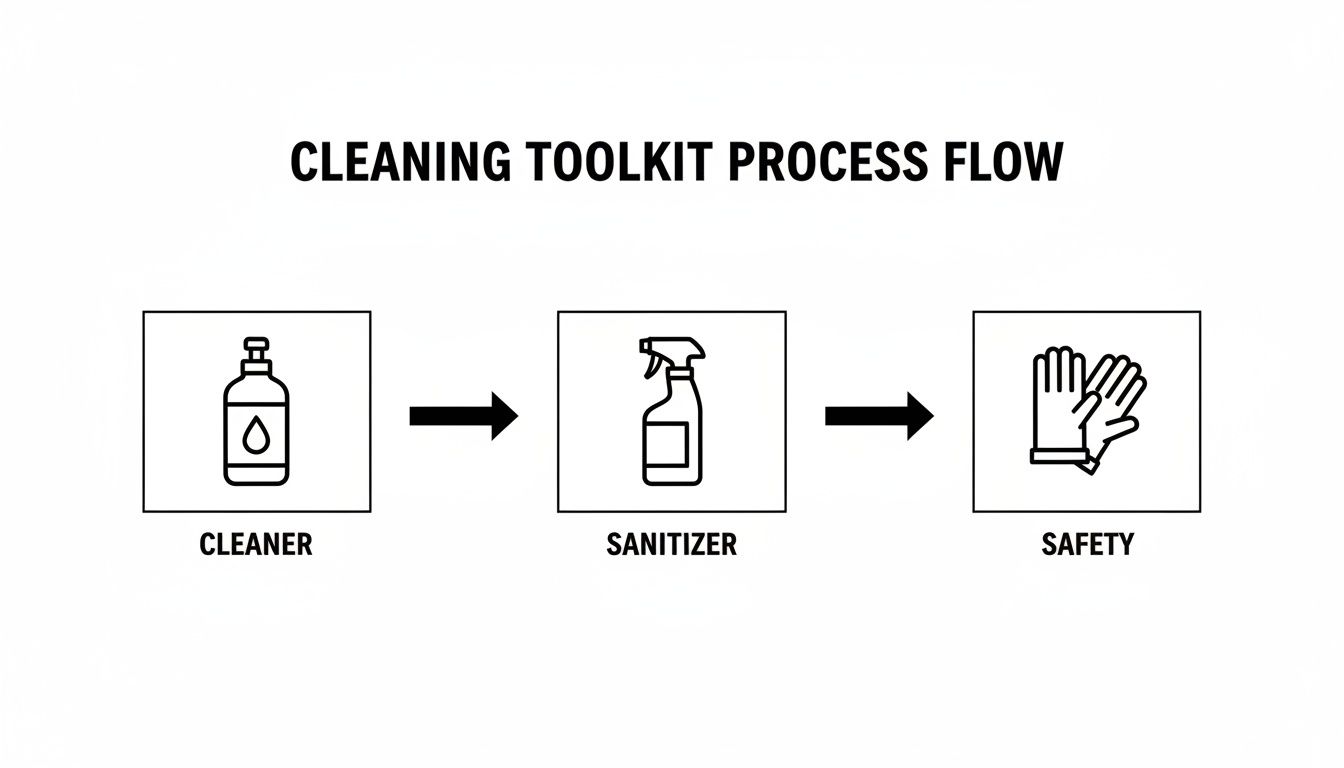
As you can see, the cleaner, sanitizer, and your safety gear are three separate but equally critical parts of a successful—and safe—cleaning routine.
Adding the Descaling Solution
After the machine has fully drained, the control panel will light up, prompting you to add the chemical cleaner. That's your cue.
Grab your bottle of Manitowoc Ice Machine Cleaner and check the label for the right amount for your specific model. Don't eyeball it; precision is key here. Pour the solution directly into the water trough, just like the user manual shows.
With the cleaner added, just give the "Clean" button another quick press. The machine handles everything from here on out.
The entire automated cleaning cycle usually takes about 20-25 minutes. During this time, the machine is busy circulating the acidic descaling solution through every single component that touches water. It's dissolving months of limescale buildup from the evaporator, water pump, and distribution tube.
You’ll hear the pump kick on and start circulating the mixture. That's the sound of your machine getting its efficiency back. Just let it do its thing. For a busy Las Vegas kitchen, this bit of downtime is a tiny price to pay to avoid a catastrophic drop in ice production during a slammed weekend dinner service.
What’s Happening Inside the Machine?
While it might look quiet on the outside, a powerful chemical reaction is happening inside. The descaler is literally breaking down and dissolving the mineral deposits that have been killing your machine's performance. Think of it like clearing plaque from an artery—you're opening up the pathways so everything can flow freely again.
This isn't just about making more ice; it’s about extending the life of your very expensive equipment.
Once the cleaning phase wraps up, the machine will automatically start a series of flushes. It dumps the used cleaning solution and then rinses the whole system with fresh water over and over again. This is a critical final step to make sure not a trace of cleaner is left behind before you move on to sanitizing. The machine knows exactly how many rinse cycles it needs, so don't interrupt it. The control panel will let you know when it’s all done, usually when the "Clean" light shuts off.
Mastering the Sanitization Process for Food Safety
You’ve finished the descaling cycle, and your Manitowoc is now free from that performance-killing mineral buildup. Great. But you're only halfway there.
Now comes the part that’s absolutely critical for the health of your customers and the reputation of your entire Las Vegas establishment: sanitizing. This phase isn't about machine efficiency—it's about food safety, plain and simple. While the descaler tackles minerals, the sanitizer is what eliminates the invisible threats. We're talking about harmful bacteria, algae, slime, and mold that absolutely love to grow in dark, moist environments like the inside of your ice machine.
Skipping this step is like washing your hands without soap. You just don't do it.
Why Sanitizing is Non-Negotiable
Picture any high-volume spot in Vegas. The constant demand means your ice machine is a workhorse, running day and night. That creates the perfect breeding ground for biofilm and other nasty contaminants if you're not on top of it.
This is even more vital for certain types of businesses we see all the time, especially those working with yeast. If you run a local brewery or a pizzeria just off the Strip, airborne yeast particles can easily find their way into your machine. When that happens, slime growth can explode at a shocking rate. This isn't just a health hazard; it creates foul-smelling, bad-tasting ice that can instantly ruin a premium cocktail or a fountain soda.
Passing a Clark County health inspection absolutely hinges on proper sanitization. Inspectors know exactly where to look for slime and mold, and a dirty machine is one of the fastest ways to get a violation that can seriously damage your business's standing.
Activating the Sanitizing Cycle
The good news is, kicking off the sanitizing cycle is a lot like the cleaning process you just finished. Once the machine has run its post-cleaning rinse cycles, the control panel will let you know it’s ready for the next step.
Your Manitowoc will likely prompt you to add chemicals again. This time, you’ll grab the Manitowoc-approved sanitizer.
Just like you did with the cleaner, check the bottle for the exact amount your specific model requires and pour it right into the water trough. With the solution in, just press the "Clean" button again to get the sanitizing cycle started. The machine will take over, circulating the sanitizer through all the same food-contact zones to make sure every internal surface gets treated.
Expanding Beyond the Automated Cycle
The automated cycle is a fantastic feature for hitting the internal components, but it can't get to everything. There are several high-touch areas you have to clean and sanitize by hand to ensure total food safety. Honestly, these are often the first places a health inspector will check.
Make sure you hit these key areas:
- The Ice Bin: Grab a food-safe brush and your sanitizing solution to scrub the entire inside of the bin. Pay extra attention to the corners and seams—that’s where slime loves to hide.
- The Ice Scoop: This is a huge source of cross-contamination. The scoop needs to be thoroughly washed, rinsed, and soaked in the sanitizer solution daily.
- The Door and Gaskets: Don't forget to wipe down the inside and outside of the door, along with the rubber gaskets around it. These spots collect dust, grease, and everything else floating around a busy kitchen.
The stakes are incredibly high for Nevada restaurateurs. Data from Manitowoc's own field studies shows why you can't afford a dirty machine: proper biannual descaling can boost daily production by 25%, while a thoroughly sanitized machine reduces contamination risks by a massive 90%. This is crucial for passing Clark County health checks, which flagged 15% more violations in 2022 for unclean ice equipment.
In high-contaminant spots like breweries or pizzerias—common among clients of Las Vegas Restaurant Equipment—the sanitizing-rinse frequency often jumps to monthly, as yeast-laden air can accelerate slime growth by 5x compared to standard environments. You can learn more about these Manitowoc specifications and findings to see the data for yourself.
Finalizing the Reassembly and Starting the First Batch
After running the cleaning and sanitizing cycles, your Manitowoc is sparkling on the inside, but the job isn't quite finished. For any Las Vegas restaurant where every detail matters, these last few steps are what separate a good job from a great one. This is where you put everything back together, making sure it's done right to avoid leaks, errors, or other headaches down the road.
You're in the home stretch, but don't get sloppy now. Proper reassembly is just as critical as the cleaning itself. A misaligned water curtain or a distribution tube that isn't seated perfectly can throw the whole system out of whack. You could end up with wonky, half-formed ice or, even worse, a shutdown error right in the middle of a dinner rush.
Putting It All Back Together
Take all the parts you cleaned by hand—the water curtain, distribution tube, and ice thickness probe—and carefully put them back where they belong. Your model’s manual is your best friend here.
Everything should click or slide back into place smoothly. If you have to force it, something’s wrong. Stop, take a breath, and double-check the alignment. A secure fit is a must; it guarantees a proper seal and correct water flow, which is the secret to those crystal-clear cubes your customers love. Getting this right is a key part of learning how to clean an ice machine Manitowoc like a pro.
Kicking Off the First Ice Cycle
With all the components back in their rightful place, it's time to close up the machine and get the power back on.
To bring your unit back to life, just press the power button to switch it from the "Off/Clean" mode to its normal ice-making cycle. The machine will handle the rest, automatically starting its sequence, filling the water trough, and getting ready for the first harvest.
The next step is non-negotiable for customer safety: You must throw away the first one or two full batches of ice. This is an iron-clad rule. It ensures that any lingering traces of cleaning or sanitizing solution are completely flushed out of the system.
Serving ice from that first batch is a rookie move that can ruin a drink and, more importantly, put your guests at risk. In the high-stakes world of Las Vegas hospitality, from fine dining to packed casino bars, only the purest ice will do. This final flush protects your patrons and your reputation. It also ensures your other essential restaurant equipment, like commercial refrigerators and commercial freezers, gets a steady supply of perfect ice to keep things running smoothly.
Smart Maintenance Routines to Extend Your Machine's Life
Once you've finished a deep cleaning cycle, you might think you're done for a while. But the real secret to keeping your Manitowoc ice machine running for years is all about building simple, consistent habits. Especially in a place like Las Vegas, where heat and dust are a constant battle, a few minutes of preventative care each week can be the difference between a smoothly running machine and a major breakdown.
Think of it this way: you wouldn't ignore your walk-in cooler or commercial freezer, right? The same logic applies here. A little bit of ongoing attention is the best defense you have for your valuable equipment against the tough realities of a busy Las Vegas kitchen.
Building Your Weekly Checklist
It's actually pretty easy to work a quick maintenance check into your team's weekly schedule. These tasks take just a few minutes but make a world of difference in the machine's performance and lifespan.
- Wipe Down the Exterior: Grab a soft cloth and a mild cleaner and give all the exterior panels a good wipe. This isn't just about looking good; it's about removing the film of dust and grease that can slowly choke off the air intakes.
- Check the Air Filter: Your machine has to breathe. In a scorching hot kitchen, a clogged air filter is a recipe for disaster, forcing the compressor to work way harder than it should. Slide it out, clean it up according to the manual, and just make sure air can flow freely.
- Inspect Condenser Coils: While you're at it, take a quick peek at the condenser coils. If they look like they're wearing a fuzzy grey blanket of dust, it's time to clean them. That dust acts like an insulator, trapping heat and tanking your machine's efficiency.
A clean air filter is probably one of the most overlooked but high-impact maintenance tasks out there. In the intense Las Vegas heat, a machine with restricted airflow can see its energy consumption spike by as much as 10-15% because it's struggling so hard to stay cool.
Why Small Habits Matter
These little routines aren't just busywork—they have a direct impact on your bottom line. A machine with clean filters and coils doesn't have to fight to cool down, which means lower energy bills and way less wear and tear on critical parts like the compressor. For a more in-depth look at best practices, our guide on commercial ice maker maintenance has even more valuable tips.
To make sure your whole operation is running as cleanly and efficiently as your ice machine, think about using a detailed commercial kitchen cleaning checklist. These small but powerful habits will keep your Manitowoc ice machine—and your entire kitchen—running like a top, helping you avoid those dreaded emergency service calls that always seem to hit on a packed Saturday night.
Common Questions About Manitowoc Cleaning in Las Vegas
Even with the best instructions, you're bound to have questions. This is especially true for restaurant owners here in Las Vegas, where our unique environment puts serious stress on equipment like commercial refrigerators and ice machines. Between the hard water and the high-heat kitchens, we hear a lot of the same questions about keeping these machines running right.
Here are the answers to the questions that pop up most often when our local clients ask how to clean a Manitowoc ice machine.
How Often Should I Really Clean My Machine Here?
Manitowoc's general advice is twice a year, but let's be real—that’s not going to cut it in Las Vegas. Our notoriously hard water builds up scale at an incredible pace, and the desert dust always finds a way in.
For most restaurants and bars in the valley, a complete cleaning and descaling cycle every three to four months is the sweet spot. This keeps your machine efficient and your ice tasting clean.
However, some kitchens need to be even more aggressive with their cleaning schedule.
- High-Contaminant Kitchens: If your ice machine is anywhere near a fryer line or in a brewery, you've got airborne grease and yeast to contend with. These contaminants are a magnet for slime.
- Monthly Sanitization: In these types of environments, you absolutely should sanitize the food zone every month. You don't have to do a full descale, but a quick sanitize will keep the gunk from taking over.
Can I Use Any Cleaner or Sanitizer?
I get it, it’s tempting to just grab whatever cleaner is on the shelf. But you absolutely should only use Manitowoc-approved cleaner and sanitizer.
Using the wrong chemicals is a huge gamble. They can eat away at sensitive internal parts, leading to some pretty expensive repair bills down the road. Even worse, it could void your machine’s warranty. Don't risk a multi-thousand dollar piece of equipment to save a few bucks on cleaner. Stick with the stuff made for the job.
It's crucial to understand that cleaning and sanitizing are two different jobs. Cleaning (or descaling) is all about removing the mineral deposits. Sanitizing is what kills the nasty stuff like bacteria and mold. You have to clean first to get rid of the scale that bacteria love to hide under, then you can sanitize to make the machine truly food-safe.
My Ice Production Dropped. Is Cleaning the Fix?
Yes, almost always. A sudden drop in how much ice your machine is making is the number one red flag that it's way overdue for a cleaning. Limescale from our local water builds up on the evaporator, basically acting like a layer of insulation. This makes it much harder for the machine to freeze water, so production just tanks.
Running a full cleaning and descaling cycle just like we laid out will bring its production capacity right back to where it should be.
If you've done a thorough cleaning and the problem is still there, you might have something else going on. Before you panic and call a tech, check out our comprehensive Manitowoc ice machine troubleshooting guide. It can help you figure out the next steps.
At Las Vegas Restaurant Equipment, we know what it takes to survive in a busy Nevada kitchen. We provide the high-quality, reliable commercial freezers, refrigerators, and ice machines that can handle the heat. Whether you're in Henderson or right on the Strip, we deliver the tools you need for success. Browse our full inventory and get equipped today at https://lasvegasrestaurantequipment.com.