

Your ice machine isn't just another piece of equipment—it's the workhorse of your entire beverage program. In the vibrant city of Las Vegas, where a diverse array of restaurants cater to every palate, success hinges on reliable equipment. Keeping essential gear like commercial refrigerators, commercial freezers, and ice machines in prime condition isn't just about preventing a breakdown; it's a core strategy for ensuring you can always serve your customers, protect your bottom line, and stay on the right side of the health inspector.
Think of regular maintenance as cheap insurance against those middle-of-a-rush disasters. It's a simple loop: routine cleaning, sanitizing, and a quick inspection. Do this, and your machine will crank out clean, clear ice efficiently for years to come.
Why Ice Machine Upkeep Is Non-Negotiable in Las Vegas
Here in the Las Vegas heat, a working ice machine is the lifeblood of any bar or restaurant. From the big resorts on the Strip to the local spots on Fremont, the demand for ice never stops. A broken-down machine isn't a small problem—it's a direct hit to your revenue and your reputation. That's why proactive maintenance isn't a chore; it's a smart business decision.
The Vegas environment is brutal on these machines. The high ambient temperatures make the condenser and compressor work overtime, leading to more wear and tear. On top of that, we have Southern Nevada's notoriously hard water, which is packed with minerals that love to build up and cause problems inside your unit.
The Real Costs of Neglect
Let a commercial ice machine or refrigerator go without proper upkeep, and you're just asking for trouble. Mineral scale builds up on the internal parts, acting like an insulator. This forces the machine to run longer and harder just to make the same amount of ice. Your energy bills will spike, and you'll burn out critical components much faster than you should.
A 2023 industry report pointed out that high maintenance and operating costs are a huge headache for businesses because they demand time, specialized supplies, and staff who know what they're doing. Putting these tasks off just adds to your total cost of ownership down the road.
For a Las Vegas restaurant, a failed ice machine during a dinner rush can mean losing hundreds of dollars in drink sales and, even worse, losing customers who won't return after a bad experience.
Protecting Your Business Beyond the Machine
Good maintenance isn't just about keeping the machine alive. It's a public health issue. A dirty machine is a perfect breeding ground for slime, mold, and nasty bacteria that can get into your ice and get your customers sick. In a city that runs on amazing guest experiences, one bad drink can do serious, lasting damage to your brand.
Ultimately, a well-maintained ice maker is a win on every front:
- Consistent Ice Production: You'll always have enough ice to meet customer demand, even on the busiest nights.
- Improved Safety and Sanitation: Serve clean, clear, and safe ice that keeps you compliant with health codes.
- Reduced Energy Consumption: A clean, efficient machine uses way less power. Check out our guide on energy-efficient commercial refrigeration to see how much you can save.
- Fewer Emergency Breakdowns: You can avoid those crippling emergency repair bills and the downtime that always seems to hit at the worst possible moment.
Building Your Realistic Maintenance Schedule
Let's be real—generic checklists printed off the internet just don't cut it in a high-volume Las Vegas kitchen or bar. A maintenance plan that actually works can't be some afterthought tacked onto a busy shift. It has to be part of your crew's daily rhythm.
The secret isn't adding more work; it's about breaking down one overwhelming annual job into small, manageable tasks. By weaving these quick checks into daily, weekly, and monthly routines, you stop tiny issues from snowballing into the kind of catastrophic failure that kills a Saturday night rush.
This approach is all about consistency. When the tasks are simple and scheduled, they actually get done. This is a framework built for the reality of a Vegas operation—scannable, actionable, and ready for your kitchen manager to put into play today.
Daily Checks: The Five-Minute Walk-Around
This daily once-over should be faster than making a pot of coffee. We're not doing a deep dive here. This is just a quick health check to spot any obvious red flags before they turn into real problems. The goal is to make it a natural habit for your opening or closing staff.
- Visual Ice Quality Check: First, just look at the ice. Is it crystal clear, or is it getting cloudy and white? Cloudy ice is one of the earliest signs of hard water scale starting to build up inside.
- Bin and Scoop Inspection: Where's the scoop? Make sure it's in its proper holder, not buried in the ice where it can easily introduce bacteria. A quick peek inside the bin, especially in the corners, can reveal any early signs of slime or mold.
- Listen for Odd Noises: As you walk past, just use your ears. Does the machine sound normal with its usual hum and the clatter of dropping ice? Or are you hearing a new grinding, squealing, or rattling? Strange sounds are your machine's way of telling you it's under stress.
- Exterior Wipe-Down: Grab a clean, damp cloth and wipe down the outside of the machine. Pay attention to the door handle and control panel. This simple step keeps grease and dust from building up and eventually clogging the air intakes.
This daily walk-around is your first line of defense. It gets your staff in the habit of paying attention and helps you catch problems when they're still small and easy to fix.
Weekly Tasks: The Ten-Minute Refresh
Set aside just 10 minutes once a week for tasks that are a bit more involved. These steps are all about sanitation and making sure your machine has the clean water and airflow it needs to run efficiently.
This is also a great time to get your team in a broader maintenance mindset. While you're at it, have them check the door seals on your commercial walk-in refrigerators—it keeps everyone thinking proactively about all your equipment.
- Sanitize Key Touchpoints: Give the ice bin door, handle, and especially the ice scoop a thorough cleaning with a food-safe sanitizer. These are the surfaces that get touched constantly.
- Inspect the Water Line: Take a quick look at the water line running to the machine. Are there any obvious kinks, drips, or signs of wear and tear? Make sure the connection is tight.
- Check Air Filters and Vents: If your ice maker is air-cooled, you have to check the air filter. A Las Vegas kitchen is full of airborne dust and grease that will choke a condenser in no time, forcing the machine to overheat. If that filter looks dirty, clean or replace it.
These weekly steps directly fight the two biggest reasons for a service call: contamination and overheating.
Monthly and Semi-Annual Deep Dives
This is where the real preventative magic happens. Your daily and weekly checks keep things running smoothly, but the monthly and semi-annual routines are about hitting the reset button and getting the machine back to peak performance.
In Southern Nevada, a full cleaning and descaling cycle isn't optional. Our hard water means mineral scale builds up incredibly fast, choking water lines and coating evaporator plates, which absolutely kills ice production.
Monthly Deep Clean: Once a month, you need to schedule a full cleaning cycle. This means emptying the bin, shutting down the machine, and using a nickel-safe ice machine cleaner to scrub down all the internal components as directed by your manual. This gets rid of the slime and scale before they get a serious foothold.
Semi-Annual Preventative Maintenance: Every six months, it's time for the works. This includes everything from the monthly clean, but you'll also run a full descaling cycle with an approved chemical solution. This is also the perfect time to pull the machine away from the wall, give the condenser coils a deep cleaning, check that all electrical connections are tight, and make sure all the sensors are working right. This is the service that truly extends the life of your machine and saves you from those brutal, middle-of-service breakdowns.
Here is a simple schedule you can adapt for your own kitchen. Post it near the machine so it stays top of mind for your whole team.
Actionable Commercial Ice Maker Maintenance Checklist
| Task | Frequency | Why It's Critical for Vegas Operations |
|---|---|---|
| Check Ice Quality & Bin | Daily | Early detection of hard water scale (a major Vegas issue) and sanitation problems. |
| Listen for Unusual Noises | Daily | Catches mechanical stress before it leads to a component failure during a rush. |
| Wipe Down Exterior | Daily | Prevents grease and dust buildup that can clog critical air vents and cause overheating. |
| Sanitize Scoop & Bin Door | Weekly | A simple food safety step that prevents cross-contamination in a busy environment. |
| Inspect Water Line | Weekly | Ensures a steady water supply and catches small leaks before they cause water damage. |
| Clean Air Filter/Vents | Weekly | Absolutely essential in dusty, greasy kitchens to prevent overheating and compressor failure. |
| Full Internal Cleaning Cycle | Monthly | Removes biofilm and slime before they affect ice taste and clog internal components. |
| Full Descaling Cycle | Semi-Annually | Combats the severe hard water scale common in Las Vegas, restoring production efficiency. |
| Deep Clean Condenser Coils | Semi-Annually | Maximizes heat exchange, reduces energy consumption, and extends the life of the compressor. |
| Check Electrical & Sensors | Semi-Annually | A professional check that prevents unexpected shutdowns from loose connections or faulty sensors. |
Following a consistent schedule like this one turns maintenance from a reaction to a problem into a proactive strategy. It's the best way to protect your investment and ensure you always have clean, clear ice ready for your customers.
A Practical Walkthrough of Deep Cleaning and Sanitizing
Alright, you've got your schedule set. Now it's time to get your hands dirty with the most critical task on your list: a full-blown deep clean and sanitization. This isn't just a quick wipe-down. It's the absolute cornerstone of proper commercial ice maker maintenance, directly affecting your ice quality, the machine's efficiency, and most importantly, public health.
We’re talking about a methodical process that ensures every single component touching water or ice is free from scale, slime, and bacteria. For any busy restaurant here in Las Vegas, where clean ice is a non-stop demand, getting this right is everything. It's what prevents those embarrassing health department shutdowns and the expensive emergency repairs that can absolutely cripple a busy service.
Let’s walk through this process step-by-step, so your staff can tackle the job with confidence.
Prepping the Machine for a Deep Clean
Before you even think about grabbing a brush, let's talk safety. This machine uses both electricity and water, so taking a moment to prepare the unit and the area around it isn't optional—it's essential.
First, empty and discard all the ice. Get every last cube out of that storage bin. This ice has been sitting in the machine's current environment, so it’s considered contaminated. Never, ever serve it.
Next, power down the unit. Use the machine's own control switch, but don't stop there. Go the extra mile and find its circuit breaker in your panel and flip it off. This simple step prevents anyone from accidentally firing it up while you’re working inside.
Finally, shut off the water supply. Find the valve connected to the ice machine's intake line and turn it completely off. The last thing you need is more water flowing into the system while you're trying to clean it.
Taking Apart Key Components for a Proper Scrub
Most modern commercial ice machines are actually designed with cleaning in mind. You'll find that key parts can often be removed without needing any tools. Your manufacturer's manual is your best friend here, but generally, you'll be looking to pull out the same basic components.
- Water Curtain: This is the plastic plate that swings aside when ice drops into the bin. It should lift right off its hinges.
- Ice Thickness Probe: A small metal sensor that tells the machine when the ice sheet is ready to harvest.
- Water Distribution Tube: This tube sits up top, over the evaporator plate, and has little holes that sprinkle water evenly. It usually just slides or snaps right out.
- Baffles or Dividers: Pull out any removable plates you see inside the ice-making zone or the bin itself.
Once you have these parts out, get them over to a three-compartment sink for a thorough scrubbing.
Pro Tip: Use a designated soft-bristle brush for these parts. Stay far away from wire brushes or abrasive pads. That kind of harsh scrubbing creates tiny scratches on the plastic, which ironically gives bacteria and slime the perfect little crevices to hide and grow in later.
Choosing the Right Chemicals Is Critical
This is where a lot of businesses make a huge, costly mistake. You can't just grab any old cleaner or sanitizer off the shelf. That evaporator plate—the metal grid where the ice actually forms—is often nickel-plated. Using the wrong chemical can strip that plating right off, causing irreversible damage and a massive repair bill.
- Cleaner: You need a nickel-safe ice machine cleaner. No exceptions. This stuff is specifically formulated to break down mineral scale and slime without eating away at the sensitive metal components.
- Sanitizer: After cleaning, you follow up with a food-grade sanitizer. This is what kills any leftover bacteria, mold, or other microscopic nasties.
Follow the manufacturer's instructions on the bottle to the letter, especially when it comes to dilution ratios and how long to let the chemicals sit. Using too much chemical can be just as damaging as using the wrong kind. After cleaning the parts you removed, you'll tackle the machine's interior, following the cleaning cycle instructions in your manual.
And when it’s time to upgrade or replace your unit, starting with the right equipment for our tough Las Vegas water is key. Exploring a collection of reliable commercial ice machines in Las Vegas will set you up for success from day one.
The final step is just as important: rinsing. Rinse every component and the inside of the machine with clean water until there is absolutely no trace of chemical residue or smell left behind. Any leftover cleaner will contaminate your next batch of ice. Once everything is back together, you can turn the power and water back on and kick off a fresh ice-making cycle.
Winning the Battle Against Las Vegas Hard Water
Here in Southern Nevada, your commercial ice maker is up against a tough, relentless enemy every single day: the water. Las Vegas is known for its incredibly hard water, which is just loaded with minerals like calcium and magnesium. It’s perfectly fine to drink, but for your equipment? It’s the number one cause of premature failure we see in this city.
As water does its thing and evaporates inside your machine, it leaves those minerals behind. Bit by bit, they build up into a crusty, chalky layer we call limescale. This isn't just ugly; it's a silent killer for your ice machine's guts.
This next visual breaks down the core cleaning process, which is your first line of defense against both scale and the slimy stuff we call biofilm.
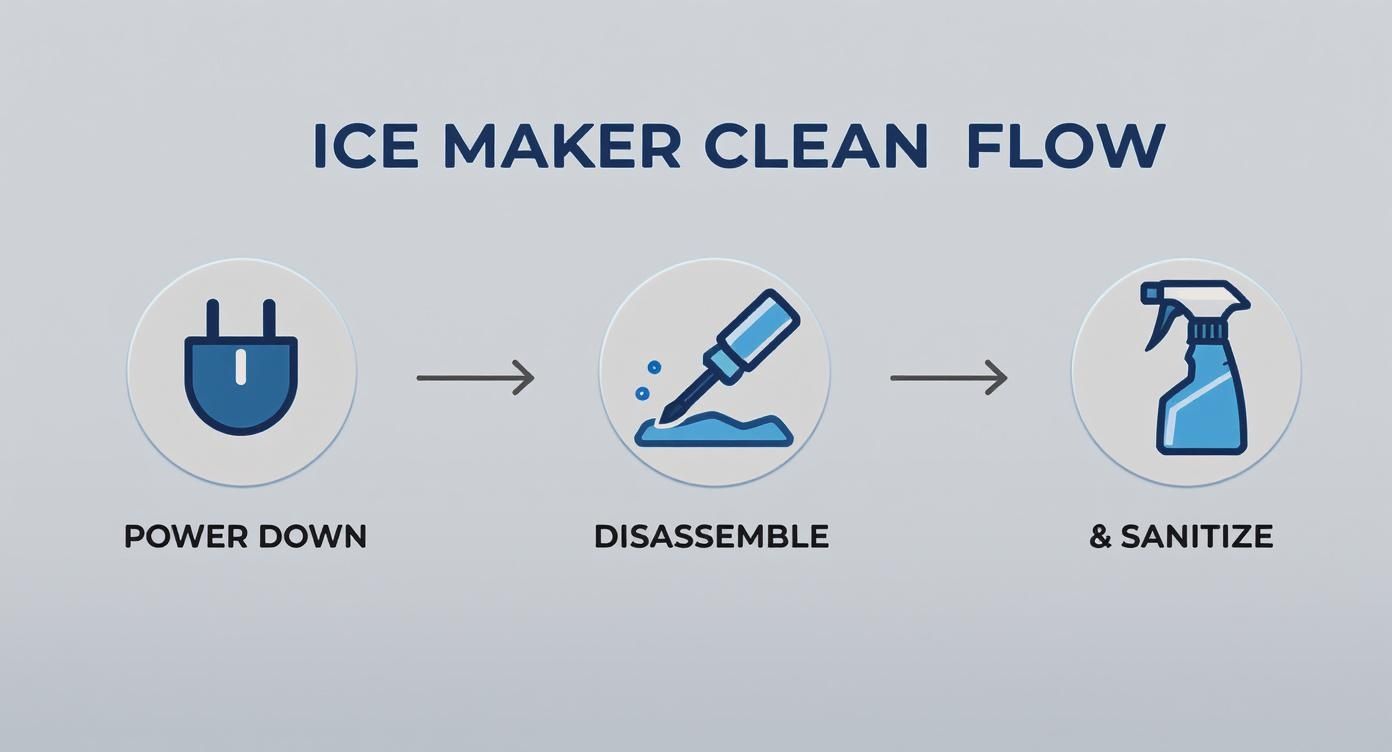
As you can see, a proper cleaning job always starts with safety (unplug it!) and takes a bit of hands-on work (disassembly) before you even think about grabbing the chemicals.
Why Limescale Is So Destructive
Limescale doesn't just hang around—it actively sabotages your machine. It'll clog up the tiny holes in the water distribution tube, which means you get uneven water flow across the evaporator plate. The result? Weirdly shaped, small, or "hollow" ice cubes that dramatically slash your harvest.
Worse yet, scale is a fantastic insulator. When it coats that metal evaporator plate, it forces your refrigeration system to work way, way harder to freeze the water. Your machine runs longer, your power bill skyrockets, and you’re putting a ton of strain on the compressor—by far the most expensive part to replace.
I’ve seen it a hundred times: limescale buildup jams up water inlet valves, forcing them to stick open or shut. This can trigger anything from a simple "low water" error to a full-blown internal flood that wrecks other parts and leaves a massive mess to clean up.
The Descaling Process: A Crucial Task
With our water quality, descaling isn't optional. It's a non-negotiable part of your commercial ice maker maintenance routine. The process is pretty straightforward: you circulate a special, acidic descaling solution through the machine’s water system, which dissolves and flushes out all that mineral crud.
It is absolutely critical that you only use a nickel-safe descaler that's been approved by your machine's manufacturer. Grabbing the wrong chemical can permanently damage the nickel plating on the evaporator plate, a costly mistake that can easily run into thousands for a repair.
You’re dealing with potent stuff, so safety first.
- Always wear protective gloves and safety glasses. This stuff can irritate your skin and eyes.
- Make sure the area has good airflow. Turn on the kitchen's exhaust hood or prop open a door. The fumes can be pretty strong.
- Follow the mixing instructions to the letter. Using a stronger mix won't make it work better; it will only increase the risk of damaging your machine.
Once you’ve run the descaling cycle according to the manual, you have to follow it up with a thorough rinse and a full sanitizing cycle. This gets rid of any leftover chemical residue before you start serving that ice again.
Water Filtration: Your Best Defense
While descaling is how you treat the problem, a good water filtration system is how you prevent it. For any restaurant in Las Vegas, a high-quality water filter isn't a luxury—it's a necessity. A proper system catches a huge chunk of those minerals before they ever get inside your ice machine.
Putting the right filter on your machine pays for itself over and over.
- Extends Equipment Lifespan: By slowing down scale buildup, you take a ton of stress off the compressor, pumps, and valves.
- Reduces Maintenance Frequency: You'll find you don't need to run a full descaling cycle nearly as often. That saves you time, labor, and the cost of chemicals.
- Improves Ice Quality: Filters also pull out sediment and chlorine. This gives you clearer, harder, and better-tasting ice that won’t mess with the flavor of your drinks.
At the end of the day, winning the fight against Vegas hard water takes a two-pronged attack. Regular, proper descaling gets rid of the scale that will inevitably show up, while a great filtration system makes sure it builds up as slowly as possible.
Solving Common Problems Before You Call for Repair
Nothing kills the mood in a busy Las Vegas kitchen faster than an ice machine that's decided to quit. Before you pick up the phone for a frantic, and likely expensive, emergency service call, just take a breath. You'd be surprised how often the most common ice maker problems are things you can diagnose and fix yourself in just a few minutes.
Knowing how to troubleshoot these little hiccups can save you a ton of downtime and a hefty repair bill. The whole point of solid commercial ice maker maintenance isn't just about cleaning; it’s about getting to know your machine and what it needs to run smoothly. Let's walk through some of the most frequent headaches you'll run into.
The Machine Won't Turn On or Just Shut Itself Off
This one always feels like the biggest panic, but it's often the easiest fix. Before you assume the worst, just run through this quick mental checklist.
- Is It Plugged In? Seriously. It sounds basic, but cords get bumped loose during a deep clean or a busy service. Make sure it's pushed firmly into the wall.
- Check the Breaker. Head over to your electrical panel. Did the breaker for the ice machine trip? A quick flip back to the "On" position might be all it takes to get you back in business.
- Look at the Control Panel. Most modern machines have a toggle switch right on the front. It's easy for someone to accidentally switch it to "Off" or leave it in the "Clean" cycle.
- Any Error Codes? If your machine has a digital display, see if it's flashing an error code. Your user manual will tell you what it means—it could be something simple like a full ice bin or a clogged filter that needs changing.
Ice Production Is Slow, or the Cubes Look Awful
When your machine can't keep up with demand, or it's spitting out slushy, small, or hollow cubes, that's a massive red flag. Something is getting in the way of the freezing process. In a hot, busy Las Vegas spot, this usually points to an issue with airflow or water.
Start with the most likely offenders. First, pop off the front panel and look at the air filter and condenser coils. If they're caked in grease and dust, the machine can't breathe properly. It'll overheat, and your ice production will plummet. A quick but thorough cleaning can often bring it right back to life.
Next, check your water. Is the main water valve opened all the way? Look at the water line behind the machine—are there any kinks or bends restricting the flow? If you have a water filter (and in Las Vegas, you absolutely should), a clogged filter cartridge is one of the most common reasons for slow production.
A machine that’s struggling to make ice is working way too hard. When the internal components get gunked up with hard water scale or the filter is clogged, the machine has to run twice as long to do the same job. That puts an incredible strain on expensive parts like the compressor.
The Machine Is Making Weird Noises
You know the normal sounds of your ice maker—the gentle hum of the compressor, the click of the water valve, and that satisfying crash when a sheet of ice drops. When you start hearing new, ugly sounds like grinding, squealing, or loud rattling, it's time to investigate.
- Grinding or Squealing: These noises are bad news. They often point to a failing motor or a bad bearing. This is a more serious problem that’s definitely a job for a professional technician.
- Loud Rattling: This could be as simple as a loose side panel that just needs to be tightened down. It can also happen if the machine isn't sitting perfectly level on the floor.
- The Fan Is Screaming: If the condenser fan sounds like it’s about to take off, that’s another tell-tale sign that the condenser coils are dirty and desperately need a deep cleaning.
Knowing When to Throw in the Towel and Call a Pro
While you can solve a lot of these problems yourself, it’s just as important to know when you're out of your depth. If you've run through all the basic checks and the machine is still on the fritz, or if you see signs of a major failure, it’s time to call for service.
Newer technology is also helping kitchens stay ahead of these problems. Many businesses are now using machines with Internet of Things (IoT) technology that allows for remote monitoring. These systems can send real-time alerts for things like needed filter changes or signs of component wear, helping you fix problems before they cause a shutdown. This predictive approach is getting more popular across North America as operators look for ways to cut down on unexpected downtime and costly repairs. You can find more insights about the growing ice maker market and its technological advancements if you're curious about where the industry is headed.
Your Ice Machine Maintenance Questions Answered
We get it. Running a busy restaurant, bar, or hotel kitchen in Las Vegas is a grind, and there’s no time for guesswork. When it comes to the workhorses of your kitchen—commercial refrigerators, freezers, and especially your ice machines—you need straight, practical answers. Here are the most common questions we hear from folks on the ground, answered from years of hands-on experience.
How Often Should I Really Clean My Commercial Ice Maker?
For a high-volume spot here in Vegas, you absolutely have to do a full clean, sanitize, and descale cycle at least every three to six months. That's not a suggestion; it's a necessity. The water in Southern Nevada is incredibly hard, which means scale builds up in a flash, and the non-stop demand puts a massive strain on your machine.
But don't just circle a date on the calendar and call it good. Your daily and weekly spot-checks are your first line of defense. If you see cloudy ice, notice the bin isn't filling up as fast, or catch any weird smells, that’s the machine telling you it needs a cleaning now, schedule be damned.
What Are the Top Signs My Ice Machine Needs a Pro?
You can definitely handle the small stuff, but some problems are clear signals to shut the machine down and get a professional on the phone right away. Trying to DIY major electrical or refrigeration work is not only dangerous, but it can also void your warranty and turn a simple fix into a catastrophic bill.
Keep an eye out for these red flags:
- Loud Grinding or Squealing: Those are mechanical screams for help, usually coming from a motor or the compressor. Never ignore them.
- Big Water Leaks: If you've got water pooling and it’s not just a clogged drain line, you could be looking at a serious internal failure.
- The Breaker Keeps Tripping: This is a major electrical fault. It’s a fire hazard, period.
- It's Just Not Getting Cold: If the compressor won't even kick on, your troubleshooting is done. It's time to call for service.
Can I Just Use Any Cleaner From the Store?
Absolutely not. This is probably the single most important part of commercial ice maker maintenance. A lot of ice machines, especially popular brands, use nickel-plated evaporator plates. If you use the wrong chemical—like a harsh descaler you’d use on a coffee pot—it can literally strip that plating right off and destroy the component for good.
Always, always use a nickel-safe ice machine cleaner and a food-grade sanitizer. Flip through your owner's manual to see what the manufacturer recommends and follow the instructions to the letter. It’s a simple step that saves you from a brutally expensive mistake.
Does the Las Vegas Heat Really Affect My Ice Machine?
You better believe it does. Air-cooled ice makers, which are what most kitchens have, work by pulling in ambient air to cool down the refrigeration system. When your kitchen is cranking during a Vegas summer, that machine has to work exponentially harder to make ice.
All that extra effort means higher power bills, less ice in the bin, and faster wear and tear on the most important parts. This is exactly why giving your unit at least 6-8 inches of breathing room on all sides for airflow is so critical in our desert climate. It's no wonder North America accounted for over 37.8% of the global ice maker market in 2024—the demand for efficient machines that can handle the heat is massive. You can learn more about ice maker market trends from IMARC Group.
No matter what questions pop up in your kitchen, Las Vegas Restaurant Equipment has the answers—and the gear—to keep your operation running without a hitch. From high-capacity ice machines built to handle the desert heat to dependable commercial refrigerators and freezers, we supply the essential equipment that powers the best kitchens in Las Vegas.
Shop our full collection of commercial kitchen equipment and get fast, free shipping today.