

Let's be honest, a hot dog is only as good as the bun it's served on. You can have the best sausage in the world, but if it lands in a cold, dry, or stale bun, the whole experience falls flat. That's where a hot dog bun warmer comes in—it’s the unsung hero of any great hot dog joint, designed to keep buns perfectly soft, warm, and ready to go.
Why a Perfect Bun Is a Non-Negotiable in Las Vegas
In the vibrant city of Las Vegas, where you'll find a diverse array of restaurants that cater to every palate, every detail of the customer experience is scrutinized. You can't afford to mess up the small stuff. From the high-rollers on the Strip to the food truck fanatics in the Arts District, people expect quality. A stiff or soggy bun isn't just a minor mistake; it's the kind of thing that kills a five-star review and sends customers elsewhere.
Serving a great hot dog is a package deal. A dedicated hot dog bun warmer is your secret weapon for making sure that package is always perfect. It elevates the bun from just something to hold the meat to an essential part of the flavor and texture. It’s what creates that memorable bite that keeps people coming back for more.
The Role of Specialized Equipment
You wouldn't try to run a kitchen in the Las Vegas heat without the essential restaurant equipment needed for success, right? Just like commercial refrigerators and commercial freezers are non-negotiable for keeping ingredients fresh, a specialized bun warmer is critical for service. This isn't some luxury add-on; it's a core piece of equipment for any high-volume kitchen.
Think of it this way: a hot dog bun warmer isn't just heating bread. It's protecting your reputation, cutting down on waste from stale buns, and making sure every single hot dog you sell meets the high standards your Las Vegas customers have come to expect.
It's no surprise that the global market for commercial hot dog cookers, which includes these warmers, is growing. Valued at USD 54.6 million in 2025, the industry is on track to hit USD 77.8 million by 2035. This isn't just a trend; it's a clear signal from the industry that getting the details right with specialized equipment pays off. For a deeper dive into these numbers, you can check out the market data for commercial hot dog cookers on futuremarketinsights.com.
At the end of the day, investing in the right equipment—from reliable ice machines to a quality bun warmer—builds a kitchen that just works. It helps your team move faster, waste less, and consistently put out a product that stands out, even in a market as competitive as Vegas.
Finding The Right Bun Warmer For Your Service Style
Choosing a hot dog bun warmer for your Las Vegas spot is a lot like a chef picking the right knife—different tools are made for different jobs. They aren't all created equal, and the tech you go with will have a direct impact on your final product, how fast you can serve customers, and how smoothly your kitchen runs. Getting to know the main types is the first real step to serving up a consistently perfect hot dog.
The three big players in the bun warming game are drawer warmers, steamers, and dry heat convection models. Each one works on a totally different principle, which means you get a unique bun texture and it’s suited for different service volumes. Your choice really boils down to what you need, whether you're crafting gourmet dogs in a downtown restaurant or slinging classic franks at a busy casino concession stand.
Drawer Warmers: The Baker's Cabinet
Think of a drawer warmer as a little, specialized baker's cabinet just for your buns. These units use a gentle mix of heat and controlled humidity to create the perfect environment. They are absolutely ideal for more delicate or artisanal buns, like brioche or potato rolls, that need just the right amount of moisture to stay soft and fluffy without turning to mush.
This precision makes them a go-to for restaurants that see the bun as a star player in their signature hot dogs. The separate drawers also make organizing and portioning a breeze, which is a huge plus for any kitchen where consistency is king.
Steamers: The High-Volume Workhorse
When you need pure speed and volume, nothing comes close to a steamer. These units are the undisputed champs of high-traffic venues—think stadiums, arenas, and the bustling food courts right here on the Las Vegas Strip. A steamer uses moist heat to quickly warm up huge batches of buns, keeping them incredibly soft and ready to go in an instant. This is the perfect method for standard hot dog buns that need to be served fast.
In fact, hot dog steamers, which often have a built-in bun warming section, are the most common choice in the industry and are only getting more popular. These powerhouses can get up to 60 buns ready in less than 20 minutes, a make-or-break feature for any high-volume operation. You can learn more about the growth of the commercial hot dog cooker market on futuremarketinsights.com.
Dry Heat Convection: The Toasted Finish
For operators who want a slightly different texture, dry heat convection warmers bring something unique to the table. These models work by circulating hot air, which gently warms the buns while giving them a slightly toasted, crisp exterior. This is an excellent way to keep buns from getting soggy, especially if you’re loading them up with chili or other wet toppings.
A dry heat unit can be a fantastic piece to add to a setup that already has other heating equipment. Pairing one with other countertop cookers can create a really efficient and versatile service line. To get a better idea of how these units can fit into your kitchen, check out our guide on putting together an effective hot food counter.
By matching the bun warmer's technology to your menu and service style, you ensure every hot dog is built on a foundation of quality. It's this attention to detail that separates a good hot dog from a great one.
To help you decide which technology is the best fit for your kitchen, we've put together a quick comparison of the three main types of bun warmers. This table breaks down how each one works and where it shines.
Bun Warmer Technology At a Glance
| Warmer Type | How It Works | Ideal Venue | Bun Texture | Key Advantage |
|---|---|---|---|---|
| Drawer Warmer | Gentle heat and controlled humidity in drawers. | Restaurants, cafes, gourmet hot dog shops. | Soft, pillowy, moist. | Precision control for delicate, high-quality buns. |
| Steamer | Uses moist heat (steam) to warm buns quickly. | Stadiums, arenas, food trucks, concession stands. | Very soft and moist. | Unbeatable speed and high-volume capacity. |
| Dry Heat Convection | Circulates hot, dry air to warm and slightly toast. | Bars, delis, operations with heavy, wet toppings. | Warm with a lightly crisp/toasted exterior. | Prevents sogginess and adds a unique texture. |
Ultimately, the goal is to find the equipment that helps you deliver a fantastic product consistently, whether you’re serving ten customers an hour or a thousand.
This concept map breaks down the core elements that all come together for the perfect hot dog experience.
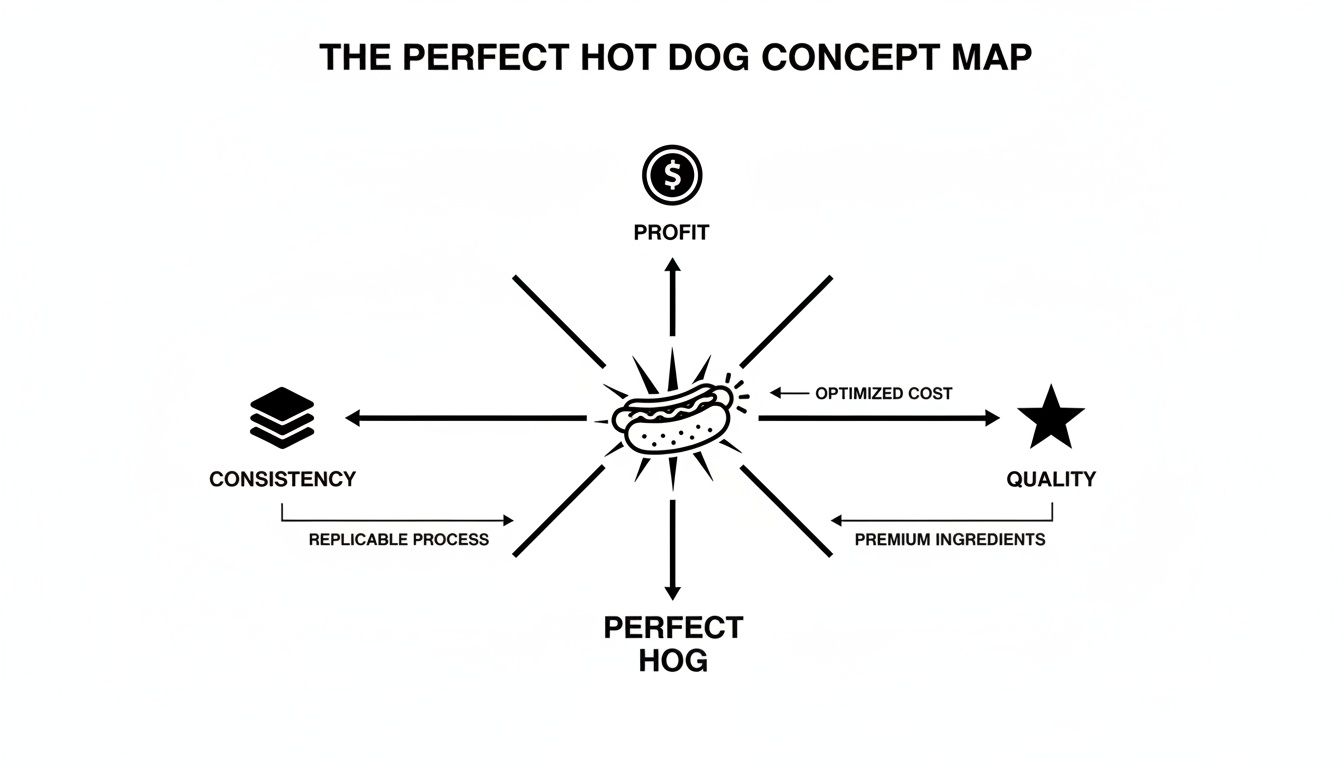
As you can see, consistency, quality, and profit are all tied together, and it all starts with a well-prepared product. Picking the right warmer is a direct investment in all three of those pillars.
Essential Features Every Las Vegas Operator Needs
Picking the right type of hot dog bun warmer is a solid first step, but the devil is in the details. The specific features are what really separate a smart investment from a future headache, especially in the relentless pace of a Las Vegas kitchen.
Think of this as your practical checklist. These are the non-negotiables you need to look for to get a unit that will perform under pressure, keep the health inspector happy, and protect your bottom line.
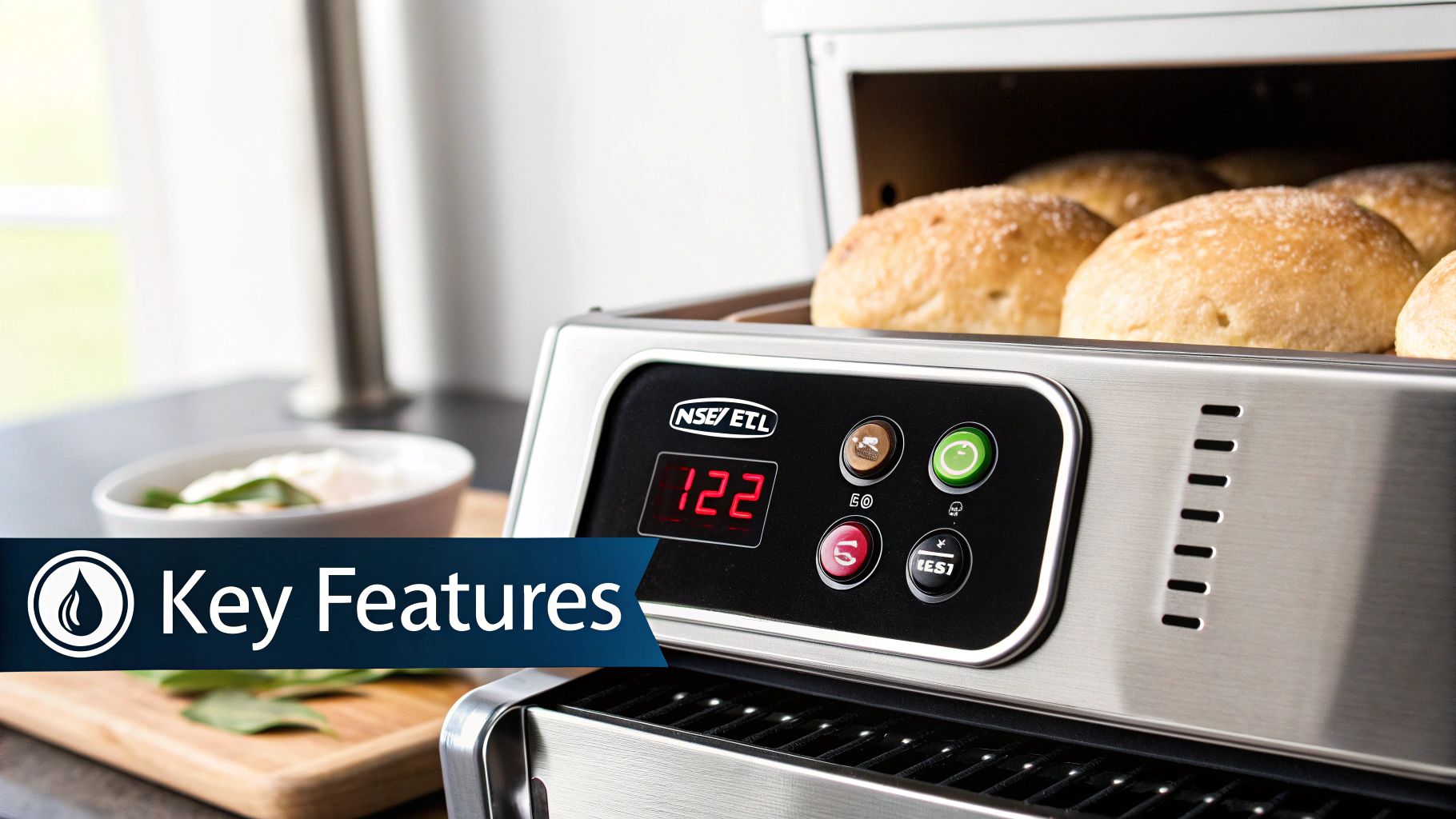
First up, and most importantly, is capacity. Underestimating your needs during a dinner rush is a recipe for absolute disaster. You need a game plan. Figure out your peak hourly hot dog sales, then add a 25% buffer to find the minimum number of buns your warmer has to hold. This simple bit of math ensures you can keep service flowing without anyone scrambling to restock mid-service.
Controls, Construction, and Compliance
Holding buns is one thing, but keeping them perfect is another. You need a unit that gives you precise control, which means adjustable temperature and humidity settings. This lets you dial in the perfect environment to keep your specific buns from drying out or, even worse, getting soggy. It’s a small detail that makes a huge difference in quality.
The build quality is just as crucial. In a demanding commercial kitchen, stainless steel is the undisputed champion. It’s tough enough to take a beating day in and day out, but it’s also non-porous and a breeze to sanitize—a must-have for food safety.
Here’s a critical point for any Las Vegas establishment: certification. Look for equipment that is NSF (National Sanitation Foundation) and ETL (Electrical Testing Laboratories) listed. These aren’t just suggestions; they are proof your gear meets the tough health and safety standards required by Clark County health inspectors. Running a kitchen without them is asking for trouble.
Finally, think about the long-term operational costs. Energy efficiency is a huge deal, especially with Las Vegas utility prices. An energy-efficient hot dog bun warmer might cost a bit more upfront, but it can save you a bundle over its lifespan.
It’s part of a bigger picture, working alongside your other workhorses like high-efficiency commercial refrigerators, commercial freezers, and modern ice machines to create a more cost-effective and sustainable kitchen. Investing in these features from the start ensures your equipment is not only compliant and functional but also makes financial sense for the long haul.
Integrating Your Bun Warmer for Peak Efficiency
In the go-go-go world of Las Vegas food service, every second counts. Where you place your hot dog bun warmer might seem like a small detail, but it’s a strategic move that can make or break your kitchen’s rhythm. Get it right, and you create a smooth, efficient assembly line. Get it wrong, and you've got a recipe for chaos during the lunch rush.
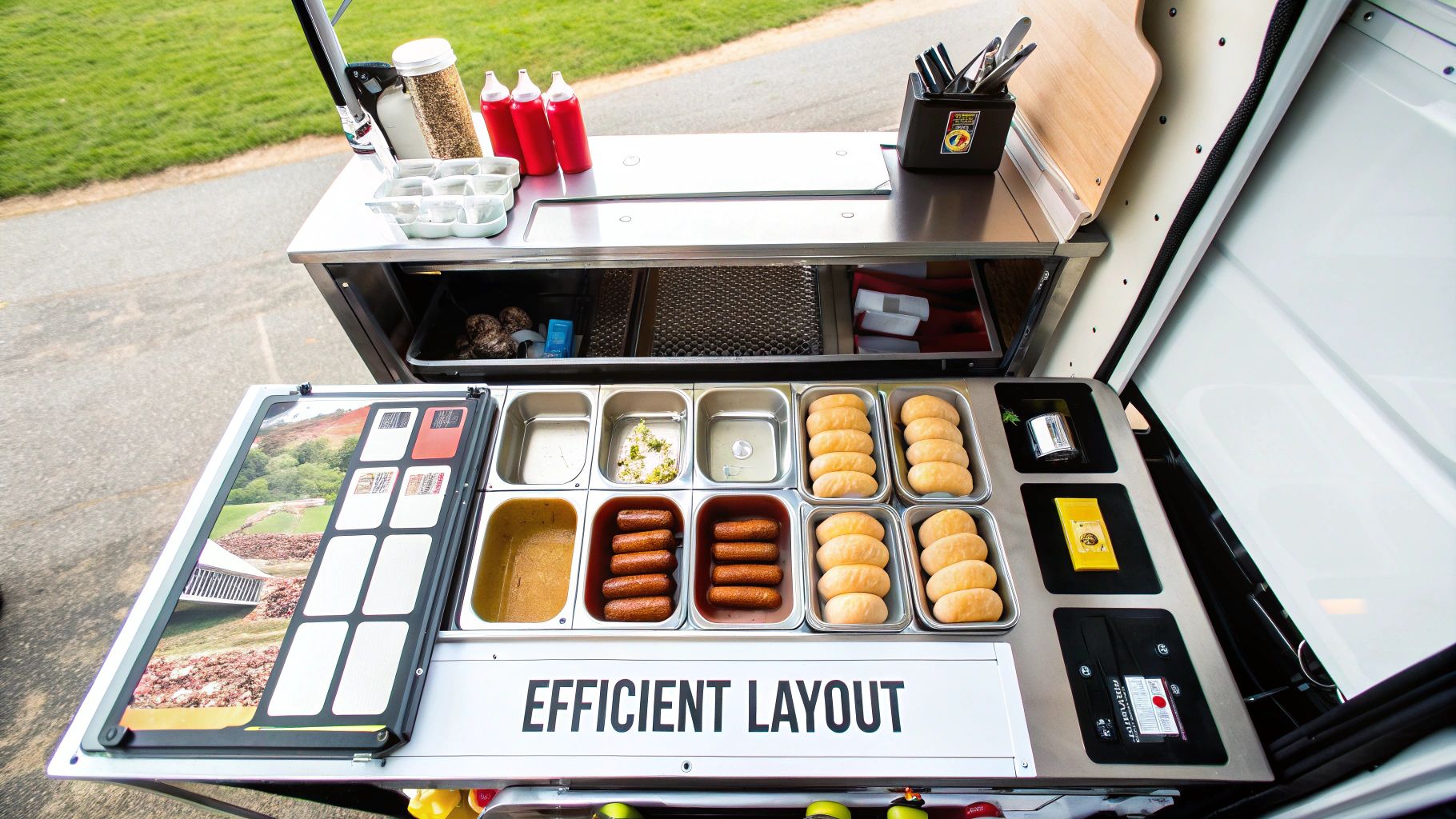
The whole point is to build a seamless workflow from grill to guest. Think of it like a "golden triangle" for your hot dog station, connecting your roller grill, your bun warmer, and your condiment bar. The goal is to keep your staff pivoting, not running. When you minimize the steps between these key points, you'll be amazed at how quickly you can churn out orders.
Blueprinting Your Hot Dog Station
Of course, the perfect layout is all about your specific venue. A cozy food truck setting up in the Arts District has totally different challenges than a massive casino cafe on the Strip. But the core principles of efficiency never change.
- Compact Food Truck Layout: When you're working in tight quarters, a straight-line setup is your best friend. Just line up the roller grill, bun warmer, and condiment station side-by-side. This layout allows one person to manage the entire show without even moving their feet, making the most of every last inch.
- High-Traffic Casino Cafe Layout: For bigger operations with more staff, an L-shaped or island setup is often the way to go. You might put the roller grill and bun warmer back-to-back, with the condiment station facing the customer. This carves out distinct zones for cooking and finishing, which helps prevent your team from bumping into each other when things get hectic.
Connecting the Kitchen Ecosystem
A truly high-performing station doesn't just sit there on its own; it’s part of your larger kitchen ecosystem. This is especially true when it comes to your cold storage. Your commercial refrigerator, stocked with fresh toppings like chopped onions, relish, and shredded cheese, needs to be just a few steps from the condiment station. This allows for lightning-fast refills without grinding the service flow to a halt.
Strategic placement is about creating a system where every piece of equipment supports the next. When your hot dog bun warmer is perfectly positioned near your grill and your commercial refrigerator is just steps away from your toppings bar, you’ve built a high-performance engine for service.
And don't forget the final stop. Placing your ice machines near the beverage station, where customers typically finish their order, completes the workflow beautifully. Want to dig deeper into how your refrigeration setup affects your bottom line? Check out our guide on energy-efficient commercial refrigeration. When you thoughtfully design this whole ecosystem, you're setting up your Las Vegas operation to handle any rush with speed and a cool head.
Keeping Your Equipment Clean and Compliant
Running a hot dog bun warmer isn't just about flipping a switch and walking away. It’s about building a solid routine that keeps your equipment safe, reliable, and cranking out quality product. Think of a well-maintained warmer as your first line of defense against food safety issues and the secret to serving up a consistently perfect hot dog for your Las Vegas customers.
Proper operation starts before the first bun even goes in. You’ve got to let the warmer pre-heat to its target temperature. This simple step is a game-changer; it stops the buns from getting soggy from condensation and makes sure every single one is heated evenly, right from the first order of the day. And whatever you do, don't cram it full. Overloading a warmer kills airflow, which means you'll end up with some buns that are cold and others that are overcooked—a recipe for food waste.
Best Practices for Upkeep
To keep your bun warmer running like a champ and in good standing with the Southern Nevada Health District, you need a cleaning schedule that's set in stone. The easiest way to tackle this is to break it down into daily, weekly, and monthly jobs. It makes the whole process manageable and way more effective.
Daily Cleaning (End of Shift):
- Wipe Down Surfaces: Once the unit is cool, grab a soft, damp cloth and a food-safe sanitizer. Give all the interior and exterior surfaces a good wipe-down.
- Empty Crumb Trays: Pull out and empty any crumb trays. This isn't just about being tidy—crumb buildup can actually be a fire hazard or an open invitation for pests.
- Clean Water Pans: If you're using a steamer or a unit with a humidity feature, that water pan needs to be emptied, washed, and sanitized daily to stop mineral scale and bacteria from taking over.
This daily reset is absolutely critical, especially in a busy Las Vegas spot. It doesn't just keep things clean; it’s your chance to catch small problems before they blow up into big, expensive ones.
Weekly and Monthly Deep Cleaning
Daily wipe-downs are great for surface grime, but you need to go deeper to keep the machine performing its best in the long run.
A clean machine is an efficient machine. Regular maintenance isn't just about food safety—it's about protecting your investment, avoiding costly repairs, and getting more years out of your equipment.
Once a week, it's time for a more thorough cleaning. Pull out any removable racks or drawers and give them a proper wash in a three-compartment sink. This is also the perfect time to give the gaskets and seals a quick inspection for any signs of cracking or wear.
Every month, you'll want to focus on descaling, especially if you have hard water—and let's be honest, that's a common problem here in Vegas. Just follow the manufacturer's guide for descaling the water reservoir to keep your steamer or humidity-controlled unit from getting clogged up. For those stainless steel exteriors that take a beating, using the right cleaning methods is key to keeping them looking good and staying sanitary. For some great tips, check out our guide on how to clean stainless steel grill grates; a lot of the same rules apply. This kind of routine maintenance, right alongside caring for your commercial refrigerators and ice machines, is what builds the backbone of a compliant and successful Las Vegas kitchen.
Choosing the Perfect Model for Your Vegas Venue
Picking the right hot dog bun warmer isn’t just about specs on a sheet; it’s about matching the machine to the unique pulse of your Las Vegas business. The best unit for you is one that slots right into your kitchen’s workflow, your menu, and the way your customers move.
To get a better handle on this, let's walk through a few real-world Vegas scenarios. Think of these as a guide to help you size up your own needs and find the warmer that will genuinely make your life easier and your hot dogs better.
The Allegiant Stadium Concessionaire
Game day at the stadium is all about two things: speed and volume. Period. For a concession stand feeding thousands of hungry fans, the only real choice is a high-capacity steamer-style hot dog bun warmer. You need something that can hold 300+ buns and blast them with heat, keeping those lines moving during the halftime chaos.
This isn't a job for a delicate machine. It needs to be tough enough to handle constant use and quick wipe-downs between quarters. This kind of operation demands a true workhorse, something that pairs with an equally massive roller grill to create a brutally efficient assembly line.
The Arts District Food Truck
Life on a food truck is a completely different game. Here, space is the most precious commodity you have, and the menu probably features some high-quality, maybe even artisanal, buns. A compact, multi-drawer warmer with precise humidity control is the perfect fit.
This kind of unit lets you keep those brioche or potato buns perfectly soft without steaming them into a soggy mess. It also needs to be light on the power draw so it doesn’t tax the truck's generator. It has to be small enough to fit into a tight space, working alongside other essential gear like undercounter commercial freezers and prep stations.
Your bun warmer should be a seamless part of your kitchen's ecosystem. The right model supports your entire equipment lineup, from the back-of-house commercial refrigerator to the frontline ice machine, ensuring a profitable hot dog program.
The 24/7 Casino Cafe
For a casino cafe that literally never closes, the name of the game is durability and simplicity. The best option here is a mid-capacity drawer warmer built from heavy-gauge stainless steel. It needs to be so easy to use that any staff member on any shift can operate and clean it without a second thought.
Reliability trumps sheer volume in this setting. The warmer must consistently hold buns at a safe, perfect temperature for hours on end, satisfying health codes and fitting in with the cafe's other pieces of restaurant equipment designed for the non-stop grind.
Your Top Questions, Answered
When you're equipping a restaurant in Las Vegas, every single piece of gear has to pull its weight. Here are some quick answers to the questions we hear most often about choosing and using the right hot dog bun warmer.
Can't I Just Use a Holding Cabinet Instead of a Bun Warmer?
You could, but it’s not a move I’d recommend if you care about quality. A dedicated hot dog bun warmer is built for one job: keeping buns perfectly soft and warm with just the right amount of humidity. They’re designed to stop them from turning into soggy messes.
Your standard holding cabinet just doesn't have that delicate moisture control. You'll end up with buns that are either dry and crusty or sadly mushy. In a town as competitive as Vegas, that kind of inconsistency will get you noticed for all the wrong reasons.
How Do I Figure Out the Right Size for My Business?
Here's a solid rule of thumb we use with our clients: figure out how many hot dogs you sell during your busiest hour, then add a 25% buffer. So, if your spot on the Strip sells 80 dogs during the lunch rush, you need a warmer that can hold at least 100 buns.
Following that simple math ensures you're always ready for a surprise rush. You can serve guests without a hitch, keep the line moving, and make sure everyone leaves happy. No frustrating delays, no running out at the worst possible moment.
Are Energy-Efficient Bun Warmers Really Worth the Extra Cost?
Absolutely, one hundred percent. In a city like Las Vegas where your AC is already working overtime, every watt you save is money in your pocket. A model with better insulation, smart digital controls, or an ENERGY STAR® rating might cost a little more upfront, but the payback is real.
Think of it this way: that warmer is going to lower your utility bill every single month. It becomes a smart long-term investment that works alongside your other efficient gear, like modern ice machines, commercial refrigerators, and commercial freezers, to slash your operating costs and fatten up your profit margins.
Ready to serve the perfect hot dog every single time? Find the ideal hot dog bun warmer and all the other restaurant essentials you need at Las Vegas Restaurant Equipment. Check out our complete catalog and get fast, free shipping straight to your Las Vegas kitchen. Visit us at https://lasvegasrestaurantequipment.com to gear up for success.