

Look, the simplest way to keep your grates from getting caked in gunk is to burn off the excess residue after every shift. Just crank the grill to high for 10-15 minutes. Then, grab a quality, bristle-free grill brush and give them a good, hard scrub. The heat turns most of the gunk to ash, making it easy to brush away. Doing this daily prevents the vast majority of stubborn buildup from ever happening.
Keeping Your Las-Vegas Grill in Pristine Condition
In the high-stakes, fast-paced restaurant world of Las Vegas, where a diverse array of restaurants caters to every palate, your grill's performance is non-negotiable. Whether you're running a high-end steakhouse on the Strip or a beloved local spot in Henderson, those stainless steel grates are the heart of your kitchen. Their condition has a direct impact on everything—food safety, flavor, and how smoothly service runs.
A clean grill is the foundation of a solid service, right up there with your other essential restaurant equipment. You count on your commercial refrigerators, commercial freezers, and ice machines to work perfectly, and your grill needs that same consistent attention to perform at its peak.
When one piece of equipment goes down, it can throw off the entire kitchen's rhythm. That’s why understanding things like commercial refrigeration repair in Las Vegas is just as critical as knowing your daily cleaning routine.
This guide will walk you through the proven methods for keeping your grates in top shape, from daily habits to the deep-cleaning battles. We'll show you how to protect your investment and make sure every plate you send out is perfect. The key is to see maintenance not as a chore, but as a core part of your craft.
A well-maintained grill isn't just about cleanliness; it's about consistency. In a city like Las Vegas where culinary standards are incredibly high, every detail matters, starting with the surface your food is cooked on.
Gathering Your Professional Grill Cleaning Toolkit
In a busy Las Vegas kitchen, whether you're running a fine dining spot or a popular food truck, having the right tools for the job is everything. You count on your commercial refrigerators, commercial freezers, and ice machines to work without a hitch, and the same thinking applies to your grill cleaning gear. Trying to tackle baked-on grime with the wrong stuff, like abrasive steel wool, doesn't just make the work harder—it can leave permanent scratches and ruin your grates.
Think about it like this: no chef would ever reach for a dull knife. It's just not done. In the same way, every professional kitchen needs a dedicated kit just for grill maintenance. If you don't have the right equipment, your crew will waste time, and you risk damaging expensive grates.
Before you even think about scrubbing, let's make sure you've got the right gear on hand. Here's a quick rundown of the essentials we recommend for any commercial kitchen.
Commercial Grill Cleaning Essentials
| Tool or Supply | Recommended Type | Why It Matters |
|---|---|---|
| Grill Brush | Bristle-Free (Brass or Stainless Steel) | This is non-negotiable. Wire brushes shed bristles that can end up in food, creating a major safety hazard. |
| Grill Scraper | Heavy-Duty with a Long Handle | Your first line of defense. It makes quick work of thick, charred carbon buildup before you get into deep cleaning. |
| Degreaser | Food-Safe, Commercial-Grade Formula | Cuts through stubborn, baked-on grease without leaving harmful chemical residues that could affect food flavor or safety. |
| Soaking Tub | Large, Heavy-Duty Plastic or Stainless Steel | Big enough to fully submerge the grates for a deep soak, which is crucial for loosening the toughest grime. |
| Gloves | Heat-Resistant, Heavy-Duty | Protects your hands from hot grates, steam, and powerful cleaning chemicals. Safety first, always. |
| Goggles | Splash-Proof Safety Goggles | A simple but critical piece of PPE to protect your eyes from splashes of hot water or degreaser. |
Having these items ready to go turns a dreaded chore into a streamlined, routine task.
Must-Have Commercial-Grade Tools
To protect your investment and keep your team safe, you absolutely need a specific set of tools. Each one has a critical job.
First up is a bristle-free grill brush. A traditional wire brush is a disaster waiting to happen. Those tiny metal bristles can break off, get stuck to the grates, and end up in a customer's meal. A good brass or stainless steel bristle-free brush scours away debris just as effectively without that serious risk.
Next, you’ll need a heavy-duty scraper. A sturdy, long-handled scraper lets you knock off the worst of the carbon buildup right away. It’s the muscle that saves you a ton of scrubbing time later.
Finally, get a food-safe commercial degreaser. Don't just grab any cleaner from under the sink. You need something specifically formulated for food contact surfaces that can power through baked-on grease without leaving behind any nasty chemical tastes or residues.
Remember, the whole point is to work smarter, not harder. When your team has the right tools, grill cleaning becomes a simple part of the daily routine instead of a massive project everyone avoids.
And please, don't forget the Personal Protective Equipment (PPE). Heat-resistant gloves are a must for handling hot grates, and safety goggles are crucial for protecting your eyes from splashes. Keeping your crew safe is just as important as getting the grill clean.
Mastering the Daily Burn-Off and Brush Method
Want to know the secret to avoiding hours of back-breaking scrubbing in a busy Las Vegas kitchen? It’s all about consistency. The single most effective habit you can build is the simple "burn-and-brush" method, a technique used by top chefs everywhere to keep their essential restaurant equipment in prime condition.
It’s a straightforward process. Once the last order is out, crank the grill up to a blistering 500°F and let it roar for 10-15 minutes. This intense heat incinerates any leftover food, grease, and marinade, turning that sticky, stubborn gunk into a dry, brittle ash.
After the burn-off, grab a long-handled, heavy-duty grill brush and give the grates a vigorous scrub. That carbonized ash should flake right off with very little fight, leaving you with a much cleaner surface. This daily ritual is the cornerstone of professional grill maintenance.
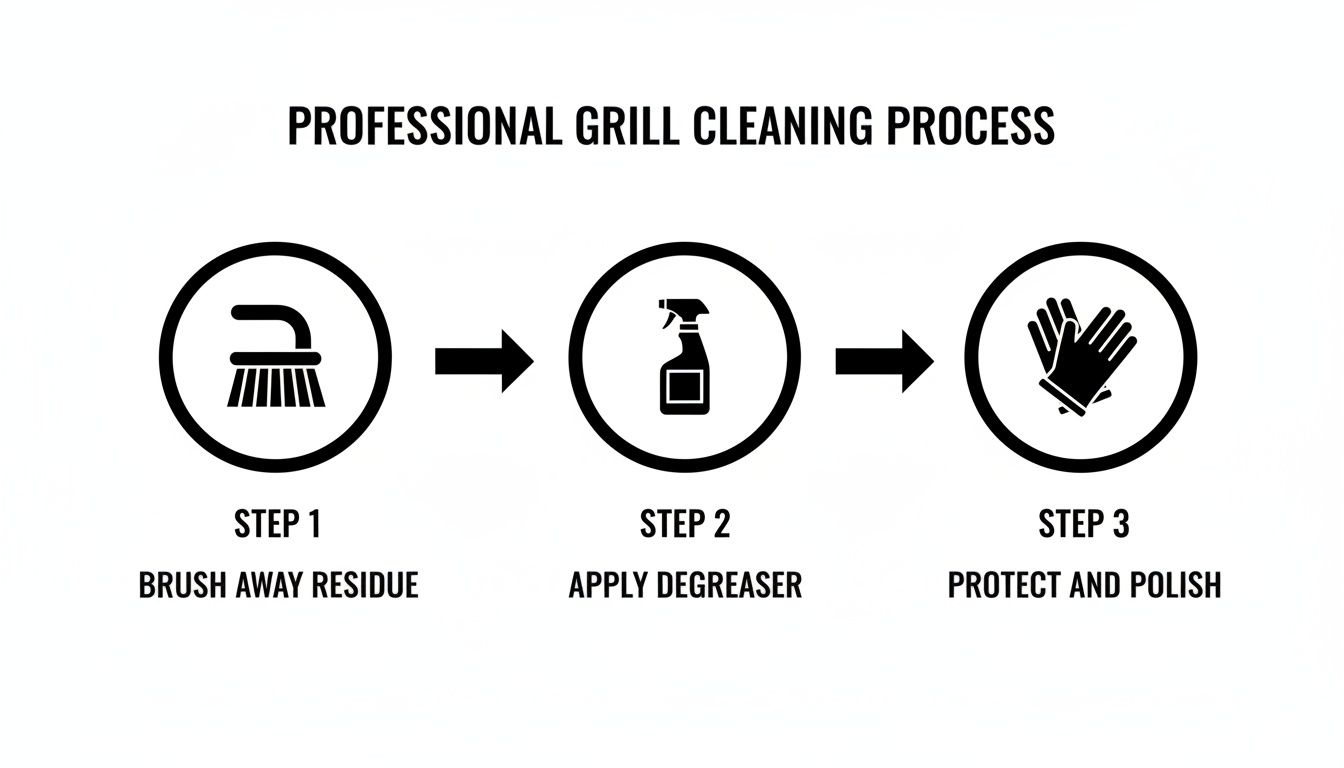
As you can see, the core toolkit is simple: a good brush, a quality degreaser for tougher jobs, and proper hand protection. These are the fundamentals for everything from a quick daily scrub to a full-on deep clean.
Why Consistency is Everything
This isn't some revolutionary new idea. Chefs have been brushing hot grates right after service for decades, and for one simple reason: it flat-out works. Spending just 5 to 15 minutes on this every single day can prevent up to 90% of carbon buildup from ever taking hold.
A clean grate ensures every dish has a pure, consistent flavor—a non-negotiable standard in the competitive Las Vegas dining scene. Skipping this step is like serving a fine wine in a dirty glass.
Making this a mandatory part of your kitchen's closing procedure does more than just keep things clean. It protects your investment in high-quality commercial charbroilers, safeguards your food's flavor profile, and dramatically extends the life of your grates. A few minutes now saves you from a costly, time-sucking deep clean down the road.
Deep Cleaning Techniques for Stubborn Buildup
Even with a solid daily cleaning routine, the sheer volume of a busy Las Vegas kitchen means your grill grates are going to need a serious deep clean eventually. Over time, grease and carbon can bake on, creating a stubborn layer that a quick burn-off just won't touch. When you hit that point, it's time to move past daily maintenance and get into restoration mode.
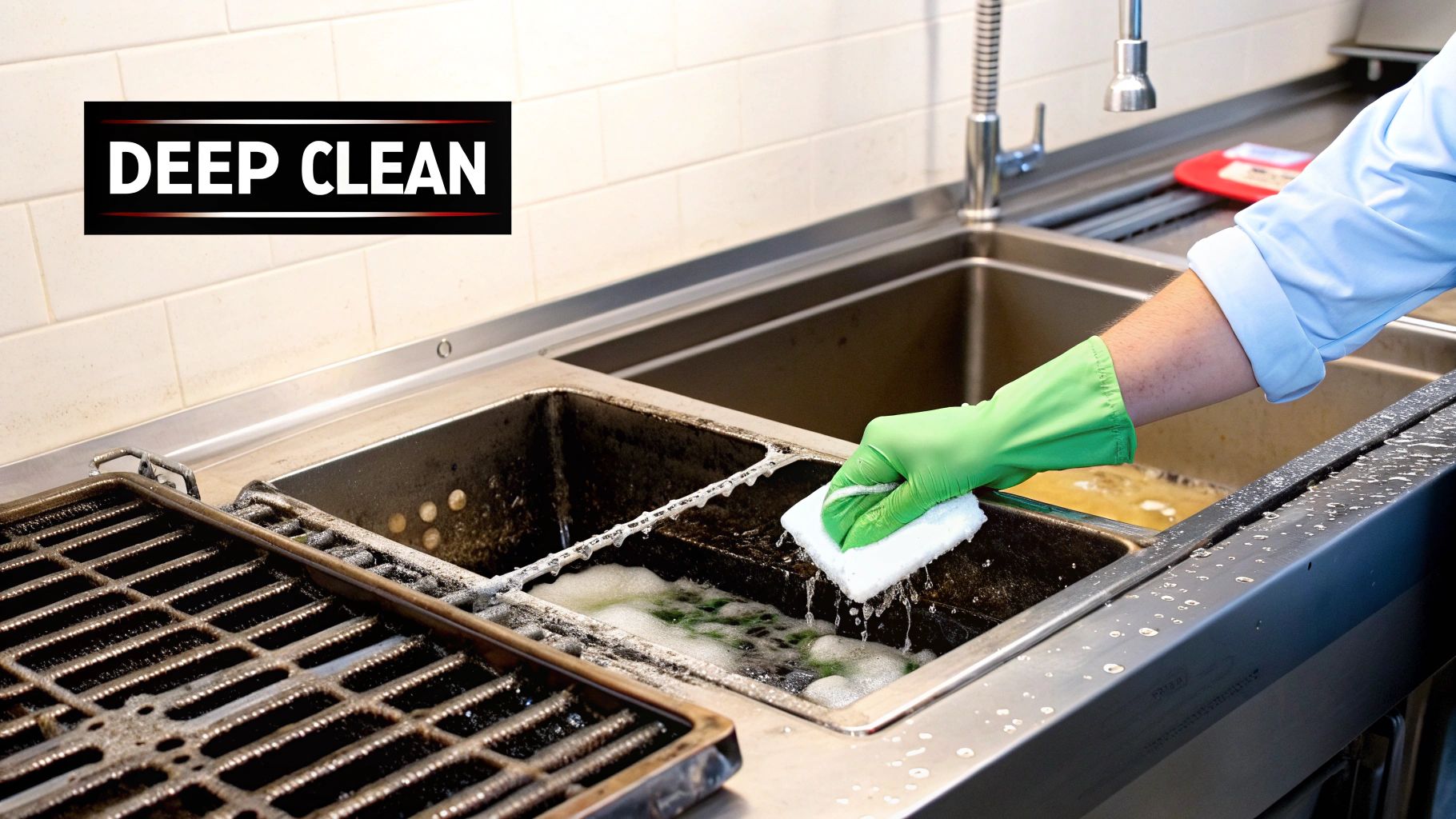
Neglected grates mess with everything from the flavor of your food to the performance of your essential restaurant equipment. Think about it—you rely on your commercial refrigerators and commercial freezers to hold exact temperatures, and your grates need that same level of care to do their job right.
Let's walk through two of the most effective deep-cleaning strategies I've seen in professional kitchens.
The Commercial Degreaser Soak
When you're dealing with the kind of heavy, caked-on gunk common in restaurant settings, an overnight soak is your best bet. This method uses a powerful, food-safe commercial degreaser to dissolve that carbonized grease so you don't have to scrub for hours.
Here’s the right way to do it:
- Pull and Scrape: Once the grates have cooled down, get them off the grill. Grab a heavy-duty scraper and knock off all the big, flaky chunks of debris first.
- Get the Soak Ready: Find a large utility sink or a heavy-duty plastic tub and fill it with the hottest water you can get from the tap. Follow the manufacturer's directions and add your commercial-grade degreaser—getting the ratio right is key.
- Submerge and Let It Sit: Carefully lower the grates into the solution, making sure they're completely covered. For the best results, let them soak for a minimum of 8 hours, but an overnight soak is ideal.
- Scrub and Rinse: By morning, that baked-on grime should have softened up dramatically. Use a stiff, non-abrasive brush or a good scouring pad to clear away what's left. Finish with a thorough rinse using clean, hot water.
The Baking Soda and Vinegar Method
Looking for a non-toxic approach that still packs a punch? A simple paste of baking soda and white vinegar can work wonders. The chemical reaction between the two lifts away some seriously tough grime, making it a great choice for kitchens that prefer to stick with eco-friendly solutions.
The real secret to making this work is patience. The acid from the vinegar and the gentle abrasion from the baking soda will do the hard work for you, but you have to give them time.
Whip up a thick paste by mixing about two parts baking soda with one part white vinegar. Slather it all over the grates, making sure every surface is coated. You'll see it foam and bubble as it starts breaking down the grease. Let it sit for several hours until the reaction dies down, then give it a good scrub with a brush and rinse it all off.
This kind of regular deep cleaning is a game-changer for the lifespan of your grates. In fact, one study showed that 72% of stainless steel grill owners who clean their grates weekly reported no corrosion after three years. That number drops to just 35% for those who only clean them monthly. If you want to learn more, you can read about the benefits of routine care for your stainless steel grill.
Sanitizing and Seasoning Grates for Peak Performance
Once you’ve put in the elbow grease and your stainless steel grill grates are sparkling, you’re almost there. But don't throw that steak on just yet. The last two steps—sanitizing and seasoning—are what separate the pros from the amateurs, whether you're running a high-end spot in Las Vegas or a busy food truck. A clean grate isn't enough; it needs to be a safe and primed cooking surface.
Sanitizing is non-negotiable, but thankfully it's simple. You can go with a commercial food-safe sanitizer, just be sure to follow the dilution ratios on the label to the letter.
Personally, I prefer the high-heat method. Just crank the grill up and let the grates get to over 300°F for a few minutes. This blast of heat incinerates any bacteria left behind, ensuring you’re meeting health codes and keeping your customers safe.
The Final Touch: Seasoning for a Non-Stick Surface
After the grates are sanitized and bone-dry, it's time to re-season them. This is the secret to getting those perfect grill marks, preventing food from sticking, and protecting your expensive equipment.
- Go for a Thin Coat: Grab a clean, lint-free cloth and apply a super-thin layer of a high-smoke-point oil. I usually reach for canola or grapeseed oil.
- Heat It Up: Get the grates back on the grill and fire it up until the oil just starts to smoke. That's the sweet spot where the oil polymerizes, creating a tough, slick barrier.
This quick seasoning process is your best defense against moisture and rust, which can kill the lifespan of your grates. It's a small bit of effort that pays huge dividends, protecting not just your grill but all the essential restaurant equipment you've invested in, from commercial refrigerators to your trusty commercial freezers and ice machines.
Stick to a solid maintenance plan and you'll find yourself replacing equipment far less often. In fact, since 2015, professional kitchens that follow a standard cleaning protocol have seen a 28% drop in grill grate replacement rates. Stainless steel is built to last when you treat it right. For a deeper dive, check out the professional approach to cleaning stainless steel grill grates on grillrost.com.
Common Questions About Grill Grate Maintenance
Even with the best procedures in place, questions always come up in a busy kitchen. In a city as dynamic as Las Vegas, where the culinary scene is incredibly diverse and competitive, consistency is non-negotiable. Keeping your essential restaurant equipment in top shape, from commercial freezers to the grill, ensures every service runs without a hitch.
Here are some straight answers to the questions we hear most often from chefs and managers trying to keep their stainless steel grill grates pristine.
Can I Use a Dishwasher for Commercial Grill Grates?
It might seem like the perfect shortcut, but throwing commercial grill grates into a dishwasher is a bad idea. The combination of intense heat and harsh detergents can strip away all that essential seasoning you've worked so hard to build.
Worse yet, it probably won't even work. Dishwashers often struggle with the heavy, caked-on grease common in a professional kitchen, leaving you with a grate that’s still dirty. Good old-fashioned manual soaking and scrubbing is still the most reliable way to get a truly deep clean.
How Often Should a Busy Restaurant Deep Clean Grates?
For any high-volume spot, a full deep clean should happen at least once a week. The daily burn-off and scrape-down is great for immediate residue, but that weekly soak is what stops serious carbon from building up.
That heavy buildup doesn't just mess with flavor; it can become a legitimate fire hazard. Keep an eye on your grates—if you notice a sticky, flaky residue that a brush won't knock off, it's time for a deep clean, even if it's not on the schedule.
Your cleaning schedule should be as consistent as your other maintenance routines. Just as you have a plan for keeping your essential equipment running, like checking our guide on commercial ice maker maintenance, your grill grates need that same level of scheduled attention.
What Is the Best Oil for Seasoning Stainless Steel Grates?
The key here is a high smoke point. You need an oil that can handle the heat without burning up and turning bitter.
Your best bets are:
- Canola Oil
- Grapeseed Oil
- Sunflower Oil
- Specialized Grill Seasoning Oils
Steer clear of oils with low smoke points, like extra virgin olive oil or butter. They’ll just create a ton of smoke and leave a nasty, burnt taste on your food.
Is It Safe to Use Oven Cleaner on Grill Grates?
Absolutely not. If you take away one thing, let it be this. Oven cleaners are loaded with caustic chemicals that will destroy the protective chromium oxide layer on your stainless steel grates.
Once that layer is damaged, you open the door to rust and corrosion, which will completely ruin your expensive equipment. Stick with food-safe degreasers, hot soapy water, or natural solutions like baking soda and vinegar. They’ll get the job done without wrecking your grates.
At Las Vegas Restaurant Equipment, we provide the durable, NSF-certified grills and commercial kitchen tools you need to keep your operation running at its best. Explore our full range of charbroilers, griddles, and cleaning supplies today. https://lasvegasrestaurantequipment.com