

When you're running a high-volume kitchen, especially in a vibrant city like Las Vegas, your cooking oil is one of your most critical tools. High smoke point oils are the workhorses of the culinary world—they're the fats that can take the intense heat of frying and searing without immediately breaking down and smoking you out. Getting this choice right is about more than just cooking; it’s about protecting your food quality, keeping your kitchen staff safe, and making sure your essential restaurant equipment lasts.
Why High Smoke Point Oils Are a Kitchen Essential
Think of your cooking oil like the engine oil in a high-performance car racing through the Las Vegas summer. It’s under constant stress. The smoke point is simply the temperature where that oil stops shimmering and starts to burn. It's the absolute limit. Once you push past it, the oil starts to degrade, releasing a foul, bitter flavor that will ruin any dish and filling your kitchen with nasty smoke.
In the fast-paced kitchens of Las Vegas, from the massive casino buffets that cater to every palate to intimate local spots, consistency and safety are everything. The sheer volume and relentless heat mean your choice of cooking oil becomes a serious business decision. It has a direct ripple effect across your entire operation:
- Flavor Consistency: An oil pushed past its smoke point will make your food taste burnt and acrid. That's a quick way to tarnish your reputation.
- Kitchen Safety: Oil that's constantly smoking creates terrible air quality for your team and dramatically increases the risk of a dangerous grease fire.
- Equipment Protection: Using the right oil protects your big-ticket investments like commercial fryers and griddles. It prevents that tough, black carbon gunk from building up and causing damage.
A smart oil strategy is about more than just cooking; it’s about managing costs, ensuring safety, and delivering a consistently excellent product. Pushing an oil beyond its thermal capacity is like running that engine without proper coolant—eventually, a breakdown is inevitable.
This isn't just another line item on a supply order. It's a foundational choice that impacts everything from how crispy your fries are to how long your commercial freezers and commercial refrigerators can keep your ingredients in prime condition. For a deeper dive into how healthy fats fit into a broader culinary context, you can explore Mediterranean diet principles and healthy fats.
Comparing The Best Oils For Professional Cooking
Once you know why you need a high smoke point oil, the real work begins: picking the right one for the right job. In a place like Las Vegas, where a diverse array of restaurants cater to every imaginable palate, the oil you choose can make or break a dish. It’s not just about heat; it's a decision that ripples through your kitchen, affecting everything from flavor and consistency to your bottom line.
For a lot of kitchens, a solid, neutral-flavored oil like canola is the undisputed workhorse. Its biggest selling point? It doesn't bring its own flavor to the party. This is huge for deep fryers, ensuring your calamari doesn't taste faintly of the onion rings you fried an hour ago. That kind of consistency is critical when you’re pushing out hundreds of plates a night.
But sometimes, you actually want the oil to be part of the flavor profile. That’s when you reach for something like peanut or avocado oil. A chef might intentionally grab peanut oil for its distinct nutty taste in a stir-fry, or choose a clean, buttery avocado oil to perfectly sear a delicate piece of fish. It’s all about using the right tool for the task at hand.
High Smoke Point Oils Comparison Chart for Commercial Kitchens
To make life a little easier for busy Las Vegas kitchen managers, we’ve put together a quick-reference chart. It lays out the essential details for the most common high smoke point oils you'll find in professional kitchens, helping you make the right call for every station on the line.
| Oil Type | Smoke Point (°F) | Flavor Profile | Best For (Commercial Use) |
|---|---|---|---|
| Avocado Oil | 520°F | Mild, Buttery | Searing, Grilling, Sautéing, Dressings |
| Safflower Oil | 510°F | Neutral | Deep Frying, Sautéing, All-Purpose Cooking |
| Refined Coconut Oil | 450°F | Neutral | Baking, Deep Frying, High-Heat Roasting |
| Peanut Oil | 450°F | Nutty, Mild | Deep Frying, Stir-Frying, Wok Cooking |
| Corn Oil | 450°F | Neutral | Deep Frying, Roasting, Baking |
| Canola Oil | 400°F | Neutral | All-Purpose Frying, Baking, Sautéing |
Think of this chart as your cheat sheet for matching the oil to the heat and the dish, ensuring you get perfect results every time.
This next image really drives home what happens when you push an oil past its limit.
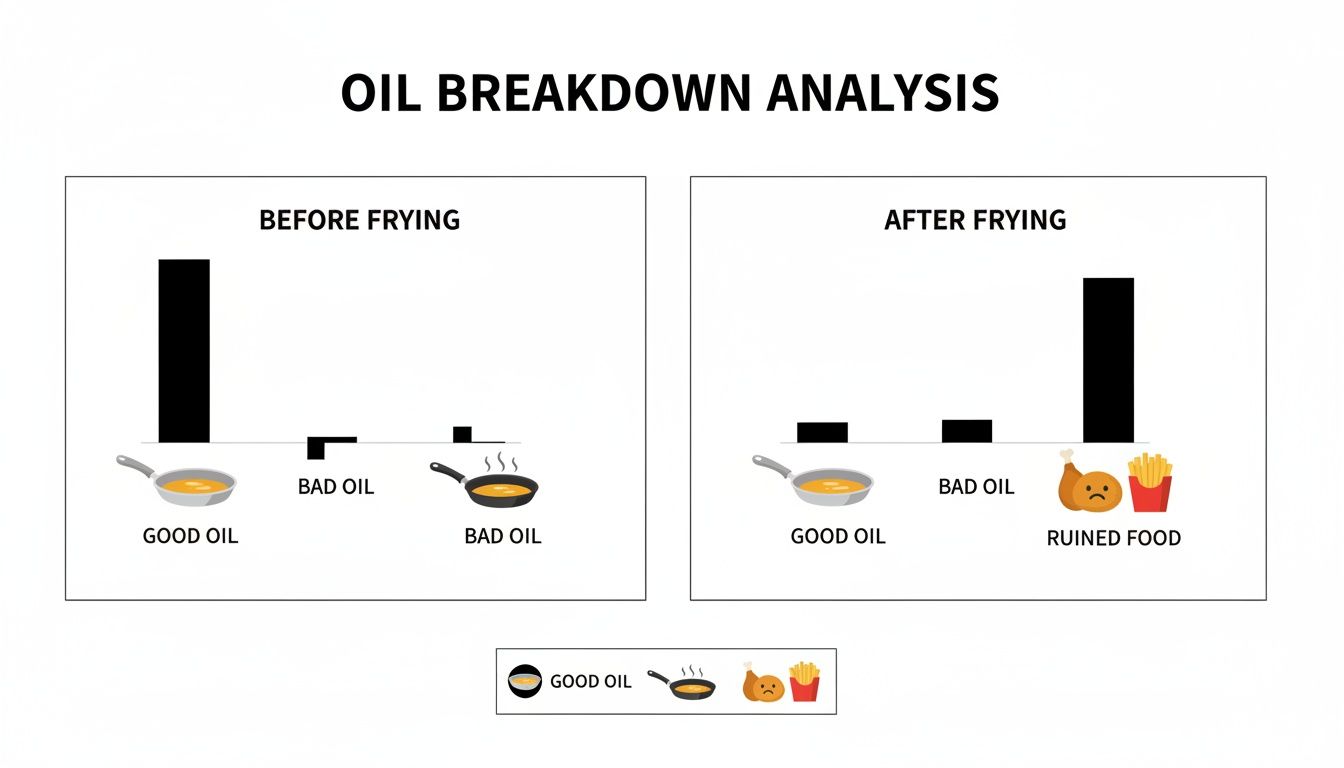
As you can see, it’s not just about a little smoke. When oil breaks down, it directly leads to ruined, acrid-tasting food that no customer will be happy with.
The Economic Engine Of The Food Industry
The impact of these oils goes way beyond a single kitchen. High smoke point oils like palm, soybean, and canola are the unsung heroes behind the massive growth of fast-food chains and the diverse array of restaurants worldwide. They hold up under the intense heat of commercial griddles and charbroilers, which often operate above 400°F. This reliability is a huge reason the global cooking oil market is on track to hit USD 209.24 billion by 2025, with food service operations leading the charge. You can read more about these market trends on cognitivemarketresearch.com.
Choosing the right high smoke point oils is a balancing act. It requires weighing flavor profile, thermal stability, and cost-per-gallon to find the perfect fit for your menu, your equipment, and your budget.
Getting this choice right ensures that every piece of essential restaurant equipment, from the fryer to the commercial refrigerators keeping your ingredients fresh, works together to create a product you're proud to serve.
Matching Your Oil to Your Kitchen Equipment
Using the right high smoke point oil for your specific commercial equipment is like picking the right fuel for a high-performance engine. Get the match right, and you’ll optimize output, guarantee consistency, and even prevent long-term damage to your gear. In a vibrant city like Las Vegas that never stops, every piece of equipment—from the fryer to the commercial freezer—has to perform perfectly, shift after shift.
This decision is most critical for your high-temperature stations. The wrong oil in a deep fryer can break down in a hurry, filling your kitchen with nasty smoke and making your food taste bitter. A stable oil, on the other hand, stands up to the heat, giving you consistently crispy results and meaning fewer expensive, time-sucking oil changes.
Optimizing Your Fryers
Deep fryers are the absolute workhorses in most Las Vegas kitchens, and they need an oil that can handle constant, intense heat. Choosing an oil with a high smoke point and excellent thermal stability isn't just a good idea—it's non-negotiable for success.
- Reduce Oil Breakdown: Stable oils like peanut, safflower, or canola hold their own for much longer. That means you get more frying time out of every single batch.
- Prevent Flavor Transfer: If you're frying different items, a neutral-flavored oil is key. It ensures your french fries don't end up tasting like the fish you cooked an hour ago, keeping every dish true to its intended flavor.
- Maximize Equipment Life: Clean-frying oils stop that hard, carbonized gunk from building up on your heating elements. That buildup kills heating efficiency and can eventually lead to total equipment failure. For more on the hardware side of things, check out our guide to choosing a commercial deep fryer.
In the high-stakes game of a Las Vegas restaurant, your fryer oil is an investment, not just a consumable. Choosing wisely protects both your food quality and your equipment, which goes straight to your bottom line.
Perfecting Your Griddle and Charbroiler Game
Griddles and charbroilers are a completely different ballgame. Here, you're usually looking for a quick, clean sear to get that perfect crust without smoking out the entire kitchen. The oil is there to help transfer heat and stop food from sticking, not to be the main cooking medium.
A light coating of an oil with a very high smoke point, like avocado or refined coconut oil, is perfect for this. These oils won’t burn the second they hit a hot flat-top, which prevents that burnt, bitter taste you get from scorched fat. This lets the natural flavor of your steaks or vegetables be the star of the show.
Protecting Your Kitchen Investment
At the end of the day, matching the right high smoke point oils with your hardware is really about protecting your entire operation. The demanding Las Vegas climate already puts a ton of stress on your equipment, from the blazing heat of the cookline to the commercial refrigerators and ice machines working overtime to keep ingredients fresh and drinks cold.
When you use the correct oil in reliable equipment, like an Atosa fryer or griddle, you create a perfect partnership. The equipment's precise temperature control helps the oil last longer, and the high-quality oil helps the machine run efficiently without getting caked in gunk. It’s this kind of synergy that makes sure every piece of your kitchen works together to deliver incredible food, every single time.
The Financial Case for High Oleic and Blended Oils
When you're running a busy Las Vegas kitchen, it’s all too easy to just look at the upfront price per gallon of cooking oil. But the sharpest operators know the real story isn’t the price tag—it’s the total cost of ownership. This is where specialized oils, like high oleic and custom blends, really start to make sense, saving you serious cash in the long run.
High oleic oils aren't some new, genetically modified product. They come from plants that have been traditionally cultivated—think of it like breeding a premium version of an olive or sunflower. The goal is to create an oil with a more stable, durable molecular structure. This extra stability means it can handle intense heat for much longer before it starts to break down.
For any high-volume spot on the Strip or out in Henderson that caters to every palate, that durability means one thing: fewer oil changes. And fewer changes mean your supply costs plummet over time.
Slashing Costs with Extended Fry Life
The numbers don't lie. High oleic oils, known for their sky-high smoke points often topping 450°F, are a game-changer for commercial kitchens, especially if you’re running fryers all day. For a restaurant owner, switching to high oleic canola can mean the oil lasts 3-4 times longer than standard stuff. In a high-turnover kitchen, that can slash your oil costs by as much as 30%. You can get more insights on the high oleic oil market on persistencemarketresearch.com.
An extended fry life doesn't just save you money on oil. Think about the reduced labor costs from less frequent fryer cleanouts and the downtime that comes with it. You're also cutting way down on the waste oil you have to pay to get rid of—a major operational headache.
Getting rid of that used oil correctly is a huge deal for staying compliant and keeping your kitchen clean. For a deep dive into managing your grease output, check out our guide on grease trap sizing.
The Smart Economics of Blended Oils
Beyond the premium high oleic options, a lot of modern kitchens are getting great results from engineered blended oils. These are products formulated to hit that sweet spot between top-tier performance and a price that doesn't kill your budget. By combining different oils, manufacturers create a workhorse product with a few key advantages for a cost-conscious kitchen:
- High Heat Stability: They’re built to deliver a consistently high smoke point, so you can count on them for your deep fryers, griddles, and charbroilers.
- Neutral Flavor Profile: Most blends are designed to be completely flavor-neutral. This is huge for preventing taste from transferring between your fried chicken and your french fries.
- Cost-Effectiveness: You get performance that’s nearly on par with a premium single-source oil but at a much more manageable price.
At the end of the day, these advanced high smoke point oils are a strategic financial move. They cut down on how often you have to buy supplies, reduce waste, and free up your staff's time. For any Las Vegas kitchen trying to dial in its bottom line without cutting corners on quality, they’re a smart, versatile choice.
Oil Management for a Safer More Efficient Kitchen
Properly managing your cooking oil is about way more than just what happens in the fryer. It’s a full-circle process, from the moment it arrives at your door to the day it gets picked up for recycling. For any high-volume kitchen here in the vibrant city of Las Vegas, nailing this process down is the secret to a safer, more efficient operation and, most importantly, consistently fantastic food.
The intense Las Vegas heat is your oil’s worst enemy. If you're not careful, it can go rancid sitting in storage, developing funky flavors that will absolutely ruin a dish. To keep your high smoke point oils fresh, always store them in a cool, dark place, well away from the heat of the cookline and any direct sunlight. Your dry storage area is perfect, as is a dedicated spot in a commercial refrigerator.
In-Service Protocols for Extending Oil Life
Once that oil hits the fryer, you need a game plan to make it last. Stretching the life of your oil saves serious cash and guarantees every order of fries or wings comes out with that perfect golden-brown crunch.
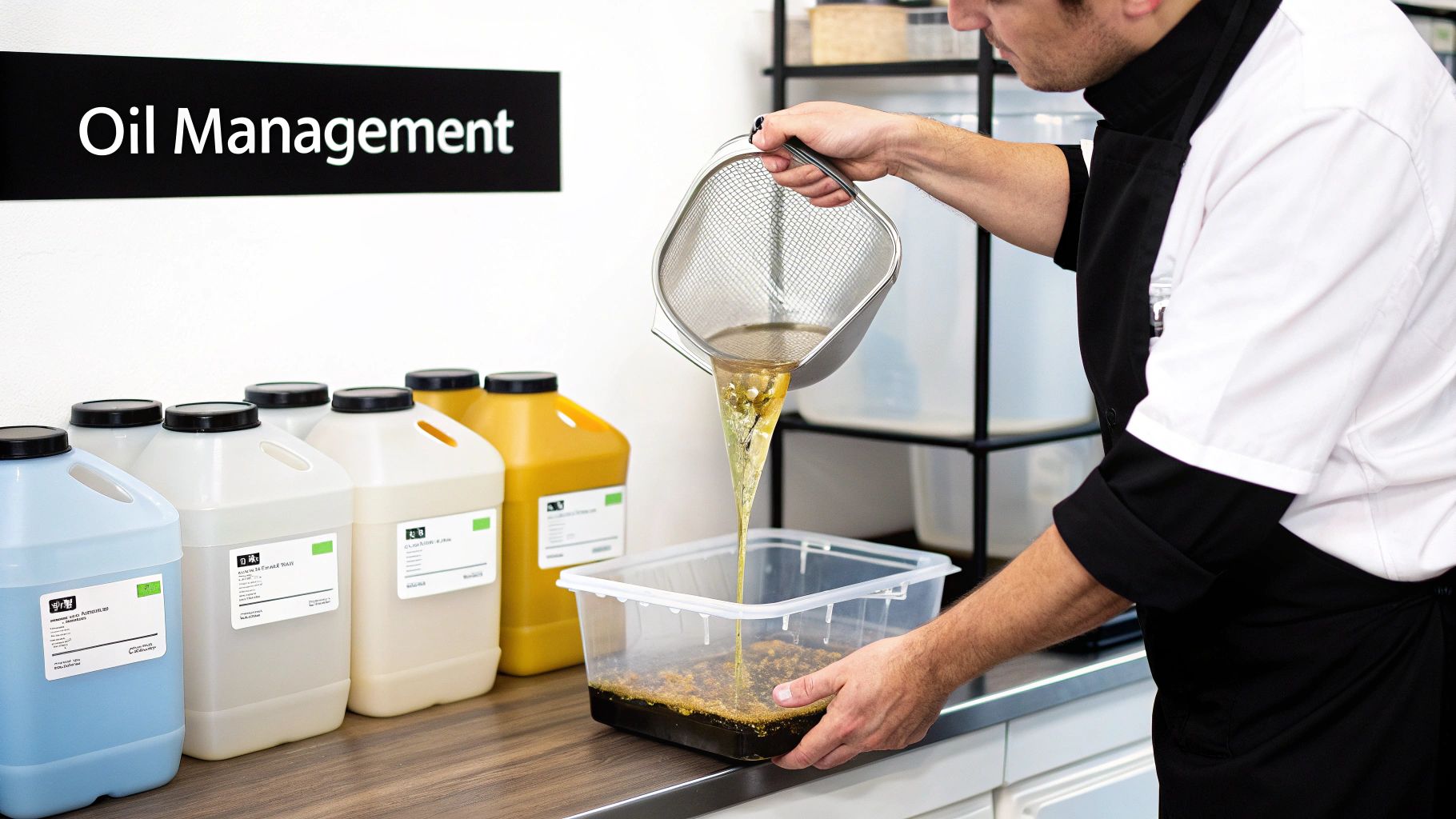
- Routine Filtration: Filtering your oil at the end of every single shift is non-negotiable. This simple step pulls out all the tiny food particles and sediment that cause oil to break down and smoke.
- Temperature Control: Don't crank the heat more than you need to. Constantly overheating your oil is the fastest way to kill it, leading to a smoky kitchen and wasted product.
- Skim Debris: Keep a skimmer handy during service. Pulling out any floating bits of batter or food as you go makes a huge difference in slowing down oil degradation.
A well-managed fryer is a sign of a professional kitchen. Consistent filtration and temperature control are not just maintenance tasks; they are critical quality control measures that directly impact your bottom line and customer satisfaction.
Taking care of your equipment is just as crucial as taking care of your oil. To really protect your investment, you need to know how to clean a commercial deep fryer the right way. It’s a key part of any solid oil management program.
Safe and Compliant Oil Disposal
The final step is getting rid of the used oil, and you have to do it right for both safety and legal reasons. Here in Clark County, used cooking oil is considered regulated waste. Whatever you do, never pour it down the drain—you’ll be asking for catastrophic plumbing blockages and environmental headaches.
The right move is to partner with a reputable grease rendering or recycling service. They’ll provide you with a proper collection bin and pick it up on a regular schedule. Following the local rules keeps your kitchen compliant, helps you avoid steep fines, and creates a much safer, cleaner workspace for your crew. It’s the professional way to close the loop on your oil management system.
Your Partner in Kitchen Performance
Picking the right high smoke point oil is only half the battle. To really win, you need to pair it with the right hardware. Here in the Las Vegas restaurant scene, it’s all about creating a perfect partnership between your ingredients and your essential restaurant equipment. When everything works together, you get superior results, shift after shift.
Nowhere is this more obvious than at the fryer. A top-notch, energy-efficient Atosa fryer with dead-on temperature controls does more than just cook food—it protects your oil. By keeping the temperature steady and preventing overheating, it makes your oil last way longer. That means less waste and real savings on your supply costs, which is crucial for getting the most out of your investment.
Building a Foundation for Success
A solid kitchen is built on dependable equipment. While the fryer is a big piece of the puzzle, you can't forget about reliable commercial refrigerators to keep ingredients fresh or powerful ice machines to handle the constant Las Vegas demand. Success depends on the complete ecosystem of your kitchen.
Blended cooking oils, specifically engineered for ultra-high smoke points around 450-500°F, are a game-changer for commercial frying. The market is huge—a projected $50 billion by 2025, which tells you just how valuable these oils are. When you pair them with NSF-compliant Atosa units from us, you get a setup that can easily handle the tough Henderson conditions, with expert support to get you running fast. You can dig deeper into the blended cooking oil market stats on archivemarketresearch.com.
At Las Vegas Restaurant Equipment, we don’t just sell machines. We offer a partnership, complete with expert advice on what equipment to choose and convenient financing options to help your place succeed.
At the end of the day, your success comes down to how well your whole kitchen performs. When you invest in the right tools and pair them with the best ingredients, you’re building an efficient, reliable, and profitable operation that's ready to shine in a city that expects nothing less.
Your Top Questions About Cooking Oils Answered
When you're running a high-volume kitchen in Las Vegas, every single detail adds up. The performance of your cooking oil is just as critical as the reliability of your commercial freezer. Here are some of the most common questions we get from chefs and owners about getting the most out of their high smoke point oils.
How Often Should I Actually Change My Commercial Fryer Oil?
This really boils down to how hard you're working the fryer and what kind of oil you're using. If you've invested in a good high-oleic oil, you'll get a much longer life out of it than a standard vegetable blend.
But one thing is non-negotiable: you have to filter it daily. Period. Beyond that, you need to trust your senses. Look for the tell-tale signs of breakdown—is the oil getting unusually dark? Is it starting to foam up? Is it smoking way before it hits its target temperature? For a busy Vegas spot, you're probably looking at a full oil change every 2-5 days to keep your food tasting crisp and clean.
In the vibrant Las Vegas dining scene, where restaurants cater to every palate, consistent food quality is paramount. Proper oil management, supported by reliable equipment like commercial refrigerators that keep ingredients fresh, directly impacts your restaurant's reputation and bottom line.
Can I Just Use the Same Oil for My Griddle and Fryer?
We strongly advise against this. Think about it: your fryer oil is a soup of flavors and tiny particles from everything you've breaded and fried. That’s a recipe for disaster if it gets anywhere near delicate items like eggs or pancakes on the flattop.
The best practice is simple: keep your griddle oil fresh and clean, and keep your fryer oil dedicated to the fryer (and well-filtered!). This is the only way to prevent flavor contamination and make sure every dish that leaves your kitchen tastes exactly how you designed it.
Is Cheaper Oil a Trap? Or is Expensive High Smoke Point Oil a Better Deal?
It’s tempting to grab the cheaper jug of oil, but for a commercial kitchen, it’s almost always a mistake in the long run. Yes, those premium high smoke point oils have a higher price tag upfront, but they are far more cost-effective over time.
Their superior stability means a much longer fry life. That translates directly to fewer oil changes, which saves you a ton of cash on both the oil itself and the labor it takes to do the changeout. On top of that, these better oils just produce a better-tasting, higher-quality product. That's a win for your customers and a win for your bottom line. Having the right essential restaurant equipment, from your ice machines to your commercial freezers, helps you get every last drop of value out of that investment.
For a complete kitchen solution that maximizes the performance of your high smoke point oils, explore the reliable and efficient equipment at Las Vegas Restaurant Equipment. Find the perfect commercial refrigerators, commercial freezers, fryers, and ice machines for your operation at https://lasvegasrestaurantequipment.com.