

If you’ve ever wondered what makes a gas convection oven the workhorse of nearly every professional kitchen, it comes down to one simple thing: powerful, consistent airflow. These ovens use a fan to blow hot air all around the food, cooking it up to 30% faster and far more evenly than a regular oven. For any commercial kitchen where time is money and consistency is king, that’s a massive advantage.
Why a Gas Convection Oven Is Your Kitchen’s Secret Weapon
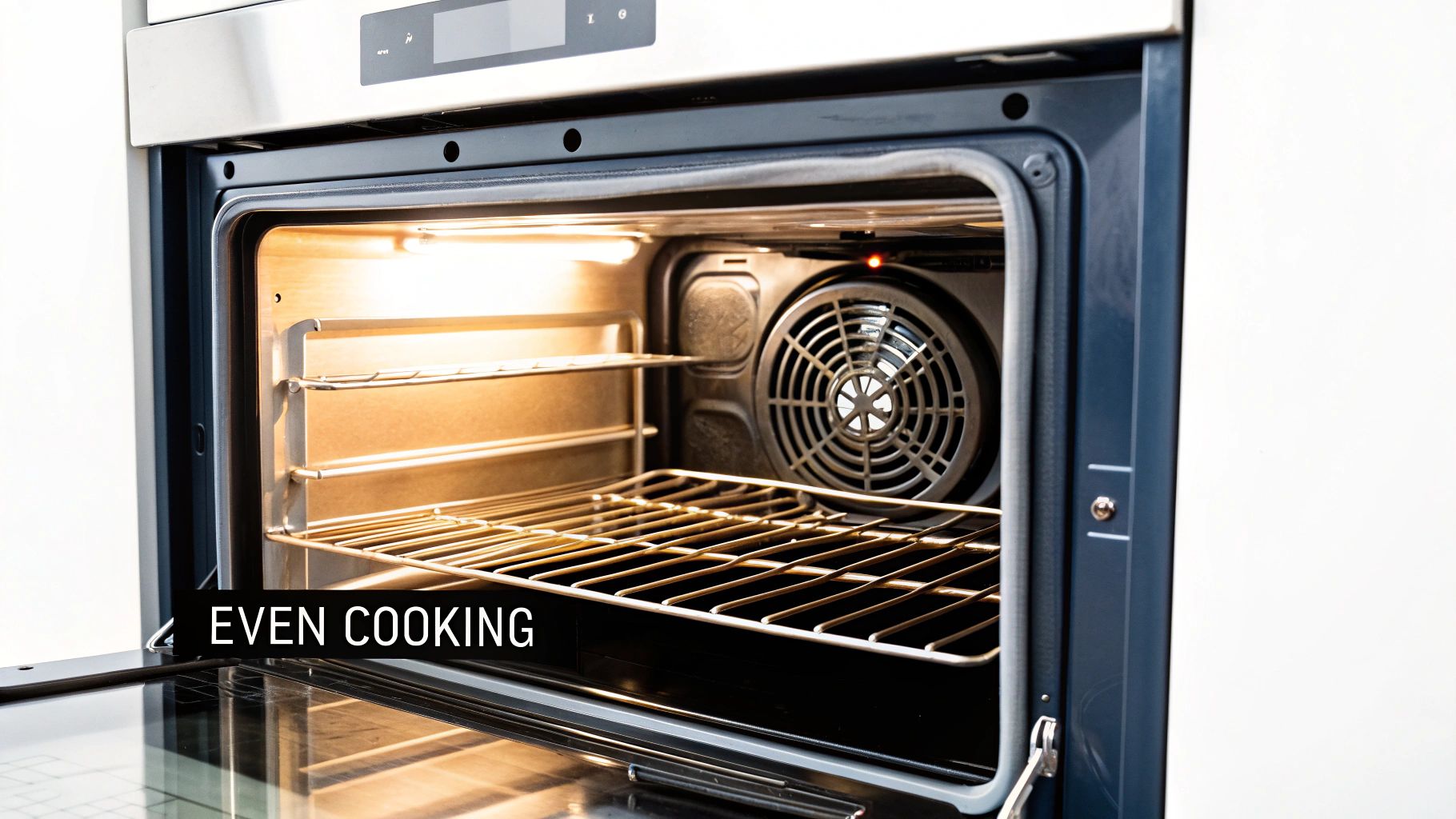
Think about the difference between letting your hair air-dry versus using a good blow dryer. That’s pretty much the leap you get with a convection oven. Instead of just letting heat passively radiate, it actively circulates hot air, blasting away the cool air bubble that naturally forms around food. The result? No more hot spots, no more rotating sheet pans halfway through, just a perfect, uniform finish every single time.
In the vibrant city of Las Vegas, home to a diverse array of restaurants that cater to every palate, this kind of efficiency isn't just nice to have—it's essential for survival. From the sprawling buffets on the Strip to the cozy bistros out in Summerlin, kitchens are under constant pressure to push out amazing food without missing a beat. A gas convection oven is built for that challenge, delivering the speed and consistency needed to keep the tickets flowing and customers happy.
The Heartbeat of a Las Vegas Kitchen
Every successful kitchen is a well-oiled machine, and the oven is right at the heart of the hot line. To achieve success, it must work seamlessly with other essential restaurant equipment to keep things running smoothly.
You can think of it as part of a high-performance ecosystem. While your convection oven is busy roasting, baking, or finishing plates, these other players are making sure the whole operation stays on track:
- Commercial refrigerators: This is where it all starts. These units keep your prepped ingredients perfectly chilled and safe, ready to go when the orders start firing.
- Commercial freezers: Essential for managing inventory and locking in freshness, a good freezer protects your high-cost proteins and reduces food waste.
- Ice machines: In a city that practically runs on ice, a dependable machine is non-negotiable. It keeps the drinks cold and the customers refreshed, a must-have for any bar or restaurant.
Together, this lineup forms the backbone of your operation. The gas convection oven is the engine that drives it all, turning your raw ingredients into the incredible dishes that make the Las Vegas dining scene so famous.
If you’re a busy operator, you need a quick rundown of why this piece of equipment is so vital. Here’s a look at the key features and how they directly benefit your kitchen.
Gas Convection Oven at a Glance
| Feature | Benefit for Your Las Vegas Kitchen |
|---|---|
| Fan-Forced Air Circulation | Eliminates hot spots for perfectly even cooking, batch after batch. |
| Faster Cooking Times | Increases kitchen throughput, allowing you to turn tables faster during peak hours. |
| Gas Heat Source | Provides powerful, moist heat ideal for roasts and baked goods, often at a lower utility cost. |
| Precise Temperature Control | Ensures consistent results, protecting your reputation and reducing food waste. |
| High-Volume Capacity | Allows you to cook multiple racks at once, maximizing output in a small footprint. |
Ultimately, this all adds up to a more efficient, profitable, and less stressful kitchen—something every Las Vegas operator can appreciate.
For any high-volume restaurant, bar, or even a food truck, the ability to produce consistent results quickly is the key to profitability. A gas convection oven ensures every dish, from perfectly roasted meats to delicate pastries, meets the highest standards, shift after shift. This reliability is what allows a kitchen to thrive amidst the relentless pace of the city.
How Convection Ovens Cook So Damn Well
To really get why a gas convection oven is a workhorse in any serious kitchen, you have to look under the hood. It’s not magic, but it’s close. The real secret is a one-two punch: a powerful gas burner kicking out serious heat and an internal fan that pushes that hot air all around the oven cavity. That dynamic duo is what makes all the difference.
Think about heating a room with just one radiator tucked in a corner. You'll get warm spots and cold spots. A regular oven isn't much different, which is why your food cooks unevenly. A convection oven throws a fan into the mix—like a ceiling fan for your food—spreading that hot air into every nook and cranny. This ensures the entire oven stays at one consistent temperature.
This constant airflow completely wipes out the hot and cold spots that mess up dishes in a traditional oven. The result? Food that looks like it came out of a magazine photoshoot. We’re talking perfectly browned chicken with crispy skin, cakes and breads with an even golden crust, and roasted vegetables cooked through without being burnt on one side. For a busy Las Vegas kitchen, that kind of consistency isn't just nice to have; it's absolutely essential.
The Power of Moving Air
All that hot air moving around does more than just even out the temperature—it actually cooks things faster. The fan strips away the little bubble of cooler air that naturally sits around food, letting the heat attack it directly and more efficiently. This is why a gas convection oven can cook food up to 25-30% faster than your old-school conventional oven.
For a massive buffet on the Strip trying to crank out perfect prime rib roasts, or a quiet Summerlin café that needs flawless croissants every morning, that speed and precision is priceless. This tech makes sure quality and efficiency go hand-in-hand, helping chefs crush ticket times without ever cutting corners on the final plate.
It all boils down to a simple concept: moving air transfers heat way faster than still air. By keeping that heat in constant motion, a gas convection oven creates the perfect environment for crisp textures and uniform browning, making it a non-negotiable tool for any chef who refuses to settle.
A Growing Market That Proves Its Worth
The sheer reliability and efficiency of gas convection ovens have made them a permanent fixture in commercial kitchens across the globe. Here in the nonstop Las Vegas restaurant scene, where kitchens are fired up 24/7, the cost savings and dependable performance of gas models are especially critical. The market numbers tell the same story.
The global gas convection oven market is on track to grow from USD 2.3 billion in 2025 to USD 3.5 billion by 2035, which is a solid 4.3% compound annual growth rate. That’s not just a random statistic; it’s proof that the industry trusts these machines to deliver, day in and day out, in the most demanding spots on earth. You can dig deeper into the numbers in this gas convection oven market report.
Choosing Between Gas and Electric Ovens in Nevada
In a city like Las Vegas that truly never sleeps, every piece of kitchen equipment has to earn its keep. For any restaurant owner here, picking between a gas and an electric convection oven is a huge decision. It's one that ripples through your kitchen's workflow, your monthly operating costs, and the quality of every single dish you send out.
Gas ovens have a legendary reputation for a reason: they preheat in a flash and recover temperature incredibly quickly. Picture the dinner rush on the Strip—your line cooks are constantly opening and closing that oven door. The ability to snap right back to the set temperature is a massive advantage, keeping your cook times consistent and your results predictable.
On the flip side, you'll hear some chefs, especially bakers, argue that electric ovens give you a slightly more precise, even heat. That's fair. But for the high-volume roasting and general-purpose cooking that drives most Las Vegas restaurants, the raw power and naturally moist heat of a gas convection oven usually takes the crown.
Comparing Key Factors for Las Vegas Kitchens
The choice isn't just about how the food turns out; it's also about the numbers. Gas models almost always have lower long-term running costs, especially when you look at Nevada's natural gas rates. For any business owner trying to keep monthly utility bills in check, that's a major point to consider.
Installation is another big difference. A gas convection oven needs a dedicated gas line and, critically, a proper ventilation hood system for safety and compliance. This might mean a bigger upfront cost to get set up, but the day-to-day savings on your energy bill can quickly make up for that initial investment. Electric models are usually simpler to install, but you'll likely feel it on your power bill down the line.
This flowchart breaks down the simple but powerful process behind convection cooking—marrying a gas heat source with a fan to get those beautifully even results.
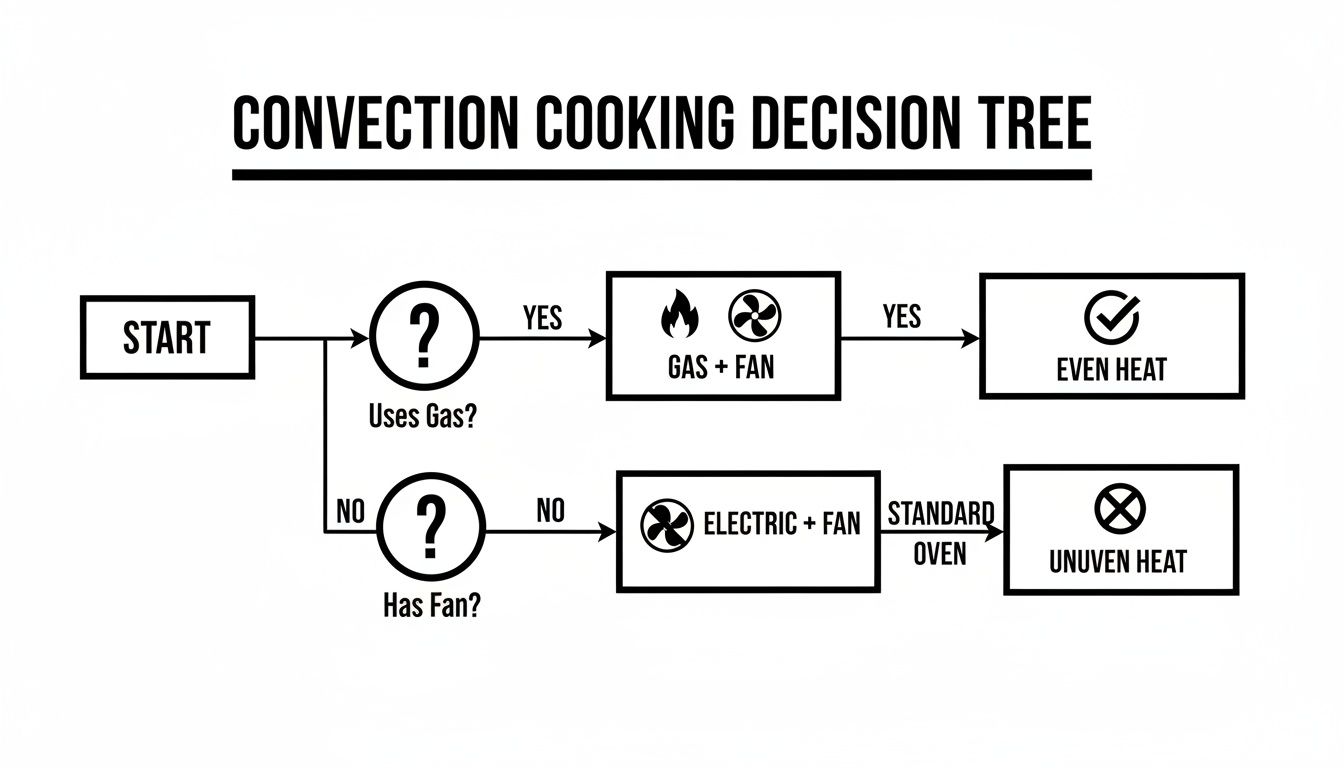
As the graphic shows, that combination of gas and a fan is the core formula for achieving the consistent, even heat that professional kitchens absolutely depend on.
Making the Right Choice for Your Menu
At the end of the day, the right oven is the one that fits your specific operation. You need to think about your menu, your expected customer volume, and what your kitchen is already set up for.
- High-Volume Roasting & General Cooking: The speed and sheer power of a gas oven are tough to compete with.
- Delicate Baking: Some pastry chefs might lean toward the dry, super-precise heat of an electric model.
- Long-Term Savings: In the Las Vegas area, gas is typically the more budget-friendly option for operating costs.
It’s no surprise that gas convection ovens dominate the commercial world. Their robust heating power is a perfect match for the intense pace of hotel and casino kitchens. The global market reflects this, valued at USD 202.2 million in 2024 and projected to hit USD 257.3 million by 2030. The gas oven segment is a huge driver of that growth, expected to expand at a 3.7% CAGR.
Making a smart decision means looking at the whole picture of your kitchen's essential restaurant equipment, including how your oven will work alongside your commercial refrigerators and ice machines. To dig a little deeper into how these cooking technologies stack up, check out our guide on the convection vs conventional oven.
Finding the Right Oven Size and Specifications
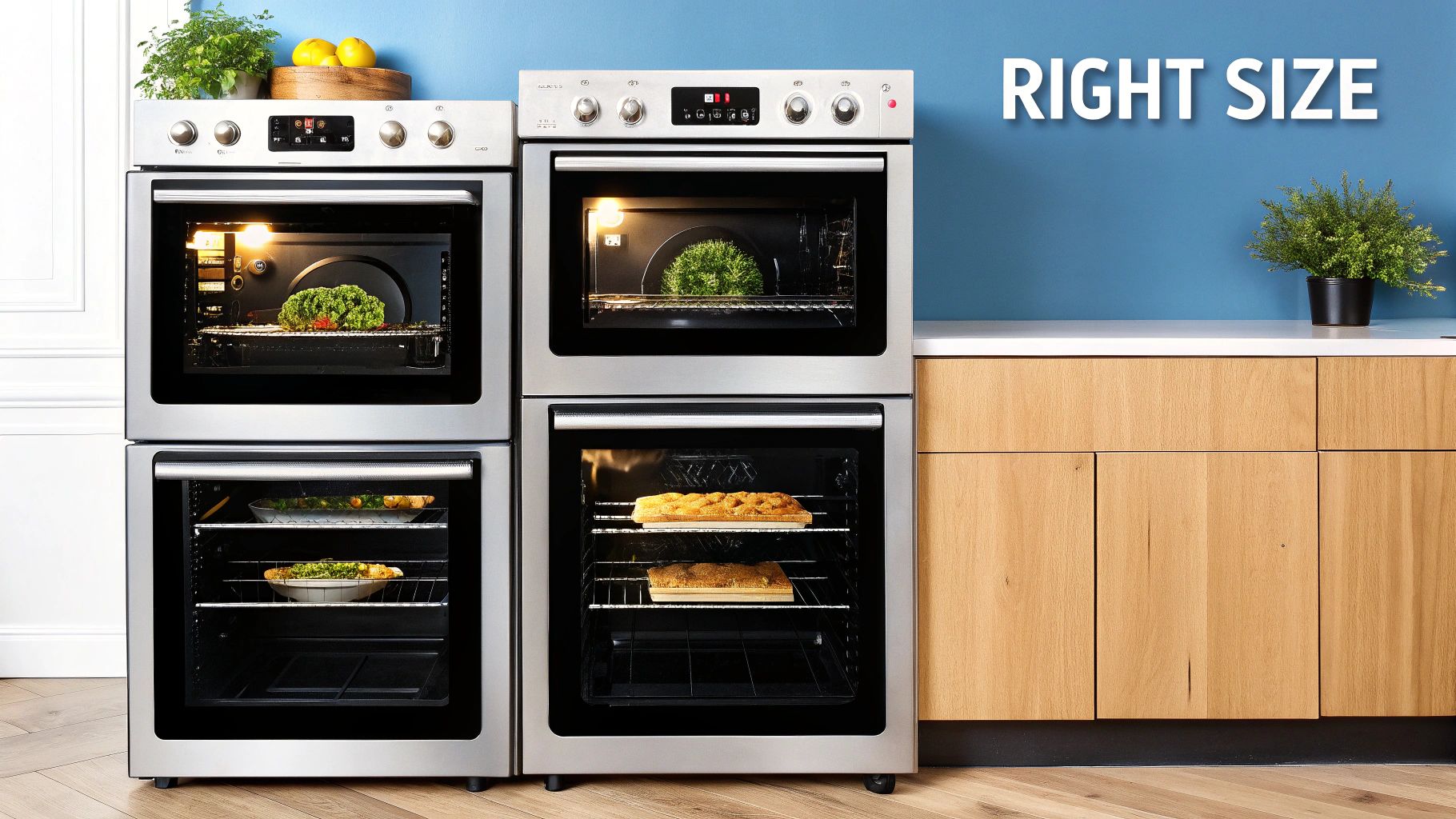
Choosing the perfect gas convection oven goes way beyond the price tag. It’s really about matching the machine to your kitchen's mission. Here in Las Vegas, every single kitchen has its own unique demands, and picking the right specs can be the difference between a smooth, profitable service and a night of total chaos. You’ve got to look past the shiny stainless steel and really dig into the engine under the hood.
This all starts with two key numbers: BTUs (British Thermal Units) and capacity. Think of BTUs as the horsepower for your kitchen—it's a measure of the oven’s raw heating power. More BTUs mean you get faster preheating and quicker temperature recovery. That's absolutely critical when your line cooks are yanking the door open every few minutes during a dinner rush.
Capacity, on the other hand, is all about your throughput. It’s measured by how many standard full-size sheet pans the oven can hold at once. This number directly tells you how much product you can crank out during your busiest hours, a vital piece of the puzzle for any high-volume kitchen.
Matching the Oven to Your Las Vegas Venue
The right size and power are completely dependent on your concept. A massive, high-traffic casino buffet on the Strip has totally different needs than a nimble food truck hustling in the downtown arts district.
- High-Traffic Casino Buffet: You're probably looking at a full-size, double-stack gas convection oven as the bare minimum. That kind of setup gives you the high capacity needed to keep endless pans of roasted chicken, vegetables, and baked goods flowing without a single hitch.
- Intimate Downtown Restaurant: A standard single-deck, full-size oven is often the sweet spot. It offers a great balance of production power and footprint for a kitchen focused on an à la carte menu.
- Compact Food Truck or Café: In these spots, space is the ultimate luxury. A smaller unit is almost always the answer. To see what these space-saving models are all about, check out our detailed look at the countertop commercial convection oven.
A gas convection oven should be an asset, not a bottleneck. Before you buy anything, map out your busiest service. Calculate the absolute maximum number of pans you need cooking at the same time. This one simple exercise will point you directly to an oven that works for you, not against you.
Essential Features for Modern Kitchens
Beyond just raw power and size, modern ovens come packed with features designed to make your life easier and your food more consistent. Programmable timers and controls let your chefs store recipes, ensuring every dish comes out exactly the same, no matter who's running the line that day.
Also, keep an eye out for models with multi-speed fans. A high-speed setting is perfect for getting that crispy skin on a roast, while a gentle, low-speed setting is way better for delicate things like cheesecakes or custards that can get ruined by aggressive airflow. Features like these give your culinary team the control they need to execute a diverse menu flawlessly.
Mastering Installation and Daily Maintenance
Your new gas convection oven is a long-term investment in your kitchen’s success, and its performance starts the moment it's installed. Here in Las Vegas, getting the setup right isn't just a suggestion—it's non-negotiable. Always bring in a licensed pro to make sure everything is safe and up to local code.
The gas line connection is the most critical piece of the puzzle. A botched installation can lead to dangerous leaks or an oven that never quite performs right. Just as important is the ventilation. In Clark County, any gas convection oven has to sit under a proper commercial hood to handle the heat and grease-filled air. It’s a strict rule enforced by the Southern Nevada Health District, and skipping this step can lead to failed inspections and serious downtime.
Building a Bulletproof Maintenance Routine
Once your oven is safely in place, keeping it running smoothly boils down to daily and weekly habits. Consistent, simple care prevents small annoyances from snowballing into expensive repair calls. It's how you keep your kitchen's workhorse in peak condition.
The best way to guarantee your oven's long life and performance is with a solid maintenance routine. A good equipment preventive maintenance checklist will keep your team on track. Create a straightforward checklist that’s easy for everyone to follow.
A simple yet effective schedule can look like this:
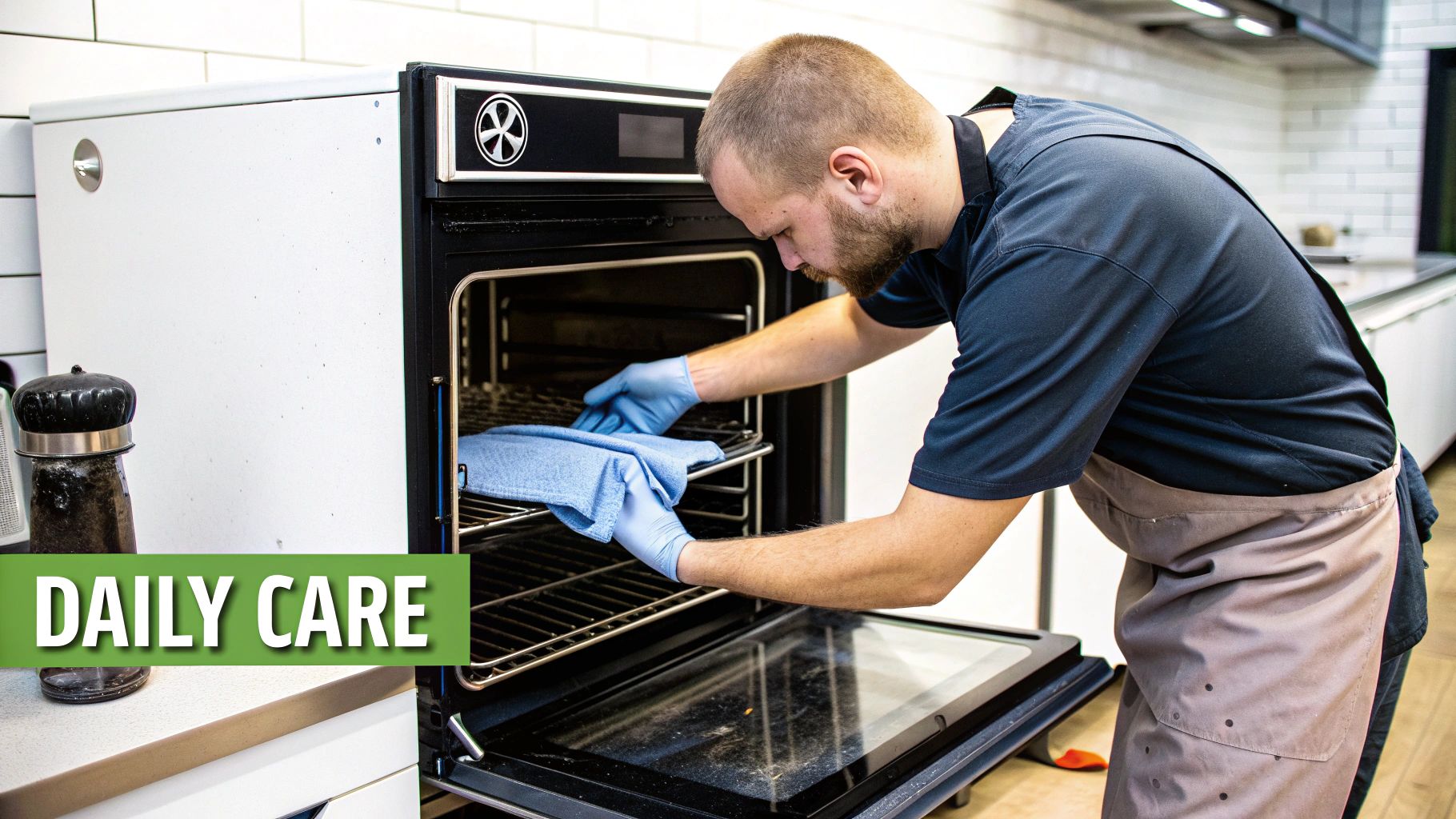
- Daily Tasks: At the end of every service, wipe down the interior and exterior. Give some extra attention to the door gaskets—a gentle cleaning keeps them from cracking, ensuring a tight seal so you're not losing heat.
- Weekly Tasks: Do a deeper clean inside, pulling out the racks and wiping down the fan area. Give the fan a quick check to make sure it spins freely. If it’s getting stuck, your airflow is compromised.
Learning to spot early warning signs is a skill that saves money. If you notice uneven baking, longer preheat times, or strange noises from the fan, address them immediately. Proactive care ensures your gas convection oven remains a reliable asset, not a recurring headache.
Proper maintenance also keeps your entire ventilation system, including the hood, working as it should. If you want to dive deeper into your options, check out our guide on the commercial ventless hood and see how it might fit your setup.
By pairing professional installation with diligent daily care, you empower your kitchen team and protect your investment for years to come.
A Smart Buyer's Checklist for Restaurant Equipment
Alright, you've done the homework. You know the benefits, you've compared the specs, and you're ready to pull the trigger on a gas convection oven that can survive the heat of your Las Vegas kitchen. Before you sign on the dotted line, let's run through one last checklist. This isn't just about buying a piece of equipment; it's about making sure your investment is solid and your kitchen is ready to rock from day one.
The restaurant scene here in Vegas is non-stop, and your gear has to keep up. That new convection oven needs to play nice with your other workhorses, like the commercial refrigerators and commercial freezers that are guarding thousands of dollars of inventory. And let's not forget a reliable ice machine—an absolute must-have in the desert heat to keep service flowing and guests happy.
Your Final Purchase Checklist
Go through these points before you finalize anything. A few minutes now can save you massive headaches down the road. And if you're outfitting a brand new kitchen, make sure you're referencing an ultimate checklist for opening a restaurant to cover all your bases.
-
Certifications (NSF/ETL): This is the big one. Don't even consider a piece of equipment without the right NSF or ETL sanitation listings. The Southern Nevada Health District inspectors will be looking for these stickers, and not having them is a quick way to get your operation shut down. It's a non-negotiable.
-
Warranty Terms: You have to read the fine print. Does the warranty cover just parts, or labor too? How long is it good for? A solid manufacturer's warranty, like the ones you get with dependable brands like Atosa, is your safety net.
-
Shipping and Lead Times: Get the logistics sorted out. What’s the shipping cost to get it to your door in Las Vegas, Henderson, or Summerlin? Even more important: what’s the real lead time? Finding out your oven will show up in 1-2 business days instead of two weeks can make or break your opening schedule.
-
Financing Options: Let's be real, top-tier equipment isn't cheap. Always ask about financing options. Good payment plans can help you get the best oven for the job without completely wiping out your operating capital, making that dream kitchen much more attainable.
A great supplier doesn’t just move boxes; they solve problems. They get the urgency of the Las Vegas market and give you straight answers on warranties, compliance, and delivery. That’s how you get a reliable oven that becomes the heart of your kitchen's success.
Got Questions? We've Got Answers
Stepping into the world of commercial kitchen equipment always brings up a few questions. Here are some quick, straightforward answers to the most common things we hear from Las Vegas restaurant owners looking to buy a new gas convection oven.
How Much Faster Does a Gas Convection Oven Really Cook?
You can expect a commercial gas convection oven to cook food about 25-30% faster than your old conventional oven. It all comes down to the internal fan, which blows hot air all around the food. This gets rid of hot spots and makes sure everything cooks evenly and, more importantly, quickly. In a fast-paced Vegas kitchen where every ticket time counts, that's a massive win.
Do I Absolutely Need a Special Hood for This Oven?
Yes, you absolutely do. Here in Clark County, any piece of commercial cooking equipment that kicks out grease-laden vapors—and that includes gas convection ovens—legally requires a Type 1 ventilation hood. This isn't just about rules; it's a critical fire safety measure. Always, always have a professional handle the installation to make sure you're up to code.
Is Gas Actually Cheaper to Run in Las Vegas?
For the most part, yes. In Southern Nevada, natural gas usually costs less per unit of energy (BTU) than electricity. While you might find an electric oven that's a little more energy-efficient, the lower price of natural gas typically leads to smaller monthly utility bills. For any high-volume kitchen, that long-term saving makes gas the smarter financial choice. It frees up your budget for other workhorses like your commercial refrigerators, commercial freezers, and ice machines, helping you build out a kitchen that runs like a well-oiled machine.
Ready to bring the power and consistency of a top-tier gas convection oven into your kitchen? The team at Las Vegas Restaurant Equipment is here to help you pinpoint the perfect model for your operation, with fast, free shipping and the expert support you need.
Shop Our Full Selection of Gas Convection Ovens