

When you're running a kitchen in the vibrant city of Las Vegas, every decision comes down to speed and consistency. From a bustling cafe in Henderson to a high-volume spot on the Strip, the oven you choose is the workhorse behind your entire operation. The fundamental difference is simple: a fan. Convection ovens use one to move hot air around, while conventional ovens don't. That one component changes everything.
Choosing Your Kitchen Powerhouse in Las Vegas
In the diverse array of restaurants that cater to every palate in Las Vegas, there's no room for equipment that can't keep up. The convection oven vs conventional oven debate isn't just about how you cook; it’s a strategic choice that hits your ticket times, your food quality, and even your power bill. Picking the right one means your kitchen is ready for the relentless pace of a city that truly never sleeps.
This decision is a huge piece of your kitchen puzzle. Getting the oven right is just as critical as other essential restaurant equipment needed for success, including your commercial refrigerators, commercial freezers, and ice machines. If you're building out a new space or doing a major overhaul, thinking about efficient commercial kitchen layouts from the start will save you a world of headaches later on.
Why Oven Selection Matters in Nevada
Let’s be real: in a high-stakes market like Vegas, speed is king. Convection ovens cook food roughly 25% faster than conventional models because that fan eliminates hot spots and transfers heat more efficiently. Think about the summer heat in Nevada—a faster oven means less time running, which helps keep the kitchen cooler and your energy bills in check.
It's also about consistency. We've seen local restaurants report a 20% drop in complaints about undercooked or unevenly cooked food after making the switch to convection. That's a massive win for quality control, whether you're serving a hotel banquet or a quick bar bite.
Your oven choice is a core part of your operational DNA. Before you sign any purchase orders, it's worth taking a look at our guide on designing a restaurant kitchen built for the unique demands of the Vegas market.
Convection vs Conventional Oven At a Glance
Sometimes you just need a quick rundown to get your bearings. This table breaks down the core differences to help you see which direction makes the most sense for your kitchen's needs.
| Feature | Convection Oven | Conventional Oven |
|---|---|---|
| Heating Method | Fan-circulated hot air | Radiant heat from stationary elements |
| Cooking Speed | Faster, typically by 25% | Slower, standard cook times |
| Heat Distribution | Even and consistent | Prone to hot and cold spots |
| Best For | Roasting, high-volume baking, even browning | Delicate items like custards and soufflés |
| Energy Use | More efficient due to shorter cook times | Less efficient due to longer preheat/cook times |
While this table gives you the basics, the right choice always depends on your specific menu and service volume. A high-turnover spot will almost always benefit from convection, but a specialty bakery might still need a conventional deck oven for certain products.
How Each Oven Technology Actually Works
To make a smart investment in your kitchen’s powerhouse, you first have to understand what’s happening inside the box. When we talk about a convection oven vs conventional oven, the real difference comes down to one thing: how the heat gets to your food. That single mechanical difference changes everything—cook times, consistency, and the final texture of your product.
For the sheer variety of restaurants we have here in Las Vegas, from high-end steakhouses on the Strip to local cafes that cater to every palate, knowing which oven does what is fundamental to executing your menu perfectly, night after night.
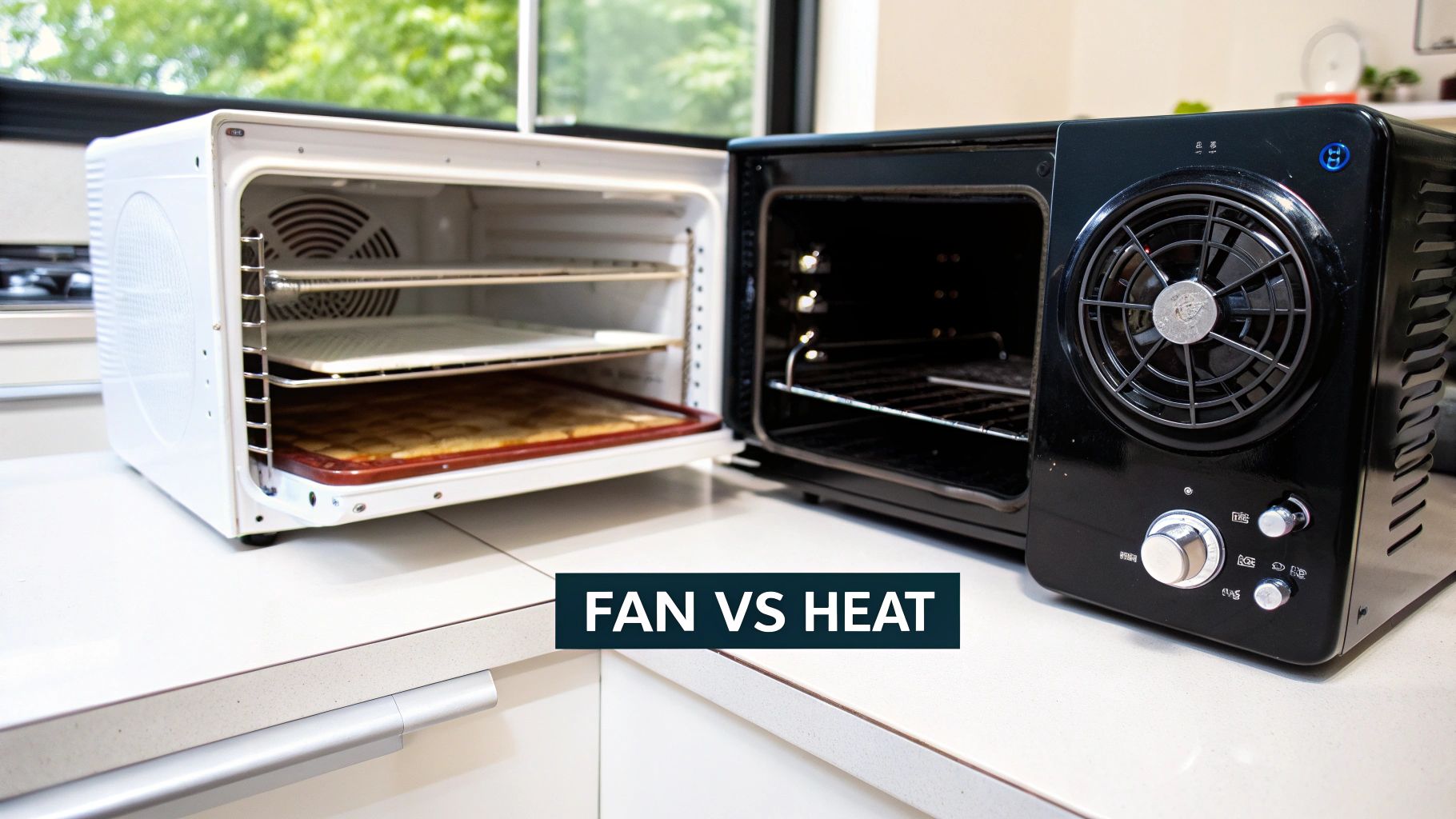
The Mechanics of a Conventional Oven
Think of a conventional oven as a classic. It works with stationary heating elements, usually at the bottom and sometimes at the top for broiling. It relies on radiant heat to fill the oven cavity, and that hot air does what it naturally does: it rises.
This creates an environment with hot and cool zones. The air is hottest at the top, and the area near the bottom element is intense. A tray of cookies might burn on the bottom rack while the top rack is barely golden. It’s why chefs constantly have to rotate pans mid-cook. You can compare it to the still, intense heat of a Nevada desert afternoon—powerful, but not evenly spread.
That gentle, static heat isn't a flaw, though. It’s perfect for delicate items like custards or soufflés that could be ruined by circulating air.
The Power of a Convection Oven
A convection oven adds a game-changing piece of tech: a fan and an exhaust system. This setup doesn't just heat the air; it actively pushes it around the entire oven cavity.
This constant airflow gets rid of the hot and cold spots you find in conventional models, creating a perfectly consistent cooking environment. The circulating heat is like a windy day, hitting every surface of the food with the same temperature. The results are huge for a commercial kitchen:
- Faster Cooking: Heat transfer is way more efficient, often cutting cook times by 25% or even more.
- Even Browning: Roasts get that perfect, crisp skin all over, and pastries turn a uniform golden-brown without needing to be turned.
- Better Yield: Because you can cook faster at slightly lower temperatures, meats don't shrink as much. You get to keep more of your product.
In a slammed Las Vegas kitchen, consistency is everything. A convection oven's circulating air ensures that the hundredth roasted chicken of the night comes out just as perfectly cooked as the first. That's the kind of reliability that makes or breaks a restaurant.
To really get a feel for how these technologies perform, it’s worth digging into the key differences between regular bake and convection bake. Understanding these core principles helps you see why one oven is a beast for roasting proteins while the other is a better choice for protecting delicate custards. Your oven choice directly impacts your entire kitchen workflow—from your commercial refrigerators and freezers to your ice machine—by streamlining cook times and keeping the whole line running smoothly under pressure.
A Performance Showdown on Speed and Consistency
When the Friday night dinner rush hits in Vegas, the theoretical differences between ovens suddenly get very real. That’s when you see the performance gap between a convection and a conventional oven show up in your profits. The whole convection oven vs conventional oven debate really comes down to three things: speed, consistency, and how much product you’re left with at the end of the cook.
For any kitchen trying to run a tight ship—from a massive casino buffet to a cozy neighborhood joint—nailing these three metrics is everything. Getting your oven choice right is just as important as picking the best commercial refrigerators and freezers to keep your inventory fresh. It all has to work together.
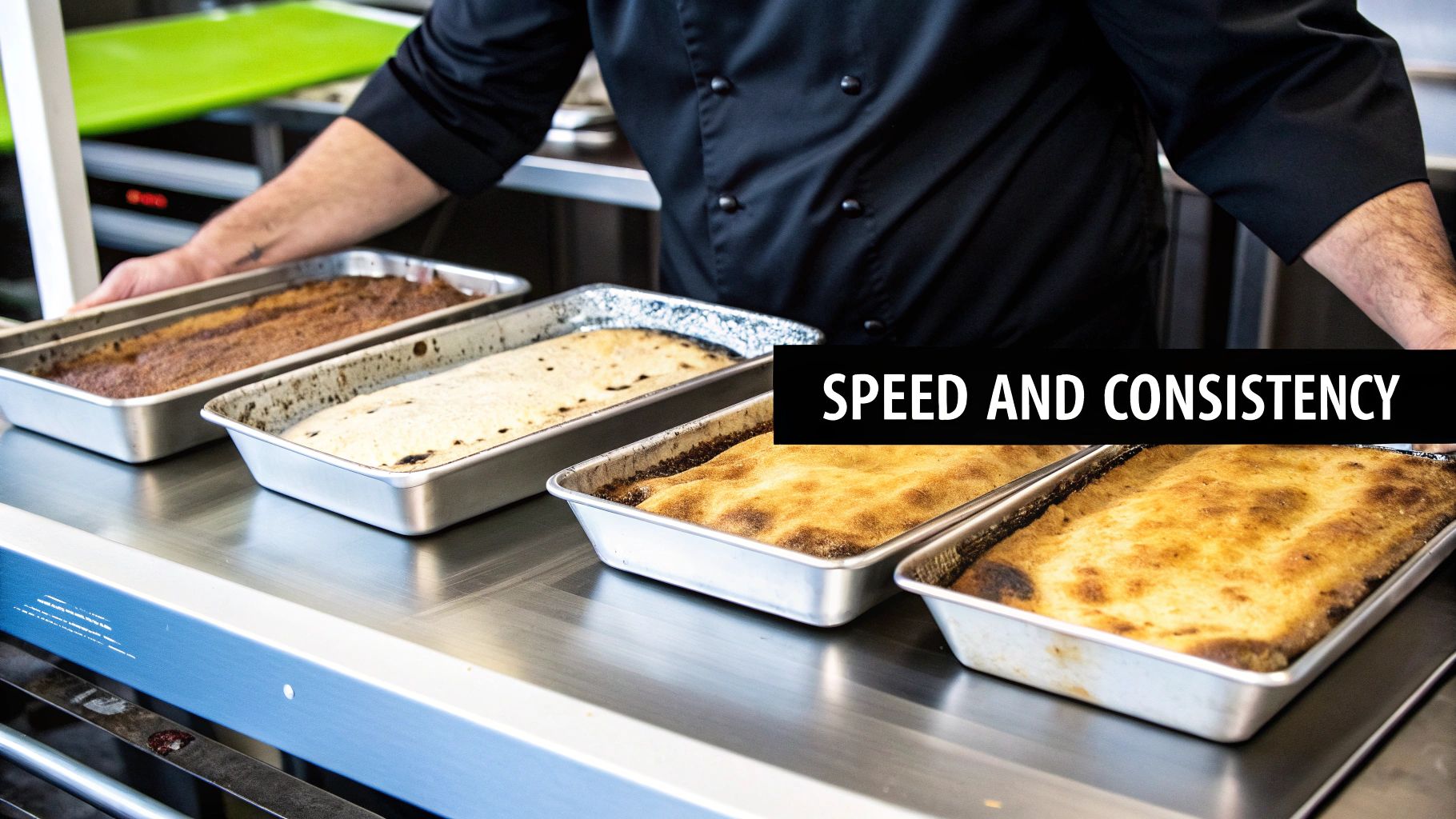
Unmatched Speed for Higher Turnover
In a town built on speed, a convection oven's biggest selling point is that it cooks food about 25% faster than a conventional oven. This isn't just a small perk; it directly leads to turning more tables and making more money.
Picture it: a packed house, a line stretching out the door. Getting your signature roasted chicken or batches of dinner rolls out of the oven faster means plates hit tables sooner. This efficiency lets you serve more guests during your busiest hours, turning a long waitlist into seated customers. For any Las Vegas kitchen, that extra speed is a massive competitive advantage.
A conventional oven, which just relies on static heat, simply can't keep up. The longer cook times create bottlenecks on the line, slowing down the whole service and capping the number of tables you can serve on a busy night.
A convection oven doesn't just cook food; it manufactures time. In the fast-paced Las Vegas dining scene, that extra time translates directly into more covers served and a healthier bottom line.
Achieving Unwavering Cooking Consistency
Consistency is what builds a restaurant's reputation. People come back for that same perfectly cooked dish they remember, and a convection oven is your best bet for delivering that reliability, especially when you’re cooking in volume.
The fan blowing hot air around in a convection oven gets rid of the hot and cold spots that are a constant headache with conventional models. This means every single item, on every single rack, gets the same even heat. For a casino buffet churning out sheet pans of roasted vegetables or a catering company baking hundreds of pastries, that kind of uniformity is essential. You get perfectly golden-brown results across the board, without a chef having to babysit the oven and constantly rotate pans.
A conventional oven, on the other hand, needs a lot of hands-on attention to get anywhere close to the same results. Chefs have to stay on top of it, swapping trays from the top rack to the bottom to keep one side from burning while the other is still raw. This eats up valuable time and labor, and it opens the door to human error and inconsistent food.
Maximizing Final Product Yield and Profit
Every ounce of product you don't lose to the cooking process is money in your pocket. This is where a convection oven's effect on your final product yield becomes a huge financial plus. Because you can cook faster at lower temperatures, you get significantly less shrinkage, especially with meats.
When you’re roasting big cuts of prime rib or pork shoulder, less shrinkage means more sellable portions from every piece. Over a few weeks or months, that adds up to serious cost savings and better profit margins. For a steakhouse on the Strip or a banquet hall serving hundreds, that increased yield can completely change the game for your food costs.
Conventional ovens, with their long exposure to high, direct heat, tend to dry out proteins and cause more moisture loss. You literally end up with fewer servings per roast, which hits your profitability hard. Choosing a convection model is an investment in getting the most out of your priciest ingredients—just like a reliable ice machine is critical for your bar service.
Analyzing Energy Use and Operational Costs
Here in Las Vegas, where summer temps easily clear 100°F, your operational costs are about way more than food and labor. The heat pumping out of your kitchen equipment goes straight to your utility bill—not just from the appliance itself, but from the absolute beating your HVAC system takes trying to keep up. This is exactly why the convection oven vs conventional oven debate is a massive financial decision for any restaurant in town.
The constant fight to keep a kitchen cool means you have to look at the energy footprint of every single machine. From your walk-in commercial freezers to the under-counter commercial refrigerators, efficiency is everything. An oven that runs hotter for longer doesn't just suck more power; it forces your entire cooling system into overdrive, running up your costs every single day.
Convection Ovens and Energy Savings
A convection oven’s biggest advantage on the cost front is simple: it’s fast. By cooking food up to 25-30% faster and at lower temperatures (usually about 25°F less), it just doesn't have to run as long. That shorter cook time translates directly into lower energy bills for every dish you send out.
This creates a positive ripple effect across a hot Las Vegas kitchen. A cooler-running oven means less heat floods the workspace, which makes things more bearable for your staff and puts less strain on your cooling equipment. When your commercial refrigerators and freezers aren't battling a sweltering kitchen, they hold their temperatures with less effort and use less power. You can learn more about this in our guide on choosing energy-efficient commercial refrigeration built for the Nevada climate.
The Higher Cost of Conventional Ovens
Conventional ovens, on the other hand, are just plain less efficient. They take longer to preheat and need more time to cook food through with just radiant heat. This extended runtime means a steady, higher pull on your electricity or gas line.
Over a year, that difference really adds up. For a high-volume spot on the Strip or a busy Henderson cafe, the extra cost from longer cooking cycles makes a conventional oven the more expensive choice in the long run, even if it's cheaper to buy upfront. Plus, all that extra heat just makes for a hotter, tougher kitchen environment.
In the unique climate of Las Vegas, an oven's energy efficiency is a direct reflection of its long-term value. The higher upfront cost of a convection oven is often a strategic investment that delivers a clear and measurable return through lower utility bills and reduced strain on other critical kitchen systems.
Energy efficiency is a huge deal in Nevada's kitchens, and convection ovens have a clear edge. A 2015 National Restaurant Association study backed this up, finding that kitchens with convection technology saved an average of $1,200 a year on energy in mid-sized operations. For busy nightlife venues where ovens can run for more than 12 hours a day in the desert heat, those savings get even bigger. You can check out more of these oven efficiency findings on angi.com. This data really reframes the higher initial cost not as an expense, but as a smart investment that pays you back month after month.
Matching the Right Oven to Your Menu
Any good chef knows you need the right tool for the job. This couldn't be more true when you get into the convection oven vs conventional oven debate. It’s not about which one is flat-out "better," but which one is better for the specific dishes that make your Las Vegas spot what it is. Your choice of oven directly impacts everything from the crust on a prime rib to the delicate texture of a cheesecake.
This decision ripples through your entire kitchen. The right oven keeps your hot line humming, pushing out food quickly and consistently. It prevents backups and ensures all the prep work you've got chilling in your commercial refrigerators and freezers doesn't go to waste.
Best Uses for a Convection Oven
The fan-circulated hot air in a convection oven is a game-changer when you need browning, crisping, and speed. For the high-volume, breakneck pace of many Las Vegas kitchens, this is the workhorse you can't live without.
Here’s where it really pulls its weight:
- Roasting Proteins: Think whole chickens, turkeys, or massive cuts of prime rib. Convection is king here. The moving air renders fat beautifully, giving you that golden-brown, crispy skin customers can't resist, all while cooking faster and more evenly. You'll also see less shrinkage, which means better yield and more money in your pocket.
- High-Volume Baking: If you're cranking out sheet pans of cookies, dinner rolls, or pastries for a casino buffet, a convection oven is your best friend. Its even heat means you can load multiple racks at once and get consistent results on every single item, without having to constantly rotate pans.
- Crisping and Browning: Dishes like roasted vegetables, potatoes, and pizzas get a major upgrade from the dry, circulating heat. It pulls moisture from the surface, creating fantastic caramelization and crispier crusts—a non-negotiable for any Vegas pizzeria trying to serve the perfect slice.
- Efficient Reheating: For banquets or big catering gigs, convection ovens are perfect. They can quickly and evenly reheat dozens of plates at once without drying out the food, making sure every guest gets a hot meal.
When to Rely on a Conventional Oven
While convection is a beast for speed and browning, that powerful fan can be the enemy of more delicate foods. A conventional oven offers gentle, still heat that's absolutely critical for anything sensitive to airflow.
This is where the radiant heat of a conventional oven shines:
- Delicate Desserts: Custards, flans, and cheesecakes have liquid batters that need a calm, moist environment to set up properly. The fan in a convection oven can make them crack on top or cook unevenly.
- Soufflés and Quick Breads: These items depend on a slow, steady rise. The force from a convection fan can knock the air right out of them, causing them to collapse or form a crust before they're fully baked inside.
- Certain Breads: While many breads do great with convection, some artisan loaves and lean doughs really need the high humidity and still air of a conventional oven at the start to get that perfect oven spring and crust.
The bottom line is simple: use convection for anything you want roasted, browned, or crisped quickly. Stick with conventional for anything delicate that needs to set or rise gently without being blown around.
Many modern Las Vegas kitchens find it's best to have both, or even a combination oven that can switch between modes. For smaller spots where every inch of space counts, a countertop model can be a smart move. To see what's out there, you can learn more about finding the right countertop commercial convection oven to round out your cooking line. Making that strategic choice ensures your kitchen can perfectly execute every single dish on the menu, from a hearty roast to the most fragile dessert.
Which Oven Is Best for Your Menu Item?
Still on the fence? Let's break it down by specific menu items you're likely to see in a Las Vegas kitchen. This table should help you match the food to the right oven for the best possible results.
| Menu Item | Recommended Oven | Reasoning & Pro Tips |
|---|---|---|
| Prime Rib Roast | Convection | Achieves a perfectly browned, crispy crust while keeping the inside moist and evenly cooked. The faster cook time also improves yield by reducing shrinkage. |
| Cheesecake | Conventional | The gentle, static heat prevents cracks and ensures a smooth, creamy texture. The fan from a convection oven is a cheesecake's worst enemy. |
| Sheet Pan Cookies | Convection | Perfect for high-volume baking. You can load multiple racks and get even browning across all cookies without having to constantly rotate pans. |
| Artisan Sourdough | Conventional | Needs a humid, still environment for the initial "oven spring" to get that classic airy crumb and crackly crust. A fan would dry it out too quickly. |
| Roasted Vegetables | Convection | The circulating air wicks away moisture, leading to superior caramelization and browning. Say goodbye to soggy roasted broccoli or potatoes. |
| Custards & Flans | Conventional | These delicate desserts need to set slowly in a moist environment, often in a water bath. Convection heat would disrupt this process. |
| Frozen Pizza | Convection | Ideal for cooking quickly and achieving a crispy crust. The fan helps melt cheese evenly and brown toppings perfectly. A must for pizzerias. |
| Soufflés | Conventional | The powerful airflow of a convection oven will cause a delicate soufflé to collapse before it has a chance to set. Gentle, radiant heat is essential. |
Ultimately, having access to both technologies gives a kitchen the flexibility to tackle any recipe with confidence. By understanding the core strengths of each, you can ensure every dish that leaves your kitchen is the best it can possibly be.
Making the Final Decision for Your Business
Picking between a convection and a conventional oven is one of those big-ticket decisions that will shape your Las Vegas kitchen for years to come. It’s a serious investment that directly impacts your workflow, the quality of your food, and ultimately, your bottom line. To get it right, you have to square the real-world demands of your operation with what each type of oven does best.
The vibrant city of Las Vegas is home to a diverse array of restaurants, so there’s no one-size-fits-all answer here. A sprawling buffet on the Strip has completely different needs than a quiet, artisan bakery in Summerlin. One needs the raw, relentless speed of convection, while the other relies on the gentle, steady heat of a conventional deck oven to coax perfection from delicate pastries.
Key Factors for Your Las Vegas Kitchen
Before you sign on the dotted line, run your kitchen through this quick gut-check. Your answers will steer you toward the right piece of equipment.
- Your Menu: What are you actually cooking? If your menu is built around roasted meats, poultry, and cranking out sheet pans of baked goods, convection is a no-brainer. You need that speed and browning power. But if you’re known for delicate custards, soufflés, or finicky artisan breads, a conventional oven is a must.
- Your Volume: How many covers are you doing on a Saturday night? High-volume spots absolutely need the efficiency of a convection oven to keep up with the rush and turn tables. Smaller, more specialized kitchens might not need that kind of firepower.
- Your Space: Get out the tape measure and check your cookline. A full-size convection oven is a workhorse, but if you’re tight on space, a versatile countertop model or a stackable unit might be a smarter play to make the most of your vertical real estate.
- Your Budget (Now and Later): A conventional oven usually has a lower sticker price. But don't forget about the long game. A convection oven’s efficiency—cooking faster and using up to 30% less energy—can shave a significant amount off your utility bills. In the Nevada heat, those savings add up fast.
This decision tree gives you a quick visual on how your menu should guide your choice.
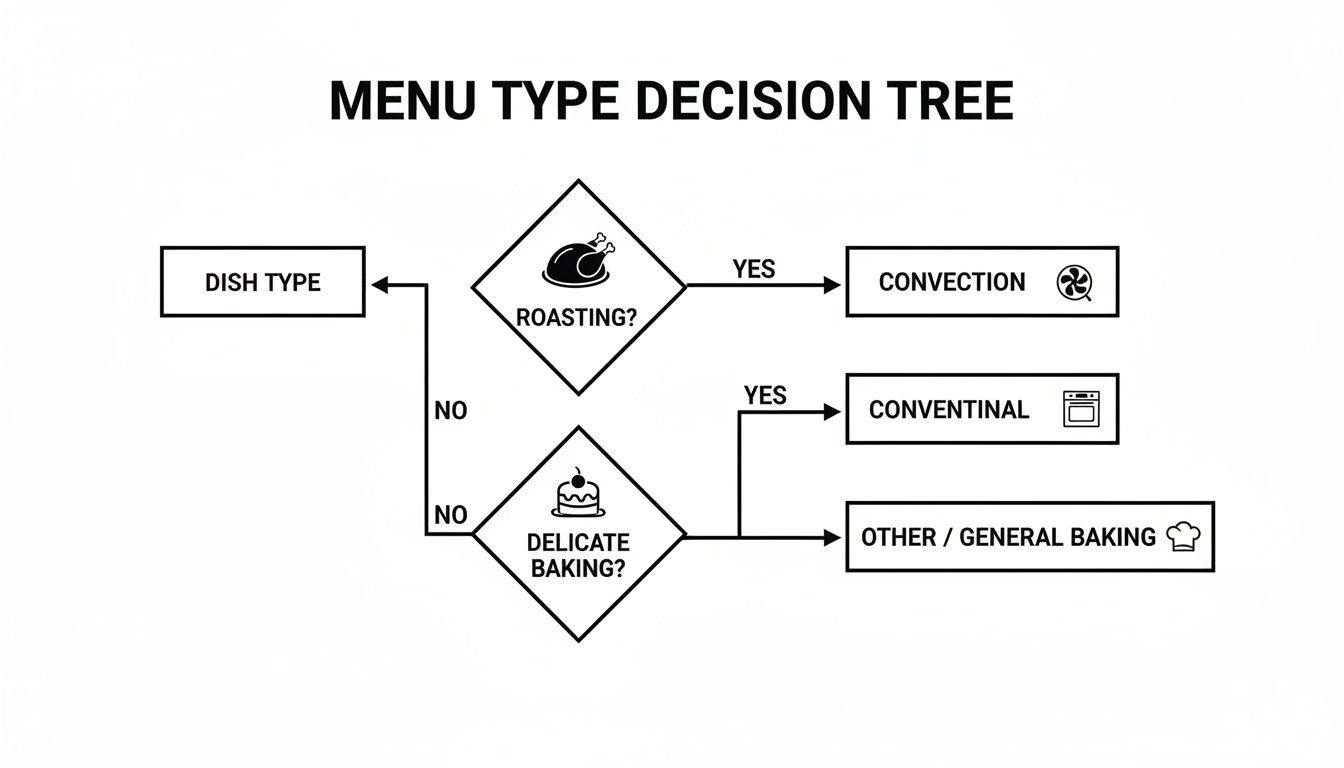
As you can see, if roasting and browning are your bread and butter, convection is your go-to. For anything that needs a delicate touch, the gentle, static heat of a conventional oven is what you need.
The Bigger Picture: Your Kitchen Ecosystem
Remember, your oven doesn't work in a silo. It’s the heart of a system that relies on dependable commercial refrigerators, powerful commercial freezers, and high-output ice machines. A lightning-fast oven is useless if your cold line can't keep up with prep. Exploring all the essential restaurant equipment needed for success ensures a seamless operation.
For Las Vegas restaurant owners, the final decision is an ecosystem choice. The right oven, supported by robust refrigeration and compliant with health codes, forms the operational backbone that allows a culinary concept to thrive in one of the world's most competitive markets.
Finally, make sure any piece of equipment you bring in is NSF compliant to meet Southern Nevada Health District standards—that’s non-negotiable. And don't let the upfront cost be the only thing you look at. Financing options can make a top-tier, efficient oven much more accessible, and it will often pay for itself over time through lower energy bills and higher output.
Got Questions? We've Got Answers
When you're in the thick of running a busy Las Vegas kitchen, you need straight answers, not guesswork. Here are some of the most common questions we hear from local chefs and managers when they're deciding between convection and conventional ovens.
Is Convection Always the Winner for Baking?
Not quite. If you're churning out dozens of cookies, dinner rolls, or anything that needs that perfect, uniform golden-brown finish, convection is your workhorse. The circulating air is a game-changer for high-volume, even baking.
But for the delicate stuff? Think again. The fan can be a real problem for cheesecakes, custards, and soufflés. These items need gentle, still heat to set correctly. A conventional oven is the only way to go to avoid a cracked or collapsed dessert.
Can I Just Cook Everything in a Convection Oven?
You could, but you'll need to know your machine. Many modern convection ovens come with a fan-off setting, essentially turning it into a conventional oven on demand. That flexibility is a massive plus.
However, if your menu is heavy on delicate baked goods, a dedicated conventional oven might still be a smart move, working right alongside your main convection unit.
For a diverse Las Vegas menu that jumps from prime rib to flan, having a convection oven that can also run in a conventional mode is a huge operational win. You get the best of both worlds without needing two separate, bulky machines.
How Does My Oven Choice Affect the Rest of My Kitchen?
Your oven is the heart of the hot line, and its performance ripples through your entire kitchen. A convection oven cooks faster and at lower temps, which means it pumps less ambient heat into your workspace.
This is a huge deal in the Las Vegas heat. It eases the burden on your commercial refrigerators and commercial freezers, helping them hold temp without running nonstop. Your ice machines won't have to work as hard either, ensuring you have a steady supply when the rush hits. It's an interconnected system, and a more efficient oven is key to keeping utility bills down and preventing equipment burnout.
Ready to equip your Las Vegas kitchen with the power and efficiency it needs to succeed? At Las Vegas Restaurant Equipment, we offer a curated selection of top-tier convection ovens, commercial refrigerators, freezers, and ice machines designed for the demands of the Nevada climate. Explore our inventory and get fast, free shipping to your door at https://lasvegasrestaurantequipment.com.