

Think of a countertop commercial convection oven as a compact powerhouse for your kitchen. Unlike a regular oven, it uses a fan to blow hot air all around the food, cooking everything faster and more evenly. It's the secret weapon for professional kitchens tight on space, giving you the performance of a full-size unit without eating up your whole prep line. This makes it perfect for everything from baking and roasting to just reheating, delivering top-notch, consistent results every time.
Your Guide to Choosing a Countertop Convection Oven
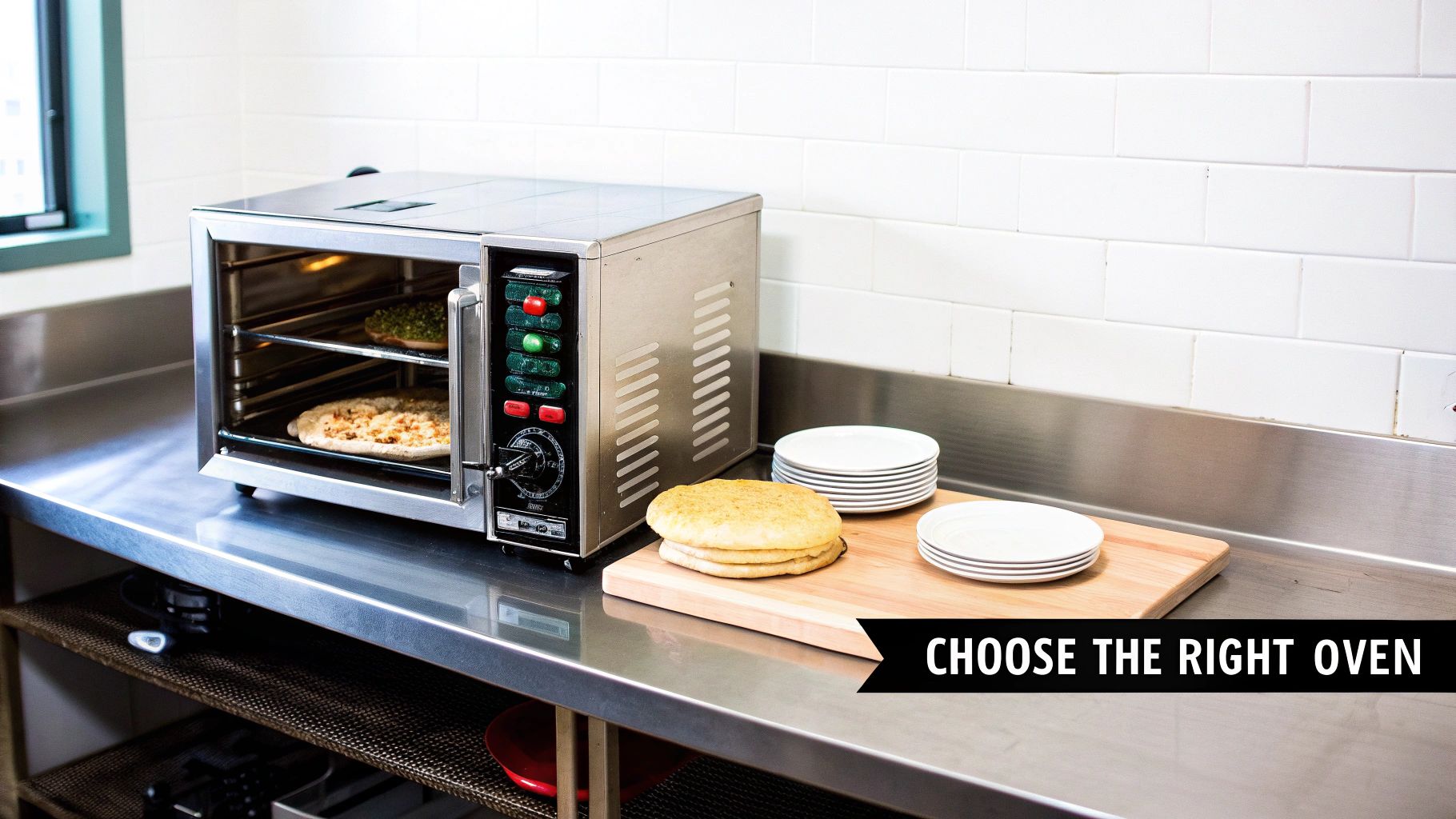
In the fast-paced food scene of the vibrant city of Las Vegas, consistency is king. From high-end casino bistros to the food trucks lighting up the Strip, you'll find a diverse array of restaurants that cater to every palate, and every single one needs gear that can handle the heat. For many spots in Las Vegas and Henderson, a countertop commercial convection oven isn't just a piece of equipment—it's a game-changer that punches way above its weight class without demanding a huge footprint.
This guide is for local restaurateurs who get it: the right tools aren't just a nice-to-have, they're essential. We'll break down why these compact workhorses are such a smart investment for any foodservice operation. A good oven doesn't just sit there; it becomes the beating heart of your kitchen's workflow, working in sync with all your other essential restaurant equipment.
Integrating Your Oven into a Cohesive Kitchen
Picture your kitchen as a well-oiled machine. Fresh ingredients for your signature dishes are pulled from commercial refrigerators and freezers, all holding at the perfect temp. Your bar is humming along, slinging drinks made with fresh cubes from a reliable ice machine. The countertop convection oven slots right into this ecosystem, making everything run smoother. These are the essential restaurant equipment needed for success.
- Commercial Refrigerators: Your prep line is only as good as its ingredients. An efficient commercial refrigerator keeps your produce snappy and proteins safe, ready to be cooked quickly and evenly in the convection oven.
- Commercial Freezers: If you're working with frozen goods—think pastries, appetizers, or par-baked breads—a solid commercial freezer is non-negotiable. A convection oven is a champ at baking these items straight from frozen, which is a massive time-saver.
- Ice Machines: It might not seem directly related, but a dependable ice machine is the backbone of your beverage service—a huge revenue stream here in Vegas. A well-equipped kitchen has every angle of the customer experience covered.
In a town that never sleeps like Las Vegas, kitchen efficiency is everything. A countertop convection oven lets you crank out batch after batch, freeing up your larger equipment and your staff for other jobs. The result? Faster ticket times and happier customers.
This guide will give you a clear roadmap to picking the perfect model for your business. We’ll cover it all, from how the tech works to the must-have features you need to look for. We'll also get into the nitty-gritty of installation and maintenance, all geared for the unique demands of the Las Vegas foodservice market. To see what's out there, check out our full collection of convection ovens. Let's get your kitchen set up for success.
How Convection Technology Transforms Your Kitchen
So, what’s the big deal with a countertop commercial convection oven, and how is it any different from the regular oven you might have at home? The secret is surprisingly simple, but it completely changes the game in a professional kitchen. It’s all about moving hot air around.
Think about the difference between a still, scorching Las Vegas summer day and one with a bit of a breeze. That moving air makes the heat feel way more intense, right? That's the exact principle behind a convection oven. A standard oven just has heating elements that radiate heat, but a convection oven adds a fan to blow that hot air all over the place.
This constant circulation gets rid of those frustrating "hot spots" and "cold spots" you find in regular ovens. You know the ones—where one side of your sheet pan is burnt to a crisp while the other side is still pale. Convection solves that headache for good, turning the entire oven into a consistent, even cooking zone.
The Power of Even Heat Distribution
In a vibrant city like Las Vegas, where every dish that leaves the kitchen has to be on point, you can't afford inconsistency. A countertop commercial convection oven gives you that reliability, making it just as crucial as your workhorse commercial refrigerators and commercial freezers.
The benefits of all that circulating heat show up immediately:
- Cooks Food Faster: By constantly hitting the food with hot air from all sides, a convection oven can slash cooking times by up to 25%. For a busy kitchen, that means getting more orders out during the dinner rush without cutting corners.
- Better Browning and Crisping: That consistent airflow is perfect for the Maillard reaction—the science behind why roasted foods taste so good and get that beautiful golden-brown color. You'll see it in crispier chicken skin and perfectly caramelized vegetables.
- Get More Out of Your Roasts: Cooking more evenly and often at slightly lower temps means less shrinkage. That means more servings from every prime rib or pork loin you cook, which is a direct boost to your bottom line.
This isn't just a small tweak to an old appliance; it’s a fundamental upgrade that improves just about everything you cook.
A Growing Trend in Professional Kitchens
Chefs and operators are definitely catching on. The demand for convection technology is a huge sign that kitchens everywhere are moving toward smarter, more efficient equipment. The market for commercial convection ovens has jumped from around USD 3.8 billion to USD 4.02 billion in just the last year. That growth isn't slowing down, either—experts predict the market could hit USD 5.8 billion as more restaurants see the value. You can dig into the numbers yourself in recent commercial convection oven industry reports.
A convection oven ensures every single item, on every single rack, gets the exact same amount of heat. For a Las Vegas restaurant pushing out hundreds of plates a night, that means every croissant is golden, and every piece of salmon is cooked through, time after time.
That kind of dependability is everything. It means your kitchen staff can trust their equipment and focus on the details that make a dish great. Whether you’re a downtown Henderson cafe baking muffins in the morning or a massive Strip kitchen roasting meats, the technology provides a solid foundation. It becomes a true partner in your operation, working right alongside other key players like your ice machines to keep everything running smoothly from prep to plate.
Selecting the Right Oven for Your Las Vegas Menu
Choosing the right countertop commercial convection oven for your Las Vegas spot isn't just about picking a box that gets hot. Think of it as a strategic move—one that directly affects the quality of your food, how smoothly your kitchen runs, and, ultimately, your bottom line. In a city with everything from high-end steakhouses on the Strip to bustling downtown cafes, the perfect oven for one kitchen could be a total disaster for another.
This guide is designed to cut through the noise and get straight to the point. We'll break down what you actually need to consider, helping you find the model that fits your menu, your space, and your budget. Getting this right now saves you from some serious headaches and costly mistakes down the road.
This simple infographic sums up the core difference between old-school conventional cooking and the fan-powered magic of convection.
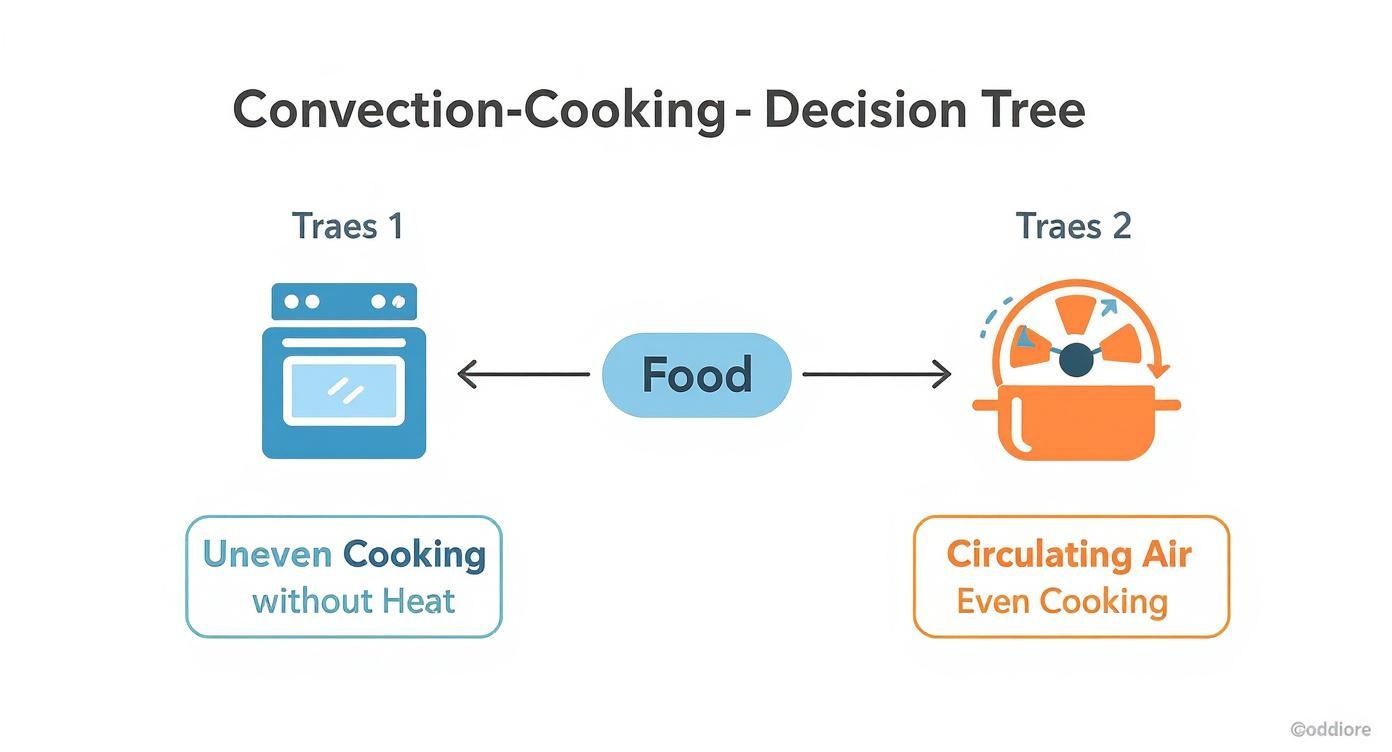
You can see right away how adding a fan changes the game. That circulating air ensures every part of the food gets consistent heat, which means you get beautifully even results every single time.
Size and Capacity
First things first: how much oven do you really need? Countertop models are usually measured by the size of the sheet pans they can fit, which tells you everything you need to know about their capacity.
- Half-Size Ovens: These are the workhorses of the countertop world, holding standard 18" x 13" half-size sheet pans. They strike a great balance between cooking capacity and a small footprint, making them a perfect fit for most restaurants, bars, and cafes.
- Quarter-Size Ovens: These little guys hold 9.5" x 13" pans and are the smallest commercial option you'll find. They're the go-to for kitchens with seriously tight space—think food trucks, concession stands, or bars that just need to heat up some appetizers.
Just think about your menu and your busiest hours. A cafe churning out muffins and pastries all morning absolutely needs a half-size unit. But a bar that's just warming up pretzels can easily get by with a quarter-size model.
Power Source: Gas vs. Electric
Your choice of power source is a big deal, affecting everything from installation and performance to your monthly utility bills here in Nevada.
Electric Ovens are typically way easier and cheaper to install since you don't need to run a dedicated gas line. They provide fantastic, even heat and are often the only practical option for food trucks or older buildings. The flip side is that electricity rates can make them more expensive to run long-term.
Gas Ovens (running on natural gas or propane) heat up faster and often cost less to operate month-to-month. They're a favorite for high-volume roasting. The trade-off? A more complicated and expensive installation that requires a proper gas line and ventilation under a commercial hood.
For Las Vegas kitchens, where energy costs can really add up, you have to weigh the upfront installation cost of gas against the long-term operational savings from NV Energy. An electric countertop commercial convection oven gives you that plug-and-play simplicity, while gas delivers raw power and efficiency.
Essential Features for the Modern Kitchen
Beyond size and power, a few key features can make a huge difference in how useful an oven is and how much your kitchen staff will love (or hate) it.
- Manual vs. Programmable Controls: Simple manual dials are tough, reliable, and easy for anyone to use. But programmable digital controls are a game-changer for consistency. You can save exact recipes with precise times and temperatures, ensuring every dish comes out perfect, no matter who's on the clock.
- Steam Injection: If you're doing any serious baking, this is non-negotiable. A quick burst of steam helps bread achieve that perfect rise and a beautiful, crispy golden crust. It's also fantastic for reheating certain foods without drying them out.
- Multi-Speed Fans: A powerful fan is great for roasting meats, but it can be way too aggressive for delicate items like meringues or soufflés. An oven with a two-speed or variable-speed fan gives you the control to dial back the airflow for those more sensitive recipes.
To give you a better idea of how these features stack up, here’s a quick comparison table.
Countertop Convection Oven Feature Comparison for Las Vegas Kitchens
This table breaks down the key features to help Las Vegas restaurateurs figure out which type of countertop convection oven is the best match for their kitchen's needs and menu.
| Feature | Manual Controls | Digital/Programmable Controls | Steam Injection Feature |
|---|---|---|---|
| Best For | Kitchens needing simple, durable operation; low staff turnover. | High-volume kitchens where consistency is key; multi-location operations. | Bakeries, patisseries, and restaurants focused on high-quality bread and moist roasts. |
| Ease of Use | Very high. Intuitive knobs for time and temperature. | Moderate learning curve, but simple once recipes are programmed. | Requires some training to use effectively for different products. |
| Consistency | Good, but depends on the operator setting it correctly each time. | Excellent. Pre-set programs ensure identical results every time. | Adds another layer of control for superior texture and finish, especially in baked goods. |
| Cost | Generally the most affordable option. | Higher upfront cost due to advanced electronics. | Adds to the overall cost of the unit; considered a premium feature. |
| Maintenance | Simple mechanical parts are typically easier and cheaper to repair. | Digital components can be more complex and costly to fix if they fail. | Requires regular descaling and maintenance of the water line and injection system. |
Ultimately, the best controls and features depend on your menu and your team's skill level.
It's no surprise that the demand for these advanced, compact units is on the rise. The global market for commercial countertop convection ovens is valued at around US$240 million and is expected to climb to about US$335 million in the next six years. This trend shows that restaurants and bakeries everywhere are looking for efficient, high-performance gear. You can read more about the commercial convection oven market growth to see where the industry is heading.
By thinking through these key points, you can confidently pick an oven that will become a true workhorse in your Las Vegas kitchen.
Installation and Maintenance Best Practices
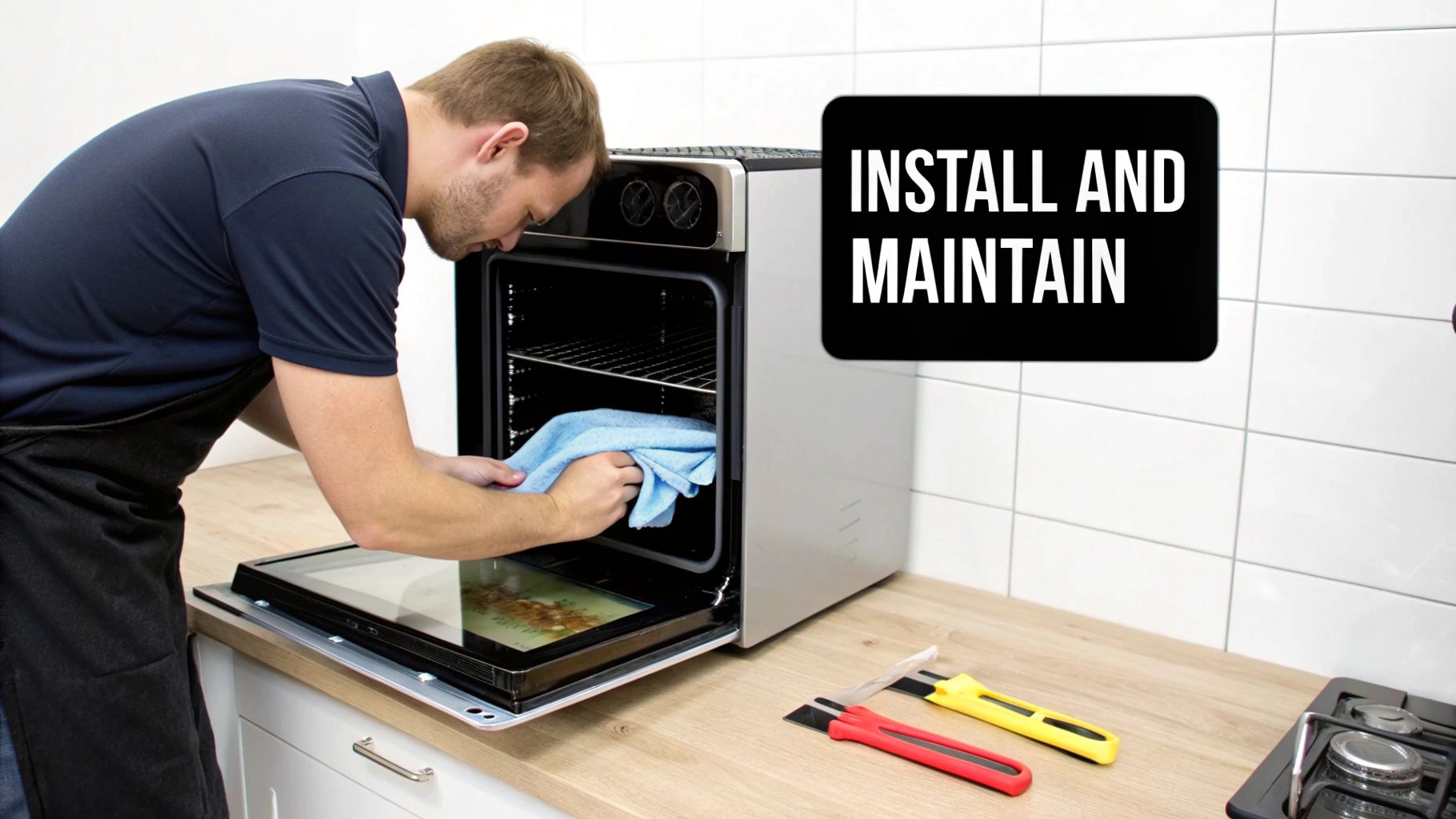
Unboxing that shiny new countertop commercial convection oven is a great feeling, but it’s really just the first step. If you want that oven to become a true workhorse in your Las Vegas kitchen, proper setup and regular maintenance are completely non-negotiable.
Skipping these steps is like buying a high-performance car and never changing the oil. Sooner or later, you're looking at expensive breakdowns and food that just doesn't come out right.
For any busy spot in Las Vegas or Henderson, a solid plan for installation and upkeep means less downtime, safer staff, and consistently great food. In other words, a much better return on your investment.
Setting Up Your Oven for Success
A proper installation from day one lays the groundwork for years of reliable service. This is about more than just clearing a spot on the counter; it's about safety, compliance, and giving the oven the environment it needs to perform at its best.
Here in Las Vegas, every piece of equipment, from your commercial refrigerators to the ice machine, has to pull its weight without fail. Your new oven is no different.
Before you even think about plugging it in, nail these key installation points:
- Ventilation and Clearance: Your oven needs room to breathe. Check the manufacturer's specs and make sure you leave adequate space around the unit—usually a few inches on all sides and the top. This keeps it from overheating and lets the fan pull in cool air, which is critical for protecting the internal parts.
- Electrical or Gas Hookup: This is not a DIY job. Most electric countertop models need a dedicated 208V or 240V circuit, not your standard wall outlet. Always bring in a licensed electrician to make sure your kitchen can handle the load and to install the right receptacle. For gas units, a pro has to connect the line and check for leaks to stay compliant with Clark County fire codes.
- Local Code Compliance: The Southern Nevada Health District has its own set of rules. While many electric countertop convection ovens are ventless, gas models almost always have to be placed under a certified commercial ventilation hood. Do yourself a favor and double-check all local regulations to avoid fines and ensure a safe kitchen.
A countertop commercial convection oven that's installed improperly is an oven that's destined to fail. Taking the time to ensure proper clearance and correct utility hookups is the single best thing you can do to protect your investment from the start.
A Simple Maintenance Schedule to Prevent Breakdowns
Once your oven is fired up and running, a simple, consistent cleaning routine is your best defense against problems. Grease and food bits are the biggest enemies of a convection oven; they cause smoking, uneven cooking, and can eventually lead to component failure.
Think about it like your cold storage—keeping it in prime condition pays off big time. You can see how this applies to other large equipment in our guide to commercial walk in refrigerators.
A proactive maintenance schedule doesn’t have to be a huge chore. Just break it down into daily, weekly, and monthly tasks to keep your oven pristine with minimal effort.
Daily Cleaning (5 Minutes):
- Wipe Down the Interior: After service, once the oven is cool, give the inside walls and door a quick wipe with a damp cloth and a mild, food-safe degreaser. This stops grease from baking on and becoming a nightmare to remove later.
- Clean the Door Gasket: Wipe down that rubber seal around the door. A clean gasket makes for a tight seal, which means better temperature control and energy efficiency.
Weekly Checks (10 Minutes):
- Deep Clean Racks: Pull the wire racks out, let them soak in a degreasing solution, and give them a good scrub. Clean racks mean better airflow and no leftover flavors transferring to your food.
- Inspect the Fan: Take a quick look at the convection fan. Make sure there's no gunk or debris blocking it. A clean fan is key to that perfectly even cook.
Monthly Inspection (15 Minutes):
- Check Door Hinge and Gasket: Give the door hinges a once-over to make sure they're aligned, and check the gasket for any cracks or tears. A damaged gasket leaks heat, wastes energy, and needs to be replaced ASAP.
- Calibrate Thermostat: Noticing things are cooking a little off? Use a separate oven thermometer to see if the temperature you set matches the actual temperature inside. If they don't line up, it might be time to call a service tech for a calibration.
Keeping Cool: Energy Efficiency and Compliance in Nevada
Here in the Las Vegas desert, heat is the enemy—both outside on the Strip and inside your kitchen. Running a restaurant means you're constantly fighting high ambient temperatures, which turns "energy efficiency" from a nice-to-have buzzword into a must-have for your bottom line. A modern countertop commercial convection oven can be a surprisingly powerful ally in this fight.
Choosing an energy-efficient model isn't just about being green; it’s a straight-up smart financial move that will shrink your monthly NV Energy bill. Think about it: older, clunky ovens don't just burn more power to get hot, they bleed that heat right back into your kitchen. This kicks off a nasty domino effect, forcing your air conditioning to work overtime and sending your cooling costs through the roof—a huge expense for any Vegas business.
How to Spot an Energy-Saving Oven
The easiest way to find a high-efficiency unit is to look for the blue ENERGY STAR® label. Ovens with this certification are built to be way more efficient than standard models. They often feature advanced insulation and tighter door seals to keep the heat right where it belongs: inside the oven.
- Electric Models: An ENERGY STAR certified electric countertop commercial convection oven can be up to 76% more energy-efficient than a standard model.
- Gas Models: Certified gas units are at least 49% more energy-efficient, which translates to serious long-term savings on your utility bills.
This efficiency means your oven heats up faster, holds its temperature without guzzling energy, and helps create a cooler, more comfortable kitchen for your staff. When it's triple digits outside, that's a massive win. This same logic applies to other essential equipment; you can see how it plays out in our guide on energy-efficient commercial refrigeration.
Staying on the Right Side of the Southern Nevada Health District
Saving money is great, but making sure your equipment is up to code is non-negotiable. The Southern Nevada Health District (SNHD) has strict health and safety rules for every single foodservice spot. Your countertop convection oven, just like your commercial refrigerators and ice machines, must be NSF or ETL certified to pass inspection. This stamp of approval guarantees the gear is designed for easy cleaning and sanitation, which is your first line of defense against foodborne illness.
In a Las Vegas kitchen, being compliant is just as crucial as performance. Picking an oven that is both ENERGY STAR rated and NSF/ETL certified means you’re covering all your bases—meeting regulations while actively keeping your operating costs down.
The demand for top-tier, compliant kitchen equipment is blowing up globally. The commercial oven market, which includes these convection workhorses, hit an estimated USD 14.46 billion and is expected to climb to USD 15.38 billion this year. This growth shows a clear industry shift toward more efficient, reliable cooking technology. You can dig into more insights on the commercial oven market over on 360iResearch.com. By making efficiency and compliance your top priorities, you're setting up your Las Vegas restaurant for long-term success.
Answering Your Top Convection Oven Questions
Stepping into the world of commercial kitchen equipment, especially in a place as competitive as Las Vegas, always kicks up a few questions. We get it. Here are some straight-up answers to the things we hear most often from local operators looking to add a countertop commercial convection oven to their kitchen.
Do I Need a Special Hood for This Thing?
This is a big one, and it's all about safety and compliance here in Vegas. The answer comes down to one simple thing: gas or electric?
- Electric Models: For the most part, electric countertop convection ovens are self-contained. They're often called "ventless," which means you don't need to stick them under a big commercial hood. This gives you a ton of flexibility on where you can place them in your kitchen.
- Gas Models: If you're going with gas, there's no exception—it must be installed under a proper ventilation hood. This isn't just a suggestion; it's a hard rule for managing combustion fumes and staying compliant with the Southern Nevada Health District and local fire codes.
No matter what, always double-check the manufacturer's specs and have a local pro give your setup the thumbs-up. Better safe than sorry.
What’s the Real Difference Between a Convection and a Standard Oven?
It all boils down to one crucial part: the fan. A regular oven just radiates heat, which is why you get those annoying hot spots and unevenly cooked food. A convection oven has an internal fan that keeps hot air moving and swirling around the cooking chamber.
Think of it this way: that constant airflow is like a super-efficient heat distributor. It wipes out hot spots, which means your food cooks about 25% faster and gets that perfectly consistent, crispy, golden-brown finish. For any high-volume spot in Las Vegas, that kind of speed is a total game-changer, especially when it’s working hand-in-hand with your commercial refrigerators and commercial freezers to get food from prep to plate faster.
Can I Actually Bake Good Bread and Pastries in It?
You absolutely can. In fact, a countertop commercial convection oven can be a baker's best friend.
If you’re serious about your bread, look for a model with a steam injection feature. That little burst of steam is the secret to getting a fantastic crust and a beautiful rise.
Also, keep an eye out for ovens with a two-speed fan. This gives you way more control. You can switch to the lower speed for really delicate stuff like macarons or soufflés that would get blown around by a high-powered fan. That's the kind of precision you need to serve the diverse tastes you find everywhere in Las Vegas, from a small neighborhood café to a fancy resort bakery.
Ready to find the oven that’s going to work as hard as you do? Check out our full lineup of high-performance, warranty-backed commercial convection ovens at Las Vegas Restaurant Equipment. We’ve got competitive prices and offer fast, free shipping to get your kitchen firing on all cylinders.