

A commercial blast chiller is essentially a high-powered, rapid-cooling machine. Its whole purpose is to get hot food through the bacterial "danger zone" (40°F to 140°F) as quickly as humanly possible. By blasting food with high-velocity, sub-zero air, it preserves quality, extends shelf life, and keeps kitchens compliant with HACCP standards.
The Secret Weapon Your Las Vegas Kitchen Needs
In the vibrant, fast-paced culinary world of Las Vegas, everything comes down to efficiency, safety, and consistency. The city boasts a diverse array of restaurants catering to every palate, from high-end spots on the Strip to beloved local cafes. At the heart of every successful operation is a foundation of essential restaurant equipment. You've got your commercial refrigerators, commercial freezers, and ice machines humming along, handling the day-to-day grind.
But in a city where the desert heat is always a factor and the service cycle never stops, standard equipment often isn't enough. The ambient heat alone puts a ton of strain on traditional cooling, making food safety a constant battle. This is where a specialized piece of gear—the blast chiller—stops being a luxury and becomes one of the smartest investments you can make for success.
Beyond Standard Refrigeration
Think of your standard refrigerator as a tool for maintaining cold. It’s great at keeping cold things cold, but it was never designed to handle the intense heat coming off a freshly cooked batch of food.
Throw a big stockpot of hot soup into a regular walk-in, and you create two problems. First, you raise the temperature of the entire cooler, putting every other item in there at risk. Second, the soup itself cools down way too slowly, spending hours in that critical danger zone where bacteria thrives.
A blast chiller, on the other hand, is built for one thing: aggressive, rapid cooling. It’s like a high-speed monorail that zips food past the danger zone in minutes, not hours. This changes the game for a few key reasons:
- Enhanced Food Safety: You dramatically shrink the window for bacterial growth, which is huge for compliance and protecting your customers.
- Superior Quality Preservation: Rapid freezing creates tiny micro-crystals instead of the large, cell-wall-bursting ice crystals you get from slow freezing. This locks in the original texture, flavor, and moisture of your food.
- Reduced Food Waste: Food that's been safely and properly chilled has a much longer shelf life. This lets you prep larger batches with confidence and seriously cut down on spoilage.
The industry is catching on. The global market for blast chillers is expected to jump from $1.7 billion in 2024 to $2.5 billion by 2030. That growth is being driven by high-volume kitchens that need to get food from 160°F down to 38°F in under 90 minutes—a non-negotiable in places like Las Vegas where the heat works against you.
(For a refresher on how standard cooling works, you can learn more about what is a commercial refrigerator).
How a Blast Chiller Preserves Perfect Food Quality
A blast chiller commercial unit is about so much more than just making food cold—it’s about preserving the quality and integrity of every dish you create. Think about the incredible and diverse array of restaurants here in Las Vegas, from massive casino buffets that cater to every palate to intimate fine-dining spots. They all rely on standard essential restaurant equipment like commercial refrigerators, commercial freezers, and ice machines for inventory, but a blast chiller operates on a completely different level.
Instead of just passively cooling food down, this machine gets aggressive. It uses powerful fans to blast high-velocity, sub-zero air directly at the food, pulling the heat out with incredible speed. It’s the difference between a gentle breeze and a focused jet of arctic air. That speed is the whole secret.
Micro-Crystals Versus Macro-Damage
When you cool food slowly, like in a regular freezer, something destructive is happening on a microscopic level. Large, jagged ice crystals begin to form, and these crystals actually puncture the food's cell walls. So when you thaw that perfectly cooked steak or delicate pastry, all the moisture leaks out from the damaged cells, turning your masterpiece into a mushy, disappointing mess.
A blast chiller changes the game by creating tiny micro-crystals. The freezing process is so fast that water molecules don't have time to group together and form those large, destructive crystals. As a result, the food's molecular structure stays completely intact, locking in its original flavor, texture, nutrients, and moisture.
This diagram shows just how quickly a blast chiller gets food through the temperature "danger zone," which is crucial for both safety and quality.
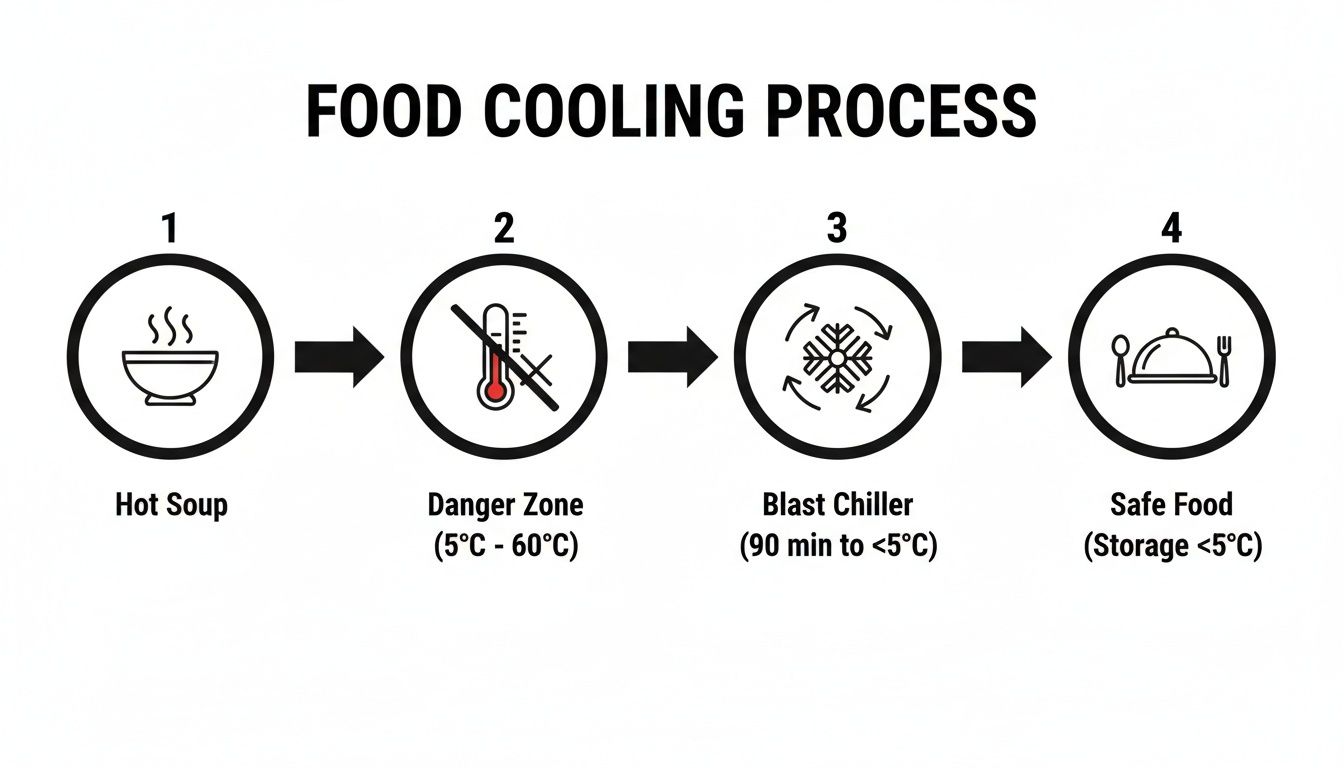
You can see how it bridges that critical gap between a hot, freshly cooked product and safe, stable storage, essentially skipping past the hazardous window where bacteria loves to multiply.
Blast Chilling and Shock Freezing Explained
Commercial blast chillers usually come with two key functions that are vital for any Las Vegas kitchen, whether you're prepping for a massive convention or serving late-night diners on the Strip.
- Blast Chilling: This is the workhorse function. It takes cooked food from a piping hot 160°F down to a safe 38°F in about 90 minutes. It's perfect for things you plan to refrigerate and serve within a few days—think cooling a huge batch of marinara for a Fremont Street pizzeria or prepping sauces for a high-end steakhouse.
- Shock Freezing: This cycle is for long-term preservation. It plunges the food’s core temperature all the way down to 0°F in less than four hours. This lets a fine bakery freeze delicate pastries at their absolute peak freshness, ready to be served weeks later with zero loss in quality.
Ultimately, a blast chiller is a crucial tool for maintaining top-tier food safety and is a masterclass in how to properly store food to extend its shelf life. By getting a handle on both blast chilling and shock freezing, a kitchen gains incredible flexibility, slashes waste, and can serve a consistently superior product day in and day out.
Real-World Benefits for Your Las Vegas Restaurant
Let's move past the technical stuff and talk about what a blast chiller commercial unit actually does for a busy Las Vegas kitchen. This isn't just another piece of stainless steel; it's a strategic investment that pays off in three huge ways: rock-solid food safety, way less food waste, and a smoother, more efficient kitchen.
The vibrant city of Las Vegas is home to a diverse array of restaurants, and each one relies on essential equipment like commercial refrigerators and freezers to succeed. A blast chiller takes that foundation to the next level. A high-volume spot on the Strip can safely prep massive batches of sauce during slow hours, while a catering company knows their prepped dishes will be perfect after traveling across the valley. This is about building a smarter, safer operation.
Bulletproof Food Safety and Compliance
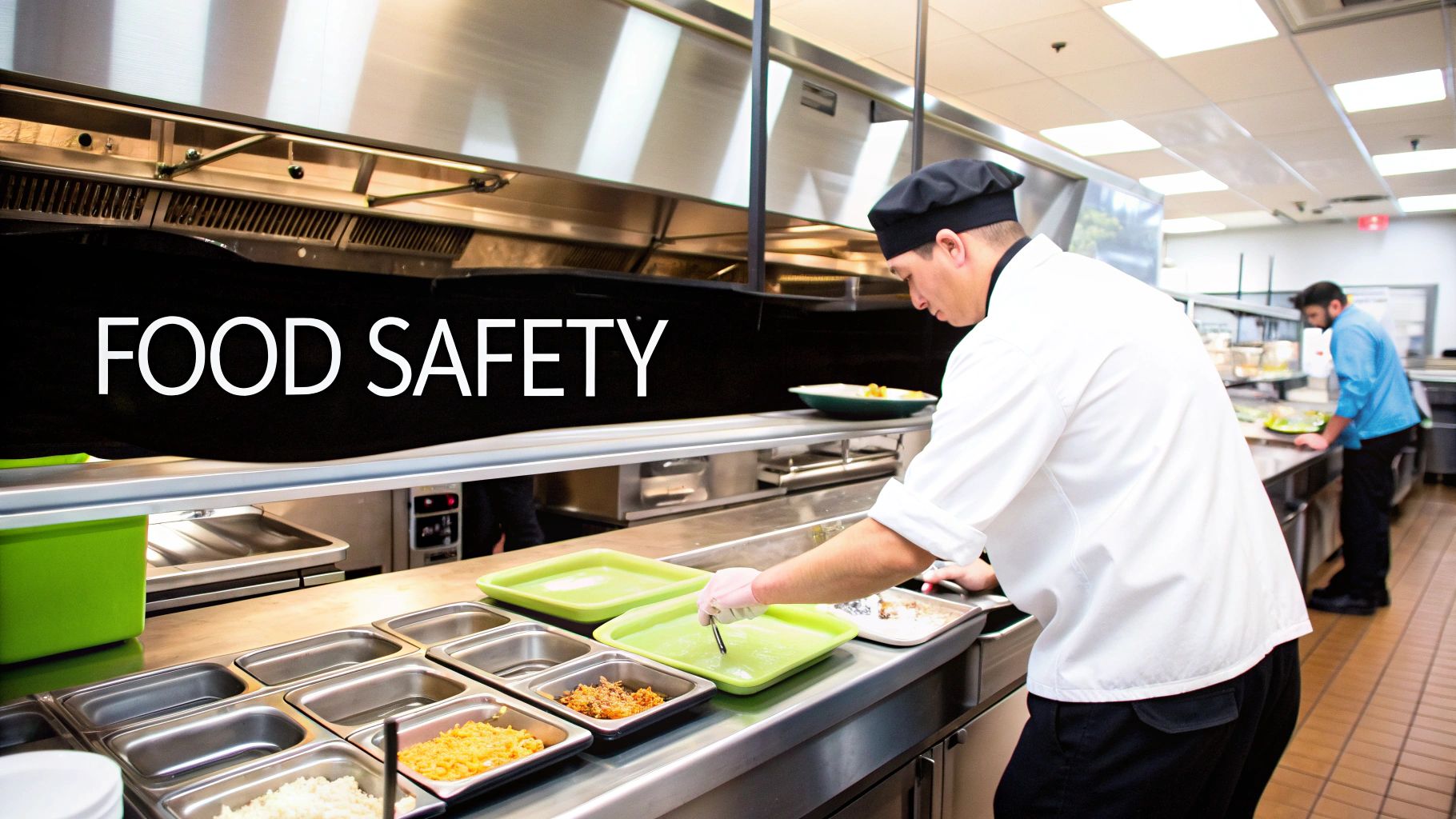
In a city defined by world-class dining, food safety is everything. A blast chiller is your single best defense against foodborne illness. It crashes food temperatures through the danger zone (40°F to 140°F) in under 90 minutes, stopping bacteria dead in its tracks. This is the gold standard for meeting HACCP (Hazard Analysis Critical Control Point) guidelines.
By using a blast chiller, you're not just hoping for safety—you're engineering it. The rapid cooling process drastically limits the window for bacterial growth, ensuring every dish served is as safe as it is delicious.
This level of control is a game-changer for any Vegas kitchen, from a sprawling buffet relying on batch cooking to a ghost kitchen juggling multiple menus. It’s peace of mind on a stainless-steel tray, and it protects the reputation you’ve worked so hard to build.
To really see the difference, let’s compare the two methods side-by-side.
Blast Chilling vs Conventional Cooling
| Metric | Conventional Cooling (Refrigerator/Freezer) | Blast Chilling |
|---|---|---|
| Cooling Time | 4+ hours to pass the danger zone | Under 90 minutes |
| Food Safety | High risk of bacterial growth | Minimal risk, HACCP compliant |
| Food Quality | Forms large ice crystals, damages texture | Forms micro-crystals, preserves texture & flavor |
| Shelf Life | 1-2 days, significant quality loss | Up to 5 days with peak freshness |
| Food Waste | Higher due to spoilage & quality degradation | Significantly lower, maximizing ingredient use |
| Workflow | Cook-to-order, high-pressure service | Enables cook-chill, less stress during rushes |
As you can see, it's not even a close contest. The blast chiller wins on every front, protecting both your customers and your profits.
Slash Food Waste and Boost Your Bottom Line
Food waste is the silent killer of restaurant profits. When you cool food the old-fashioned way, you're on a countdown clock. The quality degrades fast, and the shelf life is short. A blast chiller completely flips that script.
By locking in food at its absolute peak freshness, it can extend the refrigerated shelf life of prepared items for up to five days. Think about what that means. Less spoilage, less trim, and far more usable product from every delivery. For Nevada operators, where food costs often eat up 28-35% of revenue, this is huge. You’ll see a direct impact on high-cost items like prime cuts of meat, fresh seafood, and delicate desserts.
It's no wonder the demand for this equipment is growing worldwide, driven by operators who are serious about safety and waste reduction. You can learn more about these commercial blast chiller market trends to see just how vital these units have become.
A More Streamlined Kitchen Workflow
Picture your kitchen during the busiest Saturday night rush, but without the usual chaos. That's what a blast chiller can do. It unlocks a "cook-chill" workflow where your team can knock out huge batches of your core menu items—soups, sauces, proteins, and vegetable preps—during slower, off-peak hours. These items are then blasted down and stored safely.
When the ticket machine starts screaming, your line cooks aren't starting from scratch. They're just reheating, finishing, and plating. This simple change completely transforms your operation.
- Faster service times mean you can turn tables quicker.
- Improved consistency ensures the last plate of the night is as perfect as the first.
- Reduced labor costs because you're using your team's time more efficiently.
For any Las Vegas restaurant, bar, or catering business, these benefits add up to a stronger, more resilient, and ultimately more profitable business.
Choosing the Right Blast Chiller Model
Picking the perfect blast chiller commercial unit for your Las Vegas spot isn't a one-size-fits-all kind of deal. This vibrant city is a wild mix of kitchens, from the massive operations inside casinos to tiny, intimate cocktail bars downtown, and each one has its own rhythm. The beast of a roll-in freezer that a Strip buffet needs would be total overkill for a cozy cafe that just needs reliable essential restaurant equipment like commercial refrigerators, commercial freezers, and a solid ice machine.
It really comes down to matching the machine to your menu, your workflow, and your floor plan. The right choice is an investment that pays you back every single day in food safety, kitchen efficiency, and the quality of what you put on the plate.
Key Specifications to Consider
Let's cut through the noise and focus on what really matters. Thinking through these key specs will point you straight to the model that will feel like it was made for your kitchen.
-
Capacity and Footprint: How much food are you chilling at once? Capacity is all about how many pans the unit holds, which goes hand-in-hand with its physical size.
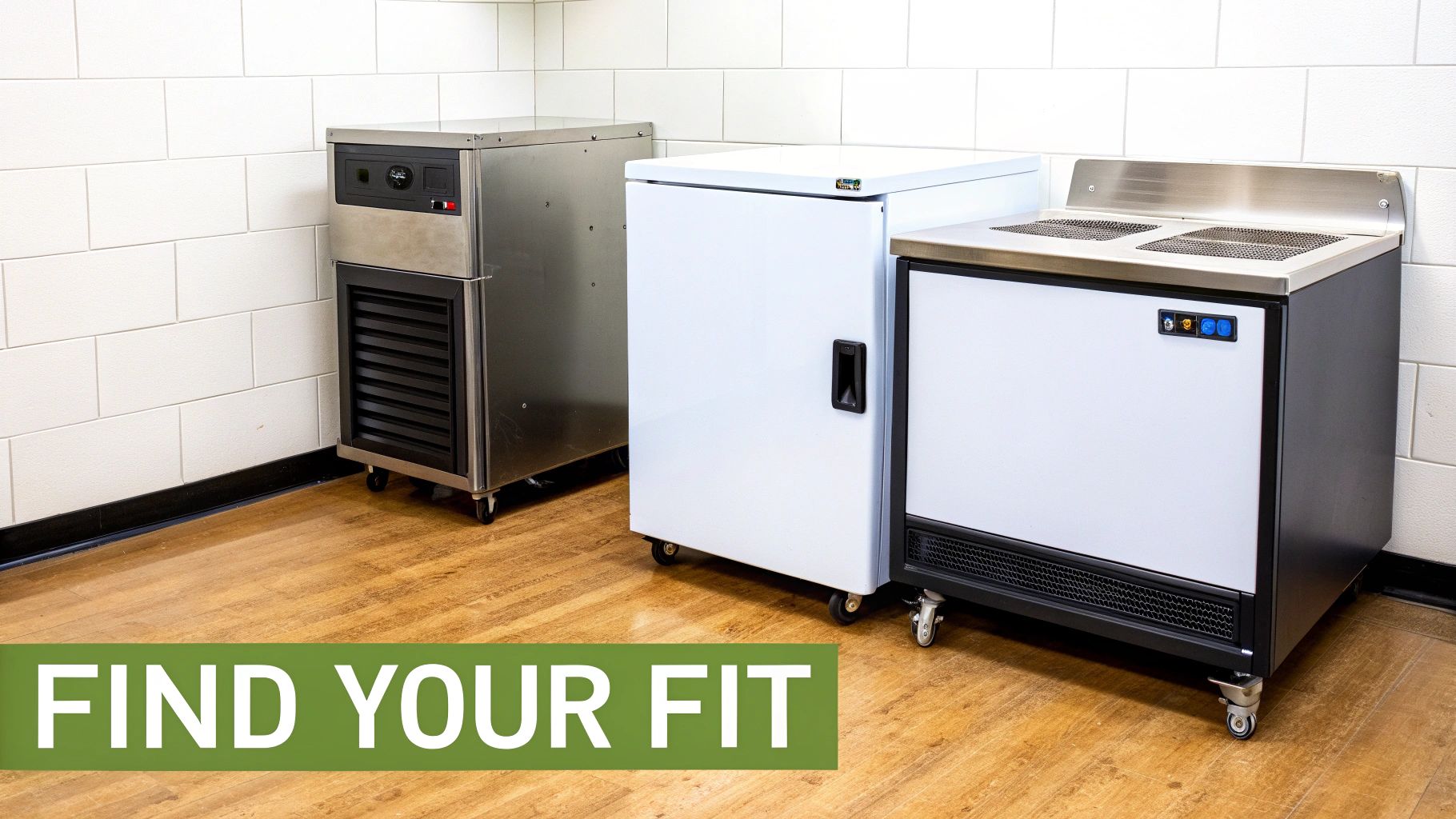
- Undercounter Models: These are the space-savers. Perfect for smaller kitchens, food trucks, or bars where you need to chill sauces, garnishes, or small prep batches without sacrificing an inch of floor space. They slide right under a standard counter.
- Reach-In Models: This is the go-to for most restaurants. They're standalone units that offer a serious amount of chilling capacity for daily batch cooking but don't take over the entire kitchen.
- Roll-In Models: These are the heavyweights. Built for high-volume places like hotels, event centers, and big catering companies. You can roll an entire speed rack straight from the oven into the chiller. It’s all about maximum efficiency.
The demand for this tech is exploding—the global market is on track to hit $2.4 billion by 2033. It's interesting to see that reach-in models are expected to be the fastest-growing segment, which makes sense given how versatile they are. Plus, modern units are now 25% faster at chilling, which is great for shaving down energy bills and hitting sustainability targets.
Built for the Las Vegas Climate
Let's be real: running any refrigeration equipment in the desert is a whole different ball game. The constant high heat puts a ton of stress on compressors, so you can't afford to mess around with flimsy equipment. Durability and efficiency are non-negotiable here.
When choosing a blast chiller for a Las Vegas kitchen, prioritize models with robust compressors and excellent insulation. A unit designed to perform in extreme heat will deliver consistent results and have a longer service life, protecting your investment from the demanding desert climate.
Always, always look for that NSF certification. It's your guarantee that the unit is built to strict public health and safety standards. Brands like Atosa are a solid bet because they're known for reliable, tough equipment that can handle the grind of a commercial kitchen. Investing in quality upfront saves you from the headache of breakdowns and keeps your kitchen humming, even when it's scorching outside. And while you're at it, you can check out our other tips for finding energy-efficient commercial refrigeration to help keep those power bills from getting out of control.
Getting the Most Out of Your Investment: Installation & Upkeep
Buying a commercial blast chiller is a huge step forward for any kitchen looking to get serious about safety and efficiency. But to really unlock its full potential, you can't just plug it in and forget about it. Proper installation and consistent maintenance are absolutely non-negotiable, especially here in the demanding Las Vegas climate. Think of it as setting your new equipment up for a long, productive life from day one.
The performance of your blast chiller truly begins the moment it rolls off the truck. Getting the setup right is the foundation for seeing a real return on your investment through less food waste and smarter labor.
Setting Up for Success in the Desert Heat
Let's be honest: in Las Vegas, every single piece of refrigeration equipment is working overtime. That intense ambient heat puts a constant strain on compressors. For a blast chiller, which is already designed to pump out a ton of heat as it rapidly cools food, ventilation isn't just a friendly suggestion—it’s a matter of survival.
You have to let the machine breathe. If it's crammed into a tight space, the compressor can't get rid of the heat it's generating. This forces it to work harder, suck down more electricity, and puts it on a fast track to burning out way too soon.
Here’s how to give your unit the breathing room it needs to thrive:
- Give It Space: Always follow the manufacturer's guidelines for clearance. That usually means leaving several inches of open space around all sides of the unit, especially the back where the condenser coils live.
- Keep It Cool: Place the chiller in a well-ventilated spot, far away from heat-producing monsters like your ovens, grills, and fryers. The hottest corner of your kitchen is the absolute worst place you could put it.
- Find Level Ground: Make sure the unit is perfectly level. An uneven base can mess with how the doors seal, letting precious cold air escape and making the components work harder than they should.
A Simple Maintenance Checklist That Pays Off
A little bit of consistent upkeep goes a long way in keeping your blast chiller hygienic and running at peak performance. Skipping these simple steps is just asking for inefficiency, breakdowns, and expensive repair calls down the line.
Proper care is a direct investment in your equipment's longevity. A well-maintained blast chiller can be a reliable workhorse for 15-20 years, while a neglected one might struggle to last half that time.
- Daily: A quick wipe-down of the interior surfaces and a cleaning of the temperature probe after each cycle is all it takes.
- Weekly: Clean the door gaskets with a mild detergent. This keeps them pliable and ensures a tight seal, which stops cold air from leaking out.
- Monthly: Clean the condenser coils. Dust and grease are your enemy here. A clogged coil can slash cooling efficiency by up to 30%, forcing the compressor to overwork itself to death.
Tying It All Back to Your Bottom Line
Every one of these steps—from proper installation to a simple weekly cleaning—directly impacts your return on investment (ROI). When your blast chiller runs efficiently, you're maximizing the very benefits that made you buy it in the first place: radically less food waste, lower labor costs through batch cooking, and better energy efficiency.
And getting this essential equipment into your kitchen is more manageable than you might think. With accessible financing options, you can integrate a blast chiller into your workflow without a massive upfront cash outlay. This lets you start seeing the financial benefits of a safer, more productive kitchen almost immediately, allowing the equipment to pay for itself over time. For any busy Las Vegas restaurant, it's just a smart financial move.
Your Partner for Las Vegas Restaurant Equipment
Let's be honest, running a kitchen in Las Vegas is a high-stakes game. It takes more than just a killer menu to succeed in a city with such a diverse array of restaurants; you need essential restaurant equipment that can keep up. Every great operation, from massive casino kitchens to cozy local spots, is built on the back of reliable commercial refrigerators, commercial freezers, and ice machines. As we've covered, a blast chiller is that next-level investment that seriously elevates your food safety, efficiency, and quality—all things you need to stand out.
This is where we come in. We're not just selling boxes; we're here to partner with you and help turn your vision for a safer, more efficient kitchen into a reality.
Your Direct Line to a Better Kitchen
We believe there's a smarter way to equip your business. We don't have a flashy showroom, and that's on purpose. By cutting out that overhead, we get you brand-new, warranty-backed equipment at prices that make sense, without the usual retail markup. We know that in a city that truly never sleeps, you can't afford to wait around for a delivery.
For restaurants in Las Vegas, Henderson, and North Las Vegas, downtime is the enemy. That's exactly why we offer fast, free freight shipping from our local warehouse. We can get essential gear like a new blast chiller to your door in just 1-2 business days.
That quick turnaround means you can get your new equipment up and running with minimal disruption to your service. To help you map out all your needs, our commercial kitchen equipment checklist is a great resource to make sure nothing gets missed.
Ready to gear up for success in the Sin City food scene? Give our specialist, Sean Kearney, a call for some straightforward, personalized advice. Let's find the perfect tools to help you win.
Your Top Blast Chiller Questions Answered
When you're running a busy Las Vegas kitchen, new equipment always brings up questions. We get it. Here are some of the most common things we hear from chefs and owners who are thinking about adding a blast chiller to their lineup.
Can’t I Just Use My Walk-In Freezer to Chill Hot Food?
That's a hard no, and trying it is one of the riskiest things you can do in a professional kitchen. A commercial freezer is built for one job: keeping already-frozen food frozen solid. Tossing a hot pan of sauce or soup in there forces the compressor into overdrive.
Worse, it raises the temperature of the whole freezer, putting everything you've already stored—from expensive steaks to prepped vegetables—into the temperature danger zone. A freezer uses static cold air to hold a temp, while a blast chiller uses powerful fans to circulate frigid air, pulling heat out rapidly. They're two completely different tools for two very different jobs.
How Much Floor Space Are We Talking About?
The footprint really depends on the model you need. A compact undercounter unit can slide right into your cook line, taking up about as much space as a low-boy refrigerator. On the other hand, the big roll-in models you see in hotel and casino kitchens will need a dedicated chunk of real estate.
But for any installation here in Las Vegas, the most important thing isn't just the footprint—it's the breathing room. Every unit needs a few inches of clearance on all sides for proper ventilation. In our desert heat, giving the compressor space to dissipate heat is crucial for keeping it from burning out.
Is a Blast Chiller Really Worth It for a Smaller Restaurant?
Absolutely. In fact, for a smaller restaurant, cafe, or bar in a competitive market like Las Vegas, a compact blast chiller commercial unit can be a game-changer. It unlocks the ability to prep ingredients and even entire dishes in larger, more efficient batches.
Think about it: you can safely cool food and extend its high-quality shelf life for days. This cuts down on food waste, reduces daily prep time, and ensures the dish you serve on Friday is just as good as the one you served on Tuesday. It’s a smart investment in efficiency that pays for itself in saved labor and ingredients, no matter the size of your kitchen.
Ready to see how a blast chiller can streamline your kitchen's safety and workflow? Check out the best models for Las Vegas operations at Las Vegas Restaurant Equipment. We've got showroom-free pricing and offer fast, free local delivery to get you up and running.
Shop Commercial Blast Chillers and More at Las Vegas Restaurant Equipment