

So, what exactly is a walk-in cooler and freezer combo? Picture a single, heavy-duty cold storage unit, but with two distinct compartments inside, separated by a shared wall. One side is your refrigerator, keeping things perfectly chilled, and the other is your deep freezer, locking in freshness. It’s a powerful, all-in-one solution for any restaurant that needs to keep both fresh and frozen inventory on hand without taking up a ton of space.
Keeping Your Cool in the Las Vegas Heat
In the vibrant Las Vegas restaurant scene, where a diverse array of restaurants caters to every palate, success is a dish best served at the perfect temperature. It doesn't matter if you're a high-end spot on the Strip or a beloved local joint in Henderson—everyone's fighting the same battles: fierce competition and the brutal desert heat. Around here, your equipment isn't just a purchase; it's a core part of your strategy for survival and success.
Every smart operator knows that solid cold storage is the absolute backbone of a functional kitchen. The essential restaurant equipment needed for success includes the workhorses: commercial refrigerators for your daily prep, big commercial freezers for bulk storage, and ice machines that never quit. The problem? All that separate gear eats up a ton of valuable kitchen real estate, which is always at a premium in Vegas.
The Ultimate Solution for Vegas Kitchens
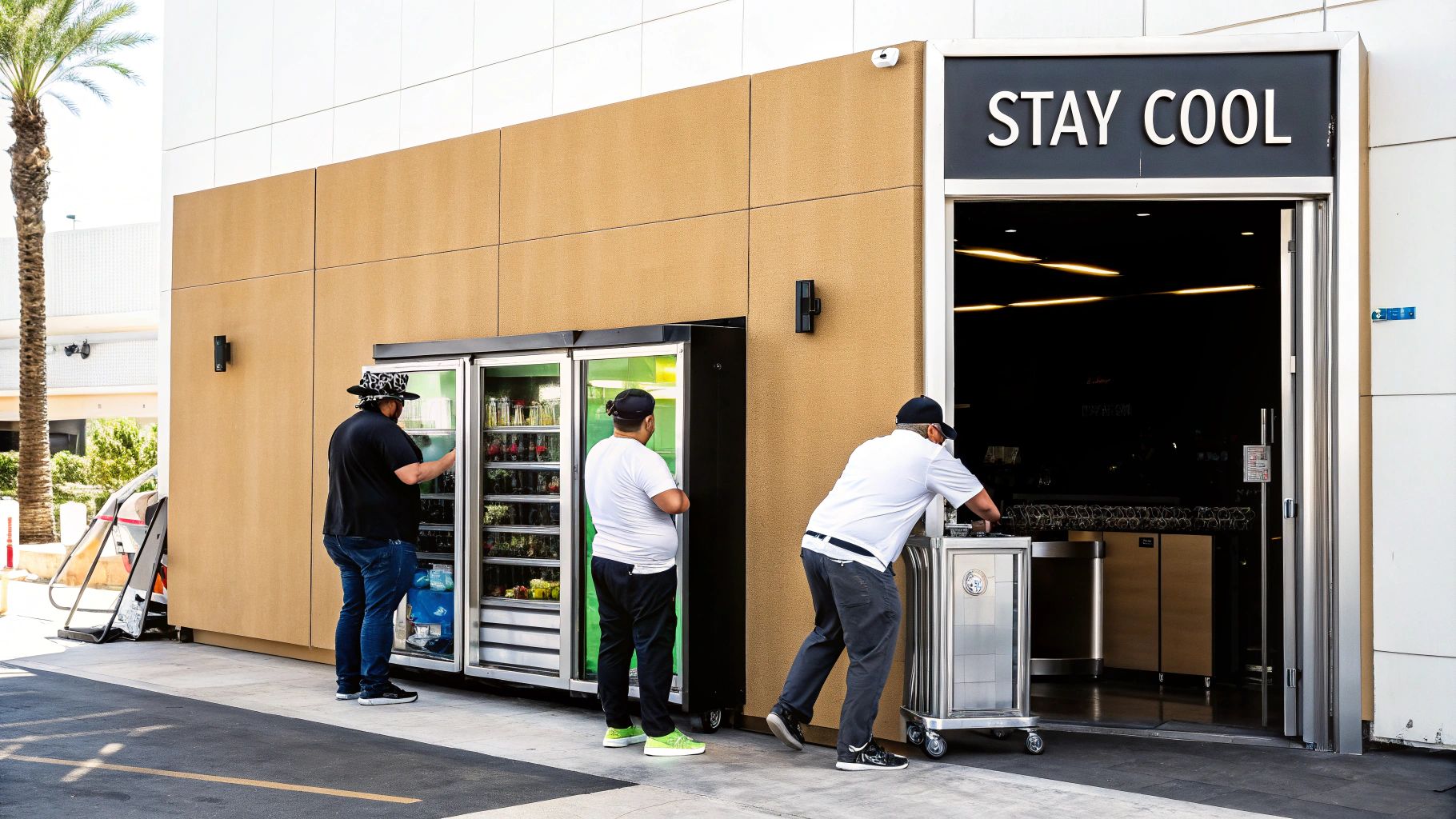
This is where the walk-in cooler and freezer combo truly shines as a mission-critical asset. Think of it as the ultimate two-for-one deal, built specifically for the chaos of a fast-paced kitchen. It packs your entire cold storage system into one streamlined footprint, giving you some serious advantages.
This kind of setup is quickly becoming a go-to for kitchens everywhere. In fact, walk-in combos are the fastest-growing part of the global market. The industry hit a massive USD 10,215.2 million in 2024, and combo units are leading that charge. Why? Because they're incredibly efficient—perfect for high-volume operations where every square foot counts and the menu demands quick access to both fresh and frozen ingredients.
For a Las Vegas restaurateur, this translates directly to:
- More Space: You can free up precious floor space for another prep station or a new piece of cooking equipment.
- Smarter Workflow: Keep everything you need, from prime beef frozen solid to delicate microgreens perfectly chilled, all in one convenient spot.
- Cost Savings: Buying one unit is often cheaper upfront than buying two, and running a single system can be a lot more energy-efficient. To learn more, check out our guide on finding energy-efficient commercial refrigeration.
Consider this guide your complete roadmap. We're here to walk you through everything you need to know about choosing, installing, and getting the most out of a walk-in cooler and freezer combo. We'll give you the real-world insights to make a smart investment that pays you back in both efficiency and profit.
So, What Exactly Is A Walk-In Cooler And Freezer Combo?
Think of it like a duplex for your food inventory. It's one single, insulated structure, but a shared wall on the inside splits it into two completely separate, climate-controlled zones. It's a simple concept that packs a major punch for kitchen efficiency.
One side acts as your everyday walk-in cooler, keeping a steady temperature between 35-40°F. This is the sweet spot for your fresh produce, dairy, sauces, and all those prepped ingredients that keep your line moving. The other side is a deep freezer, holding everything at a frigid 0°F or below to lock in the freshness of your meats, seafood, and bulk frozen goods.
Each side has its own door and—this is the important part—its own independent refrigeration system. This setup gives you total, individual control over both environments. You can rest easy knowing everything from your delicate microgreens to your prime steaks is stored under perfect conditions. Bringing your entire cold storage footprint into one organized location is a true game-changer for fast-paced Las Vegas kitchens.
The Core Components Driving The Magic
The genius of a walk-in combo isn't just in the layout; it's how the components work together. That shared interior wall is a huge advantage. It immediately reduces the total surface area exposed to the ambient heat of a busy kitchen. This one design feature means the unit doesn't have to work as hard, which translates directly to lower utility bills every month.
Inside each zone, a dedicated refrigeration system is working around the clock. The key players are:
- An Evaporator Coil: This is the part inside the box that soaks up heat from the air, chilling the space down.
- A Condensing Unit: Usually found outside the box (often on the roof in Las Vegas to get that heat away from the kitchen), this part releases all the heat captured from inside.
- A Compressor: This is the heart of the whole operation. It pumps the refrigerant through the system, making the heat exchange possible.
These systems need to be incredibly precise. To really understand how they nail those exact temperatures, it helps to know a bit about the different types of temperature sensors that act as the brains of the operation.
Why This Design Is Catching On So Fast
Having two temperature zones in a single footprint is just plain practical, and it's why you're seeing these units pop up everywhere. The demand for smarter, more efficient commercial refrigerators and freezers has completely blown up.
And we're not just talking gut feelings—the numbers back it up. Fortune Business Insights tracked the market jumping from USD 12.67 billion in 2021 to a projected USD 20.22 billion by 2028. Just the commercial kitchen segment alone is expected to hit USD 5.30 billion by 2025. You can check out the full walk-in coolers and freezers market report to see the data for yourself.
This growth shows a real shift in how modern restaurants, especially in a competitive town like Las Vegas, are optimizing their back-of-house. By combining a cooler and freezer, you streamline inventory, slash energy costs, and free up precious floor space for other critical equipment—like another fryer or a high-capacity ice machine. It’s all about working smarter, not harder.
Choosing The Right Size And Specs For Your Kitchen
Picking the wrong walk-in combo is like buying a delivery truck that’s too small for your busiest day—it just cripples your kitchen's workflow and creates constant headaches. To sidestep that nightmare, you need a solid game plan for choosing the perfect size and specs for your restaurant's unique flow. It all begins with getting a real handle on your inventory needs.
A great place to start is by figuring out your required storage capacity. A solid rule of thumb for most restaurants is to plan for roughly 1.5 cubic feet of storage space for each meal served on your peak day. So, if your Las Vegas steakhouse is pushing out 300 covers on a packed Saturday night, you're going to need at least 450 cubic feet of combined cold storage just to keep up.
That formula gives you a fantastic baseline, but you also have to think about your delivery schedule. If you're getting fresh produce dropped off daily, you might get away with less cooler space. But if you’re buying frozen goods in bulk once a week to lock in better pricing, you better believe you'll need to account for a much larger freezer section.
Dialing In The Technical Details For The Desert Climate
Once you've got a good idea of the size, it's time to zero in on the technical specs that will make or break your unit's performance in the relentless Las Vegas heat. This is absolutely not the place to cut corners; getting these details right will save you thousands in energy bills and lost product over the life of your unit.
Insulation is your first line of defense against our desert sun. You'll want to look for panels with a high R-value, which is just a measure of how well it resists heat. In our climate, polyurethane foam insulation is the gold standard, no question. It blows extruded polystyrene (XPS) out of the water, meaning your refrigeration system won't have to work nearly as hard to keep things cool.
Next up is the refrigeration system itself. You've got two main choices:
- Self-contained systems have all the guts—compressor, condenser, and evaporator—in one package, usually mounted right on top of the box. They're simpler to install, but they pump heat directly into your kitchen, which can put a serious strain on your HVAC.
- Remote refrigeration systems are the smarter play for most permanent Las Vegas kitchens. They stick the noisy, heat-producing condenser and compressor outside, usually on the roof. This keeps your kitchen cooler and quieter, which your staff will definitely thank you for.
This decision tree can help you visualize that initial choice between a single combo unit and separate walk-ins.
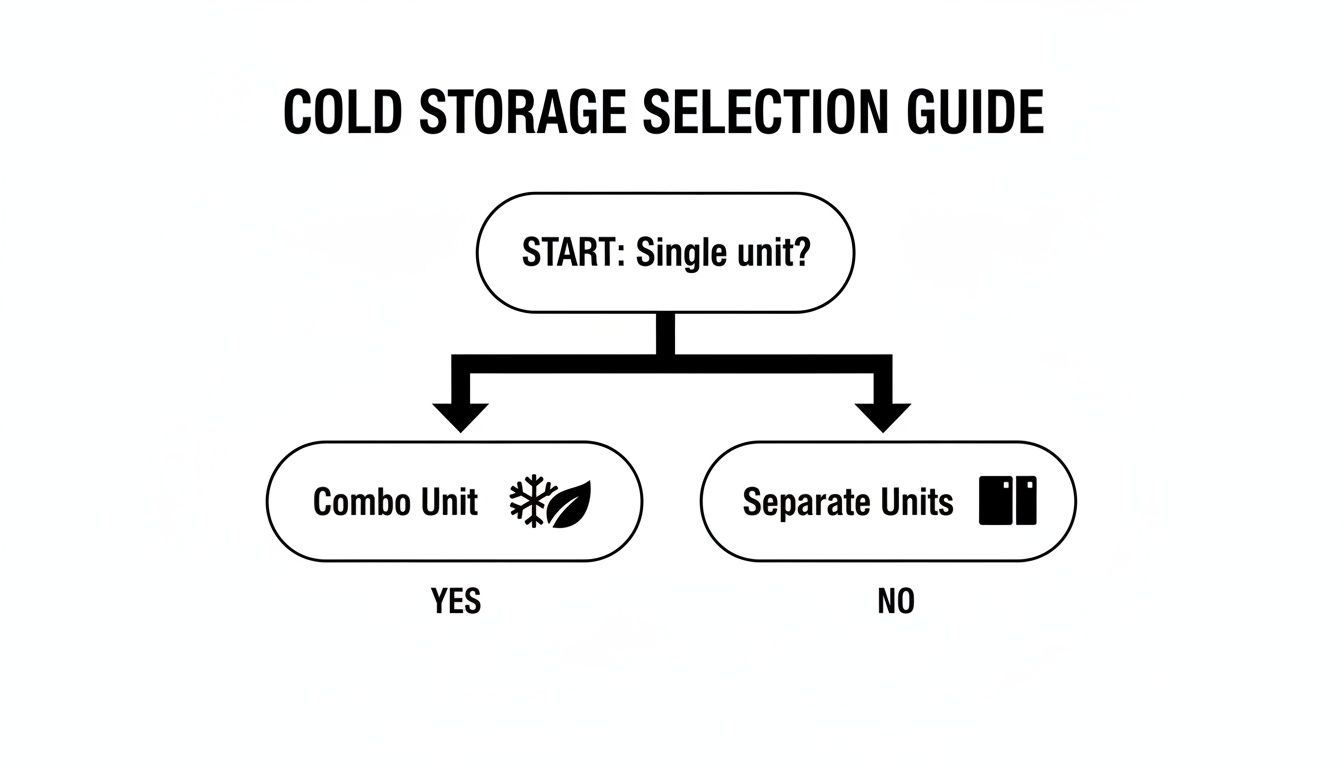
The flowchart really simplifies it: if you need to consolidate into a single footprint to save precious floor space, a walk-in cooler and freezer combo is the logical path forward.
Doors And Floors: The Unsung Heroes Of Efficiency
Finally, let's talk about the parts you and your team interact with all day, every day. The doors on your walk-in are critical for holding temperature. Make sure they are heavy-duty, well-insulated, and have tight-sealing gaskets to stop cold air from bleeding out. And seriously, adding strip curtains is a small investment that pays for itself over and over by minimizing temperature loss during that dinner rush when the door is constantly swinging open.
The threshold of the door matters, too. A standard threshold can be a tripping hazard and a real pain when you're trying to roll heavy carts in and out. Opting for a ramp or even a floorless model that sits flush with your kitchen floor can be a game-changer for workflow and safety.
The floor itself needs to be tough enough to handle constant foot traffic and heavy rolling carts. If you're storing heavy items like kegs or massive boxes of frozen protein, a reinforced floor isn't just nice to have—it's essential.
Making the right call on these details is huge. For more guidance, you can check out our in-depth article on commercial walk-in refrigerators to get an even clearer picture. When you combine smart sizing with specs built for our climate, you ensure your walk-in combo will be a reliable workhorse, not a constant source of stress.
Navigating Installation In Clark County
You've picked out the perfect walk-in cooler and freezer combo—a huge milestone, for sure. But the job is only half done. A flawless installation is just as critical as the unit itself. It’s the only way to guarantee it runs efficiently and safely for years to come.
This process is way more than just snapping panels together. It's about getting your Las Vegas restaurant site ready to handle specific structural, electrical, and regulatory demands.
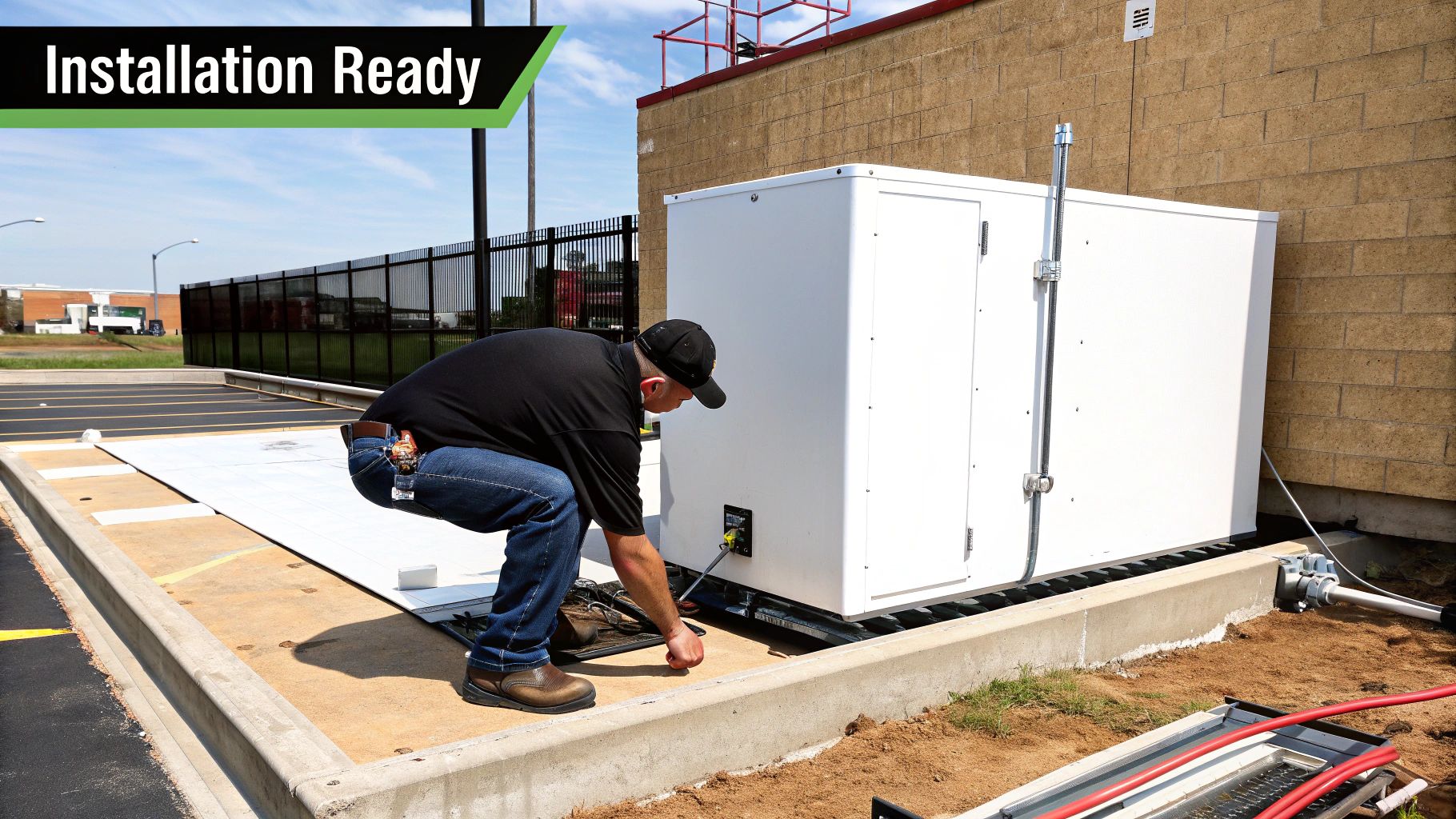
Think of the installation as the foundation for your investment. If you skip a step, you're setting yourself up for major headaches down the road, from equipment failures to expensive code violations. Let's walk through a practical checklist to get your site prepped, with a special focus on our local Las Vegas requirements.
Preparing The Foundation And Utilities
Before a single panel gets moved into place, your site has to be 100% ready. These physical and utility prep steps are non-negotiable for a successful setup, especially for a heavy-duty piece of equipment like a walk-in combo.
First, let's talk about the floor. Your walk-in needs a perfectly level, reinforced concrete slab to sit on. An uneven floor will mess with the unit's structural integrity, causing panels to fit poorly and doors to misalign. That means disastrous air leaks and wasted energy.
Next up is drainage. Both the cooler and freezer sections produce condensate that has to go somewhere. You’ll need proper drainage lines installed according to local plumbing codes to handle this moisture. Get this wrong, and you're looking at water damage and serious health hazards.
Finally, get your electrical in order. A walk-in combo has two separate refrigeration systems, and each one has its own voltage and amperage demands. You absolutely need a licensed electrician to confirm your building can supply the necessary power and to install dedicated circuits for each system. Trying to run it off existing circuits is a recipe for equipment failure and a major fire risk.
Meeting Local Las Vegas And Clark County Codes
Here in Vegas, installing major restaurant equipment means you’ve got a specific set of local rules to follow. Ignoring them isn't an option—it can lead to fines or even a shutdown. Getting familiar with these requirements early is the key to a smooth launch.
Your first step is always to check with the Clark County Building Department. A walk-in unit is often considered a structural addition, which means you’ll probably need to pull a building permit before installation can even start. This process ensures your new unit meets all safety and construction standards.
The Southern Nevada Health District (SNHD) also has its own regulations. Their inspectors will check to make sure your walk-in is installed in a way that promotes food safety. That means things like ensuring all interior surfaces are smooth, non-absorbent, and easy to clean.
Proper ventilation is another huge deal, especially in our desert climate. The condensing units for your walk-in combo need plenty of airflow to get rid of heat effectively. If you trap them in a poorly ventilated space, the systems will overwork themselves, leading to premature failure and sky-high energy bills.
A professional installation will make sure your setup meets all these crucial requirements, keeping your equipment humming along. But if you do run into unexpected issues, knowing your options for commercial refrigeration repair in Las Vegas can be a real lifesaver.
Calculating The Real Cost And Return On Investment
It’s easy to get tunnel vision and focus only on the price tag when you’re looking at a major equipment purchase like a walk-in cooler and freezer combo. But any savvy Las Vegas operator knows the real math goes way deeper than that. The total financial picture has to include everything—from the upfront purchase to the long-term operational savings that actually define your return on investment.
Let's break down what it really costs to get one of these units into your kitchen. The sticker price is just the starting point. You've got to budget for the whole project, because you're not just buying a box; you're integrating a critical piece of infrastructure into your operation.
These other costs almost always include:
- Delivery and Freight: Getting a beast of a unit from the warehouse to your spot in Las Vegas isn't free.
- Site Preparation: This can mean anything from pouring new concrete for a level foundation to running new plumbing for drainage and upgrading your electrical to handle the power draw.
- Professional Installation: You’ll want a certified team to assemble the unit perfectly. This ensures every seal is tight and both systems are running at peak performance from day one.
Beyond The Initial Outlay: The ROI Drivers
Once your combo unit is installed and humming along, the conversation shifts from cost to return. This is where a walk-in cooler and freezer combo really starts to pay for itself, especially in a dog-eat-dog market like Las Vegas. Your return on investment comes from three key areas that directly pad your bottom line.
First up is the massive space savings. In a city where commercial real estate is gold, every single square foot of your kitchen needs to be making you money. By consolidating your cold storage, you free up valuable floor space. That space could become another prep table, a high-capacity ice machine, or any other piece of restaurant equipment that boosts your output.
This isn't just a theory; the numbers back it up. Recent data shows combo units are killing it in commercial kitchens, supermarkets, and busy restaurants because their all-in-one design saves up to 30% floor space compared to separate units. A 2024 report from Global Insight Services, which looked at 1.2 million units sold, found that 55% were for commercial use, proving just how dominant they've become.
Boosting Efficiency And Streamlining Operations
The second huge driver for ROI is better energy efficiency. That shared internal wall between the cooler and freezer means less surface area is exposed to the ambient heat of your kitchen. Bottom line: both the commercial refrigerator and freezer systems don't have to work nearly as hard. That translates directly to a lower monthly NV Energy bill—a massive win during our scorching Las Vegas summers.
To really nail down the long-term cost and maximize your return, you have to think about ongoing maintenance. A solid commercial HVAC maintenance checklist is a great tool for planning regular upkeep and avoiding surprises.
Finally, a combo unit delivers ROI through streamlined operations. Think about it: all your cold storage in one central spot saves your staff precious time and steps. They aren't running back and forth between two different coolers to grab ingredients. This makes inventory management a breeze and helps speed up service. That kind of operational smoothness cuts down on labor costs and helps your kitchen run like a well-oiled machine during the dinner rush.
For many restaurateurs, that initial capital expense can still feel like a big hurdle. The good news is, there are accessible financing options out there that can make this upgrade happen without a massive upfront payment. This lets you pay for the equipment as it generates savings and revenue for your business.
Your Actionable Checklist For Choosing The Right Combo Unit
Alright, let's get down to brass tacks. Pulling the trigger on a major piece of hardware like a walk in cooler and freezer combo is a big decision, and you need to be confident you've got it right. Think of this checklist as your final walkthrough, turning all the technical talk into a simple, actionable game plan.
This is your last sanity check before you commit. Answering these questions honestly will ensure you're making a smart investment that's going to be a workhorse for your kitchen for years to come.
Size and Site Readiness
First things first, let's make sure this thing will actually fit and that your kitchen is ready for it. A misstep here can throw your whole timeline off and hit you with some nasty, unexpected bills.
- Have I nailed down my peak capacity needs? The 1.5 cubic feet per meal rule is a decent starting point, but you need to get real about your menu, your inventory, and how often your suppliers show up.
- Is my site prepped and ready to go? Double-check that you have a level concrete floor, proper drainage for all that condensate, and the right electrical circuits put in by a pro. No shortcuts here.
- Does my ventilation plan make sense? If you're going with a remote system, is there a clear, well-ventilated path to the roof or an exterior wall for that condenser?
System and Feature Selection
Next up, let's lock in the specs that really matter, especially in our brutal Las Vegas climate.
Your choice of refrigeration system and insulation will directly impact your monthly power bill and whether your unit can keep up when you're slammed on a Saturday night. This is not the place to cut corners.
- Which refrigeration system is the right call for my kitchen? A remote system is almost always the best bet for a Vegas restaurant—it moves the heat and noise outside where they belong. A self-contained unit might work for a smaller spot, but think it through.
- Am I insisting on high R-value insulation? Make sure those panels are packed with high-density polyurethane foam. It’s your best defense against the desert heat trying to sneak in.
- Are the doors and floors built for my daily grind? Get heavy-duty doors with seals that lock tight. And seriously consider a ramp or even a floorless design if your team is constantly rolling heavy carts in and out.
Finalizing Your Purchase
Before you sign on the dotted line, a few last questions about logistics and support will protect your investment. This is where you need a partner who gets the relentless pace of a modern Las Vegas kitchen, one that depends on everything from commercial refrigerators and commercial freezers to high-capacity ice machines working flawlessly.
Ready to make this upgrade happen without the headaches? The team at Las Vegas Restaurant Equipment is here to help. We offer real-world advice, competitive "Sin City" pricing, and fast, free shipping to get your new walk in cooler and freezer combo delivered and ready for action.
Common Questions from Las Vegas Kitchens
When you're running a restaurant in Las Vegas, every decision counts. Here are the straight answers to the questions we hear most often from operators just like you about walk-in cooler and freezer combos.
How Much Space Am I Really Going to Save?
You can expect to reclaim 20-30% of your floor space compared to installing two separate walk-ins. It's a significant difference, especially in a tight Las Vegas kitchen where every square foot is prime real estate.
Think about what you could do with that extra room. That's enough space for a new prep station, another fryer, or a high-capacity ice machine—equipment that directly translates to a higher output and a smoother service.
Is a Combo Unit Actually More Energy Efficient?
Absolutely. A walk in cooler and freezer combo shares one of its walls, which drastically cuts down on the surface area exposed to the heat of your kitchen.
For a restaurant battling the Vegas heat, this is a huge win. The refrigeration systems in both the cooler and freezer sections simply don't have to cycle as often or work as hard. The result is a direct, noticeable drop in your monthly power bill, which is a big deal for your bottom line.
What’s the Real Deal with Maintenance?
Keeping a combo unit running smoothly is straightforward, but you can't afford to slack off. You're essentially managing two distinct temperature zones that happen to be connected.
Here’s what your routine should look like:
- Constant Cleaning: Both interiors need regular cleaning to stay on the right side of health inspectors.
- Seal Checks: Make a habit of checking the door gaskets. Any cracks or gaps are just letting your cold air—and your money—escape.
- Drain Line Patrol: You have two condensate drain lines. Make sure both are clear to prevent water from backing up and creating a nasty slip hazard.
The best part of maintaining a combo unit is how efficient professional service calls become. Your tech can inspect and service the condenser and evaporator coils for both systems in a single visit. It saves you time, and it saves you money.
Ready to find a cold storage solution that won't sweat in the Las Vegas heat? The crew at Las Vegas Restaurant Equipment is here to walk you through selecting, financing, and installing the perfect walk in cooler and freezer combo for your kitchen. Explore our full range of commercial kitchen equipment and get your project started today.