

Behind every great buffet line or bustling cafeteria in the vibrant city of Las Vegas is a piece of equipment that works harder than almost anything else in the kitchen: the steam table. Think of it as the ultimate support crew, keeping every dish perfectly hot and ready for service the second a guest walks up. It’s the invisible force ensuring that your food is not just served, but served right at the perfect temperature for every palate.
The Unsung Hero of Every Las Vegas Buffet
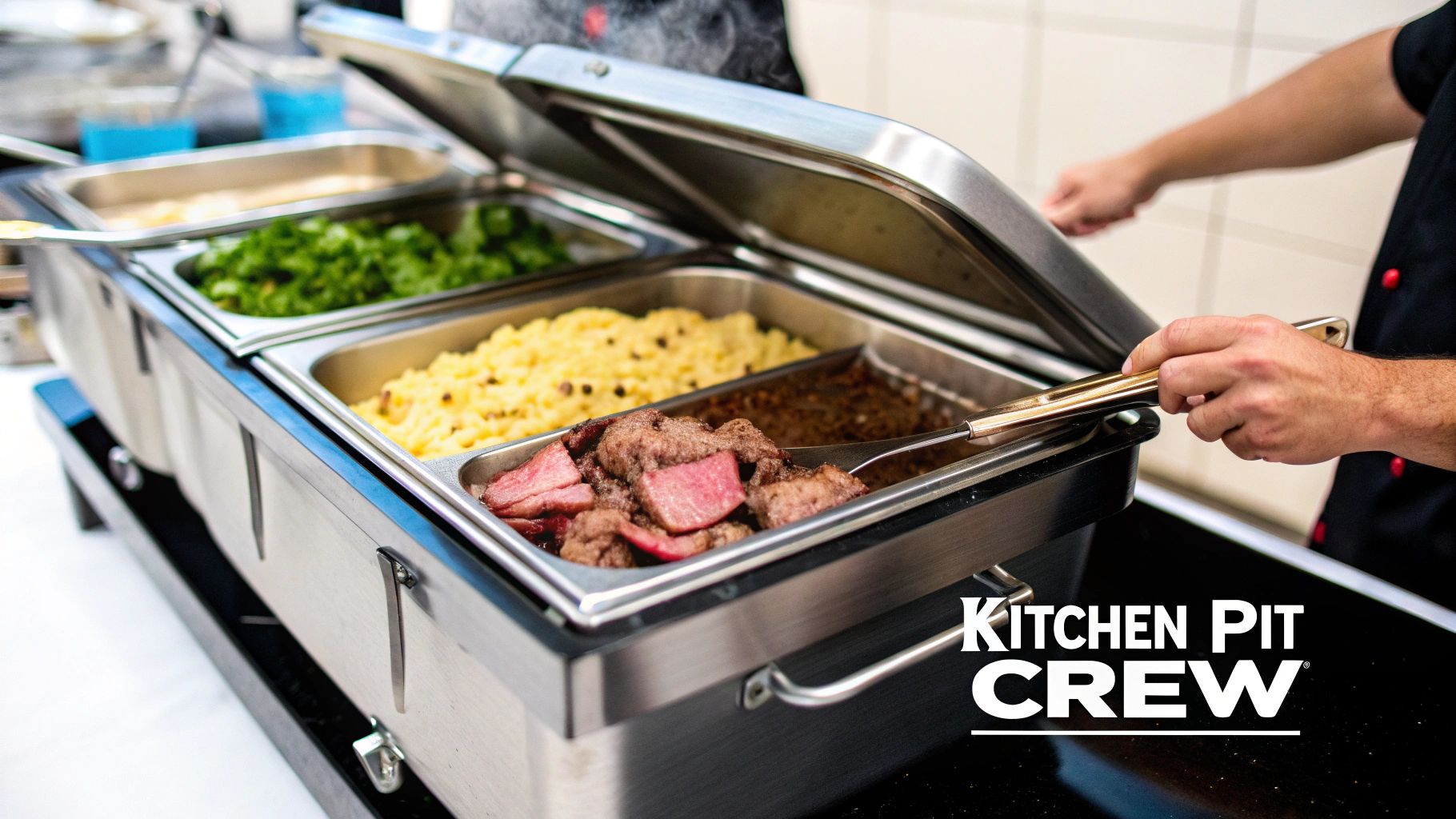
If you peek behind the curtain of any successful Las Vegas buffet, you’ll see a steam table holding the line. In a town with a food scene as competitive and diverse as ours, where you'll find a diverse array of restaurants catering to every palate, you can't afford to slip up on food quality or safety. The steam table is what makes it all possible, day in and day out.
This is the key to delivering that exceptional dining experience Vegas is famous for. From keeping the prime rib perfectly warm to making sure the mac and cheese stays creamy and delicious, a solid, reliable steam table is the true backbone of any high-volume food operation.
Why Steam Tables Are Essential in Las Vegas
In a city that never stops, your kitchen has to run like a well-oiled machine. A properly equipped service line isn’t just a nice-to-have; it's an absolute necessity. The steam table is the heart of it all, but success requires essential restaurant equipment working in concert to keep things moving smoothly.
A complete service line that really works needs:
- Commercial Refrigerators: These units are the starting point, keeping all your ingredients fresh and safely chilled before they hit the hot line.
- Commercial Freezers: For everything you need to store long-term, a good commercial freezer is non-negotiable for preserving quality and cutting down on waste.
- Ice Machines: Ice is critical for everything from drinks to creating those eye-catching cold displays that complement the hot food on your steam table.
At the end of the day, a steam table's job is simple but absolutely critical: it maintains quality, ensures safety, and protects your restaurant's reputation with every single plate you serve.
This need for reliable equipment isn't just a local trend. The global market for commercial steam tables was already valued at around USD 1.2 billion and is expected to hit USD 2.1 billion by 2033. This growth is all about the increasing demand for efficient food warming and stricter safety rules. For a deeper dive, you can check out the full report on Market Trends Analysis.
Wet Heat vs. Dry Heat: The First Big Decision
When you're looking at steam tables, the first fork in the road is deciding between wet and dry heat. This isn't just a technical detail; it's a choice that directly affects your food's quality, texture, and how your team manages the service line. The two methods couldn't be more different, and for any Las Vegas kitchen, getting this right is key to a smooth, successful service.
Think of a wet steam table as a gentle, humid sauna for your food. It works by heating a large basin of water—a water bath—that sits underneath your food pans. The resulting steam rises and wraps around the pans, providing a soft, consistent heat. It's the perfect environment for anything that dries out easily. We're talking mashed potatoes, delicate sauces, gravies, or steamed veggies. That moist heat is a lifesaver for preserving texture and temperature over a long service.
On the flip side, a dry steam table is more like our own Mojave heat—intense and direct. It uses heating elements, either exposed or enclosed, that radiate heat straight up to the bottom of the food pans. This is your go-to for anything crispy. Fried chicken, crunchy egg rolls, french fries—anything you don't want getting soggy will thank you for being in a dry well. There's no moisture to ruin that perfect crunch.
The Lowdown on Wet Heat
Wet steam tables are the champions of holding food quality, especially during those marathon service hours. That humid environment is incredibly forgiving and keeps things from scorching.
- The Good: You get incredibly even heating, food doesn't dry out, and it's a dream for delicate items like fish or creamy sauces.
- The Bad: They need a bit of babysitting. You have to keep an eye on the water levels. If they run dry, you risk burning out your heating elements. Plus, they require more cleaning, especially with our hard Las Vegas water which loves to leave mineral deposits behind.
The Lowdown on Dry Heat
For speed and simplicity, you can't beat a dry steam table. They're a favorite in high-volume spots and for specific menus. They also tend to be a bit more energy-efficient since you aren't spending electricity to keep a big tub of water hot.
The biggest win for a dry steam table? It protects the texture of anything breaded or fried. By cutting out the steam, you guarantee that crispy food stays crispy, which is a massive deal for keeping customers happy.
But that direct heat can be harsh. If you're not careful, it can create hot spots and scorch food that's left sitting too long. For any steam tables restaurant setup, the final call between wet and dry really comes down to what you're serving. Honestly, most Las Vegas buffets and hot lines use a mix of both, playing to each type's strengths to build out a service line that can handle anything on the menu.
Designing Your Service Line: Sizing and Pan Configuration
Alright, you've picked your heat source. Now for the fun part: designing a service line that can keep up with the breakneck pace of a Las Vegas crowd. The physical form of your steam table—whether it's a tight countertop unit, a big portable rig for catering, or a slick drop-in for that custom buffet line—is going to define your workflow. This is your frontline, and its setup dictates how smoothly you can serve a varied menu.
The secret to a flexible, hard-working service line is all about mastering hotel pans. These stainless steel workhorses are the literal building blocks of any steam table setup. They're built on a standardized sizing system, which means you can mix and match them to fit whatever your menu calls for, day in and day out.
Mastering Hotel Pan Configurations
Getting a handle on the basic sizes is the first step to creating a layout that just works. The whole system is pretty logical, revolving around the standard full-size pan.
- Full-Size Pan: This is your big gun, perfect for high-volume items that fly off the line, like mashed potatoes or mac and cheese.
- Half-Size Pan: Exactly what it sounds like—half the size of a full pan. It's ideal for main dishes or popular sides.
- Third-Size Pan: When you want to offer more variety with smaller portions of sides, sauces, or toppings, this is your pan.
- Sixth-Size Pan: Think small. This is your go-to for condiments, garnishes, and those small-batch specialty items.
The image below gives you a clear look at the two main ways steam tables generate heat.
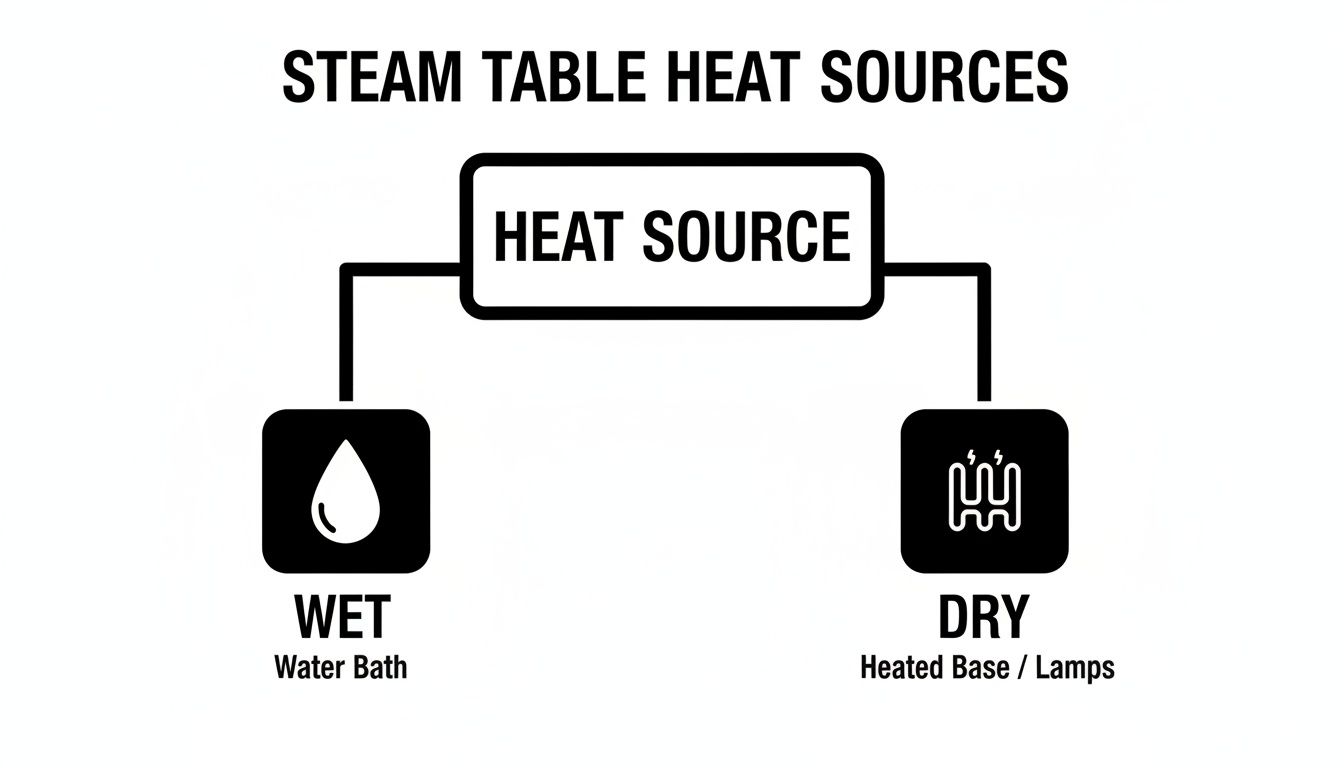
This distinction between wet and dry heat is crucial because it affects how you'll use different pans to keep food tasting great. You might put a delicate fish in a full-size pan over a gentle water bath, while using a dry well to hold multiple smaller pans of crispy appetizers.
Building a Versatile Service Line
The real goal here is to combine these pans creatively to prevent logjams at the buffet and make your food look incredible. For example, a single well built for one full-size pan can just as easily hold two half-size pans or even three third-size pans. That kind of modularity means a Las Vegas restaurant can pivot its line from a brunch service with tons of small options to a dinner service centered on a few large roasts, all without missing a beat.
A well-configured steam table does more than just hold food; it guides the customer's experience and supports the kitchen's rhythm. By planning your pan layout, you can serve a wider variety of dishes without needing more space.
To give you a better idea of the possibilities, here’s how you could arrange a standard four-well table for different needs.
Sample Pan Configurations for a 4-Well Steam Table
This table shows a few ways you can combine different hotel pan sizes in a four-well steam table. It's all about maximizing your space and making the service line work for your specific menu.
| Configuration Example | Well 1 | Well 2 | Well 3 | Well 4 |
|---|---|---|---|---|
| High-Volume Mains | 1 Full-Size | 1 Full-Size | 2 Half-Size | 2 Half-Size |
| Variety of Sides | 3 Third-Size | 3 Third-Size | 3 Third-Size | 3 Third-Size |
| Mixed Menu | 1 Full-Size | 2 Half-Size | 3 Third-Size | 6 Sixth-Size |
| Taco/Salad Bar | 2 Half-Size | 6 Sixth-Size | 6 Sixth-Size | 6 Sixth-Size |
As you can see, the combinations are nearly endless, giving you the power to adapt on the fly.
This isn't just a niche piece of equipment, either. The investment in these pans is huge across the industry. The steam table pan market was valued at USD 1.2 billion and is expected to hit USD 1.9 billion by 2033. That growth tells you just how essential these pans are to the daily grind in commercial kitchens everywhere.
Ultimately, a thoughtfully designed service line is one where your steam table works in perfect harmony with your entire back-of-house. To learn more about picking the right sizes and materials for your kitchen, check out our guide on steam table pans.
Powering Your Kitchen: Gas and Electric Steam Table Options
Once you’ve settled on the type of heat and the right pan layout, the next big question is how your new steam tables restaurant setup will actually plug into your kitchen. The choice between gas and electric isn't just a minor detail; it’s a major decision that directly affects your installation, day-to-day performance, and what you'll be paying on your utility bills for years to come.
Electric steam tables are the champs of simplicity and precision. Think of them as the plug-and-play powerhouses of the hot line. They’re usually much easier to install and give you incredibly accurate temperature control, which is a lifesaver when you're holding delicate sauces or other items that can't handle wild temperature swings. For the diverse and demanding menus you see all over Las Vegas, that kind of control is invaluable.
On the other side of the coin, you've got gas models. These are often the go-to for high-volume kitchens that are all about speed and keeping utility costs down. Gas units almost always heat up faster than their electric cousins, a huge plus when you're slammed during the dinner rush. Plus, in areas where natural gas is cheaper than electricity, a gas steam table can make a real dent in your monthly bills.
Technical Needs and Installation Realities
Beyond how they perform, you have to get real about the practical side of installation to avoid some expensive headaches down the road. For an electric unit, it’s not just a matter of finding an open outlet. You have to know the specific voltage and amperage your model needs.
- Standard 120V: Most smaller, portable, or countertop models will run just fine on a standard 120V circuit. That’s the kind of outlet you have everywhere in your kitchen.
- Heavy-Duty 208V/240V: But the bigger, multi-well workhorses often demand a more powerful 208V or 240V connection. That usually means calling in an electrician to install a dedicated circuit.
Gas units come with their own checklist. The installation absolutely requires a professional to connect it to your kitchen's gas line, and this work has to meet strict local safety codes—no exceptions. You'll also need to make sure you have proper ventilation, just like with any other gas-powered appliance.
No matter which power source you land on, if you're getting a wet steam table, you've got to think about plumbing. Having a water source nearby makes filling the wells a breeze, and a floor drain is non-negotiable for safe and easy draining when service is over.
Finally, remember that a steam table doesn't work in a vacuum. It's just one piece of the puzzle that is your service line. To keep things running smoothly, it needs to work in harmony with other key equipment. High-quality commercial refrigerators and commercial freezers are critical for keeping ingredients safely stored before they hit the hot line.
And don't forget a reliable ice machine. It’s essential not just for drinks, but also for building out those appealing cold wells and salad bars that often sit right next to a hot buffet. When you plan for your steam table’s power and plumbing needs while looking at your entire equipment lineup, you set yourself up for a seamless, efficient operation ready to crush any Las Vegas service.
Building a Complete Hot and Cold Service Line
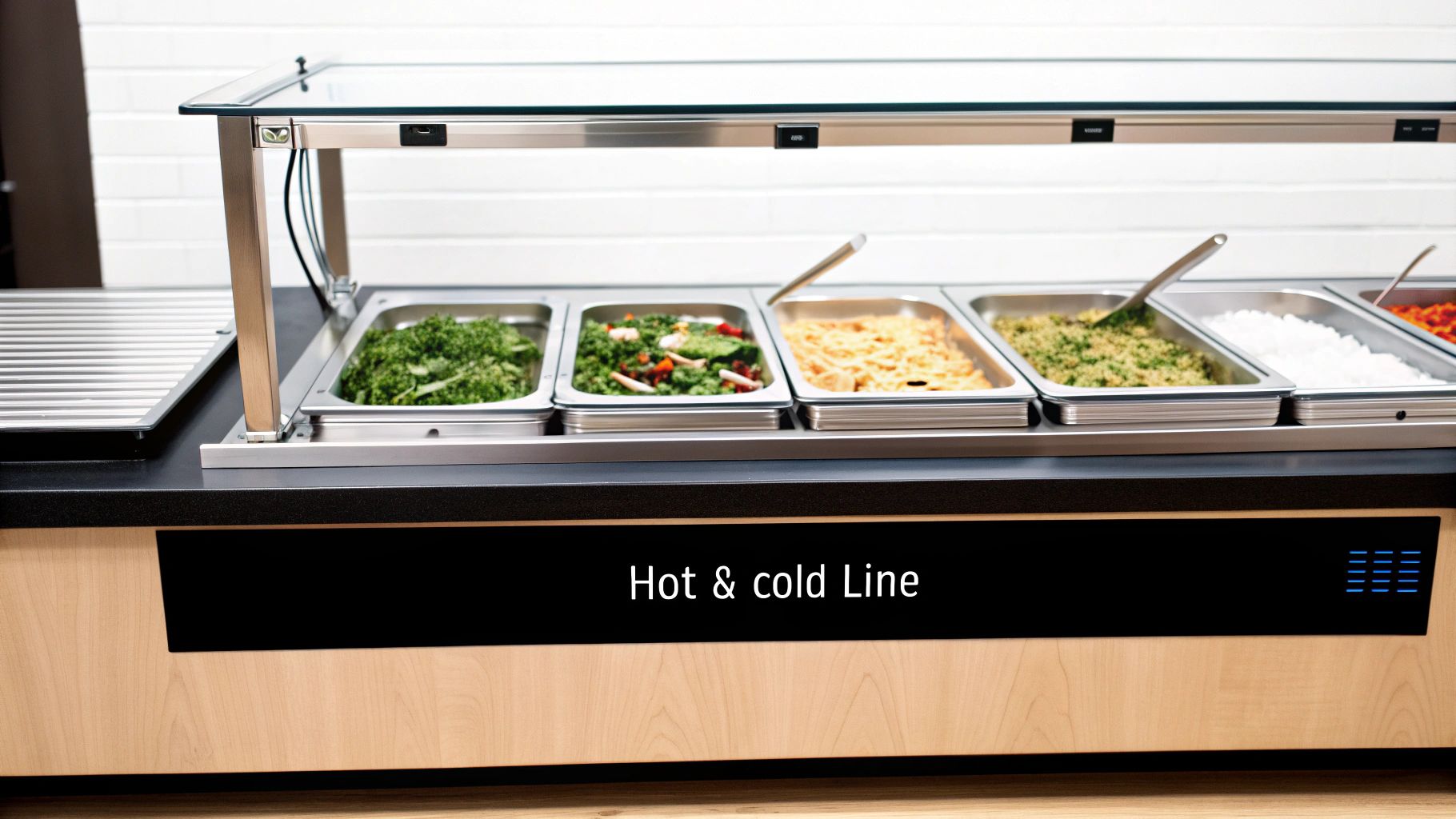
A steam table is the star of your hot line, no doubt. But even the biggest star needs a solid supporting cast. In the fast-paced, high-stakes Las Vegas restaurant world, a truly great service line is about more than just keeping food hot. It’s about the entire journey from the walk-in to the guest's plate.
Thinking about the whole workflow is what separates a decent setup from a spectacular one. The action doesn't start when pans hit the steam table—it begins way back in your cold storage.
The Foundation: Cold Storage Essentials
The road to a perfect hot buffet always starts cold. This is where your ingredients are kept safe, fresh, and ready for their moment in the spotlight. Success in the diverse Las Vegas culinary scene absolutely depends on having the right essential restaurant equipment from the get-go.
- Commercial Refrigerators: These are the unsung heroes of your kitchen, keeping produce crisp and dairy perfectly chilled. They're your first line of defense for food safety and quality.
- Commercial Freezers: For anything long-term, a reliable commercial freezer is non-negotiable. It locks in freshness, cuts down on waste, and helps you keep a tight grip on inventory.
Getting your entire refrigeration system right is crucial. You can dive deeper into picking the right units in our guide on energy-efficient commercial refrigeration.
When your hot and cold equipment work together, you create a seamless kitchen ballet. Imagine your staff moving effortlessly from a well-organized walk-in to the prep station and right to the service line. That’s how you crush a chaotic dinner rush without breaking a sweat.
This need for reliable, integrated systems explains a lot about the commercial steam table market. North America holds the biggest market share, and it's no surprise why. High-density commercial kitchens and strict food safety laws mean operators can't afford to cut corners on equipment. In markets like Las Vegas, the established hospitality industry drives a constant demand for these essential upgrades.
Completing the Line with Ice and Cold Wells
The best buffets offer contrast. Right alongside those steaming hot entrees, you need an appealing cold selection to create a complete experience. This is where a dependable ice machine becomes absolutely critical.
An ice machine does way more than just stock your bar. It’s the key to building beautiful—and safe—cold wells for your salad bar, a fresh seafood display, or chilled desserts. By placing cold displays right next to your steam tables restaurant setup, you offer a balanced menu that has something for everyone.
Of course, the equipment is only part of the story. A clean, compliant kitchen also has to manage its waste properly. For any restaurant, that means staying on top of things like regular Restaurant Grease Trap Cleaning.
When you map out the entire workflow—from your commercial freezers to your ice machines and beyond—you build a tough, efficient system that’s ready for anything Las Vegas can throw at it.
Frequently Asked Questions About Restaurant Steam Tables
When you're in the thick of a busy Las Vegas service, the last thing you need is equipment trouble. Here are some straight-up, practical answers to the most common questions we get about steam tables, designed to keep your kitchen running smoothly and your food safe.
How Often Should I Clean My Steam Table?
Think of it this way: daily cleaning is absolutely non-negotiable. At the end of every single shift, you need to pull all the pans, drain the water, and give every surface a thorough wipe-down with a food-safe sanitizer.
Once a week, schedule a deep clean. For wet tables, this means deliming the wells. This is especially critical here in Las Vegas with our notoriously hard water. Staying on top of this prevents mineral buildup, which helps your unit heat more efficiently and will definitely extend its life.
Can I Use a Steam Table to Cook or Reheat Food?
Nope. Never. A steam table is a holding unit, not a cooking appliance. Its one and only job is to keep food that’s already been cooked safely above 140°F.
Trying to cook raw food or bring cold items up to temp in a steam table is a massive food safety risk. It simply can't heat food fast enough to get through the temperature "danger zone" (40°F to 140°F), which is prime time for bacteria to grow.
Think of your steam table like a marathon runner holding a steady pace, not a sprinter. It’s designed for endurance—maintaining heat over time—not for the initial burst of energy needed for cooking. This distinction is vital for food safety compliance.
What Are NSF and ETL Certifications?
These are basically seals of approval that tell you a piece of equipment meets strict public health and safety standards. An NSF-certified steam table is made from food-safe materials and designed to be cleaned easily.
Similarly, the ETL mark confirms the unit complies with electrical safety standards, which you can learn more about in our article on what is ETL certification. The Southern Nevada Health District won't let you operate without certified equipment, so these are a must-have.
How Do I Prevent Food From Drying Out?
This is a constant battle in the kitchen. For wet steam tables, the simplest solution is to keep an eye on the water level and make sure it never runs low. Be aware that running a wet unit can sometimes mean dealing with smoke detectors triggered by steam, so it helps to know what causes that.
For any type of steam table, keeping lids on the pans whenever you're not serving is your best defense—it traps moisture right where you want it. Other pro-tips include stirring sauces periodically and using smart batch cooking so food isn't sitting out for hours on end.
Ready to build the perfect service line for your Las Vegas venue? From reliable commercial refrigerators and commercial freezers to the essential ice machines, Las Vegas Restaurant Equipment has the warranty-backed gear you need at showroom-free prices.
Explore our full collection of steam tables and other essential kitchen equipment today at https://lasvegasrestaurantequipment.com.