

In the vibrant, high-stakes world of Las Vegas food service, where a diverse array of restaurants cater to every palate, steam table pans are the absolute workhorses of the kitchen. Think of them as the foundational building blocks for everything you do, from prepping ingredients to the final presentation on the line. These versatile, standardized containers are designed to hold food safely in steam tables, prep stations, and walk-in coolers, making sure everything runs smoothly and efficiently. They are truly the unsung heroes of professional kitchens everywhere.
The Unsung Hero of the Las Vegas Buffet Line
Picture the controlled chaos of a massive Las Vegas buffet, where a dizzying variety of dishes and visual appeal are everything. From the sprawling casino spreads on the Strip to the buzzing downtown eateries, one simple piece of equipment is absolutely critical for pulling it off: the steam table pan. These pans are essential for keeping food at the perfect temperature, creating a lightning-fast workflow, and making sure every single dish looks incredible under the lights.
This guide goes beyond a simple definition to give you a practical rundown for any Las Vegas or Henderson operation. We’ll show you exactly how these pans are the critical link in your kitchen’s entire operational chain. They let you seamlessly move dishes from a commercial refrigerator to the prep line, into the oven, and finally onto the serving line without missing a beat.
Powering the Vegas Culinary Scene
In a city that famously never sleeps, kitchens have to operate with razor-sharp precision. The flow of ingredients and prepared dishes is a constant dance between different temperature zones, and that’s where a well-organized system of essential restaurant equipment becomes non-negotiable. Success depends on reliable gear, including commercial refrigerators, commercial freezers, and ice machines.
A typical workflow might look something like this:
- Bulk ingredients are kept safe and sound in large walk-in or reach-in commercial freezers.
- Items are then brought into commercial refrigerators to thaw properly and be held for prep.
- Once prepped, ingredients are often organized in steam table pans on refrigerated prep tables.
- Finally, hot dishes are held in those very same pans on a steam table or a dedicated hot food counter for service.
A kitchen's efficiency is built on the seamless movement of food through its lifecycle. Steam table pans are the vessels that make this entire journey possible, from cold storage to the final hot presentation.
More Than Just a Pan
While holding hot food is their main job, steam table pans are vital for so much more. They're instrumental in organizing your mis en place, marinating proteins, baking big batches of casseroles, and even serving cold items on a salad bar that's being kept chilled by an ice machine. This incredible versatility makes them totally indispensable.
Whether you're running a high-volume hotel kitchen feeding thousands of people a day or a nimble food truck navigating the city's packed event schedule, knowing how to pick and use these pans is key. Mastering this simple piece of equipment will help you streamline your entire operation, cut down on food waste, and deliver a consistently excellent dining experience that keeps your customers coming back for more.
Choosing the Right Pan Size for Your Menu
Walking into the world of steam table pans can feel like trying to learn a new language, but trust me, it’s a lot simpler than it looks. The trick is to think of the standard 'full-size' pan as the foundation—a master grid for your entire hot line. This one pan is the blueprint for a totally modular system that gives any Las Vegas kitchen incredible flexibility.
You can then fill that master grid with smaller, fractional pans. Think halves, thirds, quarters, sixths, and even ninths, all fitting together like puzzle pieces. This setup, known across the globe as the Gastronorm (GN) system, lets you perfectly configure your steam table to match whatever you’re serving that day. For the dynamic, ever-changing menus we see all over Las Vegas, that's not just a nice feature; it's essential.
The Gastronorm System in Action
Let’s say you're running a taco bar for a slammed lunch service at your spot in Henderson. A single full-size pan is way too big for just one ingredient. Instead, you could use a mix of smaller pans that all fit neatly inside that same footprint:
- One half-size pan for your main event, like seasoned ground beef or shredded chicken.
- Two sixth-size pans for the shredded lettuce and diced tomatoes.
- Three ninth-size pans for those smaller toppings—jalapeños, onions, and cilantro.
This layout keeps every single ingredient separate, fresh, and easy for your team to grab, all while taking up the space of just one full-size pan. This modular design is a total game-changer. It means a chef can go from serving a huge prime rib for a casino buffet in a full-size pan to a complex, multi-ingredient build-your-own-bowl concept without having to tear down and rebuild the whole line.
At their core, steam table pans do three critical jobs: they control food temperature, dictate kitchen workflow, and define the final presentation to the guest. Mastering the sizing system is the first step to controlling all three.
This infographic really breaks down the crucial roles these pans play in any kitchen that wants to run smoothly.
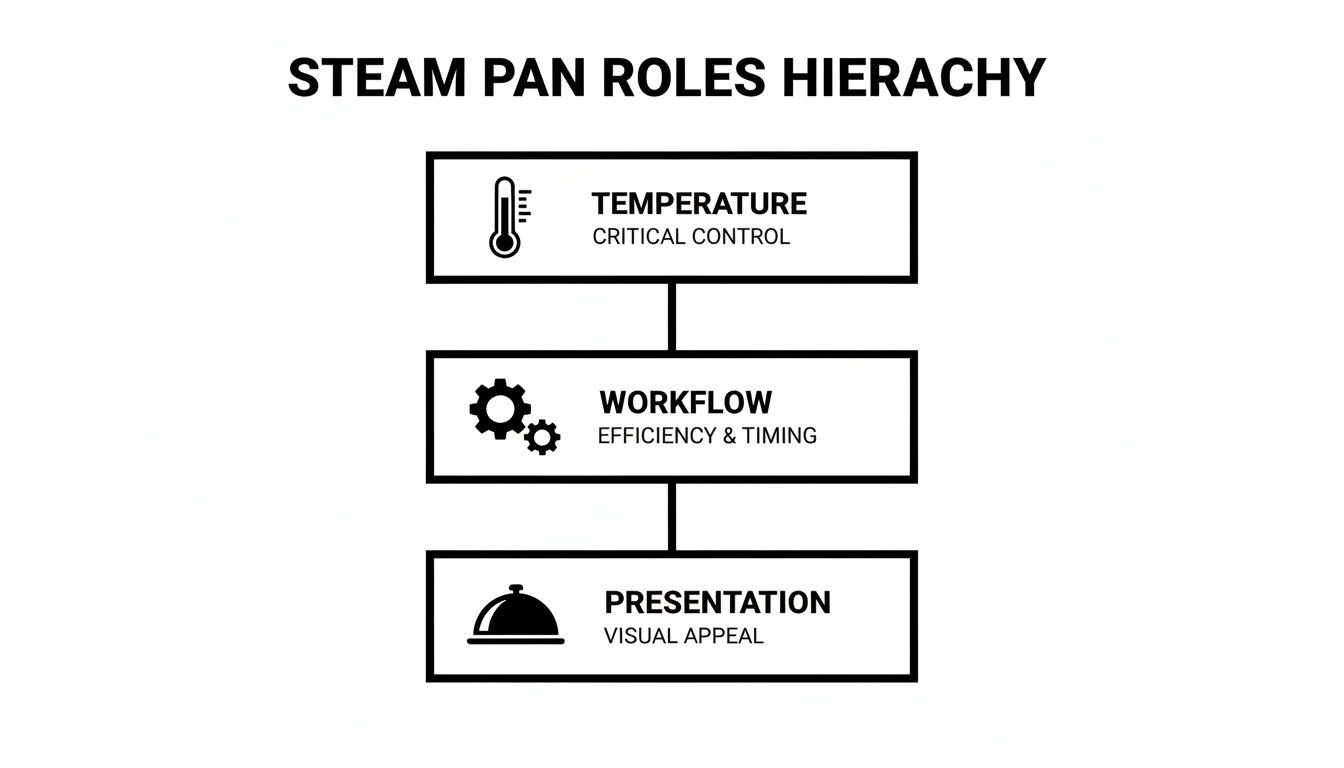
As you can see, while keeping food at a safe temperature is job number one, the effect these pans have on your workflow and how the food looks to the customer is just as important for a profitable operation. The system is so successful that the market for it is booming.
Full-size pans are still the king for high-volume jobs like casino buffets and big catering events, but the half and third-size options offer the flexibility needed for smaller restaurant menus or cramped food trucks. The entire market is projected to skyrocket at a 12.80% CAGR from 2020-2033, climbing from about USD 0.9 billion in 2025 to USD 1.6 billion by 2033. It’s no surprise that full-size pans are the top sellers in restaurants and hotels. Here in North America, which holds 34% of the global share, this kind of segmentation is key as U.S. regulations increasingly push for standardized 'hotel pans' that fit perfectly into any steam table, which helps cut down on waste and seriously boosts efficiency. You can discover more insights about these market trends and how they’re shaping the industry.
To help you visualize how this works on a practical level, here’s a quick guide to matching pan sizes with some classic Las Vegas dishes.
Matching Pan Sizes to Popular Las Vegas Menu Items
Use this table to quickly find the ideal steam table pan size and depth for common dishes served in Las Vegas restaurants, from buffets to cafes.
| Pan Size (Fractional & GN) | Common Depths | Best For (Menu Examples) | Capacity (Approx. Quarts) |
|---|---|---|---|
| Full-Size (1/1 GN) | 4", 6" | Prime Rib, Mac & Cheese (Bulk), Roasted Chicken | 13 - 21 |
| Half-Size (1/2 GN) | 2.5", 4" | Mashed Potatoes, Green Beans, Scrambled Eggs | 4 - 6.5 |
| Third-Size (1/3 GN) | 2.5", 4", 6" | Pulled Pork, Chili, Various Sauces, Salad Bar Items | 2.5 - 5 |
| Sixth-Size (1/6 GN) | 2.5", 4" | Taco Toppings (Lettuce, Cheese), Salsas, Condiments | 1 - 2 |
| Ninth-Size (1/9 GN) | 2.5", 4" | Garnishes (Jalapeños, Onions), Small Toppings | 0.6 - 1 |
Getting the right combination of sizes and depths on your line not only makes service smoother but also keeps your food looking and tasting its best for longer.
Why Pan Depth Matters More Than You Think
Beyond just the length and width, the depth of your steam table pans has a massive impact on your food quality and how long you can hold it. The standard depths you’ll see are 2.5 inches, 4 inches, and 6 inches. Picking the right one is absolutely crucial for preserving the texture and flavor of your dishes.
A shallow, 2.5-inch pan is your go-to for items that you'll go through quickly or things that could get crushed by their own weight, like delicate fish fillets or roasted asparagus. The wider surface area helps them heat up fast, but it also means moisture escapes quicker, so it's best for high-turnover items you're constantly refilling.
On the flip side, a deep, 6-inch pan is the workhorse for holding liquids and dense foods like chili, macaroni and cheese, or a big batch of marinara. Its reduced surface area minimizes evaporation, which stops your sauces from drying out or forming that nasty skin during a long service. This makes them a must-have for holding bulk items that you prep ahead, store in a commercial refrigerator, and then heat up for the line. The 4-inch pan is that perfect, versatile middle ground, great for just about everything from mashed potatoes to steamed vegetables.
Stainless Steel vs. Aluminum vs. Polycarbonate
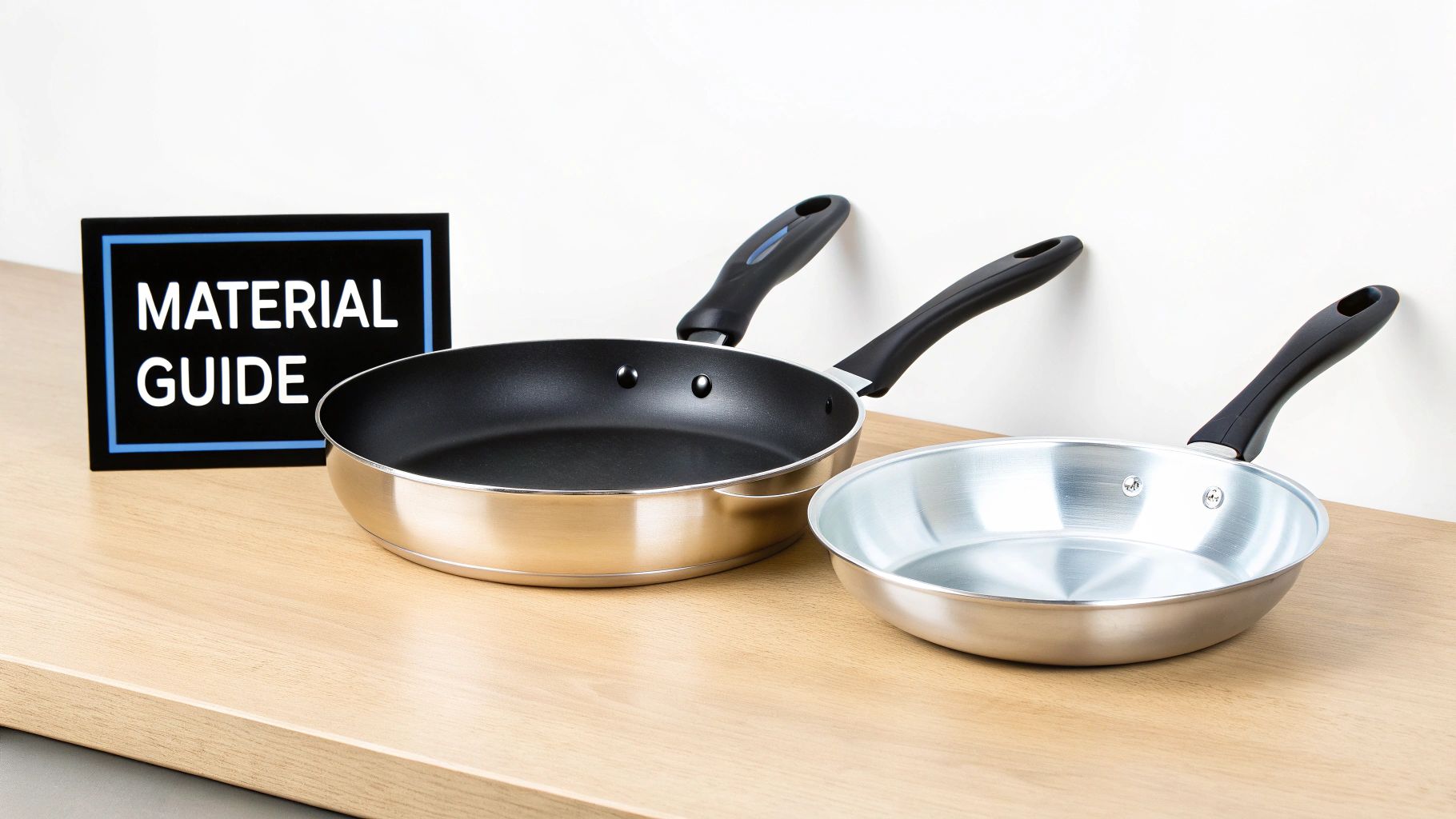
Picking the right material for your steam table pans isn't just a small detail—it's a critical choice that affects your food quality, how long your pans last, and even safety. For any fast-paced Las Vegas kitchen, you have to match the pan to the job. It's all part of a smooth workflow, from pulling ingredients out of a commercial refrigerator to getting them onto the service line.
Think of it like having the right set of kitchen knives. You wouldn't use a paring knife to butcher a primal cut, right? The same logic applies here. Using the wrong pan can kill your food quality, wreck your equipment, and create real safety issues. Let's break down the big three—stainless steel, aluminum, and polycarbonate—so you know exactly what to grab for every dish.
The All-Purpose Champion: Stainless Steel
When you're holding food hot, whether it's on a steam table or in a low oven, stainless steel is the king. There's really no debate. It’s tough as nails, won’t react with your food, and holds heat like a champ, which is why it's the go-to workhorse in just about every professional kitchen on and off the Strip. It shrugs off rust, corrosion, and the kind of dents that come with the daily chaos of a high-volume restaurant.
That non-reactive quality is a huge deal. Stainless steel won't pick a fight with acidic ingredients like tomato sauce or a sharp vinaigrette, so you never have to worry about a nasty metallic tang ruining a dish you’ve worked hard on. That reliability makes it the only real choice for the tough environment of a hotel buffet or a casino's hot line.
For anything hot, stainless steel is non-negotiable. Its durability and non-porous surface are the industry standard for food safety. It can be scrubbed, sanitized, and put right back to work, which is exactly what you need in a commercial kitchen.
Here’s why stainless steel wins for hot-holding:
- Superior Durability: It resists the dents, scratches, and warping that high heat can cause.
- Food Safety: It’s a non-reactive material, preventing weird flavors and keeping bacteria from finding a place to hide.
- Excellent Heat Retention: Keeps food at a consistent, safe temperature on the line.
- Easy to Clean: The smooth, non-porous surface is built for heavy-duty washing and sanitizing.
The Lightweight Specialist: Aluminum
While stainless steel owns the hot line, aluminum pans have their own important role, mostly in baking and transport. Aluminum is an incredible heat conductor, which means it heats up and cools down way faster than steel. That’s perfect for things like sheet cakes or big hotel pans of lasagna where you want quick, even cooking.
It's also a lot lighter than steel, making it the obvious choice for catering jobs or just hauling prepped ingredients across the kitchen. But there's a catch: it's a softer metal, so it dents and scratches more easily. And the most important rule: never put an aluminum pan directly on a steam table to hold acidic food. You'll risk a chemical reaction that can mess with both the flavor and color of your food.
The Cold Application Hero: Polycarbonate
For anything cold, clear polycarbonate pans are the undisputed champ. You can see exactly what's inside at a glance, which is a massive time-saver for a busy prep line or for keeping your walk-in commercial freezer organized. Imagine a Las Vegas kitchen cranking out hundreds of salads or building complex sandwiches—being able to see every ingredient instantly makes the whole process faster and more efficient.
These plastic pans are lightweight, surprisingly durable, and won't shatter like glass, making them much safer. They're perfect for salad bars, holding chopped veggies, or keeping dressings and sauces in a refrigerated prep table. Just stick to the golden rule: standard polycarbonate is for cold food only. If you put it on a steam table or in an oven, it will warp, or worse, melt. That’s a food safety nightmare. While some high-heat plastic versions are out there, the simplest and safest rule for any busy kitchen is "steel for hot, plastic for cold."
Extending Pan Life with Proper Maintenance
In the relentless pace of a Las Vegas restaurant, your equipment isn't just a tool—it's an investment. The lifespan of your steam table pans has a real impact on your bottom line, and good maintenance is the single best way to protect that investment. Taking care of your pans isn't just about keeping them shiny; it's a financial strategy. It prevents you from having to buy replacements, helps you fly through health inspections, and keeps your food safe for your customers.
Think of your pans like any other high-performance piece of gear in your kitchen, from your commercial refrigerators to your ice machines. They need consistent, correct care to do their job right. A neglected pan can quickly turn into a liability, hiding bacteria in tiny scratches or, worse, messing with the taste of your food. A solid maintenance routine is your best defense against these problems, keeping your whole kitchen running smoothly.
The Right Way to Clean Your Pans
A quick scrub in the dish pit isn't going to cut it. Truly effective cleaning is a process, one designed to cut through tough grime without actually damaging the pan itself. The goal is simple: get rid of all the food residue and sanitize the surface. Do this right, and you'll sidestep common issues like discoloration and pitting that send pans to the scrap heap way too early.
Here’s a step-by-step approach for daily cleaning that actually works:
- Pre-Soak Immediately: The second a pan is empty, scrape out what’s left and get it soaking in hot water with a good degreaser. Letting food dry and bake onto the metal is what creates those cleaning nightmares later on.
- Use Non-Abrasive Tools: Grab a nylon brush or a soft scouring pad to scrub the pan. This is especially important for stainless steel.
- Rinse Thoroughly: Use hot water to blast away every bit of soap and food. Any residue left behind can affect food flavor and sanitation.
- Sanitize and Air Dry: Submerge the pan in a sanitizing solution that meets health code requirements. Then, set it on a drying rack and let it air dry completely. It’s far more sanitary than using a towel.
One of the biggest mistakes we see in busy kitchens is using the wrong tools for the job. Never, ever use steel wool or harsh metal scrapers on your stainless steel pans. You’re essentially carving tiny scratches into the surface that trap food and become breeding grounds for bacteria.
This same idea—using the right techniques for stainless steel—applies to your other equipment, too. For those dealing with bigger appliances, understanding the specifics of how to clean stainless steel grill grates can give you some great insights that you can apply to pan maintenance.
Preventing Damage Before It Happens
The best maintenance strategy is simply preventing damage in the first place. The two most common culprits—warping and denting—are almost entirely avoidable if you put the right procedures in place.
Preventing Warping
Warping is caused by thermal shock, a fancy term for a sudden, extreme change in temperature. The classic example is taking a pan straight from a sizzling steam table and dunking it into a sink of cold dishwater. The metal contracts way too quickly and unevenly, causing it to bend out of shape. The fix is simple: Always let hot pans cool down to room temperature before you wash them.
Preventing Dents and Scratches
Dents and scratches are more than just ugly. They create little crevices where bacteria can hide, making it impossible to properly sanitize the pan. The solution here is all about proper storage. Instead of just tossing them in a pile, stack your pans neatly by size. Using pan dollies or carts to move them around also cuts down on the risk of dropping them—a major cause of dents in a bustling Las Vegas kitchen.
Maximizing Performance with Essential Accessories
A steam table pan on its own is just a metal box. Its real magic comes from the ecosystem you build around it. For any Las Vegas kitchen, from a high-end Strip buffet to a bustling downtown spot, the right accessories are what transform that simple pan into a serious workhorse. These aren't just "nice-to-haves"—they're critical for controlling food quality, boosting safety, and giving you the flexibility to keep your menu fresh and exciting.
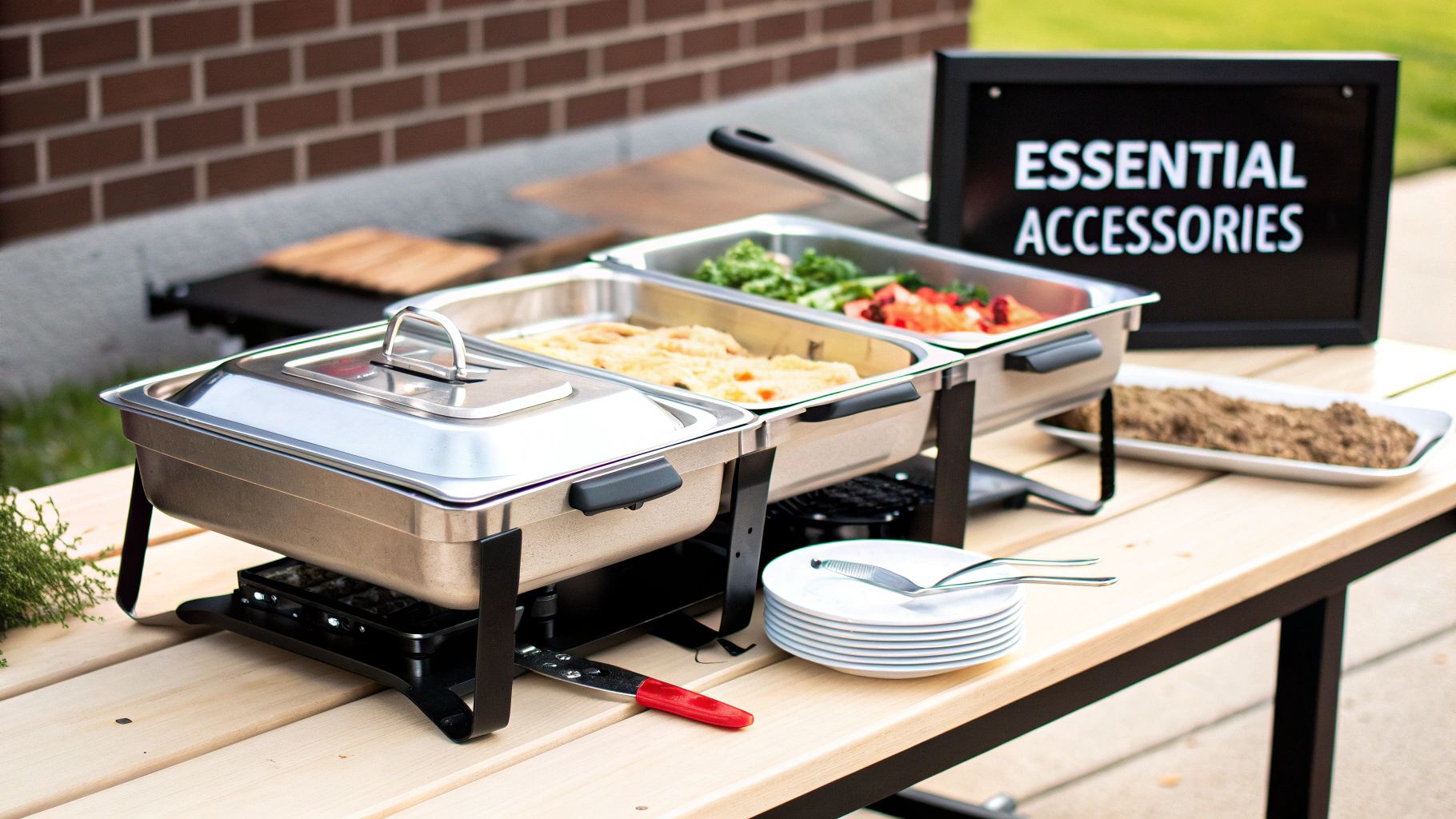
Think about how all your equipment works together, from your walk-in commercial refrigerators to the final serving line. Without the right lids or dividers for your pans, you risk ruining the very dishes you and your team worked so hard to get just right.
Choosing the Right Lid for the Job
The lid you pick directly affects the texture and temperature of your food. It’s a rookie mistake to assume all lids are created equal. In reality, choosing the right one is absolutely crucial for holding different kinds of food properly.
Here’s a quick rundown of the main players:
- Solid Lids: This is your go-to for anything you need to keep moist. A solid lid traps all that steam, making it perfect for holding soups, sauces, and stews without them drying out or reducing during a long service.
- Slotted Lids: These lids have a simple cutout to fit a serving spoon or ladle. It’s a small detail that lets your staff serve guests without taking the whole lid off, which is a huge help for keeping everything at a consistent, safe temperature.
- Hinged Lids: Super convenient, these lids flip open partway. This allows for easy access while minimizing how much heat escapes. They’re an excellent choice for self-service stations and buffets.
- Notched Lids: Similar to the slotted style, these have a small notch on the side. It's just big enough for the handle of a serving spoon to stick out, which keeps the lid sitting securely on the pan during service.
Think of your lid choice as the final step in executing a recipe. A solid lid on fried chicken will make it soggy in minutes. Leaving a soup uncovered will cause it to thicken and get too salty. The right lid preserves the dish exactly how the chef intended.
Specialty Pans and Bars for Ultimate Flexibility
Beyond the standard setup, a few key accessories can unlock a whole new level of customization for your steam table. This is a game-changer in a city like Las Vegas, where menus have to adapt quickly to meet the demands of a constantly changing crowd.
Perforated Pans
These pans are designed with small holes across the bottom, allowing steam to circulate and liquids to drain away. They're indispensable for steaming vegetables so they come out tender-crisp, not mushy and waterlogged. They’re also fantastic for thawing frozen products you've pulled from a commercial freezer—the meltwater drips right through, so your food isn't sitting in a puddle.
Adapter Bars
These simple stainless steel bars are the secret to creating custom layouts on the fly. Sometimes called divider bars, you just lay them across the top of the steam table well. They create a sturdy ledge that lets you mix and match different fractional pan sizes in a single full-size opening.
This means you can easily drop two third-size pans next to three ninth-size pans to build the perfect taco bar or a complex sauce station, all without leaving any dangerous gaps. That kind of adaptability is pure gold in any dynamic kitchen.
Sourcing Your Pans and Equipment in Las Vegas
If you're running a restaurant in Las Vegas or Henderson, you know that speed is everything. This city doesn't sleep, and you can't afford to have a station go down because a pan cracked or a freezer gave out. Waiting a week for a replacement isn't an option when every minute of downtime costs you money and adds stress to your kitchen. That’s why having a local supplier who gets the relentless pace of Vegas is a massive advantage.
Choosing a supplier with showroom-free pricing and fast, local shipping is just a smart business move. When a critical piece of equipment fails mid-service, you need it replaced now, not after it’s been trucked across the country. This direct model saves you money on overhead, getting you essential restaurant equipment needed for success, including commercial freezers and ice machines, at a better price and on a timeline that actually works for a Vegas operation.
The Non-Negotiables for Your Kitchen
When you're buying steam table pans or any other piece of equipment, two things are absolutely non-negotiable: third-party safety certifications and a rock-solid warranty.
Look for certifications from groups like NSF (National Sanitation Foundation) and ETL (Intertek). These aren't just fancy logos; they’re your guarantee that the gear is built for commercial abuse, is easy to sanitize, and won't become a breeding ground for bacteria. With health codes as strict as they are in Las Vegas, this is essential for passing inspections and keeping your diners safe.
A strong warranty is just as important. Your equipment gets put through the wringer every single day, especially in a high-volume Vegas restaurant. A good warranty is your safety net against defects or premature breakdowns, protecting your investment and showing that the manufacturer truly stands behind their product.
Building Your Operation from the Ground Up
For anyone launching a new restaurant or expanding an existing one, the upfront cost of outfitting a kitchen can feel overwhelming. Buying everything from steam table pans to heavy-duty appliances all at once takes serious capital. This is where financing options become a lifesaver, letting you get the high-quality, dependable equipment you need without wiping out your cash reserves.
Financing makes it possible to start strong with reliable commercial refrigerators and ice machines that can handle our desert heat and the constant demands of service. It frees up your cash for other critical needs like marketing, hiring good people, and stocking your pantry. To make sure you don't miss anything, a detailed commercial kitchen equipment checklist is the perfect tool to map out every single item your new kitchen will need.
Investing in certified, warrantied equipment from a local supplier isn't an expense; it's a foundational business strategy for any Las Vegas restaurant. It ensures compliance, protects your capital, and minimizes the costly downtime that can cripple an operation.
And the demand for quality pans isn't slowing down. The global market for steam table pans hit USD 1.20 billion and is expected to climb to USD 1.90 billion by 2030, growing at a steady 5.8% each year. North America makes up a huge piece of that pie—about 35-38%—thanks to our massive number of restaurants and strict hygiene standards. That means a high demand for durable, NSF-compliant pans, especially in high-traffic venues like Las Vegas casinos. Learn more about these steam table pan market findings to see how these trends are shaping the local supply chain.
Got Questions? We've Got Answers
Running a restaurant in Las Vegas comes with its own unique set of challenges. From keeping ingredients fresh in the desert heat to managing the relentless pace of a Strip-level service, every piece of equipment has to pull its weight. Here are some of the most common questions we get about steam table pans and how to get the most out of them.
Can I Use Aluminum Pans Directly on a Steam Table?
That's a definite no-go. Aluminum pans just aren't built for the direct, sustained heat of a steam table. They're too soft. Even worse, if you're holding something acidic like a house-made marinara sauce, the acid can react with the aluminum. This can mess with the flavor of your food, giving it a metallic tang, and even change its color—a complete disaster for any kitchen that takes pride in its product.
When you're holding hot food on the line, 22- or 24-gauge stainless steel pans are the only real choice. They're the industry standard for a reason: they’re tough, safe, and built to perform.
What Does the Gauge of a Stainless Steel Pan Mean?
The gauge tells you how thick the steel is. It’s a bit counterintuitive, but the lower the number, the thicker and stronger the metal.
For a busy kitchen in Vegas or Henderson, a 22-gauge pan is the perfect workhorse. It's got the heft to resist dents and warping far better than a flimier 24-gauge pan. While you might pay a little more upfront, a thicker pan will survive the daily grind for much longer, making it a smarter investment in the long run.
Are Plastic Steam Table Pans Safe for Hot Food?
This one is a crucial safety issue. Those standard clear polycarbonate pans you see everywhere? They are for cold use only. They’re fantastic for organizing your prep table or storing food in a walk-in commercial freezer, but they will absolutely warp, and can even melt, if you put them on a hot steam table.
Now, there are special high-heat plastic pans out there, usually amber or black, that are designed to handle temperatures up to 375°F.
But to keep things simple and safe in a chaotic kitchen, just follow this rule: clear pans for cold, stainless steel for hot. It takes the guesswork out of the equation and prevents some very expensive (and dangerous) mistakes.
How Do I Stop My Pans From Warping?
Warping almost always comes down to one thing: thermal shock. That's the sudden, extreme change in temperature that happens when a pan goes from one extreme to another. The classic mistake is pulling a blistering hot pan from the oven or steam table and dunking it straight into a sink full of cold water.
The metal contracts way too fast and unevenly, causing it to buckle and bend. The fix is simple: always let hot pans cool down to room temperature before you wash them. Making this one small change in your kitchen's routine will dramatically extend the life of your steam table pans.
Ready to gear up your Las Vegas kitchen with pans and equipment that can handle the pressure? Las Vegas Restaurant Equipment delivers showroom-free pricing on everything from steam table pans to commercial refrigerators and ice machines, all with fast shipping to keep your operation running smoothly.
Check out our complete catalog of commercial kitchen equipment at https://lasvegasrestaurantequipment.com.