

In the vibrant, diverse Las Vegas food scene, where you'll find every imaginable cuisine, one piece of equipment is the absolute, non-negotiable heart of any professional kitchen: the stainless steel sink.
Think about it. From a massive resort kitchen on the Strip catering to global palates to your favorite local spot in Henderson, the sink is where it all happens. It's the command center for food safety, the key to a smooth workflow, and the first line of defense for staying compliant. Putting real thought into your sink setup isn't just buying equipment; it's a direct investment in your restaurant's future.
Setting Your Las Vegas Kitchen Up for Success
In a town famous for its world-class dining and sky-high standards, the real magic behind the scenes comes down to the workhorses. And no piece of equipment works harder than a commercial sink. These aren't just basins for washing up. They are the nexus of your entire operation, critical for keeping the Southern Nevada Health District happy and your customers safe.
Picture your kitchen as a living, breathing thing. Every part needs to work together perfectly. The stainless steel sink is the hub that connects all the essential restaurant equipment. It’s where produce gets washed and prepped safely, where dishes are sanitized to protect every single guest, and where your crew washes their hands, preventing the spread of foodborne illness. This hub is the unsung hero that makes the rest of your kitchen run smoothly.
The Kitchen’s Big Three
For any restaurant in Las Vegas, from a high-end steakhouse to a bustling diner, a truly functional back-of-house is built on three pillars of equipment:
- Commercial Refrigerators: In the desert heat, these are your lifeline. They keep expensive ingredients fresh, safe, and at the perfect temperature, protecting both the quality of your diverse menu and your bottom line.
- Commercial Freezers: These are all about smart inventory management. Commercial freezers let you buy in bulk, cut down on food waste, and stay prepped for those unexpectedly slammed nights.
- Ice Machines: You can't run a bar, cafe, or restaurant in this city without a reliable ice machine. It's essential for keeping drinks perfectly chilled and meeting the relentless demand of a town that never sleeps.
But here’s the thing: all three of these—your coolers, freezers, and ice machines—depend entirely on the cleanliness and utility that a good stainless steel sink provides. Before a single head of lettuce hits the walk-in or a cocktail is poured over ice, the foundation for safety starts right there at the sink. This guide will walk you through picking the right ones to anchor your kitchen, making sure you’re set up for compliance, efficiency, and success for years to come.
Choosing the Right Sink for Every Kitchen Task
In the high-stakes culinary world of Las Vegas, a kitchen's success hinges on having the right tool for every single job. You wouldn't use a paring knife to break down a side of beef, right? The same logic applies to your sinks.
Think of your core kitchen equipment—the sinks, commercial refrigerators, and ice machines—as your all-star lineup. Each player has a specific position, and they need to excel at it for the team to win.
The undisputed captain of this team is the 3-compartment sink. This isn't just a friendly suggestion; it's a non-negotiable piece of gear required to meet health codes here in Vegas. Its trio of basins creates a crystal-clear workflow for the critical "wash, rinse, sanitize" dance. This single process is the absolute backbone of your food safety program, stopping cross-contamination in its tracks and guaranteeing every plate and pan is spotless.
This simple diagram shows just how foundational sinks are, working hand-in-hand with your other workhorses to keep the whole operation running.
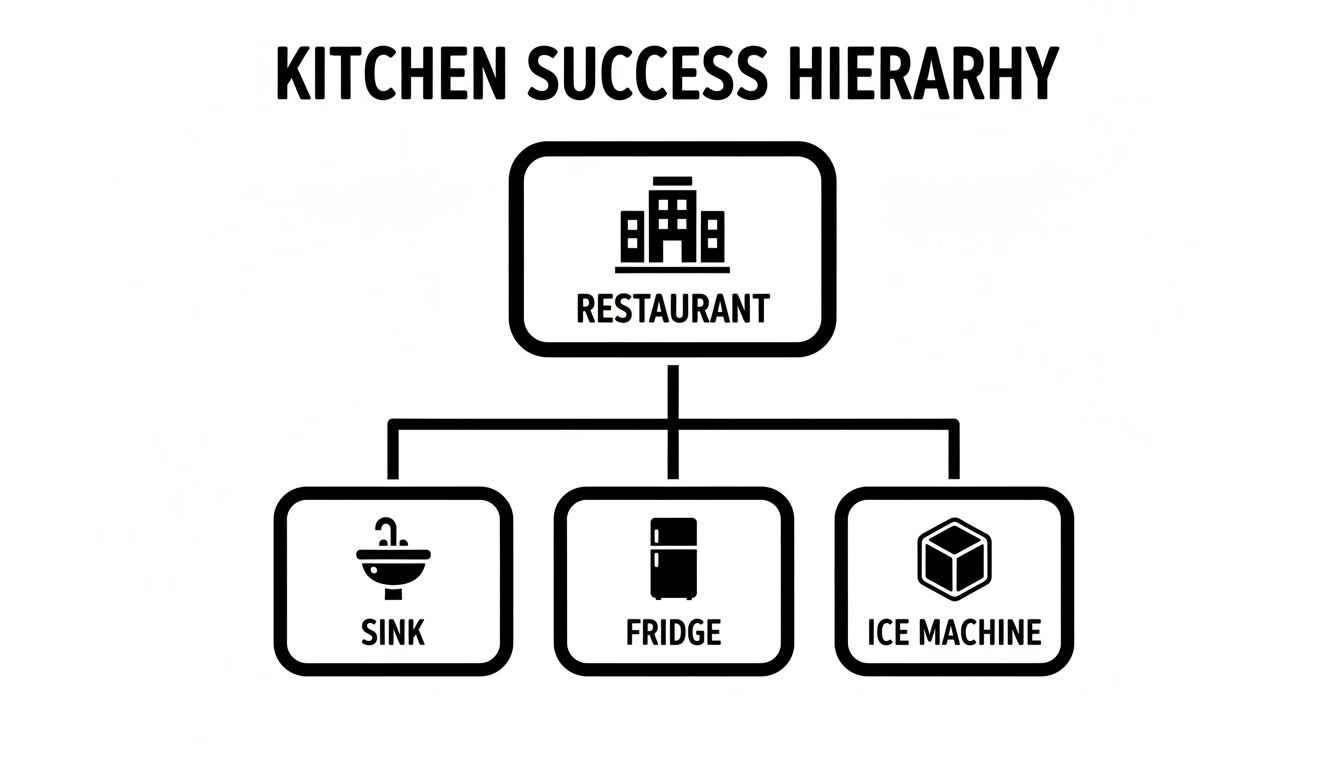
As you can see, the sink, fridge, and ice machine are the bedrock. Get these right, and you've built a solid foundation for everything else.
To help you visualize where each piece fits, here’s a quick-reference table breaking down the most common sink types you’ll find in a Las Vegas kitchen.
Commercial Sink Types and Their Functions
| Sink Type | Primary Use | Common Kitchen Location | Key Feature |
|---|---|---|---|
| 3-Compartment Sink | Manual warewashing (wash, rinse, sanitize) | Dish pit or main cleaning area | Three deep basins for a systematic cleaning process |
| Hand Sink | Handwashing only | Near prep stations, cook lines, and entrances/exits | Small, dedicated, and easily accessible to promote hygiene |
| Prep Sink | Rinsing produce, thawing proteins | Food preparation areas, away from the dish pit | Prevents cross-contamination between raw food and dirty dishes |
| Underbar Sink | Washing glassware, rinsing bar tools, dumping ice | Behind the bar | Compact, multi-compartment design for fast-paced service |
| Mop/Utility Sink | Filling/emptying mop buckets, general cleaning | Janitorial closet or a dedicated utility corner | Low, floor-mounted basin to handle dirty water and chemicals |
This table gives you the "what" and "where," making it easier to plan your kitchen's layout for maximum efficiency and compliance.
Essential Sinks for a Compliant Kitchen
Beyond the main dish pit, a truly functional kitchen needs a few other specialized sinks to keep things hygienic and running smoothly. Each one has a distinct, vital role to play.
- Hand Sinks: These aren't optional. These small, dedicated sinks must be placed strategically near food prep areas and kitchen entrances. They're your first and best line of defense against foodborne illness, ensuring staff can wash up frequently without walking through other work zones.
- Prep Sinks: Used only for washing vegetables or thawing proteins, these sinks create a crucial barrier. They keep raw food away from your main 3-compartment sink, which is strictly for dirty dishes. This separation is key for an organized and safe prep process.
- Underbar Sinks: If you have a bar, you need one of these. These compact units let bartenders quickly wash glassware, rinse shakers, and dump old ice without ever having to step foot in the main kitchen, keeping the drinks flowing and the service area clean.
- Mop Sinks: Also called janitorial sinks, these low-to-the-ground basins are for one thing: dealing with dirty water from mopping. They keep all that grime far away from any food prep or service areas, a critical piece of your overall sanitation plan.
When you're ready to buy, remember that the sink itself is just part of the equation. You’ll also need to think about the fixtures and professional installation, which is often handled by companies providing complete sink and faucet services.
Equipping your kitchen with the correct types of sinks is not just about efficiency—it's about building a system that prioritizes food safety and compliance from the ground up. Each sink creates a designated zone, minimizing risks and streamlining workflow for your entire team.
Getting a handle on the specific job of each sink is the first step toward designing a kitchen that can take the heat of the Las Vegas dining scene. To get a closer look at the warewashing process itself, check out our guide on specialized restaurant dishwashing equipment.
Why Stainless Steel Is the Only Real Choice
Step into any high-volume kitchen in Las Vegas, from a bustling resort on the Strip to a beloved local diner, and you'll see one thing in common: stainless steel. It’s everywhere. This isn't just a trend; it's because commercial kitchens are a battlefield. Equipment gets slammed, temperatures swing wildly, and everything is constantly being scrubbed down. This is where stainless steel sinks for restaurants prove they aren't just an option—they're the undisputed champion.
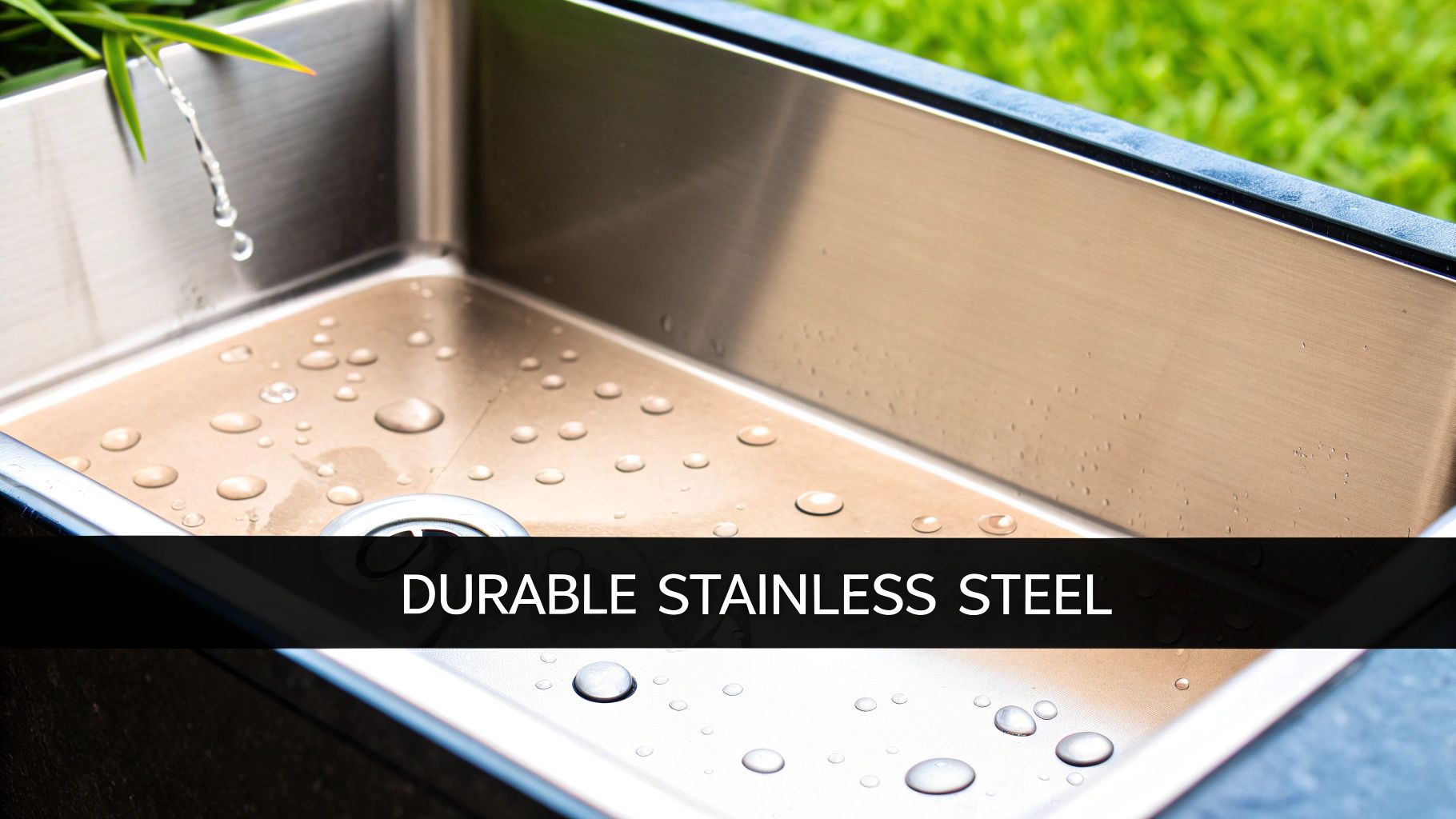
Think of a good stainless steel sink as armor for your back-of-house. It’s built to take a beating. Heavy stockpots get dropped, utensils get tossed around—it handles the daily chaos without denting or cracking. That kind of resilience is what makes it a smart, one-time investment that will pay for itself over years of relentless service.
The Hygiene Factor
Beyond its raw toughness, the single most important feature of stainless steel is its non-porous surface. There are no tiny cracks or crevices for bacteria to hide in, which is a major problem with other materials. Stainless steel creates a smooth, solid barrier that germs just can't penetrate.
For any restaurant, this is a massive win for food safety and a huge relief when the health inspector walks in. The surface is incredibly easy to wipe clean and sanitize, making it simple to prevent cross-contamination between raw chicken and fresh vegetables. It's the same principle that makes other key equipment, from your commercial refrigerators to your ice machines, so reliable and safe.
In a town like Las Vegas, where health codes are strict and a restaurant's reputation is everything, the sanitary nature of stainless steel is non-negotiable. It’s the clean slate your kitchen needs to operate safely.
Built to Handle Kitchen Warfare
A commercial kitchen is an assault on the senses—and on your equipment. Stainless steel is engineered to thrive in this environment because it naturally fights off two of a kitchen's biggest enemies:
- Corrosion: It shrugs off rust and damage from constant exposure to water, acidic foods like tomatoes and citrus, and the harsh chemicals we use to keep things clean.
- Heat: You can pour boiling water from a pasta pot directly into it, and it won't warp or weaken. That’s a must-have feature when your sink is right next to a fiery cooktop.
This powerful one-two punch of durability and resistance is exactly why stainless steel dominates the market. It’s no surprise that metal kitchen sinks grabbed 52.98% of the total market share in 2024. Professionals choose it because it endures constant, high-volume use while still looking good and performing flawlessly. If you want to dig deeper, you can explore more about the kitchen sink market and see why this isn't changing anytime soon.
Ultimately, investing in stainless steel is investing in peace of mind for your operation.
Understanding Steel Gauge and NSF Certification
When you're outfitting a kitchen, especially in a city as demanding as Las Vegas, it's easy to get lost in the details. But when it comes to stainless steel sinks for restaurants, there are two specs you absolutely cannot ignore: gauge and NSF certification. Get these right, and you've got a workhorse that'll last. Get them wrong, and you're in for a world of headaches.
Steel Gauge: The Brawn Behind the Basin
Think of steel gauge as the sink's muscle. It's a simple concept: the lower the number, the thicker and tougher the steel. It might seem backward, but that’s just how it works.
For any serious commercial kitchen, 16-gauge stainless steel is the gold standard. This is the kind of sink that can take a beating—heavy pots dropped in, constant scrubbing, the general chaos of a Saturday night rush—and come out looking good. It’s built for the long haul.
You'll see sinks made from 18-gauge or even 20-gauge steel, and they'll always be cheaper. But that lower price comes at a cost. Thinner steel dents easily, can warp under high heat, and just doesn't have the backbone for a high-volume restaurant. A few bucks saved upfront can turn into a much more expensive replacement down the line.
NSF Certification: Why It's Non-Negotiable
If gauge is the sink's strength, NSF (National Sanitation Foundation) certification is its brains. This isn't just a fancy sticker; it's your proof to the Southern Nevada Health District that your sink is built for safe, hygienic operation. In Las Vegas, it's not a "nice-to-have"—it's a must.
An NSF-certified sink has been put through the wringer to ensure it meets strict public health codes. What does that actually mean for its design?
- No Hiding Spots for Bacteria: The entire sink is constructed with smooth, seamless surfaces. There are no tiny cracks or crevices where gunk and germs can build up.
- Easy-to-Clean Coved Corners: Look at where the walls of the sink meet the bottom. On an NSF sink, those corners are rounded. This simple design feature makes cleaning a breeze and prevents grime from getting trapped.
- Food-Safe Materials: The steel itself is tested to be non-toxic and corrosion-resistant. You can be confident it won’t leach anything nasty into your water or food.
In short, the NSF stamp is a guarantee that your sink is designed from the ground up for sanitation. It's a crucial piece of the puzzle, working alongside your certified commercial refrigerators, freezers, and ice machines to keep your entire kitchen compliant and safe.
This focus on certified equipment is fundamental to running a professional kitchen. It's about more than just following the rules. It's about building your business on a foundation of quality and safety that protects everyone—your customers, your staff, and your reputation. If you want to dive deeper into equipment standards, you can learn more about ETL certification and what it means for your kitchen in our other guide.
Optimizing Kitchen Workflow with Smart Sink Placement
In the high-stakes, fast-paced world of Las Vegas restaurants, efficiency isn't just a goal—it's money. Your kitchen's layout is every bit as important as the five-star food you’re sending out. A truly smart design isn't about having the flashiest gear; it’s about creating a logical flow that shaves off wasted seconds and eliminates crossed paths. And the absolute cornerstone of that seamless workflow is the placement of your stainless steel sinks for restaurants.
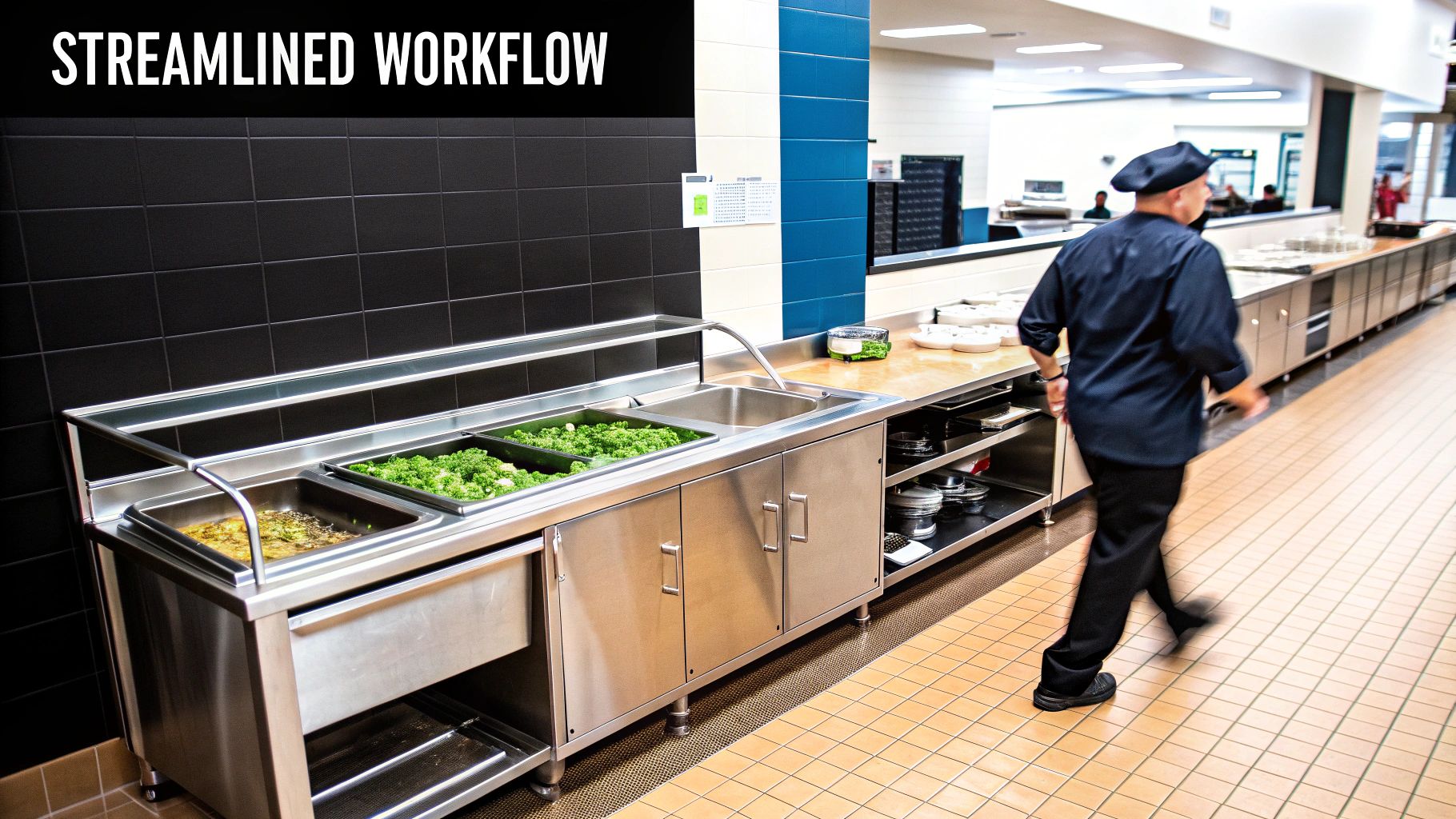
Think of your kitchen’s operational flow like a one-way street, always moving from dirty to clean. Dishes come in at one end and should move cleanly through the wash, rinse, and sanitize cycle without ever doubling back to cross paths with fresh food prep. Your 3-compartment sink is the undisputed king of this warewashing zone—it’s the engine that drives your entire cleaning process.
Strategic Sink Placement for Safety and Speed
Getting your sink placement right does two critical things: it dramatically cuts down the risk of cross-contamination and lets your team move faster. A well-designed kitchen means your staff isn't constantly zig-zagging across a busy line, which is not only slow but flat-out dangerous. To really get this right, you need to be thinking about efficient, compliant commercial kitchen layouts from day one.
Here are the non-negotiable rules for a safe and high-octane Las Vegas kitchen:
- Hand Sinks Everywhere: A dedicated hand washing sink needs to be at every kitchen entrance and within a few steps of all food prep stations. No excuses. This makes constant handwashing second nature, which is your number one defense against foodborne illness.
- Isolate Your 3-Compartment Sink: The warewashing station should be its own island. Keep it separate from your food preparation areas to prevent splashes of dirty, chemical-laced water from ever touching fresh ingredients.
- Prep Sinks Live in the Prep Zone: The sink for washing produce belongs right in the middle of the food prep area. This ensures all your raw foods are handled in a controlled, clean environment.
This deliberate separation of tasks is what makes everything else work. It creates a clean, organized system where your other workhorses, like your commercial refrigerators and commercial freezers, can operate effectively.
Preventing Bottlenecks During Peak Hours
When that dinner rush hits, a poorly sized sink can bring your entire operation to a dead stop. This is where drainboards become absolutely crucial for avoiding disastrous pile-ups. You need a generous "landing zone" for dirty dishes to stack up and a separate, equally large area for clean dishes to air-dry.
The most common mistake I see is underestimating drainboard space. Without it, dirty plates clutter up prep counters, and clean dishes have nowhere to go. It creates a chaotic, unsanitary bottleneck that grinds the whole kitchen to a halt.
By sizing your sinks and drainboards correctly, you guarantee a continuous flow, even when the ticket machine won't stop screaming. For a deeper dive into building a kitchen from the studs up, check out our detailed guide on designing a restaurant kitchen.
Keeping Your Sins Clean and Compliant
The real secret to getting decades of service from your stainless steel sinks—and passing every health inspection—is all in the maintenance. For kitchens all over Las Vegas, keeping your gear spotless isn't just for show. It's about protecting your investment and making sure you're operating at the highest level of food safety.
It all comes down to protecting the steel’s passive layer. Think of it as an invisible shield that stops rust and corrosion in its tracks. A simple daily cleaning with non-abrasive, non-chlorine cleaners and a soft cloth is all it takes. That basic routine keeps the protective layer strong and your sink looking brand new.
Daily and Long-Term Care Checklist
A consistent cleaning schedule is your best friend, especially when you're up against the hard water we have here in Vegas. If you let it sit, mineral buildup can leave some really stubborn spots.
- Daily Wipe-Downs: After every single shift, give the sinks a good rinse and wipe them completely dry with a soft microfiber cloth. This is the #1 way to prevent water spots.
- Go with the Grain: When you're scrubbing, always move in the same direction as the steel's grain. This simple trick prevents tiny scratches that can make the finish look dull over time.
- Weekly Deep Clean: Use a cleaner made for stainless steel, or even just a simple paste of baking soda and water, to gently lift off any gunk. Rinse it clean and dry it completely.
You know, one of the biggest mistakes I see kitchen staff make is grabbing steel wool or harsh chemicals like bleach. Those will permanently scratch the surface and completely strip away that passive layer. Once that's gone, you’re practically inviting rust to move in.
Don't forget about the drains, either. Pouring hot water down them every day helps break up grease and stops clogs before they can start causing nasty odors and attracting pests.
This focus on hygiene is a huge deal right now, especially as the Las Vegas culinary scene keeps booming. In fact, the commercial side of the stainless steel sink market is expected to grow at the fastest rate, a CAGR of 6.5%, all the way through 2034. This is directly tied to the growth of the food service industry and rising health standards. It just goes to show that investing in equipment that's durable and easy to clean is just a smart business move. You can read the full analysis of the stainless steel sink market to see how these trends are shaping the future of kitchen equipment.
A Few Common Questions About Commercial Sinks
When you're outfitting a kitchen, a lot of questions pop up. It's totally normal. Here are some quick, straight-to-the-point answers to the questions we hear most often from fellow Las Vegas restaurant operators about their stainless steel sinks for restaurants.
What’s the Best Gauge for a Sink in a Busy Las Vegas Kitchen?
For any high-volume spot, 16-gauge stainless steel is the professional standard, period. It's easy to get confused, but with gauge, the lower the number, the thicker and tougher the steel.
While you might see 18-gauge sinks out there, they're better suited for lighter-duty work. A 16-gauge sink is built to take a beating—it’ll resist dents and warping from heavy stock pots and the daily grind of a busy kitchen. Think of it as an investment; it will last longer and save you headaches down the road.
Do I Really Need a Separate Hand Sink?
Yes, you absolutely do. This isn't just a suggestion; it's a hard rule from the Southern Nevada Health District. You are required to have dedicated hand washing sinks that are completely separate from your 3-compartment sink or any food prep sinks.
Your three-bay sink is strictly for washing, rinsing, and sanitizing pots, pans, and utensils. A separate, properly stocked hand sink is a non-negotiable for preventing cross-contamination and getting that green light from the health inspector. This rule is in place to keep your entire operation—from your commercial refrigerators to your ice machines—safe and clean.
How Can I Stop Getting Those Hard Water Spots on My Sinks?
Ah, the joys of Las Vegas water. Those cloudy mineral deposits are the bane of every kitchen manager's existence. The fix is surprisingly simple: after you're done using the sink, give it a good rinse and wipe it completely dry with a soft cloth.
That one little step prevents the minerals from settling on the surface as the water evaporates. If you already have some buildup, a 50/50 mix of white vinegar and water will usually do the trick. Just gently wipe the area, then rinse and dry it thoroughly. Whatever you do, stay away from abrasive pads—they will scratch the finish.
Honestly, taking just a minute to wipe down your sinks at the end of a shift is the single best thing you can do to fight hard water buildup. It keeps your kitchen looking sharp and protects the steel for years to come.
Getting the right equipment and knowing the simple tricks to take care of it is what sets a successful kitchen apart. From your sinks to your commercial freezers, every piece of gear plays a part in your daily hustle.
Ready to get your kitchen set up with reliable, NSF-certified stainless steel sinks and other must-have equipment? Las Vegas Restaurant Equipment has a handpicked selection of commercial refrigerators, freezers, ice machines, and more. We offer great prices and fast, free shipping right here in the Las Vegas area. Outfit your restaurant for success by visiting us at https://lasvegasrestaurantequipment.com.