

In the high-stakes, high-speed world of Las Vegas dining, a hand washing station isn't just a sink—it's your restaurant's first line of defense. Think of it as a non-negotiable guardian of public health, customer trust, and your entire operation. It's just as vital as any other piece of core restaurant equipment you own.
The Unsung Hero of Your Las Vegas Kitchen
The vibrant Las Vegas culinary scene is a wild ride, with a diverse array of restaurants that cater to every palate. We're talking high-volume buffets on the Strip, exclusive celebrity chef spots, and local gems that never seem to slow down. Behind every perfectly plated dish and signature cocktail is an engine room of essential restaurant equipment working around the clock.
Your commercial refrigerators and massive commercial freezers are protecting thousands of dollars in inventory. Your ice machines are churning out pristine cubes for countless drinks. But the humble hand washing station? It's playing an equally critical role, standing between your staff and the spread of foodborne illness.
More Than Just a Sink
Thinking of a hand washing station as just another fixture is a gamble no Las Vegas restaurant owner can afford. This is a purpose-built tool, designed specifically to eliminate pathogens effectively and efficiently. In an environment where every second counts, having dedicated, properly stocked stations is the foundation of a real safety culture.
Cutting corners here can be catastrophic:
- Health Code Violations: These can lead to hefty fines or, even worse, a temporary shutdown.
- Damaged Reputation: It only takes one food safety incident to destroy years of hard-earned customer trust.
- Operational Disruption: Putting your ability to serve the thousands of diners who flock to Vegas every day in serious jeopardy.
A properly placed and maintained hand washing station is a crucial safety checkpoint. It safeguards your ingredients, protects your patrons, and preserves the integrity of your brand with every single use.
This guide will walk you through everything you need to know, from navigating Southern Nevada’s specific health codes to picking the perfect station for your unique venue. By the end, you’ll see that investing in the right hand washing station isn't just about being compliant—it's about setting a standard for excellence in the cutthroat Las Vegas market.
Why a Dedicated Hand Washing Station Is Non-Negotiable
Let's get straight to it: a dedicated hand washing station isn't just about checking a box for the health inspector. In a high-traffic Las Vegas kitchen, it’s your first line of defense, a specialized piece of equipment engineered to stop cross-contamination in its tracks.
Think of it less like a simple sink and more like a commercial freezer that has one critical job—maintaining a precise temperature. Your hand wash station has an equally vital job: killing pathogens. This isn't just about a quick rinse. It’s a crucial safety checkpoint that ensures germs from handling raw meat, cash, or bussing tables are neutralized before an employee touches a clean plate. Skipping this step is like leaving the back door of your restaurant unlocked overnight—you're just asking for trouble.
The Anatomy of an Effective Hand Wash
A proper hand washing station isn't just a basin with a faucet. It's a complete system where every part has a job to do in the fight against germs. If one piece is missing, the whole system fails.
Here are the non-negotiable components:
- Hot and Cold Running Water: You need water that can get warm enough—around 100°F—to help soap break down the greasy, oily grime where germs love to hide.
- Soap Dispenser: Always liquid soap. Bar soap can become a breeding ground for bacteria, defeating the whole purpose. A hands-free dispenser is even better, as it cuts down one more touchpoint for contamination.
- Sanitary Drying Method: Single-use paper towels are the gold standard here. They physically wipe away and trap any lingering bacteria. Air dryers can sometimes just blow germs around the room, which is the last thing you want in your kitchen.
- Trash Receptacle: A dedicated, easy-to-reach trash can for used paper towels is a must. It keeps the area clean and prevents used towels from becoming another contamination hazard.
From a high-end kitchen on the Strip to a beloved local taco shop, this simple setup is what protects your food, your customers, and your hard-earned reputation with every single wash.
A dedicated hand washing station is the epicenter of kitchen hygiene. It is where your commitment to safety is put into practice dozens, if not hundreds, of times a day.
This focus on hygiene isn't just a local thing; it's a global trend. The market for proper hand washing solutions is booming, valued at USD 1119.13 million and expected to climb to USD 1729.68 million by 2034. This growth is fueled by a massive public shift in awareness around hygiene. Customers and regulators everywhere are demanding a higher standard. You can explore more insights about these market trends and their drivers to see just how important this has become.
Navigating Las Vegas Health Codes for Compliance
When you're running a restaurant in Las Vegas, the Southern Nevada Health District (SNHD) isn't just making suggestions—they're setting the rules that keep you in business. Getting cited for a hand washing station violation is one of the fastest ways to fail an inspection, so you absolutely have to get this right.
First rule: a hand washing sink is only for washing hands. That means your food prep sink or your big three-compartment sink is completely off-limits for hand washing. Using them for a quick rinse is a cardinal sin in the eyes of an inspector because it’s a wide-open door for cross-contamination.
Location is everything. The SNHD requires a dedicated hand washing station in every single area where food is prepped, served, or where dishes are washed. You also need one in or right next to every restroom. The logic is simple: your staff should never have to cross a busy kitchen just to wash their hands. It needs to be right there, ready to go.
Core Requirements for Every Station
Beyond just having a sink in the right place, each station has a non-negotiable checklist of features. If you're missing even one of these, you're not compliant. It’s that simple.
This guide lays out the three must-haves for any station.
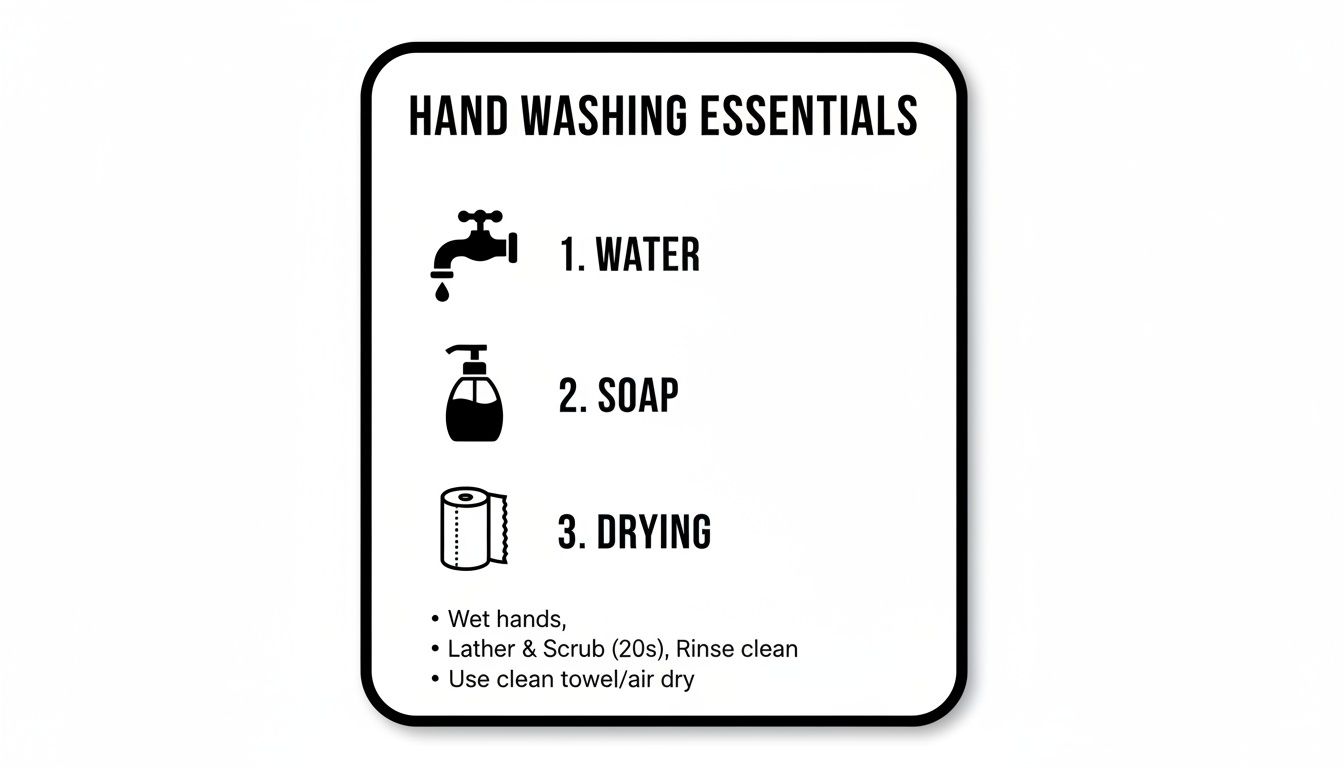
These three elements—water, soap, and a way to dry hands hygienically—are the bedrock of food safety and what inspectors will look for immediately.
Every sink needs to provide hot and cold running water through a mixing valve that can hit at least 100°F. You’ll also need a soap dispenser (liquid, not bar soap) and a way to dry hands without spreading germs, which almost always means single-use paper towels. And don't forget the sign—a clearly posted notice reminding employees to wash their hands is required at every single station.
To help you stay on top of the specifics, here's a quick reference table breaking down the SNHD's key demands and the common pitfalls we see operators fall into.
Las Vegas Hand Washing Station Compliance Checklist
| Requirement | SNHD Guideline | Common Mistake to Avoid |
|---|---|---|
| Dedicated Use | Sink must be used exclusively for hand washing. No food prep or dish dumping. | Using the hand sink to dump old drinks or rinse a piece of produce. |
| Location | Must be easily accessible in all food prep, service, and warewashing areas. | Placing a sink in a hard-to-reach corner that disrupts workflow. |
| Water Temperature | Hot and cold water must be available, reaching a minimum of 100°F. | Having a water heater set too low or a faulty mixing valve. |
| Soap & Drying | A stocked liquid soap dispenser and single-use paper towels must always be available. | Running out of paper towels or using a communal cloth towel. |
| Signage | A clear, visible sign instructing employees to wash their hands is mandatory. | Forgetting to replace a sign that has fallen down or become unreadable. |
| Accessibility | The sink must be completely unobstructed and clear of any clutter. | Stacking boxes, trash cans, or cleaning supplies in front of the sink. |
This isn't just about ticking boxes for an inspection. Following these rules shows you're serious about protecting your customers and your staff.
Accessibility and Other Considerations
It’s not enough to just have a sink; it has to be usable. That means keeping the area completely clear at all times. No trash cans, no boxes of inventory, no rolling carts parked in front of it. An inspector sees a blocked sink and immediately marks it as a violation.
Your stations also need to be compliant with the Americans with Disabilities Act (ADA), ensuring they can be used by every member of your team. This covers details like the height of the sink, the type of faucet controls, and the amount of clear floor space around it.
A properly equipped and located hand washing station is your proof to the SNHD that you take food safety seriously. It’s a clear signal that your establishment is committed to protecting both your customers and your staff from foodborne illness.
Keeping the area clean extends to waste disposal, too. A hygienic hand washing station needs a nearby trash receptacle for used paper towels. For a closer look at managing waste streams in your kitchen, check out our guide on choosing the right kitchen waste disposals. A clean operation, from hand washing to waste management, is what separates the pros from the amateurs.
Choosing the Right Hand Washing Station for Your Venue
Picking the perfect hand washing station for your Las Vegas spot isn't a one-size-fits-all deal. What works for a sprawling casino buffet is completely wrong for a cramped bar on the Strip. Think of it like buying other essential restaurant equipment; you wouldn't try to cram a massive walk-in commercial refrigerator into a small café kitchen. Your choice has to make sense for your space, your staff's workflow, and how many people you serve.
For a busy back-of-house kitchen, with all its controlled chaos, you need a true workhorse. A wall-mounted stainless steel sink is the undisputed champion here. It's tough as nails, saves that precious floor space, and is incredibly simple to clean and sanitize during the madness of a dinner rush.
Then you have the vibrant Las Vegas food truck scene and outdoor catering gigs, which demand a totally different game plan. For these mobile operations, a self-contained portable hand washing station is non-negotiable. These units give you the hot and cold water you need without permanent plumbing, keeping you compliant even when you're on the move.
Materials and Design Matter
When you look at materials, there's a reason stainless steel is the king of the commercial kitchen. Its surface isn't porous, meaning it resists rust and keeps bacteria from setting up shop. It's the same reason all the best commercial refrigerators, ice machines, and prep tables are made from it—durability and cleanliness are everything.
But it's not just about the metal. You have to consider the design that actually fits how your team works.
- Space-Saving Models: For those tight bar areas or smaller kitchens, a compact or drop-in sink can get you compliant without messing up your flow.
- Heavy-Duty Stations: Big operations with multiple prep areas might need a multi-station trough sink. This lets several employees wash up at once, preventing a bottleneck when you're slammed.
- Hands-Free Options: Faucets with foot pedals or electronic sensors are fantastic for cutting down on cross-contamination, getting rid of one more thing people have to touch.
Your hand washing station is an active part of your kitchen's ecosystem. The right choice not only ensures compliance but actively enhances your team's efficiency and your establishment's overall safety.
The global push for better hygiene isn't just a restaurant thing. The need is so critical that in healthcare, more than one-third of facilities worldwide don't have enough hand washing stations where they're needed most. This problem has sparked some cool new ideas, from AI sensors that track hand-washing compliance to innovative waterless options. As a restaurant owner, providing top-notch facilities puts you ahead of the game.
Ultimately, choosing the right unit is about balancing what the health department requires with what actually works for your business day-to-day. By taking a hard look at your venue's specific needs, you can pick a station that helps your team, not hinders them. Take a look at our extensive collection of commercial sinks to find the perfect fit for your Las Vegas establishment.
Installation, Maintenance, and Staff Training
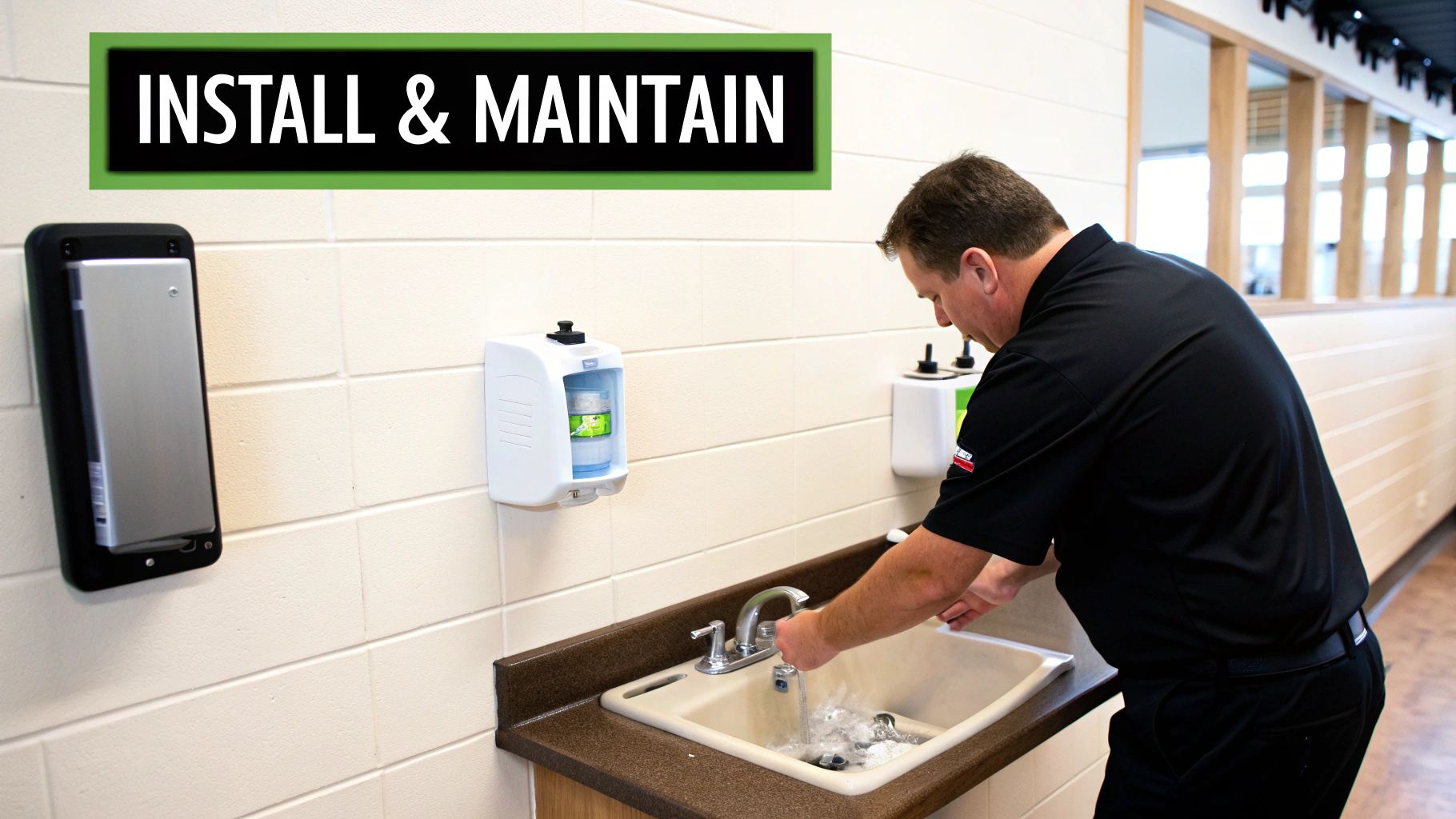
A top-of-the-line hand washing station is only as good as its installation and upkeep. You can have the best sink on the market, but if it's not set up right and maintained, it’s not doing its job. Proper setup from day one saves you from immediate compliance headaches and future repair nightmares.
For any fixed unit, professional installation is completely non-negotiable. This isn’t a DIY weekend project. It means getting the hot and cold water lines connected perfectly to a mixing valve, guaranteeing you can hit that SNHD-required 100°F water temperature every single time. It also means the drainage has to be properly trapped and vented to keep sewer gases out of your kitchen—a major health hazard you can't afford to ignore.
Portable stations are definitely simpler to get going, but you still need to make sure they're stable and all the parts are working correctly right out of the box.
Creating a Bulletproof Maintenance Schedule
Once your station is installed, consistent maintenance is what turns it from a simple fixture into a reliable tool for safety and compliance. Think of it this way: a daily checklist is your best defense against a surprise health inspection. It keeps your station ready for action 24/7.
Your daily routine should include these simple but absolutely critical checks:
- Restock Supplies: Are the soap and paper towel dispensers full? Check them at the start of every shift. Running out mid-rush is just not an option.
- Clean and Sanitize: The sink basin, faucet handles, and the entire area need to be cleaned and sanitized constantly to prevent grime and bacteria from building up.
- Check Water Flow and Temp: Give the faucet a quick run. You’re looking for strong, consistent flow and water that heats up fast.
- Empty Trash: The nearby trash can should be emptied regularly. An overflowing bin is an eyesore and a health code violation waiting to happen.
This proactive approach is what keeps everything in perfect working order. The same principle of diligent upkeep applies to all your equipment. You can see how this philosophy extends to other critical areas by checking out our guide on maintaining essential restaurant dishwashing equipment.
Training Staff to Build Lasting Habits
The final, and honestly most important, piece of the puzzle is your team. The best equipment in the world is useless if your staff doesn’t use it correctly and consistently. Your goal with training is to build muscle memory, making proper hand washing an automatic habit, not a chore they have to think about.
Training isn't a one-and-done task you check off during onboarding. It has to be an ongoing conversation, reinforced with regular reminders, clear signage, and—most importantly—leadership that models the right behavior.
Lead by example. When your managers and head chefs make a point of washing their hands properly and often, it sends a powerful message that this stuff matters. Combine visual aids in the breakroom, hands-on demonstrations during pre-shift meetings, and a bit of positive reinforcement. This is how you create a kitchen culture where hygiene is a shared responsibility, ensuring your investment in a quality hand washing station truly pays off.
Your Final Checklist for a Compliant Restaurant
In the fast-paced, high-stakes culinary world of Las Vegas, your success really comes down to the details. It's everything from the muscle of your commercial freezers to the strategic placement of every single hand washing station. This isn't just a box to check on a health inspection form; it's the bedrock of your restaurant's safety and reputation. Being proactive about hygiene is how you protect your brand, keep your customers safe, and ultimately, carve out your piece of this ridiculously competitive market.
Think of this list as your final pre-flight check before you open the doors. It’s a quick rundown of the must-haves we've talked about, making sure you're ready for a killer service.
The Pillars of Hand Hygiene Success
- Know the Las Vegas Health Codes Inside and Out: You have to follow the SNHD regulations for station placement, accessibility, and supplies to the letter. There’s no wiggle room here.
- Pick the Right Gear for the Job: Your equipment needs to match your venue. A high-volume kitchen on the Strip needs a heavy-duty stainless steel unit, while a food truck will do great with a tough portable model.
- Get Obsessive About Maintenance: Daily checks are a must. Is there enough soap? Are the paper towels stocked? Is the water hot? A clean, well-supplied station is the only kind that works.
- Drill It into Your Staff: Hand washing can't just be a rule—it needs to be a reflex. Make it an unshakeable habit for every single person on your team, from the dishwasher to the head chef.
Your investment in a quality hand washing station isn't just an expense. It's a direct investment in your customers' trust and your own operational excellence. It sends a loud, clear message that you put safety first.
The tough part is, good habits don't always follow people out the door. While 93% of adults in the U.S. say handwashing is crucial, a recent report found that a shocking 48% just forget or blow it off after eating out. You can read the full research about these handwashing habits for yourself—it’s a real eye-opener and shows why what you do inside your four walls is so critical for everyone's health.
Frequently Asked Questions
Running a restaurant in Las Vegas means navigating some of the strictest health codes in the country. It can feel like a maze, but when it comes to hand washing stations, you're not alone in your questions. We hear the same concerns from new and veteran restaurateurs all the time.
Let's clear up the confusion with straight answers to the most common questions we get.
How Many Hand Washing Stations Does My Las Vegas Restaurant Need?
The Southern Nevada Health District (SNHD) keeps it simple: a station needs to be convenient for every single food handler. Think about your workflow. You'll need at least one dedicated hand sink in each food prep area, every food dispensing spot (like the line), and in your dishwashing zone.
On top of that, a station is required either inside or right next to every restroom. The final count really depends on your restaurant's size and layout. The golden rule is accessibility—an employee should never have a long walk or have to cross the kitchen just to wash their hands. Always pull out your floor plan and check it against SNHD rules to be sure you're covered.
Can I Use a Three-Compartment Sink for Hand Washing?
Nope. Absolutely not. This is one of the easiest ways to get hit with a major health code violation, and we see it happen all the time.
Sinks for prepping food, washing dishes, or any other utility purpose are off-limits for hand washing. You must have a completely separate, dedicated hand washing station used for that one job and nothing else. This isn't negotiable; it's one of the first things an inspector will look for to prevent the dangerous cross-contamination that can happen between dirty hands and clean dishes or food.
What Are the Rules for a Portable Hand Washing Station?
For food trucks, pop-up concepts, or any temporary event in Las Vegas, your portable station has to be a completely self-contained unit. That means it needs to provide both hot and cold running water, and it has to be delivered under pressure—no gravity-fed jugs.
Every portable unit must come equipped with liquid soap, single-use paper towels, its own trash can, and a wastewater tank big enough to hold all the greywater without any risk of overflowing. Before you set up for any event, make sure you double-check the latest temporary food establishment rules directly with the SNHD.
Does My Hand Washing Station Need Hot Water?
Yes, hot water is non-negotiable. The SNHD is very clear on this: every hand washing sink must provide water that can reach a minimum temperature of 100°F (38°C).
Why so specific? That temperature is what it takes to effectively cut through grease and oils, lifting germs from the skin. Your station has to be hooked up with a mixing valve that can safely and consistently hit that mark. Trust us, it’s a key detail inspectors will test every single time.
Outfitting your Las Vegas spot with the right, compliant gear is make-or-break for your success. From heavy-duty hand washing stations to the essential commercial refrigerators, commercial freezers, and ice machines that keep you running, Las Vegas Restaurant Equipment has what you need to build a kitchen that’s both safe and brutally efficient. Check out our full catalog and get fast, free shipping on the equipment that powers this city's best restaurants. Swing by our site at https://lasvegasrestaurantequipment.com.