

Common issues with Manitowoc ice makers, especially here in Las Vegas, almost always trace back to the environment. When you see problems like slow ice production, the machine shutting down out of nowhere, or just plain bad ice quality, it’s usually the desert heat and mineral-heavy water putting a strain on the machine.
Why Your Manitowoc Fails in the Las Vegas Heat
In the vibrant, 24/7 hustle of the Las Vegas hospitality scene—a city renowned for its diverse array of restaurants that cater to every palate—a steady flow of ice isn't just a nice-to-have. For every successful restaurant, a suite of essential equipment, including high-performance commercial refrigerators, commercial freezers, and ice machines, forms the backbone of the operation. But no piece of gear feels the burn of our climate quite like an ice machine. When your Manitowoc starts acting up, it’s rarely a random glitch; it’s the machine reacting to its brutal working conditions.
The crazy ambient temperatures inside a busy Las Vegas kitchen can absolutely cripple an ice machine's performance. These units are built to operate within a specific temperature window. When the air around them gets too hot, the refrigeration system has to go into overdrive just to cool down and freeze water. This constant stress leads directly to longer production cycles and serious wear and tear on crucial parts like the compressor.
The Impact of Temperature on Ice Production
It’s wild how much heat affects output. The temperature of the air and the incoming water can swing a machine's daily ice production by hundreds of pounds.
Take a Manitowoc IDF-0600A air-cooled dice ice machine, a workhorse you see all over Vegas. It's rated to produce a solid 632 pounds of ice every 24 hours in perfect lab conditions: 70°F air and 50°F water. But on a scorching summer day, when the kitchen air and tap water are both pushing 90°F, that production number plummets.
In a Las Vegas kitchen, your ice machine is in a constant battle with its environment. The hotter the kitchen, the harder the machine has to work, which not only reduces ice output but also shortens the lifespan of the unit itself.
This table gives you a quick look at common symptoms we see in Las Vegas kitchens and what you should check first.
Common Manitowoc Symptoms and Initial Checks
| Symptom | Potential Las Vegas Cause | What to Check First |
|---|---|---|
| No ice or slow production | High ambient heat, dirty condenser coil | Is the area around the unit scorching hot? Is the air filter clogged with dust? |
| Small or misshapen cubes | Clogged water distribution tube (limescale) | Look for mineral buildup blocking the holes where water comes out. |
| Machine shuts down | Overheating, water supply issue | Check that the water line is open and the machine has proper airflow. |
| Leaking water | Clogged drain line, cracked water pump | Ensure the drain isn't backed up with slime or debris. |
This isn't a replacement for a technician, but running through these basics can sometimes save you a service call.
The Hard Water Problem
On top of the heat, Nevada's notoriously hard water creates a whole other category of Manitowoc ice maker problems. The water here is packed with dissolved minerals like calcium and magnesium, which leads to limescale buildup on all the internal components.
This scale can:
- Form an insulating layer on the evaporator plate, making it tougher for ice to form and drop.
- Clog up the water distribution tube, which is what causes those misshapen, incomplete cubes.
- Gunk up and damage water pumps and float sensors, triggering system errors and shutdowns.
Keeping your kitchen's temperature under control and tackling scale buildup before it gets out of hand is your best defense. For some related tips, you can check out our guide on energy-efficient commercial refrigeration to help manage your kitchen's climate and utility bills. Being proactive is the only way to win the fight against the unique challenges of the Las Vegas environment.
Diagnosing No Ice or Slow Ice Production
When your Manitowoc ice machine grinds to a halt or starts producing ice at a snail's pace, it's a code-red situation for any Las Vegas kitchen. This piece of equipment is every bit as critical as your commercial refrigerators and freezers. Before you make that frantic, and often expensive, service call, there are a few diagnostic checks your team can safely run through first.
Honestly, the simplest checks are the ones that solve the biggest headaches. The first thing to do is confirm the machine is actually set to "ice" mode. It's surprisingly common for a unit to get accidentally switched to "off" or "clean" during a hectic service or the end-of-night wipe-down. After that, just make sure the plug is secure in the wall and the circuit breaker hasn't tripped. Easy stuff, but you'd be surprised how often it's the culprit.
Checking Environmental and Water Issues
If the power and settings are good to go, the next place to look is the machine's immediate environment. This is a huge source of Manitowoc ice maker problems, especially here in our desert climate. A Manitowoc needs to breathe. If it can't get proper airflow, it traps hot air, forcing the compressor to work way harder and killing its efficiency.
- Air Filters: Here in Vegas, desert dust is a constant battle. Check the air filter and the condenser fins for any blockages. If they're caked with dust, clean them. A clogged filter is like trying to run a marathon while breathing through a straw—the machine just can't perform.
- Clearance: Make sure there's enough room around the unit for air to circulate. We recommend at least six inches on all sides. Pushing it right up against a wall or another piece of hot equipment is a surefire way to cause problems.
This handy flowchart can give you a visual guide for where to start when the ice stops dropping.
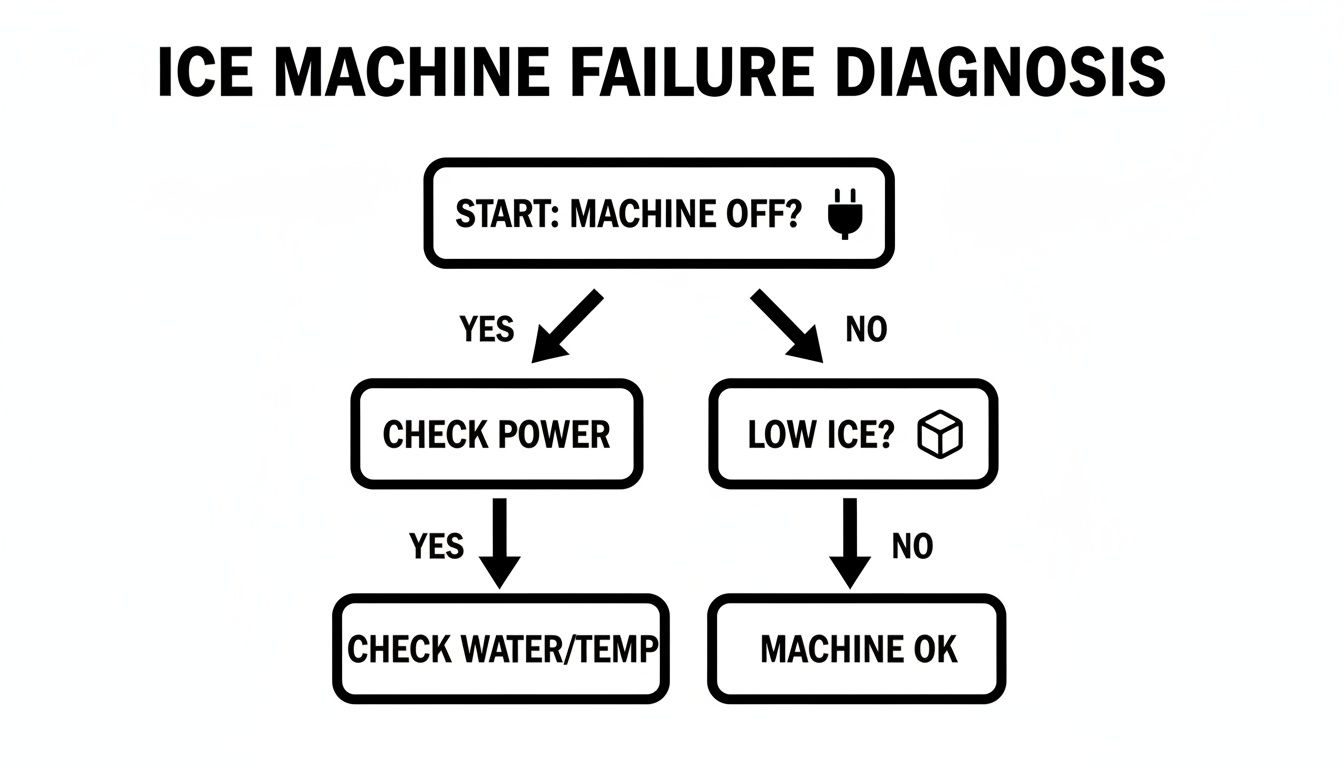
As you can see, it follows a logical path from the basics like power, then moves on to water supply and temperature, which are the most common points of failure we see in the field.
Inspecting the Water Supply and Sensors
Once you've ruled out any environmental issues, it's time to check the water. Your Manitowoc is thirsty, and any interruption to its water source will shut down production instantly. Go behind the machine and check that the water supply valve is fully open and that the line isn't bent or kinked.
We see this all the time with Las Vegas businesses—improper leveling and water system issues are two of the most common reasons for a machine to act up. If the ice maker or its bin isn't perfectly level, the sensors can get a false reading on the water level, causing it to shut down or produce inconsistent ice. The water pressure is also critical; it needs to be between 20-80 PSI for the machine to run properly.
Think of your machine's control panel as its voice. Pay attention to those indicator lights. A blinking or solid red light is trying to tell you something specific, like a water supply fault or a component failure. Your owner's manual will have a guide to what each light means.
Getting familiar with these basic diagnostic steps can empower your team to handle minor issues in-house, saving you a ton of time and money. If you're looking for a deeper dive, you might find our guide on commercial ice maker troubleshooting helpful. By methodically working through these key areas, you can often pinpoint the root cause and get the ice flowing again.
Fixing Leaks and Poor Ice Quality
Spotting a puddle under your ice machine or scooping up a batch of tiny, malformed cubes are two of the most aggravating Manitowoc ice maker problems a Las Vegas restaurant can have. These aren't just minor annoyances; they're your machine's way of telling you something is seriously off with its water system. Thankfully, a few quick checks can usually point you right to the culprit.
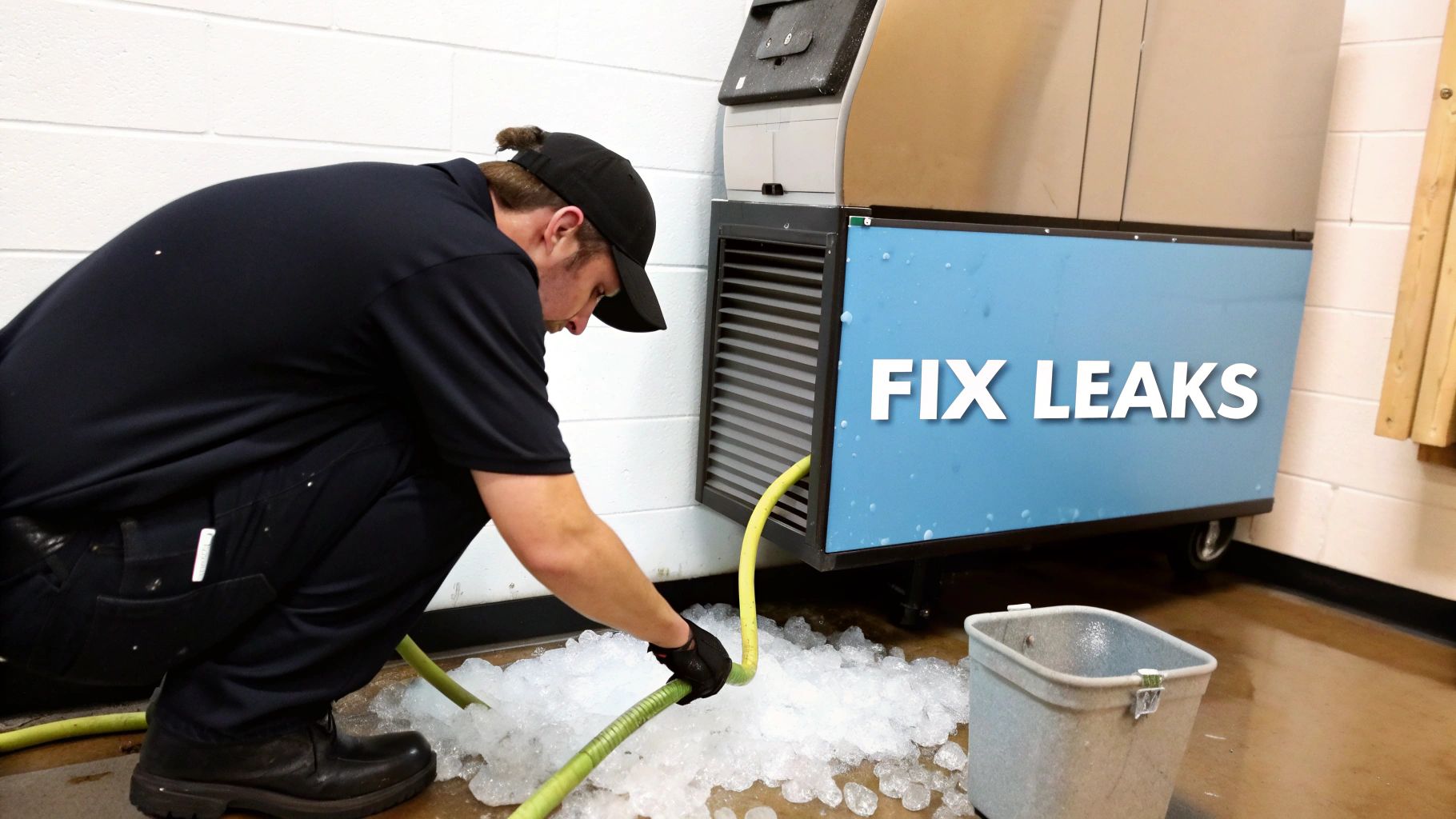
When you find water on the floor, your first job is to play detective and trace it back to its origin. Start by checking the water inlet and drain lines at the back of the unit. I've seen countless "major leaks" that were nothing more than a loose connection or a cracked hose. If everything looks tight and dry back there, the problem is likely internal.
A clogged drain is another common offender, especially in a high-volume kitchen. Slime and scale can build up in the drain hose over time, causing water to back up and spill out from the machine's base. It's an inevitable issue for restaurants that are constantly running their ice machines.
Dealing With Poor Ice Cube Quality
If the floor is dry but your ice quality is suffering—think small, hollow, cloudy, or just plain weird-looking cubes—it's time to look inside the machine. Here in Las Vegas, our notoriously hard water is almost always the villain. That high mineral content creates limescale buildup that just absolutely wreaks havoc on your machine’s performance.
This scale accumulation is particularly bad for a couple of key parts:
- Water Distribution Tube: This tube has tiny holes designed to spray water evenly over the evaporator plate. Once those holes start clogging with scale, the water flow becomes erratic, leading directly to incomplete or misshapen ice.
- Evaporator Plate: This is where the magic happens and ice is formed. A layer of scale acts like an insulator, preventing the plate from getting cold enough to freeze water efficiently. The result? Slower ice production and cubes that are small and often hollow.
At its heart, a Manitowoc has a super-efficient copper evaporator that's nickel-plated for extra durability. It's built for rapid freezing, but even the best engineering can't overcome a thick coating of mineral scale from our local water.
Why Your Water Filter Is Non-Negotiable
To fight back against the constant assault of hard water minerals, a good water filter isn't just a suggestion—it's essential restaurant equipment. Making sure you replace that filter cartridge on schedule is the single most important piece of maintenance you can do to prevent scale-related headaches. A fresh filter grabs those minerals before they get a chance to build up on your distribution tube or evaporator.
Skipping filter changes is basically asking for trouble. You're guaranteeing that you'll eventually end up with bad ice, lower production, and a hefty repair bill. Do yourself a favor: set a recurring reminder on your phone or calendar. It’s a simple, free step that protects your investment and ensures your Las Vegas customers always get clean, solid ice in their drinks.
Decoding Common Manitowoc Error Codes
When your Manitowoc ice machine starts flashing an error code, it’s not just beeping at you—it's trying to talk. For a busy Las Vegas restaurant, knowing how to interpret these codes can be the difference between a quick five-minute fix and a full-on ice crisis during the dinner rush.
Think of it as a direct line of communication from one of your most essential pieces of equipment. It’s a built-in self-preservation system. Instead of just running until a small issue turns into a catastrophic failure, the machine shuts down production and tells you where to look. Getting a handle on these alerts is a huge part of managing Manitowoc ice maker problems before they get out of hand.
E04 High Condenser Temperature
This is, without a doubt, the most common error code we see out here in the Las Vegas valley. It’s a direct result of our desert heat. An E04 code means the condenser is getting way too hot to cool the refrigerant properly.
When this happens, the machine smartly shuts down the refrigeration system to keep the compressor from burning out. The culprits are usually pretty simple:
- A dirty air filter or condenser coil: All that dust and grease from a busy kitchen will clog these parts up fast, trapping heat inside.
- Poor ventilation: The ice maker is jammed too close to a wall, or it's surrounded by other hot equipment like commercial refrigerators or ovens, and it just can't breathe.
- High ambient kitchen temperatures: On a scorching summer afternoon, sometimes the kitchen itself is just too hot for the unit to keep up.
Before you even think about calling for service, your first move should always be to check for and clean any obvious blockages on the air filter and condenser. A little cleaning can go a long way.
E20 Water System Faults
Another frequent visitor here in Las Vegas is the E20 code. This one points to a problem with the water getting into or moving through the machine. This could be anything from a simple oversight to an internal component giving up.
The machine stops making ice because it’s not getting the water it needs. The first things to check are the easy ones: a closed water supply valve, a kinked hose behind the machine, or a clogged water filter. If all that looks good, you might be looking at a bad water pump or inlet valve, and that’s when it’s time to call in a pro.
Think of these error codes not as a failure, but as a preventative measure. The machine is intelligently protecting its most critical components, like the compressor, from the extreme stresses that are just a part of life in a Las Vegas restaurant.
When a code does pop up, you need to make a quick decision. This field guide can help your team know exactly what to do next.
Manitowoc Error Code Field Guide
| Error Code | What It Means | Your Next Step |
|---|---|---|
| E04 | The condenser is overheating. | Clean the air filter and condenser; ensure proper ventilation. |
| E20 | There's a water supply issue. | Check the main water valve, hose, and water filter. |
| E01 / E02 | A thermistor has failed. | This is an internal sensor issue; call a certified technician. |
This little chart is a great thing to print out and stick on or near the machine. It empowers your staff to handle the simple stuff and know immediately when they need to pick up the phone for professional help.
When to Repair or Replace Your Ice Machine
Every restaurant operator in Las Vegas, from a buzzing casino cafe to a local downtown spot, eventually gets to a crossroads with their equipment. When it comes to your commercial ice machine, you hit a tough question: do you sink more money into another repair, or is it time for the big investment in a new unit? Knowing that financial tipping point can save you from a world of hurt and costly downtime, especially during peak tourist season.
The age of your machine is really the biggest piece of the puzzle. Manitowoc commercial ice machines are workhorses, but they’re generally built for a 7 to 10-year lifespan. Here in the demanding Las Vegas climate, pushing a machine past that window is just asking for trouble. Think about it: the average cost to repair an ice machine was already $708.44 back in 2021. A few service calls on an aging unit, and you’re quickly burning through cash.
Analyzing the Cost of Repairs
Once a Manitowoc starts showing its age, the repairs don't just happen—they start happening more often, and they get more expensive. A single breakdown on a packed Friday night costs you way more in lost drink sales and frustrated customers than the actual repair bill. It’s a good idea to start tracking what you've spent on repairs over the last 12-18 months.
A solid rule of thumb we use is the "50% rule." Once your total repair costs in a single year climb past 50% of what a new, comparable Manitowoc would cost, it’s time to replace it. Holding on any longer just means you’re pouring money into a failing asset.
When things go wrong, it helps to know if you're dealing with a quick fix or a major component failure that's signaling the end. Having some context on common appliance repair problems, associated costs, and when to call a technician can help you make a more informed call.
Efficiency and Long-Term Value
Looking past the repair bills, a brand-new ice machine brings a lot to the table. Modern Manitowoc models are way more energy and water-efficient, which means lower utility bills every month—a welcome sight for any Las Vegas business. They also come with a fresh manufacturer's warranty, giving you peace of mind and predictable costs for the next several years.
- No More Downtime: A new, reliable machine means you can stop scrambling for bagged ice or telling customers you're out during a dinner rush.
- Better Ice Quality: Newer units produce that crystal-clear, consistent ice that makes your drinks look a whole lot better.
- Lower Utility Bills: An Energy Star certified model can seriously cut down your electricity and water usage compared to a machine from a decade ago.
The upfront cost of a new ice machine can feel steep, but it’s really an investment in keeping your doors open and running smoothly. An older machine with recurring Manitowoc ice maker problems is a liability, not an asset. If you’re wrestling with this for your other coolers, our guide on when to consider commercial refrigeration repair in Las Vegas walks through a lot of the same logic.
Your Essential Manitowoc Maintenance Checklist
Let’s be honest: in a demanding city like Las Vegas, proactive care is your best defense against the most common Manitowoc ice maker problems. A little consistent maintenance is far less painful—and a lot cheaper—than dealing with emergency repairs and lost sales during a packed weekend rush. This isn't just a list of chores; it’s a game plan to keep your ice supply safe, clean, and totally reliable.
Think of this schedule as more than just cleaning—it’s about paying attention. Catching a small issue before it snowballs into a major breakdown is how you stay ahead. By building these simple checks into your kitchen’s daily and weekly rhythm, your team becomes the first line of defense.
Daily and Weekly Checks
These quick tasks take just a few minutes, but they are absolutely critical for fighting back against the constant heat and dust of a Las Vegas kitchen.
- Daily Visual Inspection: First thing every morning, take a quick peek inside the ice bin. Is the ice clear? Is it properly shaped? Then glance around the machine itself. Any new puddles or signs of a leak?
- Listen for Changes: You know what your kitchen is supposed to sound like. If that ice machine suddenly starts making a new grinding, rattling, or an unusually loud humming noise, that’s an early warning sign that a part might be on its way out.
- Weekly Air Filter Cleaning: This one is non-negotiable in our dusty environment. Pull out the air filter and give it a good cleaning, following the manufacturer's instructions. A clogged filter is the #1 cause of overheating and sluggish ice production.
- Wipe Down Exterior Surfaces: Once a week, wipe down the outside panels and the bin door. This simple step keeps dust and grease from building up and eventually finding their way into the system.
Here's a pro tip: Keep a simple logbook right next to the machine. Have your team initial the weekly filter cleaning and jot down any weird sounds or ice quality problems. This creates a service history that's pure gold for a technician when they come out.
Semi-Annual Deep Cleaning and Professional Service
While your daily and weekly checks handle the surface-level stuff, you need to go deeper twice a year to tackle internal issues. The biggest one? Scale buildup, a problem we see constantly here in Las Vegas.
This semi-annual service needs to include a full descaling and sanitizing cycle using Manitowoc-approved chemicals. This process dissolves the mineral scale that chokes the evaporator plate and other water system components—the main culprit behind bad-looking ice.
While some kitchens try to handle this in-house, we strongly recommend scheduling a professional service with an authorized technician for this job. A pro won’t just do the deep clean; they’ll also inspect critical parts like:
- Water System Components: They'll check the water pump, float switch, and distribution tube for wear and tear.
- Refrigeration System: They'll make sure refrigerant levels are correct and the compressor is running efficiently.
- Electrical Connections: They'll tighten and inspect all the wiring for safety and performance.
This professional check-up guarantees your machine is running at peak efficiency and keeps you in line with health codes. For a broader look at equipment longevity, you can also check out these comprehensive preventative maintenance guidelines. If you stick to this schedule, you'll drastically cut down on service calls and keep your Manitowoc running strong, even when the summer heat is at its worst.
Common Questions We Get Asked All The Time
Look, even the most well-maintained ice machine is going to have you scratching your head at some point. It's just the nature of the beast. Here are some of the questions we hear constantly from restaurant and bar owners trying to keep things running smoothly here in Vegas.
How Often Does My Manitowoc Really Need a Professional Cleaning in Las Vegas?
In Las Vegas, we tell everyone the same thing: at least every six months. The combination of our notoriously hard water and the constant desert dust creates the perfect storm for scale and slime to build up inside your machine. That buildup is what kills performance.
If you're a high-volume spot on the Strip or a busy downtown kitchen, you might even need to get it done quarterly. Staying ahead of the game with a deep cleaning schedule is the single best way to avoid slow ice production and, more importantly, keep your ice clean and safe for your customers.
What’s That Loud Noise Coming From My Ice Machine?
When your ice machine starts making a racket, it's not just being annoying—it's practically screaming for help. Those strange sounds are almost always pointing to a mechanical problem that needs to be looked at right away before it turns into a catastrophic, expensive failure.
- A Loud Humming: This usually means the compressor is working way too hard or a fan motor is on the fritz. It's straining against something, either a blockage or an internal part giving out.
- Grinding or Rattling: That horrible grinding sound? It’s a classic sign that your water pump or gearbox is failing. Parts that shouldn't be touching are grinding against each other.
If you hear any of these noises, do yourself a favor: shut the machine down and call a pro. Trying to push through it is a surefire way to cause permanent damage to the most expensive parts.
Can't I Just Use Any Water Filter on My Manitowoc?
Absolutely not. We see people make this mistake all the time, and it's a costly one. You have to use a water filtration system that was specifically built for the demands of a commercial ice machine. These aren't like the filter on your home fridge; they're designed to handle a high flow rate and target the specific gunk in Las Vegas water, like scale, sediment, and chlorine.
Slapping on a generic or undersized filter can void your warranty. Worse, it won't actually protect the sensitive guts of your machine. Think of the right filter as cheap insurance for your most valuable equipment, from your commercial refrigerators and freezers to the ice maker itself.
When Manitowoc ice maker problems start costing you time and money, trust Las Vegas Restaurant Equipment to get your operation back to 100%. We carry a solid lineup of new, reliable commercial ice machines, refrigerators, and freezers that are tough enough for any Las Vegas kitchen. Check out our inventory and find the right gear for your business at https://lasvegasrestaurantequipment.com.