

When you think about an ice bin for an ice machine, it's easy to picture just a simple box. But it’s so much more than that. It’s a specialized piece of equipment—insulated, food-safe, and built to hold massive amounts of ice, keeping it clean and frozen until the moment it's needed. For any busy spot, picking the right bin is just as crucial as choosing the ice maker itself, because it has a huge impact on how smoothly and safely you can serve your customers.
Keeping Your Las Vegas Business Cool
In the relentless heat of Las Vegas, ice isn't a luxury; it's the lifeblood of the entire hospitality scene. From a high-end cocktail lounge on the Strip to a packed Fremont Street diner, that clinking sound of ice in a glass is the soundtrack of a happy customer. Behind every perfectly chilled drink, though, is an unsung hero: the commercial ice bin.
Choosing the right ice bin for your ice machine is a decision that sends ripples through your whole operation, touching everything from how fast your bartenders can work to whether you pass your next health inspection.
Here’s a simple way to look at it: your ice machine is the factory, and the ice bin is its warehouse. If the warehouse is too small, poorly insulated, or hard to access, the whole production line grinds to a halt. This guide is your map for getting your ice storage strategy right from the start.
The Foundation of a Thriving Operation
In the vibrant city of Las Vegas, where a diverse array of restaurants caters to every palate, a few key pieces of equipment form the core of any successful back-of-house. Your success really hinges on how well these workhorses perform day in and day out.
- Commercial Refrigerators: Absolute must-haves for keeping ingredients fresh and safe in our desert climate.
- Commercial Freezers: The bedrock of good inventory management, preserving everything from prime cuts of steak to gourmet ice cream.
- Ice Machines and Bins: This is the dynamic duo responsible for a clean, endless supply of ice for every single drink order, making sure service never misses a beat during a dinner rush.
This whole system of essential restaurant equipment has to be reliable and efficient. It's no surprise that the global ice bin market, currently valued at $1.2 billion, is on track to hit $2.1 billion by 2033. The mature foodservice industry in North America, especially in hubs like Las Vegas, is what's driving this growth. It just goes to show that quality ice storage isn't an expense—it's a smart investment.
To keep your business profitable while staying cool, it’s also smart to look for ways to boost your energy efficiency. Beyond just the equipment itself, understanding concepts like optimizing energy consumption for cost savings can seriously impact your bottom line.
Finding the Right Ice Bin Model for Your Venue
Let's be clear: not all ice bins are created equal. The perfect ice bin for an ice machine in a bustling Las Vegas restaurant is all about your kitchen's specific layout, daily ice demand, and how your team actually works. Picking the right model isn't just about storing ice; it’s about making your whole operation run smoother.
Think of it like choosing a vehicle for a job. You wouldn't use a compact car to haul commercial equipment, and you definitely wouldn't fire up a semi-truck for a quick grocery run. In the same way, each type of ice bin is built for a different purpose, whether you're running a high-volume casino bar or a cozy neighborhood cafe.
The three main models you'll come across are modular, undercounter, and drop-in bins. Each plays a distinct role in the fast-paced world of hospitality, and knowing the difference is the first step toward making a smart investment.
Modular Bins: The High-Capacity Workhorse
Modular ice bins are the heavyweights of the ice storage world. These are large, standalone units designed to sit right under a separate, modular ice machine head. Their biggest selling point? Massive capacity. We're talking anywhere from 300 to over 1,000 pounds of ice.
This setup is the go-to for any high-volume spot that absolutely cannot afford to run out of ice during a peak rush.
For a sprawling casino floor bar on the Strip or a large banquet hall in a Summerlin hotel, a modular bin is non-negotiable. It’s like having a central ice reservoir, ensuring a constant supply for multiple service stations without missing a beat.
Undercounter Bins: Compact and Convenient
Picture a compact mini-fridge, but just for ice—that's basically an undercounter ice bin. These smaller, self-contained units bundle the ice maker and the storage bin into one piece of equipment that fits neatly under a standard 34-inch high counter.
Their smaller footprint makes them perfect for spots where space is a premium or for specific points of service that need their own dedicated ice supply.
- Henderson Cafe: An undercounter unit can be tucked away behind the counter, giving baristas instant access to ice for blended coffees and iced teas without having to leave their station.
- Restaurant Service Station: Sticking one at a server's station streamlines drink refills, cutting down on trips back to the main kitchen and speeding up service for your guests.
Drop-In Bins: Seamless and Accessible
Drop-in bins are all about easy access and a clean, integrated look. These insulated bins are installed directly into a countertop, so the top opening is flush with the surface. This design is fantastic for self-service areas or for bars where bartenders need to scoop ice quickly and without breaking their rhythm.
You’ll see them a lot in hotel breakfast bars for beverage stations or in craft cocktail bars where speed is everything. A mixologist can scoop ice for multiple drinks in one fluid motion without even bending down, keeping the workflow smooth and fast.
When you're looking at options, it’s a good idea to check out a full collection of commercial ice makers in Las Vegas to see how different machine heads can pair up with these bin types.
Ice Bin Model Comparison for Las Vegas Operators
Choosing between these models can feel overwhelming, but it really comes down to your specific needs for space, volume, and workflow. This table breaks down the key differences to help you find the right fit for your Las Vegas operation.
| Bin Type | Best For | Capacity Range (lbs) | Typical Las Vegas Use Case |
|---|---|---|---|
| Modular | High-volume kitchens, bars, and event venues needing massive, centralized storage. | 300 - 1,000+ | A busy casino bar on the Strip, hotel banquet kitchen, or a large nightclub. |
| Undercounter | Space-constrained areas, satellite bars, and specific service stations. | 50 - 350 | A neighborhood cafe in Henderson, a server's beverage station, or a small office breakroom. |
| Drop-In | Self-service stations and high-speed bartending environments for ergonomic scooping. | 50 - 200 | A hotel breakfast buffet's soda fountain or a craft cocktail bar downtown. |
Ultimately, the right choice aligns with your daily ice consumption and physical layout. A modular bin is your workhorse for high demand, an undercounter unit solves space and convenience issues, and a drop-in bin optimizes workflow for fast-paced service.
Calculating Your Ideal Ice Storage Capacity
Figuring out the right size for your ice bin for an ice machine isn't a guessing game—it's one of the most critical calculations you'll make for your kitchen. Pick one that's too small, and you're guaranteed to run out during a chaotic Saturday night dinner rush. That’s a nightmare scenario no Las Vegas operator wants. On the flip side, getting a bin that’s too big is just a waste of money and precious kitchen real estate, burning energy to keep a mountain of ice frozen that you'll never use.
The real goal is to find that perfect sweet spot. You need a reliable, steady supply of ice without overcommitting on space or budget. This means looking past the simple capacity numbers and really digging into how your specific operation runs. For any spot in Vegas, where a slow Tuesday can turn into a sold-out Wednesday, a smart approach is everything.
From Seats to Scoops: A Simple Formula
To get out of the guesswork zone, we can start with a simple industry-standard formula. This gives you a solid baseline for your daily ice needs, which points you directly to the right bin size.
First, let's figure out your peak daily ice consumption:
- For Restaurants: A good rule of thumb is about 1.5 pounds of ice per customer. If you have a 100-seat restaurant that turns tables twice during dinner, you should plan for at least 300 pounds of ice (100 seats x 2 turns x 1.5 lbs).
- For Bars and Nightclubs: Here, the demand skyrockets. You'll want to budget for at least 3 pounds of ice per customer. A busy bar on the Strip serving 500 people a night needs a minimum of 1,500 pounds of ice, easy.
- For Hotels: You've got to think about 5 pounds of ice per room for guest use, plus whatever your on-site restaurants and bars will need on top of that.
The golden rule here is to choose an ice bin that can hold 12 to 24 hours of your ice machine's total daily production. This buffer is your safety net, making sure you have enough ice to cover those peak hours, even when the machine is in a harvest cycle or you get an unexpected wave of customers.
This quick visual breaks down the different types of ice bins you'll come across, from the big modular units needed for high-volume spots to the smaller, built-in drop-in models.
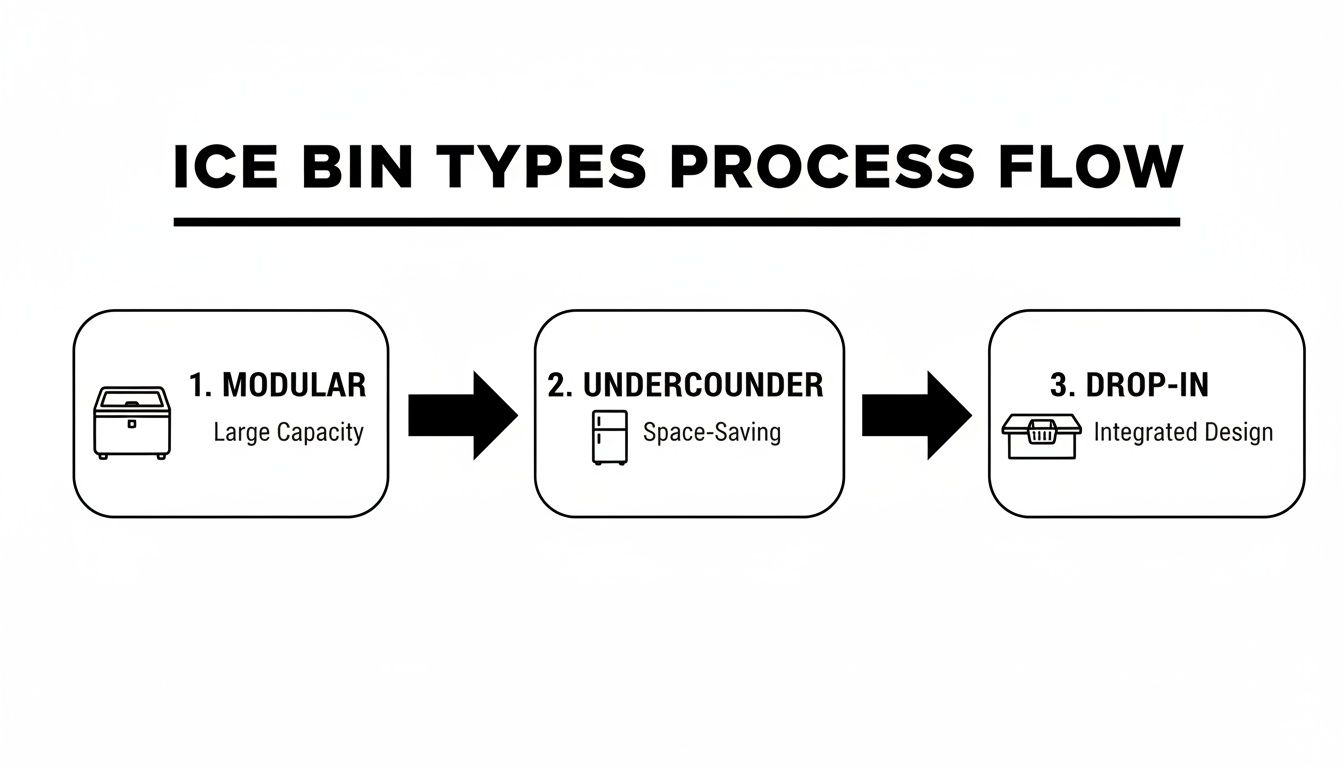
As you can see, each type—modular, undercounter, and drop-in—is really built for different kitchen scales and workflows.
Factoring in the Las Vegas Variables
Now, beyond that basic formula, Las Vegas operators have to think about our unique local factors. That intense desert heat means every drink needs more ice just to stay cold, and if you have a patio, your consumption is going to jump even higher. Don't forget about the conventions, events, and seasonal tourism spikes that can completely change your daily needs overnight. I always tell people to build a buffer of at least 20% into their final number to handle those unpredictable surges.
This constant demand for ice storage is part of a much bigger picture. The entire commercial ice equipment market, currently valued at $4.759 billion, is expected to hit $7.205 billion by 2035. While Europe is a big player, North America’s massive foodservice industry—with hospitality hubs like Las Vegas leading the charge—is what's really driving this growth. The U.S. ice maker market alone brought in $1.4 billion, which shows you just how tightly ice production and storage needs are connected. You can learn more about the growing commercial ice equipment market and what’s behind the trend.
How to Ensure Your Ice Machine and Bin Are Compatible
Think of pairing an ice machine head with a storage bin like putting a new engine in a car. If the engine doesn't fit the chassis, it’s not just a minor problem—it's a disaster waiting to happen. In your Las Vegas kitchen, a mismatch isn't just about size; it's about getting a precise, secure fit that keeps your operation running efficiently and safely.
Get it wrong, and you’re looking at damaged equipment or, worse, an unstable setup that’s a genuine hazard to your staff. The most basic rule is that the ice bin for an ice machine has to be physically compatible with the ice maker head. The top opening of the bin needs to perfectly cradle the ice machine's footprint, so the unit sits securely without any wobbly overhangs or gaps.
This isn't just about stacking two metal boxes. It's about creating a sealed, sanitary system designed to keep your ice pure and your customers safe.
Reading the Spec Sheets
The single best way to guarantee a perfect match is to get familiar with the manufacturer's spec sheets for both the ice machine and the bin. These documents are your roadmaps, packed with all the technical details you need, even if you're mixing and matching brands.
Here’s what to look for:
- Footprint Dimensions: You need to compare the width and depth of the ice machine head against the bin’s top opening dimensions. They absolutely have to line up.
- Weight Capacity: The bin's spec sheet will tell you the maximum weight it can support. Make sure that number is comfortably higher than the operating weight of your ice maker.
- Ice Drop Zone: The part of the machine that actually produces and drops the ice must be positioned directly over the bin's opening. If it's off-center, you'll have ice spilling all over the floor or getting jammed in the machine.
A classic mistake is assuming any 30-inch bin will work with any 30-inch ice maker. A machine from one brand might have a slightly different design, drain placement, or mounting points than a bin from another. Don't eyeball it—always, always verify with the spec sheets.
The Role of Adapters and Brand Matching
The easiest, most straightforward route is to stick with the same brand for both pieces of equipment. Pairing an Atosa ice maker with an Atosa bin, for example, pretty much guarantees a perfect fit right out of the box. This takes all the guesswork out of the equation.
But you’re not necessarily locked into one brand. Sometimes you find a bin from a different manufacturer that has exactly the features you need. In that case, you can often bridge the gap with an adapter kit.
These kits are specifically engineered to connect different models, creating that secure and sanitary seal you need. Just be certain the adapter is designed for your specific machine and bin combo. A quick check of the manufacturer's recommendations before you buy will save you a world of headaches later on.
Why Materials and Sanitation Certifications Matter
In the high-stakes world of Las Vegas food and beverage, sanitation isn't just a talking point; it's the absolute standard. When you're picking out an ice bin for an ice machine, the materials and certifications are your first line of defense against contamination. They’re also your best bet for passing a Southern Nevada Health District inspection with flying colors.
Think of it this way: the quality of the bin's construction directly impacts how easy it is to clean and maintain day in and day out. For any commercial kitchen, from a high-volume restaurant on the Strip to a craft cocktail bar downtown, this is a critical decision. Skimping on materials now is just asking for headaches later.
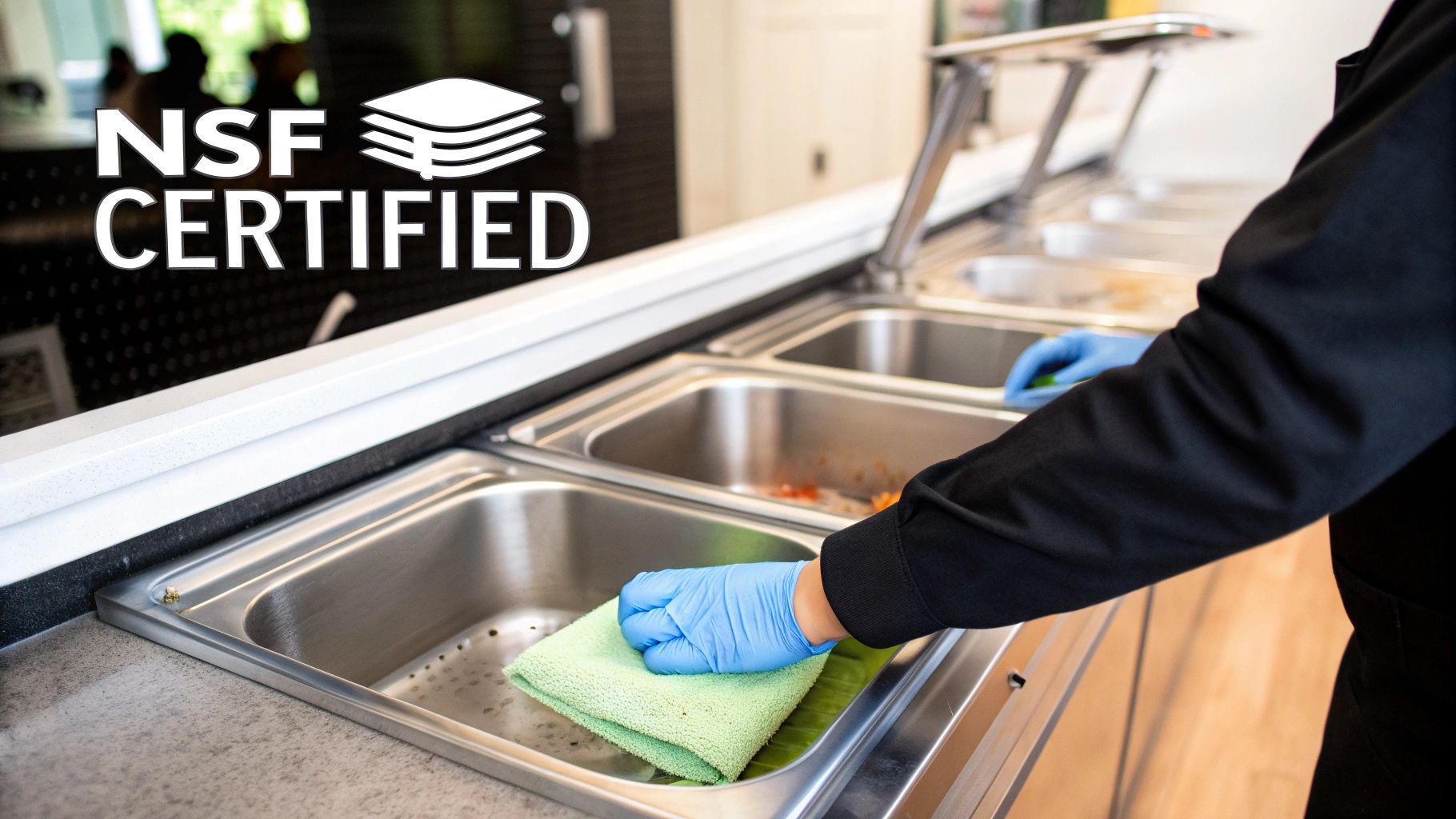
The Importance of Stainless Steel and Sanitation Features
There's a reason stainless steel is the undisputed champ for commercial kitchen gear. Its non-porous surface is incredibly tough against rust and corrosion, which is a must-have in the constantly damp environment of an ice bin. Even better, it doesn't give bacteria a place to hide, making it far simpler to sanitize than plastic.
But it goes beyond just the metal. You'll want to look for features that are designed to actively fight contamination. Many modern bins have antimicrobial agents baked right into their liners. These little helpers slow down the growth of bacteria, slime, and mold, giving you an extra layer of protection between cleanings. A good built-in drainage system is also non-negotiable—it prevents standing water, which is basically a playground for microbes.
Decoding NSF and ETL Certifications
When you see those little NSF or ETL logos on an ice bin, they're not just stickers. Those marks are your guarantee that the equipment has been put through the wringer by a third party and meets strict public health and safety standards.
- NSF (National Sanitation Foundation): An NSF certification tells you the ice bin is designed and built for food safety. That means it’s made from non-toxic materials, is a breeze to clean, and won't encourage bacterial growth.
- ETL (Intertek): The ETL Listed Mark shows that the product has been tested to meet North American safety standards. It’s a seal of approval for a well-built, reliable piece of equipment.
For any restaurant operator in Las Vegas, buying equipment with these certifications is a no-brainer. It's the easiest way to show health inspectors that your commercial refrigerators, freezers, and ice machines are built for safe food contact and meet the health codes. It's peace of mind in a box.
Local Installation and Maintenance Tips
Picking the right ice bin for an ice machine is a huge first step, but the real work starts when you get it back to your kitchen. Proper installation and, more importantly, consistent maintenance are what will make or break your investment, especially in a place as demanding as Las Vegas.
The initial setup truly sets the stage for years of reliable service. For any commercial kitchen, understanding the value of local plumbing expertise is a game-changer. A professional will make sure the bin is perfectly level, has proper drainage with the right air gap to keep health inspectors happy, and has enough breathing room to prevent the machine from overheating.
Creating a Routine for Lasting Performance
Once your ice bin is up and running, a proactive maintenance schedule is your best friend. It’s the only way to prevent surprise breakdowns and nasty contamination issues. Trust me, the last thing you want is an equipment failure or a health code violation during a Saturday night dinner rush.
A simple, consistent cleaning routine is absolutely non-negotiable.
- Daily Wipe-Downs: At the end of every shift, give the outside of the bin a good wipe. Get the door, the handle, and any spills or grime.
- Monthly Deep Cleans: At least once a month, you need to empty the bin completely. Clean and sanitize the entire interior to stop slime, mold, or scale from building up. For a step-by-step guide, check out our post on commercial ice maker maintenance.
- Regular Inspections: Make it a habit to check the door gasket. Look for cracks or tears that could break the seal and cause your precious ice to melt way too fast.
Don’t forget that in Las Vegas, your equipment—from commercial refrigerators to commercial freezers—is working overtime because of the ambient heat. A solid maintenance plan isn’t just good practice; it's a financial necessity to protect your gear.
Local Support for Nevada Businesses
For restaurant operators in Las Vegas, Henderson, or Boulder City, having local support makes all the difference. Quick delivery means you can get essential equipment like a new ice machine or freezer on-site in just one to two business days, which keeps your downtime to a minimum.
On top of that, accessible financing options can be a lifesaver for new or expanding restaurants. Instead of draining your cash on a massive upfront purchase, you can get warranty-backed equipment with payments you can actually manage. That frees up your capital to invest in other critical areas of your business.
Common Questions About Ice Bins
When it's time to choose an ice bin for an ice machine, Las Vegas restaurant and bar owners tend to run into the same questions. Making the right call upfront saves you from a world of future headaches, from service bottlenecks all the way to health code violations. Getting straight answers helps you invest with confidence.
Out here in the fast-paced Las Vegas culinary scene, operators of fine dining spots and slammed bars alike often wonder about the day-to-day realities of owning this piece of gear. The big concerns usually boil down to cleaning schedules, making sure it plays nice with the ice machine, and which features actually make a difference when your kitchen is going full tilt.
How Often Should I Clean My Commercial Ice Bin?
To keep things sanitary, you should be doing a full deep clean and sanitization of your ice bin at least once a month. But let's be real—this is Vegas, and our hard water is no joke. A much smarter move is to clean it every two to three weeks to get ahead of any scale or slime buildup before it even thinks about starting.
Don't forget, the FDA considers ice a food product. That means your ice bin has to meet the exact same high standards as any other food-contact surface in your kitchen, like your commercial refrigerators and freezers.
Regular cleaning doesn't just keep the Southern Nevada Health District happy; it also protects the taste of your drinks. A clean bin makes clean, clear ice—the kind your customers expect. If you do hit a snag, you can always check out a guide on commercial ice maker troubleshooting to figure out what’s going on.
What Is the Advantage of a Sloped Front Bin?
A sloped front bin is exactly what it sounds like: it's designed with an angled door. This makes it so much easier to get your scoop down to the bottom and grab ice. For a busy Las Vegas spot, this ergonomic design delivers two major wins.
First, it’s a lifesaver for your staff's backs, letting them access ice without having to bend way over. Second, it naturally encourages a First-In, First-Out (FIFO) system for your ice. By making the older ice at the bottom easy to get to, you ensure it gets used up first, keeping your whole supply fresh. For a bar where speed is everything, that simple design feature is a game-changer.
Do I Need a Floor Drain for My Ice Bin?
Yes, a floor drain isn't just a good idea—it's absolutely essential for any commercial ice bin installation. Ice melts, that's a given, and that water needs a safe place to go. Without a proper drain, you’ll end up with standing water inside the bin, which is basically an open invitation for bacteria and a serious health hazard.
Even worse, any overflow can create a nasty slipping hazard on the kitchen floor. Health codes are strict on this, requiring the bin's drain line to be installed with an air gap. This simple plumbing trick prevents any contaminated water from the floor drain from ever backing up into your clean ice supply.
Ready to find the perfect ice storage solution for your Las Vegas business? Las Vegas Restaurant Equipment offers a curated selection of durable, NSF-certified ice bins designed to meet the demands of any commercial kitchen. https://lasvegasrestaurantequipment.com