

So, what exactly is a flat top cooking range? Think of it as a solid, unbroken sheet of steel that gets incredibly hot from underneath. Instead of individual burners like you’d see on a standard stove, you get one massive, consistently heated surface. This design is an absolute game-changer for cooking huge amounts of food at once.
The Secret Weapon of High-Volume Las Vegas Kitchens
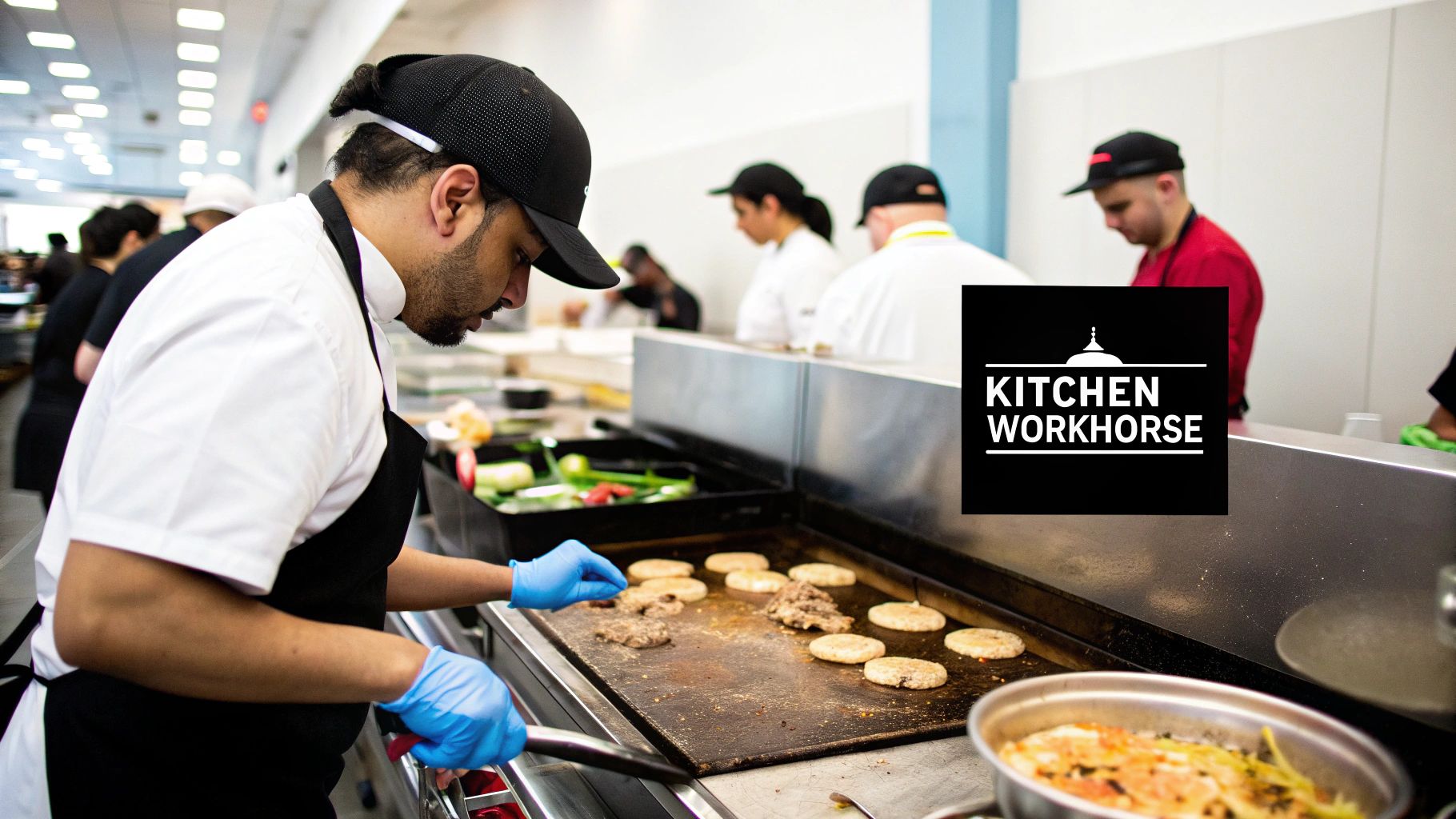
In the vibrant, non-stop culinary scene of Las Vegas, everything comes down to speed, consistency, and efficiency. From the high-end resort kitchens on the Strip to the beloved local diners catering to every palate, chefs are under constant pressure to push out quality food without missing a beat. The secret weapon that helps so many of them pull it off isn't just one piece of gear, but a powerful ecosystem of essential restaurant equipment working together.
At the very center of this system, you’ll almost always find the flat top cooking range. This single piece of equipment becomes the kitchen's command post, handling everything from searing a perfect steak to toasting brioche buns. It's the engine that powers a diverse menu, letting one cook on one station produce an incredible variety of dishes. But even a powerhouse like this can't do the job alone.
Building an Efficient Kitchen Ecosystem
To keep up with that relentless demand, the flat top needs solid support from other key pieces of equipment. This is where a smart, well-planned kitchen layout becomes absolutely crucial. The real magic happens when your cooking, cooling, and storage work in perfect harmony—it's what separates a smooth, profitable service from total chaos.
A few essential pieces of restaurant equipment needed for success include:
- Commercial Refrigerators: These have to be close. We're talking arm's reach from the cook line, keeping fresh ingredients perfectly chilled and ready to go. That proximity cuts down on wasted steps and keeps the workflow humming.
- Commercial Freezers: For your bulk items and long-term storage, high-performance freezers aren't just nice to have; they're non-negotiable. They protect your product's integrity and are essential for managing inventory when you're serving a constant stream of customers.
- Ice Machines: Especially in the blistering Las Vegas heat, a reliable ice machine is vital. It’s used for everything from drink service to food prep, making it a true unsung hero in any successful restaurant or bar.
This demand for do-it-all equipment isn't just a Vegas thing. On a global scale, the flat top grill market hit around $4.5 billion in 2024, and the commercial side of the industry drove a massive 60% of that demand. That tells you just how much value professional chefs and operators place on equipment that can handle insane volume and menu variety.
A truly efficient kitchen is a carefully choreographed dance between heating and cooling. Your flat top cooking range is the star performer, but the commercial refrigerator and freezer are the essential supporting cast that makes the entire show possible.
By integrating these core components, Las Vegas kitchens create a streamlined workflow that pumps up output and slashes ticket times. The first step toward a more profitable operation is simply thinking about your kitchen's overall design. If you're planning a new build-out or a remodel, our guide on designing a restaurant kitchen has some crucial insights. This strategic approach is how you turn individual appliances into a powerful, cohesive system built for success.
Thinking Beyond Burners: Understanding the Flat Top Advantage
So, what exactly is a flat top cooking range? Let's forget the dictionary definition for a second. To really get why it’s a game-changer in a town like Las Vegas, think of it this way: your standard stovetop, with its individual burners, is like having a bunch of single-lane roads. Each lane can only handle one car—or one pan—at a time. During a dinner rush, that creates a serious traffic jam.
Now, imagine the flat top as a massive, wide-open plaza. It's one huge surface where you can sear, sauté, toast, and hold dozens of different items all at once. This completely changes the flow of your cook line, turning what could be a frustrating bottleneck into a powerhouse of efficiency. In a city that truly never sleeps, that kind of advantage is everything.
The Core of Flat Top Performance
At its heart, a flat top is just a thick, heavy plate of steel sitting over powerful gas burners or electric heating elements. But that simple design is its secret weapon. The sheer thickness of that steel plate acts like a giant heat battery, soaking up thermal energy and spreading it evenly across the entire surface.
What does that mean for your cooks? It means no more frustrating hot spots or cold corners. Instead of sliding pans around trying to find the "sweet spot," your team gets consistent, predictable heat no matter where they place an ingredient. That level of consistency is non-negotiable when you're pushing Las Vegas-level volume, where every dish has to be perfect, from the first ticket of the night to the very last.
The magic of a flat top isn't just about its size; it's the thermal stability. That thick steel plate holds its temperature even when you slam it with a dozen cold steaks, guaranteeing a perfect sear every single time without the temperature drops that plague thinner cookware.
Mastering Zone Cooking for Maximum Output
This incredible heat distribution unlocks a technique called zone cooking. Just think of it as creating different culinary neighborhoods on one surface. You can have one section cranked up to a blistering heat, perfect for searing steaks or getting that amazing crust on smash burgers.
Meanwhile, a spot just a foot or two away can be held at a much gentler temperature, ideal for warming sauces, melting cheese, or holding finished plates before they head out to the dining room. You’ve effectively turned one piece of equipment into a multi-tool station, combining the jobs of a grill, a sauté station, and several burners into a single footprint.
This kind of flexibility is a massive win for Las Vegas restaurants, which have to cater to an incredibly diverse array of restaurants and palates. One minute the kitchen is firing off delicate brunch dishes, and the next, it's deep in a dinner rush that demands flawlessly cooked proteins. A flat top handles it all without breaking a sweat.
One Surface, Multiple Functions
Being able to consolidate equipment is a huge plus in any commercial kitchen, where every square inch of space is precious real estate. A properly used flat top cooking range can easily take the place of several other machines. Think about all the jobs it can do at the same time:
- Grilling: Sear burgers, steaks, chicken, and veggies right on the seasoned steel.
- Sautéing: Use your pots and pans directly on the surface, just like a traditional range.
- Toasting: Brown hundreds of brioche or sandwich buns at once to keep up with the lunch rush.
- Warming: Set up a cooler zone to hold sauces, soups, and other components at a food-safe temperature.
For any restaurant operator, this consolidation is a massive strategic advantage. It means less equipment to buy, less to maintain, and less to clean. It also streamlines the entire cook line, letting a single chef manage more tasks without running between stations. To see how a dedicated griddle surface can transform a menu, you can learn more about commercial griddles and their unique applications. In the end, this kind of efficiency is what it takes to thrive in the fast-paced Las Vegas dining scene.
Choosing the Right Flat Top for Your Kitchen
Picking the perfect flat top cooking range for a Las Vegas kitchen is more than just buying another piece of equipment—it's a strategic investment that hits your utility bills, your line's workflow, and the final quality of the food you serve. In a city where kitchens never sleep, you need gear that can take the heat. That decision process always starts with one big question: gas or electric?
This is usually the first hurdle for any operator. Gas flat tops have a reputation for firing up fast and giving chefs that instant, responsive control they love. On the other hand, modern electric units offer incredible precision and tend to create a cooler kitchen environment—a major bonus in the middle of a Nevada summer. Each has its place, depending on your menu and what your kitchen is already set up for.
The demand for this equipment tells a story. Flat tops are a powerhouse in the foodservice industry, and North America is leading the pack. The global market, valued at a huge $2,069 million in 2024, is expected to climb to $2,538 million by 2031. For Las Vegas restaurant owners, this trend just confirms what we already know: the flat top is a proven workhorse. In fact, this category alone is projected to be worth $912.4 million by 2035, a figure largely driven by the one million-plus U.S. restaurants that depend on these griddles for a huge chunk of their menus. You can dig deeper into these numbers over at Data Insights Market.
Gas Versus Electric: Powering Your Production
For any Las Vegas business, operating cost is king. While natural gas has traditionally been cheaper per BTU in Nevada, a high-efficiency electric flat top can offer savings in other, less obvious ways. Because electric models transfer heat more directly into the cooking surface, they bleed less ambient heat into the kitchen.
This can mean a real drop in your air conditioning costs during our brutal summers—a hidden but serious saving. Of course, many seasoned chefs swear by gas units for their raw power and the classic visual feedback of a live flame.
When deciding between gas and electric, you have to balance the upfront utility costs with the long-term operational expenses. It’s not just about the price of gas vs. electricity; it's also about the impact on your kitchen's climate control and ventilation needs.
Gas vs. Electric Flat Top: A Comparison for Las Vegas Operators
To make the decision a little clearer, let's put gas and electric models head-to-head, focusing on what matters most to a kitchen on or off the Strip.
| Feature | Gas Flat Top Range | Electric Flat Top Range | Best For Las Vegas Kitchens |
|---|---|---|---|
| Heat Control | Fast, responsive control with manual knobs. Can have hot/cold spots. | Highly precise, consistent temperature across the entire surface. | Electric for delicate items needing exact temps; Gas for chefs who prefer manual control. |
| Initial Cost | Generally lower upfront cost. | Often a higher initial investment. | Gas for budget-conscious startups. |
| Utility Costs | Natural gas is often cheaper per BTU in Las Vegas. | Can be more expensive to run, depending on Nevada's electricity rates. | Gas typically wins on direct utility costs. |
| Kitchen Heat | Vents a lot of excess heat into the kitchen, raising ambient temperatures. | More efficient heat transfer means a significantly cooler kitchen. | Electric is a huge advantage for managing A/C costs in the summer. |
| Installation | Requires a dedicated gas line and robust ventilation. | Needs a high-voltage electrical hookup. | Depends entirely on your existing kitchen infrastructure. |
| Performance | Excellent for high-power searing and quick recovery. | Slower to heat up but maintains steady heat perfectly. | Gas for high-volume burger joints; Electric for consistent all-day breakfast service. |
Ultimately, there's no single "best" answer. A high-volume steakhouse might lean toward the raw power of gas, while a brunch spot focused on perfect pancakes and eggs could benefit from the pinpoint precision of an electric model.
Plate Material and Thickness: The Key to Heat Retention
The cooking surface itself—the plate—is where the magic happens. The material and thickness of this plate are what determine how your flat top performs during a relentless dinner rush.
-
Standard Steel: This is the workhorse of the industry. It seasons beautifully over time, building up a naturally non-stick surface, and offers fantastic heat transfer. It needs to be cleaned and oiled diligently to prevent rust, but it rewards you with incredible flavor.
-
Chrome Plated: A chrome surface is less porous than steel, which is great for preventing flavor transfer between different foods—think searing fish right after cooking pancakes. It's also easier to clean and radiates less heat, keeping the kitchen cooler. The tradeoff? It's more delicate and can be easily scratched or damaged by metal spatulas.
Plate thickness is just as critical. A thicker plate, usually ¾-inch to 1-inch, acts like a thermal battery. It holds a massive amount of heat and recovers its temperature almost instantly after you drop a load of cold ingredients on it. This ensures a perfect, consistent sear on every single burger, even when you're completely slammed. A thinner plate might be cheaper upfront, but it will struggle to keep up when the tickets start flying.
This chart breaks down the choice between a classic open burner and a flat top.
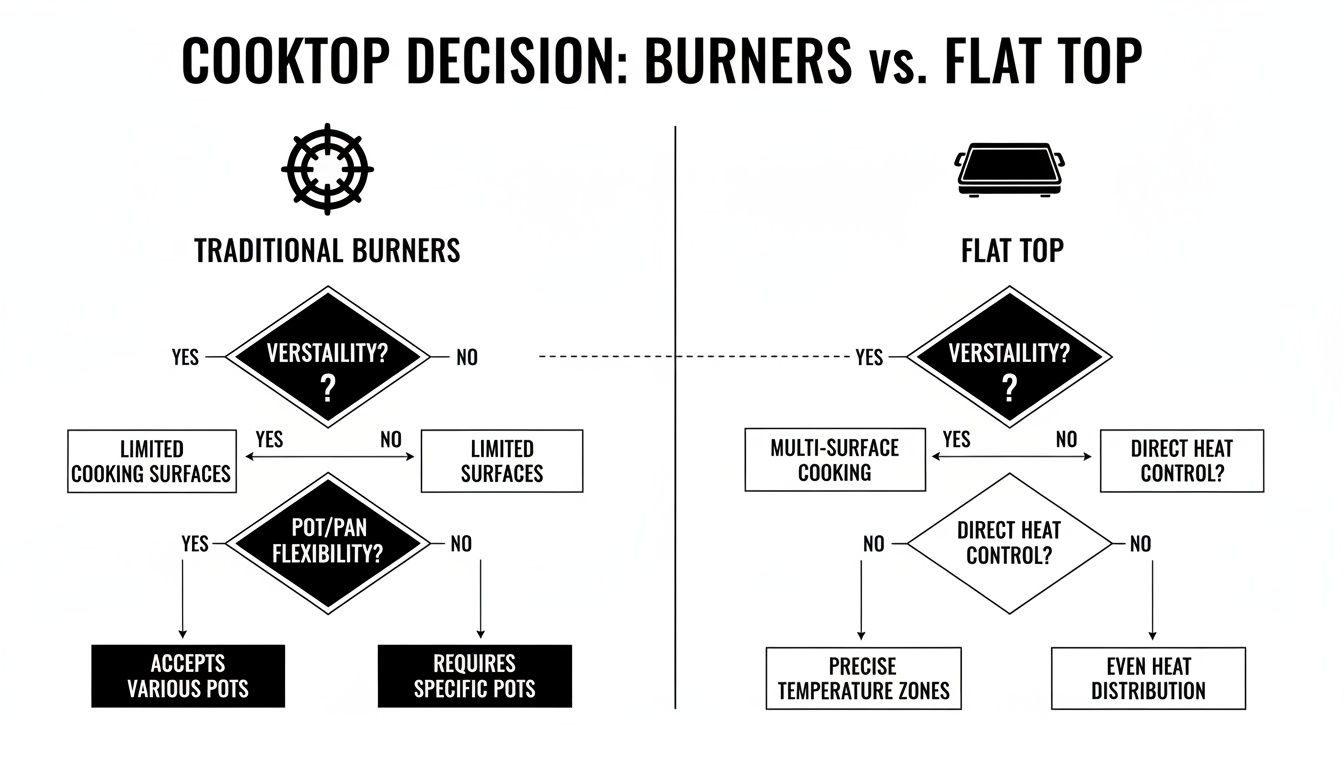
It really highlights how the single, massive surface of a flat top is built for handling multiple, diverse cooking jobs all at the same time—something a traditional range just can't match.
Finding the Right Size and Features
Finally, you have to match the unit's size to your space and your menu. A 24-inch model could be the perfect fit for a cozy food truck, while a sprawling 72-inch beast is what a high-capacity casino kitchen needs to pump out hundreds of meals an hour. Measure your line space carefully, and don't forget to account for the necessary ventilation clearance.
Beyond sheer size, look for the features that matter in a commercial kitchen. A solid grease management system with a large, easy-to-remove trap is non-negotiable. And stick with durable, simple controls; they'll hold up to the chaos of a busy line far better than a fancy digital interface. Thinking through these details will make sure your new flat top is a profitable asset, not a frustrating bottleneck.
Transforming Your Menu and Kitchen Workflow
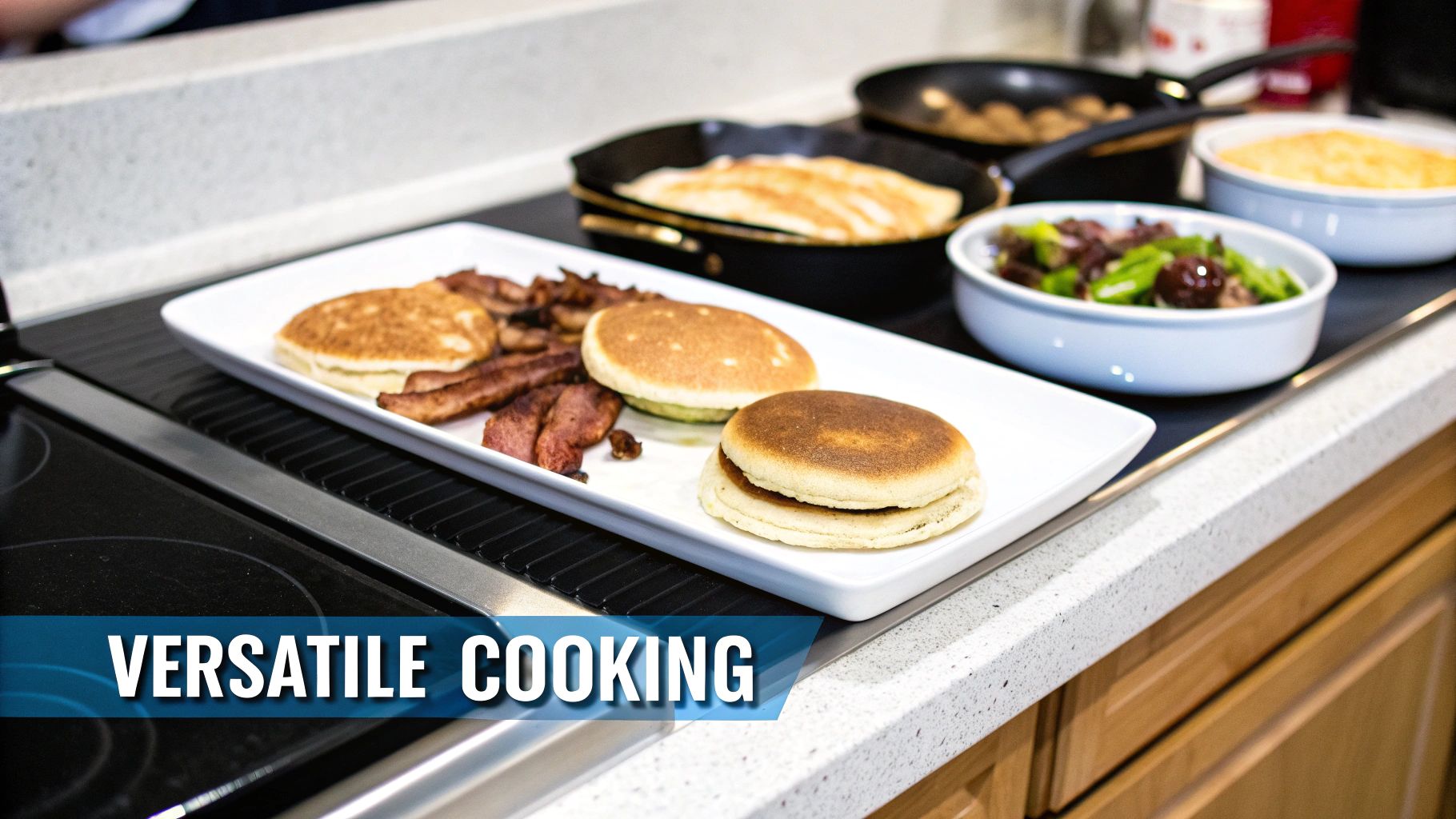
A flat top cooking range does a lot more than just heat up food. It completely changes the rhythm and flow of your kitchen. This is where we stop talking about specs and start talking about what this means on the ground in a market as demanding as Las Vegas.
Picture the classic breakfast rush. A single cook is firing off orders for pancakes, bacon, sausage, and eggs all at once, on one massive surface. The usual chaos of juggling a dozen pans is just... gone.
Then, as breakfast service winds down, that same surface gets a quick scrape and is ready for lunch. It becomes the engine for the next rush, searing a perfect crust on a line of smash burgers on one side while toasting hundreds of brioche buns on the other. This isn't just a piece of cooking equipment; it’s a high-output command center for your entire menu.
This kind of adaptability is exactly why the market for these ranges is exploding. Flat top griddles, as the pros call them, fueled a global market that hit US$2,069 million in 2024 and is on a rocket ship to US$2,538 million by 2031. That growth is a direct reflection of what high-volume Vegas restaurants need: one surface that can handle a huge, diverse menu. For local operators, a flat top cooking range is a real competitive edge, capable of slashing cook times by up to 30% when the pressure is on. You can read the full market analysis on Valuates Reports to see the global picture.
Designing a High-Speed Kitchen Line
To really unlock the power of a flat top, you have to think of it as the heart of a larger system. Its efficiency skyrockets when it's logically connected to your cold storage and prep stations. In Las Vegas, every second is money, and a poorly designed line is a revenue killer. The goal is simple: create a smooth, unbroken path from the walk-in to the plate.
It all starts with where you put your commercial refrigerators. They need to be right on the line, within arm's reach of the cook. This setup kills wasted steps, letting your team grab prepped ingredients—from burger patties to sliced onions—without ever leaving their station. The workflow becomes a fluid, continuous motion, which boosts speed and consistency like nothing else.
Your commercial freezers play a crucial supporting role. While they’re usually located further from the main line for bulk storage, how you organize them is key. A well-managed freezer inventory ensures that the line refrigerators are always stocked and ready for battle, preventing disastrous delays during a slammed service.
A great kitchen workflow isn't about having the fastest chefs; it's about creating a system where the chefs have to move the least. Integrating your flat top with immediate access to refrigerated ingredients is the first step toward building that system.
Creating a Cohesive Equipment Ecosystem
Beyond just cooking and chilling, other pieces of equipment complete the puzzle. Think about the non-stop demand for drinks in the Vegas heat. A reliable ice machine is an absolute must-have, not just for your bar but for the kitchen, where ice is essential for food prep and safety.
Look at how these pieces all work together:
- The Flat Top: Your high-volume cooking engine.
- Commercial Refrigerators: The immediate supply line, feeding fresh ingredients directly to the cook.
- Commercial Freezers: The strategic reserve, making sure that supply line never runs dry.
- Ice Machines: A critical resource for both the front and back of the house.
When you see these as interconnected parts of a single operational machine, you can design a kitchen that’s not only faster but also less physically draining for your team. This kind of thoughtful layout cuts down on staff fatigue, reduces errors, and ultimately leads to a more profitable, consistent service—a true necessity for any restaurant trying to make it in the Las Vegas scene.
Installation and Safety in Your Commercial Kitchen
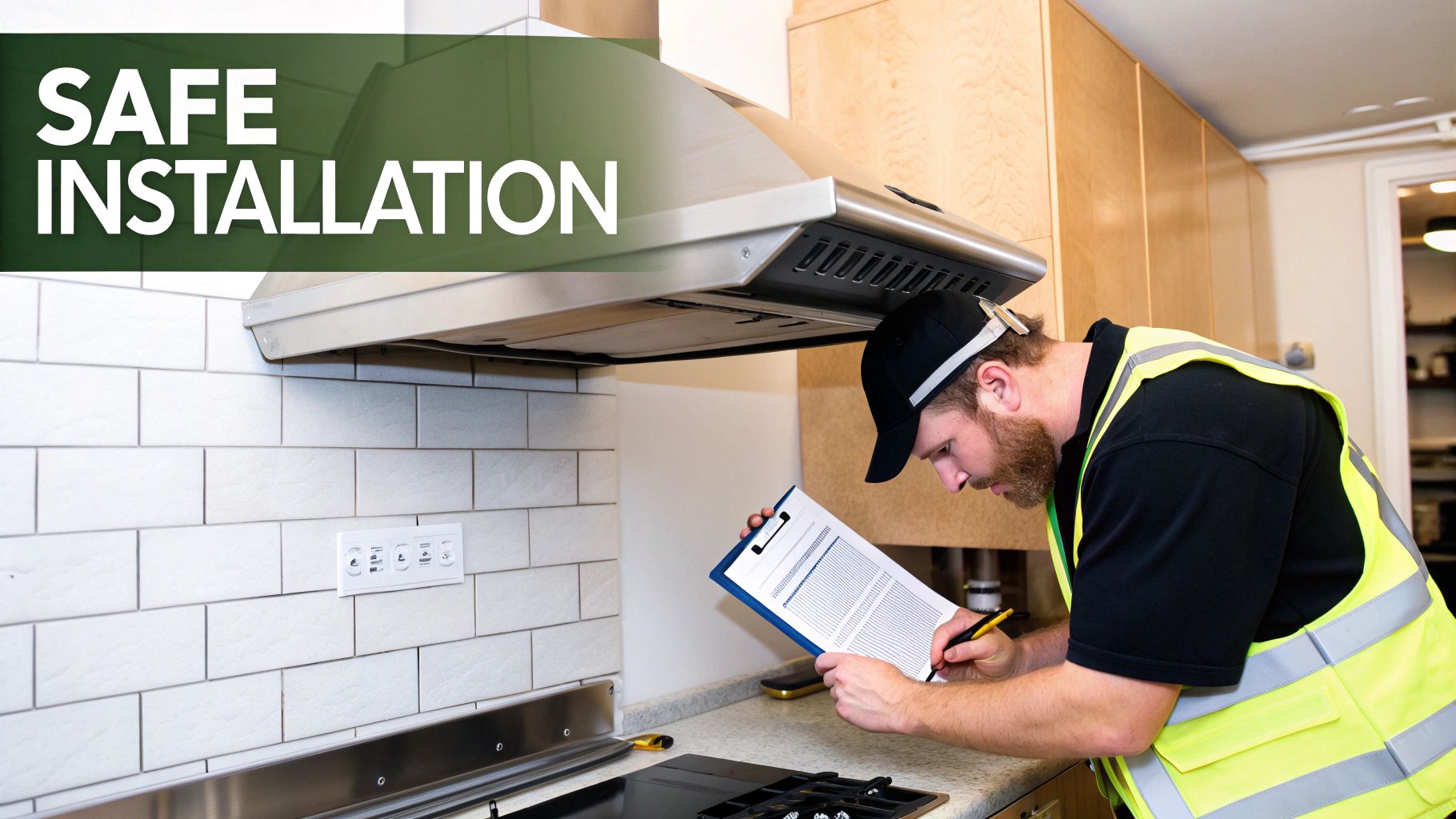
Getting your flat top cooking range installed correctly isn't just another box to check. It's one of the most important things you can do for the safety, performance, and legal standing of your Las Vegas kitchen. Trying to cut corners here is a recipe for disaster, leading to failed health inspections, busted equipment, or even a dangerous fire hazard.
Think of it this way: proper installation is the foundation of your whole cook line. A pro setup makes sure your new range runs like it's supposed to, without overloading your building’s gas or electrical systems. That's a huge deal when you have other power-hungry beasts like commercial refrigerators and ice machines all running at the same time.
Navigating Certifications and Local Codes
Ever wonder about those NSF or ETL logos on your equipment? They’re not just for show. These certifications are your golden ticket, proving that your gear meets incredibly strict public health and safety standards. Here in Las Vegas, where inspectors don't mess around, having certified equipment is non-negotiable.
These marks guarantee that your flat top is made with food-safe materials and designed to be cleaned easily and completely. It’s about protecting your customers, sure, but it's also about protecting your reputation and your business.
An ETL or NSF certification is your kitchen's passport through a health inspection. It tells inspectors that your equipment is designed for commercial safety and sanitation, which is a major requirement for operating legally in Clark County.
The Critical Role of Proper Ventilation
In the middle of a Nevada summer, keeping your kitchen's air quality under control is a battle you have to win. A flat top range pumps out a serious amount of heat, smoke, and greasy vapor. Without a powerful, correctly installed ventilation hood, your kitchen turns into a hot, miserable, and unsafe place to work.
A real commercial hood system does way more than just suck out hot air. It's a full-on safety system built to trap airborne grease—a massive fire risk. In Las Vegas, your hood and ventilation have to be up to local fire codes, period. For bigger jobs like a full installation or major repairs, using formal permit to work systems is a smart move to ensure everyone stays safe and compliant.
Professional Installation Protects Your Entire Kitchen
A professional installer does more than just plug in your flat top. They look at your whole kitchen's utility setup. They make sure your gas lines or electrical circuits can actually handle the new load without causing dangerous leaks or tripping breakers all day.
This big-picture approach stops a new flat top from creating a domino effect of problems for your other critical equipment, such as:
- Commercial Freezers: An overloaded circuit can shut down your freezer, turning thousands of dollars of inventory into garbage.
- Ice Machines: These need steady power to keep up, especially when the summer rush hits.
- Refrigerated Prep Tables: You need consistent power to keep food on the line at safe temperatures.
At the end of the day, professional installation is about protecting your investment, keeping your team safe, and making sure your entire kitchen runs without a hitch. It's also smart to be ready for anything. Speaking of safety, check out our guide on choosing the right fire extinguishers for your kitchen.
Your Flat Top Range Purchasing Checklist
Alright, feeling like you’re ready to pull the trigger on a new flat top cooking range? It's a big move. Choosing the right one is all about balancing what your menu dreams are with the hard realities of your kitchen space. I've put together this final checklist to walk you through it, making sure you pick a unit that's going to be a workhorse for your Las Vegas spot for years.
First things first: your menu. What are you actually going to cook on this thing? A joint slinging breakfast classics has totally different needs than a steakhouse getting a hard sear on prime cuts. Make a real list of your core dishes and think about the cooking surface and temperature control each one needs. Getting this right from the start keeps you from buying something way too big or, even worse, too small for what you actually do.
Once you know what you’re cooking, grab a tape measure. Get an exact measurement of the space you have on your cook line. But don't just measure the footprint—you have to account for the mandatory clearance space on all sides for safety and proper ventilation. In a tight Las Vegas kitchen, every single inch is prime real estate.
Finalizing Your Technical Requirements
With your menu and space locked in, you can really start digging into the specs. These are the details that will make or break your daily grind and affect your costs down the road.
- Confirm Your Utility Hookups: Do you have the right gas line ready to go, or the high-voltage electrical circuit you'll need? Checking this now saves you from massive headaches and expensive delays during installation.
- Evaluate Your Ventilation: Is your current hood system up to the task of handling the heat and grease this new beast will put out? Having to upgrade your ventilation can be a nasty surprise cost if you don't plan for it.
- Set a Realistic Budget: Your budget isn't just the price tag on the range. You've got to factor in potential shipping costs, professional installation, and any of those utility upgrades we just talked about.
A purchase you’ve planned out is an investment that pays you back. Thinking through everything—from the demands of your cheesesteaks to the physical limits of your kitchen—is the difference between just buying equipment and getting a true asset for your operation.
Last but not least, think about who you're buying from. It’s a huge plus to work with a local partner who gets the Las Vegas market. You want a supplier who offers solid warranty support, can get it to you fast, and has financing options that work for you. Honestly, these things are just as crucial as the flat top itself. It's the peace of mind knowing you’ve got a reliable team backing up your kitchen's most important players, right alongside your commercial refrigerators and ice machines.
Answering Your Top Questions About Flat Top Ranges
When you're thinking about dropping serious cash on a piece of equipment like a flat top cooking range, you’re going to have questions. You should. It's a big decision. We've heard just about all of them from restaurant owners here in Vegas, so let's get right into the most common ones.
Making it in the Las Vegas food scene is no joke. Whether you're running a high-end spot on the Strip or a beloved local diner, your kitchen needs to be a well-oiled machine. The right flat top can be the engine that drives it all, but it has to work with the rest of your setup.
Can a Flat Top Really Take the Place of My Other Gear?
For a whole lot of menus in Las Vegas, the answer is a big, loud "yes." Think about it: a flat top is basically a massive, versatile cooking surface that combines your multi-burner range and your griddle into one powerhouse. You can set up different heat zones to sear a steak on one side, gently sauté some onions in the middle, and keep a sauce warm on the edge—all at the same time.
If your kitchen cranks out a high volume of breakfast, burgers, or cheesesteaks, this thing will absolutely change your life. It cleans up your cook line, gets rid of equipment clutter, and gives you back precious space. In a fast-paced town like ours, that kind of efficiency is gold.
Your kitchen is an ecosystem. While a flat top handles the heat, it relies on support from other key players. The synergy between your cooking range, commercial refrigerators, commercial freezers, and ice machines is what truly drives success and efficiency.
What’s the Real Deal on Utility Costs: Gas vs. Electric in Vegas?
This is the million-dollar question for any operator in Nevada. On paper, natural gas is often the cheaper fuel. But it's not that simple. Modern electric flat tops have gotten incredibly efficient, and they don't bleed nearly as much heat into your kitchen.
In the middle of a Las Vegas summer, that makes a huge difference. Less waste heat from your cook line means your air conditioning doesn't have to work as hard, which can lead to some serious savings on your power bill. Those savings can easily eat up the difference in fuel cost. We always tell people to look at their own utility bills to figure out what makes the most sense for their bottom line.
How Does Financing Actually Work for My Restaurant?
Financing is a game-changer. It lets you get the gear you need—whether it’s a new flat top cooking range, a walk-in commercial refrigerator, or a beast of an ice machine—without draining your bank account. We work with finance partners who get the restaurant business and have simple, fast applications built for operators like you.
For a new spot, this frees up cash you desperately need for launch. For an established restaurant, it’s how you upgrade and stay ahead of the competition. You get the equipment you need to grow now and pay for it with monthly payments that don't break the bank.
Ready to upgrade your Las Vegas kitchen with a high-performance flat top cooking range or other essential equipment? At Las Vegas Restaurant Equipment, we offer a curated selection of commercial-grade appliances designed to handle the toughest demands. Explore our collection online and get fast, free shipping directly to your business.
Find the perfect equipment for your restaurant at https://lasvegasrestaurantequipment.com.