

Starting a successful food truck all comes down to choosing the right equipment for food truck kitchens, especially when it comes to high-performance cooking gear, refrigeration, and prep stations. Think of your truck as a compact, high-output machine. Every single component has to perform perfectly under pressure, and this guide will break down the essential gear you need to make that happen.
Building Your Las Vegas Food truck Kitchen From the Ground Up
The vibrant city of Las Vegas presents a unique challenge, but also a massive opportunity. It's home to a diverse array of world-class restaurants that cater to every palate, so the competition is fierce, and customer expectations are sky-high. To make it here, your food truck has to operate like a mini version of a top-tier professional kitchen, delivering speed, quality, and safety—all from a tiny space.
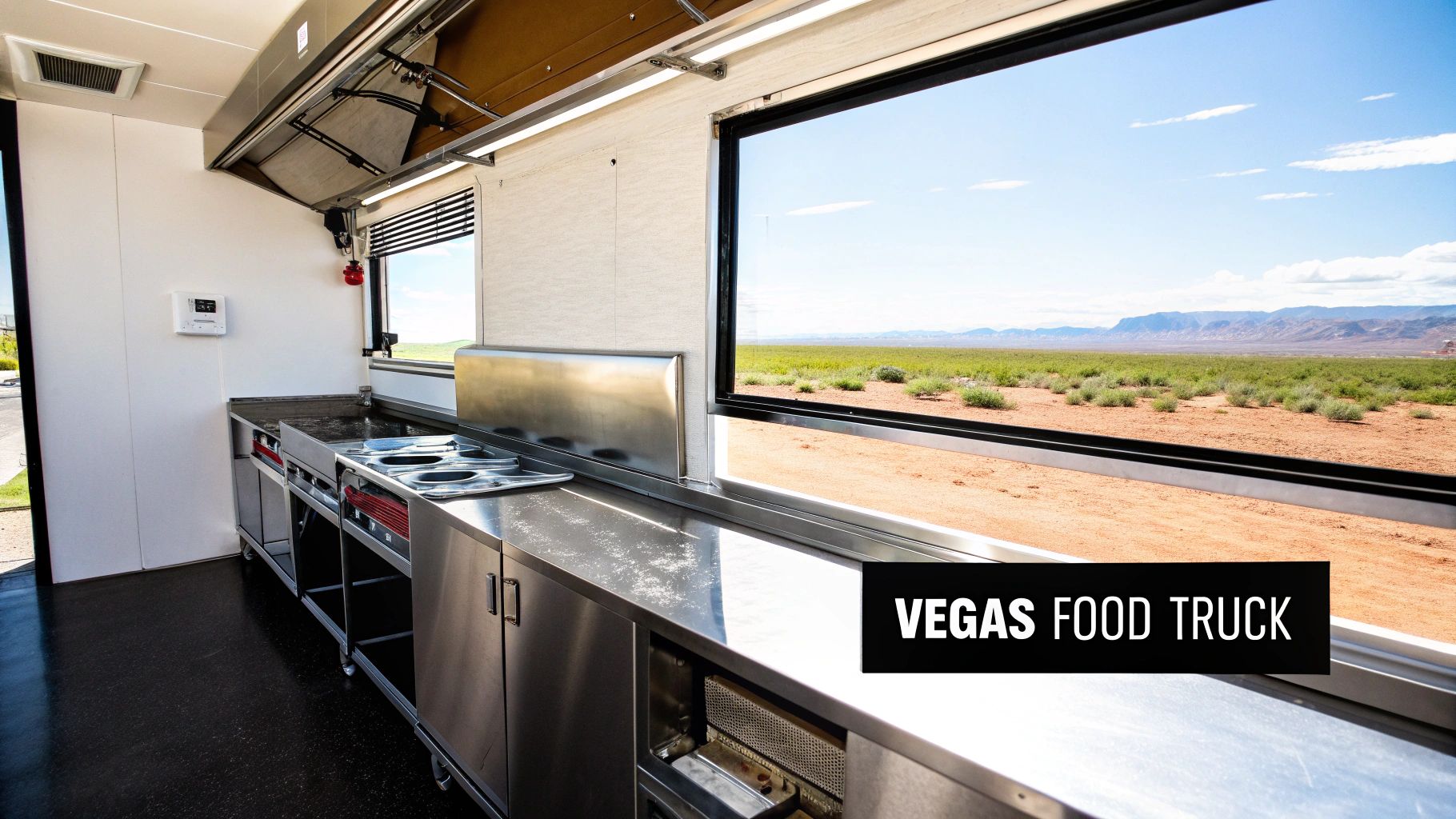
This isn't just about cramming as many appliances as you can into a truck; it's about smart, strategic design. Your kitchen layout needs to create a seamless workflow, letting your team move from prepping ingredients to cooking to serving customers without tripping over each other. That kind of efficiency is absolutely critical during a crazy lunch rush on Fremont Street or at a packed local festival.
Essential Food Truck Kitchen Equipment at a Glance
To get started, here's a quick look at the core equipment categories and why they're so vital for a Las Vegas food truck.
| Equipment Category | Primary Function in Your Truck | Las Vegas Must-Haves |
|---|---|---|
| Refrigeration & Cooling | Keeping ingredients fresh and safe in extreme desert heat. | Commercial refrigerators, under-counter freezers, powerful ice machine. |
| Cooking Equipment | The heart of your menu, where your recipes come to life. | Griddles, charbroilers, fryers, and ranges sized for your menu and space. |
| Ventilation & Fire Safety | Removing heat, smoke, and grease while ensuring code compliance. | Commercial-grade hood vent and a certified fire suppression system. |
| Preparation & Storage | Creating an efficient workspace for chopping, mixing, and organizing. | Stainless steel prep tables, cutting boards, and NSF-certified shelving. |
| Sanitation & Water | Meeting health department standards for handwashing and dishwashing. | A 3-compartment sink, separate handwashing sink, and reliable water tanks/heater. |
This table covers the big picture, but the real success is in the details—choosing units that are durable, compact, and powerful enough for the Nevada climate.
Core Components for Vegas Success
The foundation of any good food truck kitchen, especially in Nevada's demanding environment, rests on a few key pillars. These are the non-negotiable systems that keep your business running smoothly and are essential for success.
- Commercial Refrigerators: This is your first line of defense against that desert heat. A powerful commercial refrigerator is absolutely essential for keeping food at safe temperatures and protecting your expensive inventory.
- Commercial Freezers: Crucial for storing ingredients in bulk and holding pre-portioned items. A reliable commercial freezer means you can handle high-volume service without running out of your most popular menu items.
- Ice Machines: In a city where temperatures regularly shoot past 100°F, a dependable ice machine isn't just for drinks. It’s a critical tool for food safety, certain prep tasks, and of course, serving the ice-cold beverages your customers will be craving.
A food truck's kitchen is an ecosystem where cooking, cooling, and prep equipment must work in perfect harmony. In Las Vegas, where extreme heat adds another layer of complexity, the reliability of your refrigeration and ventilation systems becomes just as important as the power of your grill.
Choosing the right equipment for food truck kitchens means finding durable, space-efficient, and powerful units that can handle constant use and the unique environmental pressures of Southern Nevada. As you start planning, it's worth exploring innovative smart cooking solutions for nomadic travelers for some great insights into adaptable and efficient designs.
Ultimately, the gear you choose will define your menu's potential and your ability to serve customers quickly and safely. For a deeper dive into creating an effective mobile kitchen, you might be interested in our guide on food truck design essentials.
Choosing Your Essential Cooking Equipment
Your cooking line is the engine of your food truck. Simple as that. It’s where raw ingredients become the signature dishes that make you money and build your reputation. Think of it as the heart of the entire operation—the equipment choices you make here will directly dictate your speed, quality, and ultimately, your profits. In the fast-paced Las Vegas food scene, having the right equipment for food truck kitchens isn't just a leg up; it's a basic requirement for survival.
Picking your cooking appliances is like casting the lead actors for your culinary show. Every single piece has to nail its performance, especially when you’re slammed during a downtown lunch rush or a packed festival out in Summerlin. Your menu is your script, so let's break down the core players you’ll need on stage.
Matching Appliances to Your Menu
First things first: look at your menu. Every item you choose has to earn its keep and justify the precious space it takes up.
- Commercial Griddles: A flat-top griddle is arguably the most versatile piece of steel you can own. It’s the undisputed champ for smash burgers, breakfast burritos, and quesadillas, giving you a huge, consistent cooking surface that can handle a ton of orders at once.
- Commercial Fryers: If you’re slinging crispy fries, wings, or churros, a high-output commercial fryer is non-negotiable. Go for countertop models with quick temperature recovery. That’s the secret to food that stays crispy, not greasy, even when the line is around the block.
- Charbroilers: For that authentic, smoky BBQ flavor on steaks, chicken, or veggies, nothing beats a charbroiler. Those grill marks and that distinct taste can become a signature part of your brand, immediately setting you apart.
- Commercial Ranges: A range gives you burners up top and an oven down below, a solid two-for-one that saves space. It’s a great fit for trucks with diverse menus that need to sauté, simmer, and do a little small-batch baking.
This need for specialized, heavy-duty gear is part of a massive global trend. Cooking equipment is the powerhouse of the food service industry, a market that's seen a USD 41.81 billion surge driven by essentials like ovens, fryers, and griddles. Here in Vegas, that means picking durable workhorses like Atosa ranges and charbroilers that can handle the desert heat, which is critical for the 30% of trucks focused on fast-food style menus. You can explore more about this growing market and see how commercial kitchen equipment trends are shaping the industry.
Power, Performance, and Practicality
Once you know what you need, you have to make sure it will actually work under pressure. A food truck is a closed system, which means your equipment's power demands have to line up perfectly with what your truck can supply.
Think of your generator as the power plant for your mobile kitchen. Your cooking equipment places the biggest demand on it, so you must match the BTU output (for gas) or wattage (for electric) of your appliances to what your generator can safely supply. Overloading it is a recipe for a mid-service shutdown.
Beyond just power, every single piece of equipment has to be NSF-certified. This isn't a suggestion—it's a hard requirement to pass your health inspection in Clark County. NSF certification guarantees the appliance is built for commercial use, with smooth, easy-to-clean surfaces that stop bacteria from growing.
And for those menus with baked goods—artisan bread, pastries, or even gourmet pizzas—a compact convection oven can be a total game-changer. If that’s your plan, you might want to check out our deep dive on choosing the right commercial convection oven to see how you can maximize your baking potential in a tiny space.
At the end of the day, picking your cooking equipment is a balancing act between your culinary vision, your budget, and the very real constraints of a kitchen on wheels.
Keeping Your Cool with Commercial Refrigeration and Ice Machines
In the vibrant, restaurant-rich landscape of Las Vegas, the desert heat isn't just a weather report—it's a serious business challenge. When you're running a food truck, your commercial refrigerators, commercial freezers, and ice machines become your single most important line of defense against the sweltering Nevada climate. This isn't just another appliance; it's the lifeline that protects your inventory, guarantees food safety, and keeps your entire operation from grinding to a halt.
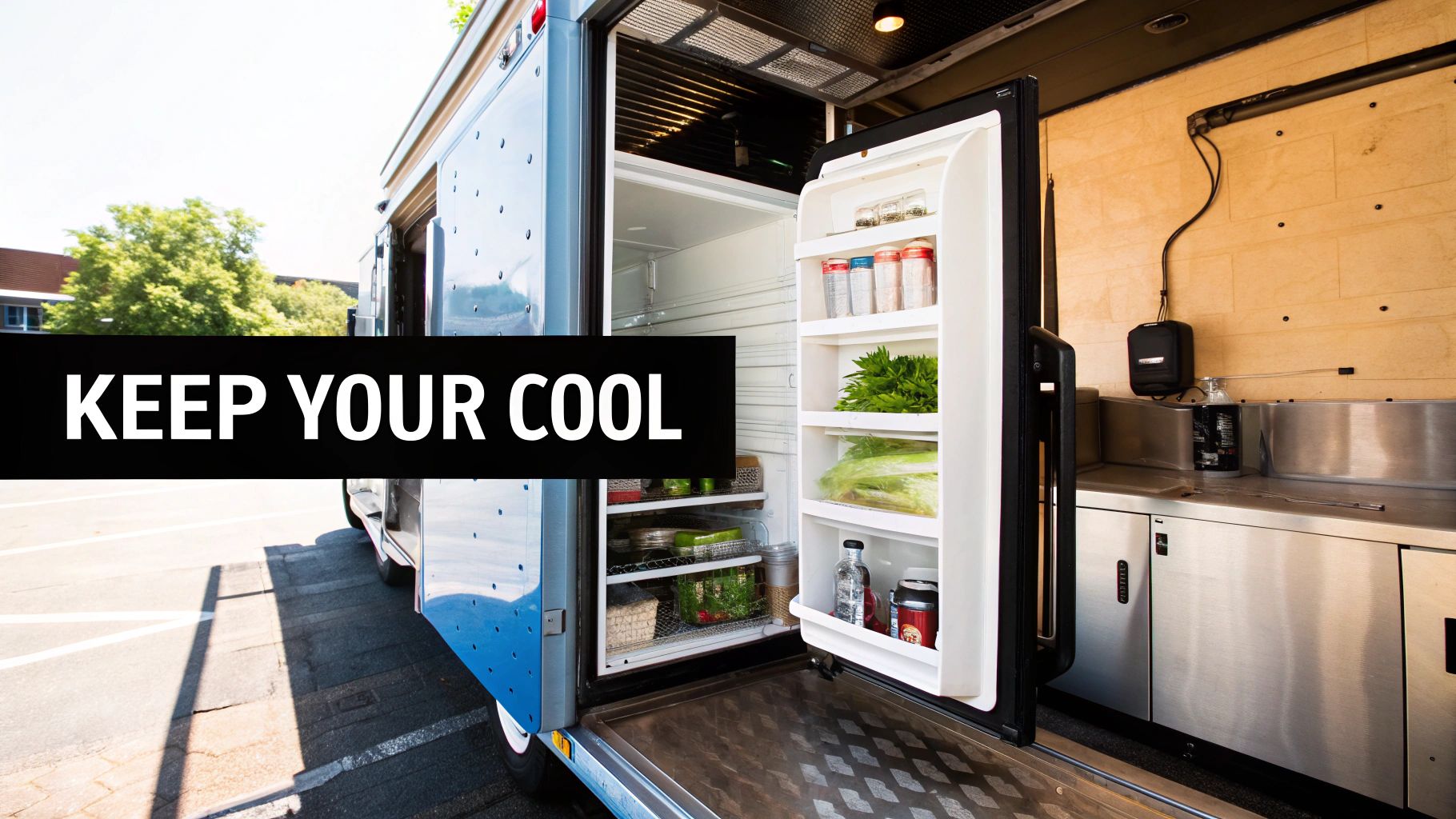
When the thermostat blasts past 100°F, your average refrigeration unit just can't hang. The intense heat forces them to work overtime, a situation that often leads to equipment failure, spoiled ingredients, and profits melting away. That’s precisely why choosing the right equipment for food truck kitchens has to start with a powerful, reliable cooling system built for extreme conditions.
Smart Refrigeration for Maximizing Space
Let's be real: every square inch inside a food truck is precious real estate. You need refrigeration that’s both a workhorse and a space-saver, letting you maximize your kitchen without sacrificing performance. This is where specialized units really shine.
- Undercounter Refrigerators and Freezers: These are the undisputed champions of space efficiency. They tuck neatly right under your prep counters, giving you instant access to chilled and frozen ingredients exactly where you need them. This streamlines your workflow and keeps the kitchen organized and moving.
- Sandwich Prep Tables: A true multi-tasker, these units combine a refrigerated base with a cooled top rail designed to hold pans of ingredients. It’s the perfect setup for banging out orders quickly, keeping everything from your crisp lettuce to sliced meats at a safe temperature and always within arm's reach.
By choosing these compact solutions, you free up more room for your cooking line and service area, which is key to creating a more ergonomic and efficient layout.
The Heart of the System: The Compressor
While the size and layout of a unit are crucial, the most critical component of any commercial fridge or freezer in Vegas is its compressor. Think of it as the engine of your cooling system. A standard-duty compressor is going to struggle—and likely fail—when the heat outside is relentless.
You absolutely need a unit with a heavy-duty, high-performance compressor specifically designed to operate in high ambient temperatures. This is what ensures your equipment can consistently hold safe food temps, even on the most brutal summer days. Investing in a powerful compressor isn't just a good idea; it's a non-negotiable insurance policy against costly inventory loss and potential health code violations.
In the world of Las Vegas food trucks, your refrigeration isn't just about keeping things cold—it's about battling the environment. A powerful compressor is your front-line soldier in the constant fight to maintain food safety and quality when the desert does its worst.
The Unsung Hero: Commercial Ice Machines
While refrigeration protects your raw ingredients, a dependable commercial ice machine fuels a huge chunk of your revenue. In a city where tourists and locals are constantly looking for a way to beat the heat, ice-cold beverages are a major profit driver. Running out of ice in the middle of a service? Not an option.
A dedicated ice machine gives you a constant supply of clean, fresh ice for sodas, iced teas, and any specialty drinks on your menu. It completely eliminates the need for inconvenient and costly runs to buy bagged ice, saving you both time and money. For any food truck operating in the Vegas heat, a commercial ice machine is an essential asset that directly boosts your bottom line and keeps customers happy.
To get the most out of your investment, it's worth learning more about selecting energy-efficient commercial refrigeration that can help lower your operational costs in the long run.
Designing a Smart and Compliant Food Truck Layout
A great food truck kitchen moves like a pit crew during a race—every second and every movement is absolutely critical. We’ve already gone over the essential cooking and refrigeration gear, but the real magic happens when you arrange all that equipment for food truck kitchens into a smart, efficient layout. This isn't just about fitting everything in; it's about strategic design that turns a cramped metal box into a high-speed, money-making machine.
Think of your food truck's workflow like a well-rehearsed dance. Every step your staff takes, from grabbing ingredients at the prep station to plating at the service window, should be as short and direct as possible. The goal is to slash wasted motion, cut down on stress, and pump out orders faster, especially when you’re slammed during a peak rush on the Strip.
The Foundation of an Efficient Workflow
Before you bolt anything down, you need to visualize the entire journey of an order. Walk through it in your mind, from the moment a customer pays to the second you hand them their food. This process naturally breaks down into three core zones that have to work together without a hitch.
- Prep Zone: This is where the magic begins—washing produce, chopping ingredients, and assembling components. It needs to have your stainless steel work tables, cutting boards, and be within arm's reach of your undercounter refrigerators and dry storage.
- Cooking Zone: The hot line is the heart and soul of your operation. This is where your griddle, fryers, and ranges need to be clustered together under a heavy-duty ventilation hood. The layout has to give your cooks enough elbow room to work their craft without tripping over each other.
- Service Zone: This is your customer-facing area, encompassing the service window, your POS system, and any holding equipment like heat lamps. You want it positioned for smooth, quick customer interactions that don't get in the way of the kitchen crew.
A solid layout keeps these zones distinct but seamlessly connected, creating a logical flow from raw ingredient to finished product.
Clark County Compliance and Safety by Design
Beyond pure efficiency, your food truck layout is under the microscope of local health codes. The Southern Nevada Health District has very specific rules that dictate how and where equipment is placed to guarantee food safety and stop cross-contamination in its tracks.
For instance, your handwashing sink has to be completely separate from your three-compartment sink for dishwashing, and you can't use either for prepping food. It's non-negotiable. On top of that, every surface must be smooth, non-porous, and easy to sanitize—think stainless steel everywhere. Getting your ventilation and fire suppression systems installed correctly isn't just a suggestion; it's a legal requirement to pass your inspection and operate safely.
Designing a food truck kitchen is like solving a high-stakes puzzle. Every piece, from the commercial freezer to the handwashing sink, has to fit perfectly. A compliant, ergonomic layout isn't just a plan—it's your blueprint for success and safety.
The actual size of your truck also dictates what’s possible. It’s no surprise that medium-sized food trucks, typically 14-25 feet long, dominate 45% of the global market. They hit that sweet spot, offering enough kitchen space for professional gear like convection ovens and charbroilers while staying nimble enough for tight parking spots around Summerlin.
This segment is a major force in the global food truck industry, which is expected to rocket from USD 5.8 billion in 2025 to USD 10.9 billion by 2035. You can dig deeper into the growing trends in the food truck market to see how vehicle size is shaping kitchen design.
A well-designed layout starts with a clear plan that maps out every station and every piece of equipment. Below is a checklist to help you think through the strategic goals for each zone in your mobile kitchen.
Food Truck Layout Planning Checklist
| Workflow Zone | Essential Equipment | Strategic Goal |
|---|---|---|
| Receiving/Storage | Shelving, Dunnage Racks, Refrigeration | Easy loading of supplies, organized inventory, and quick access to both cold and dry ingredients. |
| Preparation Zone | Prep Tables, Sinks, Food Processors, Mixers | Create a dedicated space for washing, chopping, and mixing to prevent cross-contamination. |
| Cooking Line (Hot) | Griddle, Fryers, Range, Charbroiler, Hood | Group high-temperature equipment together for efficient cooking and proper ventilation. |
| Cooking Line (Cold) | Sandwich/Salad Prep Table, Refrigerated Drawers | Keep cold ingredients at safe temperatures while allowing for rapid assembly of orders. |
| Service Window | POS System, Warming/Holding Equipment, Counter Space | Enable fast, friendly customer interaction and ensure orders are held at the right temperature. |
| Cleaning/Sanitation | 3-Compartment Sink, Handwashing Sink, Waste Bins | Isolate dishwashing and cleaning tasks from food prep areas to meet health code standards. |
Ultimately, a smart layout isn't just about ticking boxes for the health inspector. It’s about creating a workspace that empowers your team to work faster, safer, and with a whole lot less stress.
Powering Your Success with Generators and Utility Systems
Your brand-new cooking line and high-powered fridge are fantastic, but they're just shiny metal boxes without the right power behind them. Think of your food truck’s utility systems—the generator, plumbing, and safety gear—as the central nervous system that brings your entire kitchen to life. This is the stuff nobody sees but is absolutely essential equipment for food truck kitchens, making sure every other appliance can actually do its job, especially out here in the demanding Las Vegas heat.
Let’s be clear: without a reliable power source and compliant plumbing, you’re not just being inefficient; you're not legally allowed to open your service window. So, let's break down these critical systems.
Choosing the Right Generator
Your generator is the heart of your truck. It's pumping the lifeblood—electricity—to every single appliance. Picking the right one isn't a guess; it's a crucial calculation. First things first, you need to figure out your kitchen's total electrical load. That means adding up the wattage requirements for every single piece of equipment you might run at the same time, from your commercial freezer and fryers right down to your POS system.
Think of your generator's capacity like a budget. You've only got so much power to "spend." If you overload it by firing up too many appliances at once, it'll trip and shut down your whole operation. A blackout during a lunch rush isn't just an inconvenience; it's a direct hit to your sales and your reputation.
Once you have that total wattage number, a good rule of thumb is to grab a generator that gives you 20-25% more power than your calculated peak load. This buffer is your safety net. It keeps the generator from constantly redlining, which helps it last longer and prevents those surprise shutdowns.
Also, think about the noise. A generator that sounds like a jet engine is a major turn-off for customers and might even get you in trouble with noise ordinances at events or in certain Vegas neighborhoods. Look for models built to run quietly. It just creates a much better vibe for everyone.
Designing Compliant Onboard Plumbing
Your plumbing is another non-negotiable that has to meet the strict rules of the Southern Nevada Health District. This system is all about providing clean water for cooking and cleaning while safely handling all the wastewater.
- Freshwater Tank: This is where you store your clean, potable water for food prep, handwashing, and dishwashing. You need to size it so you can get through a whole day of service without having to stop and refill.
- Greywater Tank: This tank collects all the used water from your sinks. Health codes are very specific here: your greywater tank must be larger than your freshwater tank—usually by at least 15%. This is to prevent any chance of a nasty overflow.
- Multi-Compartment Sinks: Clark County has a required setup: one sink just for handwashing, a three-compartment sink for the whole wash-rinse-sanitize process, and often another separate sink just for prepping food.
A dependable water heater is also mandatory. You have to supply hot water to all your sinks to meet sanitation requirements and pass that all-important health inspection.
Essential Safety Systems
Finally, your safety systems are your first line of defense against the inevitable hazards of a busy kitchen. A commercial ventilation hood is required over any cooking equipment that produces greasy vapor, like your griddle and fryers. This system is responsible for pulling all that smoke, heat, and gunk out of the air, keeping your kitchen safe and way more comfortable.
Tied directly to the hood is a mandatory fire suppression system. This is an automated system designed to detect and extinguish a kitchen fire before it gets out of control, protecting your crew, your customers, and your entire investment. These systems aren't optional—they're required by law and are a critical piece of your overall safety plan.
Budgeting and Sourcing Your Kitchen Equipment
Let's talk about one of the biggest upfront investments you'll make: outfitting your food truck. It's so tempting to look for the cheapest gear possible, but making smart financial choices right now will pay you back big time down the road. This isn't just about buying stuff; it's about balancing those initial costs with long-term reliability and real value.
When you think strategically about every purchase, you’re building a kitchen that’s set up for success, not just survival. That means carefully weighing every major decision, from buying new versus used to finding financing that keeps your startup cash free for other things.
New vs Used Equipment: A Strategic Choice
Ah, the classic debate: new or used equipment? Going the used route can definitely save you some serious cash upfront, which is a huge draw when you’re just starting out. But that path is full of risks. You’re looking at no warranty, a higher chance of surprise breakdowns, and no guarantee that the gear will meet the strict NSF/ETL compliance standards required here in Clark County.
New equipment, on the other hand, is all about peace of mind. It comes with a manufacturer's warranty, so you're not on the hook for expensive repair bills. It’s also guaranteed to pass your health inspection, and it’s often more energy-efficient, which means you'll save money on generator fuel over time.
Think of it this way: choosing new, warrantied equipment isn’t just buying an appliance; it's an investment in keeping your truck open and making money. A single equipment failure during a packed lunch rush can cost you more in lost sales and a damaged reputation than you ever would have saved buying used.
When you work with a supplier who knows the Las Vegas market, you can often find competitive pricing on new units, making the decision even easier. In this business, reliability is king, and new equipment delivers.
Financing Your Food Truck Kitchen
Getting the best equipment doesn't have to mean emptying your bank account before you sell your first taco. Financing options are a game-changer for food truck owners, letting you get top-notch, reliable gear while keeping your cash flow healthy for things like inventory, marketing, and payroll.
This is how you get the professional-grade commercial refrigerators and cooking lines you need to stand out in the crowded Las Vegas food scene. With flexible terms, you can build a kitchen that’s ready to compete from day one.
In the booming U.S. food truck industry, you'll notice that trailers hold a commanding 42.85% share of the market as of 2025. There's a good reason for that—they're a fantastic choice for operators watching their budget. Trailers generally have lower startup costs and are easier to maintain, which is a huge plus in a fast-paced market like Vegas where you need to be set up and serving fast.
This process flow diagram shows how all the core utility systems in your truck work together to power your success.
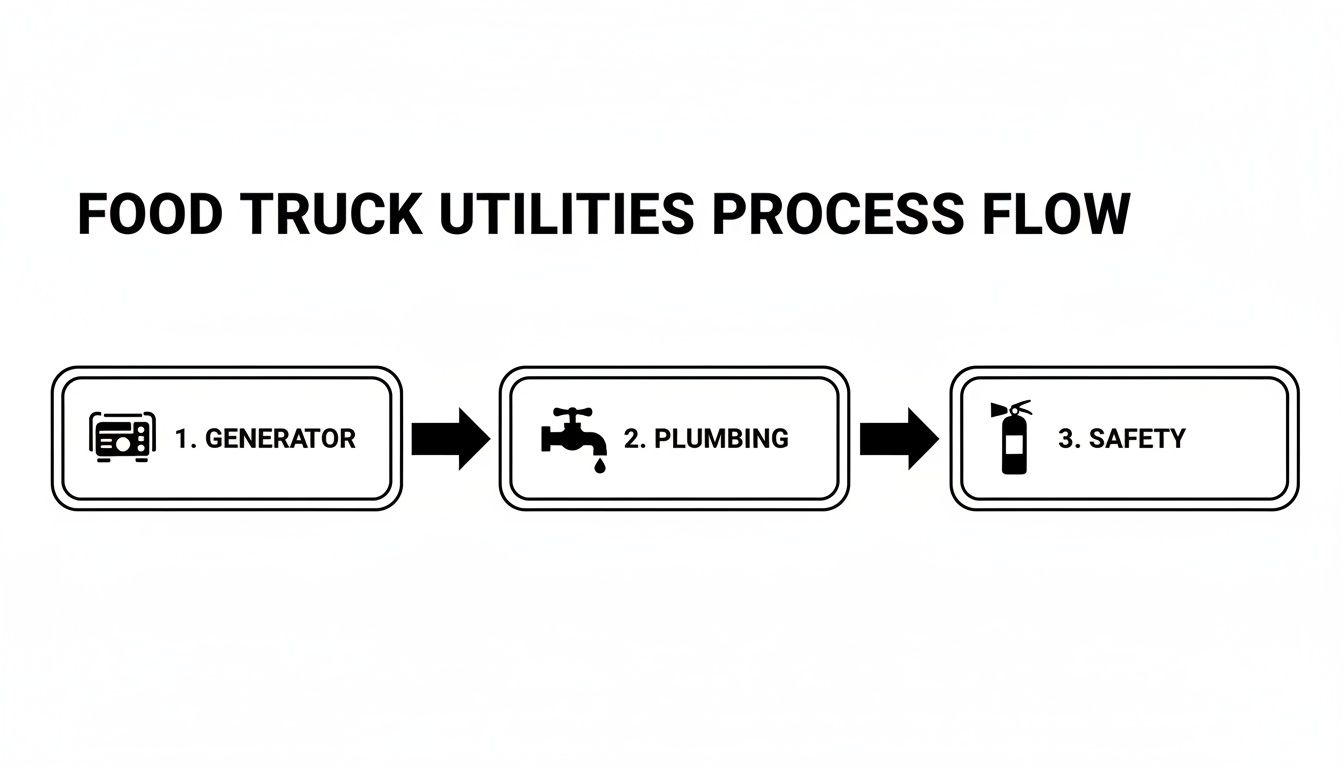
As you can see, a solid generator, compliant plumbing, and certified safety systems are all interconnected—they form the foundation of your mobile kitchen. And once you've got your core equipment sorted, don't forget the serving supplies! For some great ideas, check out this guide to eco-friendly takeaway containers.
Got Questions? We've Got Answers
Here are a few of the most common questions we get from aspiring food truck owners in Las Vegas. From picking the right gear to passing those tough health inspections, we've got you covered.
What Is the Most Critical Piece of Equipment for a Las Vegas Food Truck?
That's a tough one, since everything has its job, but if I had to pick just one, it’s got to be your refrigeration. Out here in the desert heat, your fridge and freezer are under constant attack. We've seen it a thousand times in the vibrant Las Vegas restaurant scene—a cooling system failure can be catastrophic.
When your commercial refrigerator or freezer dies in the middle of a lunch rush, you're not just losing service; you're losing thousands of dollars in product. That's why skimping here is not an option. You need a rock-solid unit with a compressor built to handle extreme heat. It’s the difference between staying in business and shutting down for good.
Should I Buy New or Used Equipment for My Food Truck?
I get it, the upfront cost of used equipment is tempting. But in the long run, new gear with a warranty almost always wins out, giving you peace of mind that's hard to put a price on. New appliances come ready to go with their NSF/ETL compliance, which makes navigating the notoriously tough Las Vegas health inspections a whole lot smoother.
Plus, new equipment is more energy-efficient and comes with a warranty. In a mobile business, a single breakdown can put you on the sidelines for days, bleeding cash. Financing options often make new equipment more affordable than you'd think, letting you start your venture on a solid foundation.
In the fast-paced Las Vegas food truck scene, reliability isn't a luxury; it's your business's foundation. New equipment provides the assurance that you can consistently serve customers without unexpected, costly interruptions.
How Can I Ensure My Kitchen Passes a Clark County Health Inspection?
Passing your health inspection starts way before the inspector shows up. First, make sure every piece of equipment you buy is NSF or ETL certified—that's the stamp of approval for commercial sanitation. Next, your layout has to meet the Southern Nevada Health District's specific sink requirements: a handwashing sink, a three-compartment sink, and often, a separate food prep sink. No exceptions.
All your surfaces need to be smooth, non-porous, and easy to clean. Working with a supplier who knows the local codes inside and out can save you from making expensive mistakes. Inspectors will be checking to see that your ice machine is installed correctly and that your commercial refrigerators and freezers hold their temperatures perfectly, so get it right from day one.
Ready to build a food truck kitchen that can conquer the Las Vegas heat? Las Vegas Restaurant Equipment has a hand-picked selection of new, warranty-backed equipment built for the grind. Check out our commercial refrigerators, freezers, ice machines, and full cooking lines. Visit us at lasvegasrestaurantequipment.com to get started.