

Let's be honest, picking a commercial pizza oven is one of the biggest calls you'll make for your restaurant. It's the heart of the whole operation, dictating the quality, speed, and even the style of every pie you send out.
Choosing Your Commercial Pizza Oven for Success
Here in Las Vegas, the food scene is no joke. It's a vibrant battlefield with a diverse array of restaurants catering to every palate, and the right equipment isn't just nice to have—it's what keeps you in the game. From a high-roller spot on the Strip to a beloved neighborhood joint out in Summerlin, customers expect the best. That constant pressure means you have to be efficient, consistent, and top-quality, every single time.
Your pizza oven is the star of the show, but it's just one part of a bigger picture. Success in this town demands a whole ecosystem of essential restaurant equipment working together flawlessly. Before that dough even thinks about seeing the inside of an oven, its ingredients need to be kept in perfect condition. That's where your support crew comes in.
The Foundation of a Great Pizzeria
Think of your kitchen like a well-oiled machine. While the oven gets all the glory, a few other key players are working hard behind the scenes to make sure every pizza comes out perfect. Especially with our desert heat, having top-tier refrigeration isn't negotiable.
You absolutely need this supporting cast:
- Commercial Refrigerators: These are your first line of defense, keeping your cheese, sauces, and fresh toppings from going south. Rock-solid temperature control is everything for quality and safety.
- Commercial Freezers: For your bulk items—dough, proteins, you name it—a reliable freezer locks in texture and flavor. This is how you manage your inventory and cut down on waste.
- Ice Machines: People always forget about the ice machine, but it’s the quiet hero of your profitable drink program. And in Vegas, a solid bar program is essential to your bottom line.
A great pizza starts long before it hits the heat. The journey from pristine ingredients to a perfectly cooked pie relies on a seamless workflow supported by robust refrigeration and preparation equipment.
This guide is your playbook. We're going way beyond just tech specs. We’ll get into how different oven types fit different restaurants, whether you're slinging pies for the masses on a casino floor or crafting artisanal pizzas for locals. Think of this as your roadmap to matching the perfect oven to your business, your staff, and what your customers are hungry for. Let’s make sure your investment pays off with every slice.
Matching Your Oven to Your Restaurant's Vibe
Choosing the right commercial pizza oven is a lot like a Vegas headliner picking their signature act. It has to match the venue, draw in the crowd, and deliver an unforgettable experience. The oven you install is the heart of your kitchen—it sets the tone for everything from flavor and texture to how fast a pie lands on a hungry customer's table.
Not all ovens are built the same, and the best one for you comes down to your restaurant's specific style and what you're trying to achieve.
The Artisan's Choice: Deck Ovens
Think of a deck oven as the classic artisan's tool. It's the go-to for pizzerias aiming for that authentic, slightly charred Neapolitan or New York-style crust that pizza purists rave about. Heat radiates directly from the stone deck, creating that perfect crisp-yet-chewy texture you just can't get any other way.
These ovens demand a skilled operator—a true "pizzaiolo"—who knows how to work the heat zones and spin the pies just right. It’s an art form.
The High-Volume Workhorse: Conveyor Ovens
On the flip side, the conveyor oven is the undisputed king of speed and consistency. If you're running a high-volume spot, especially somewhere in the tourist-packed corridor, this is your engine. A conveyor oven simply pulls pizzas through a heated chamber on a belt.
The result? Every single pie comes out exactly the same, with almost no special training needed for your staff. It’s less about craft and all about pumping out a reliable product at a serious pace.
The Showstopper: Wood-Fired Ovens
Then you have the wood-fired oven. This isn't just a piece of cooking equipment; it's the main event. Often built from beautiful brick or stone, these ovens are masters of both flavor and pure theater. The intense, dry heat combined with the subtle smokiness from the burning wood creates a taste that gas or electric ovens can only dream of.
For an upscale Italian joint in Henderson or a trendy bistro in the Arts District, a wood-fired oven is marketing gold. The sight of the flames and the smell of the fire create an ambiance that makes customers happy to pay a premium. It’s a statement that you’re all about tradition and quality, turning the cooking itself into part of the show.
This flowchart gives you a quick way to think through the decision based on your business, your staff, and what your customers are looking for.
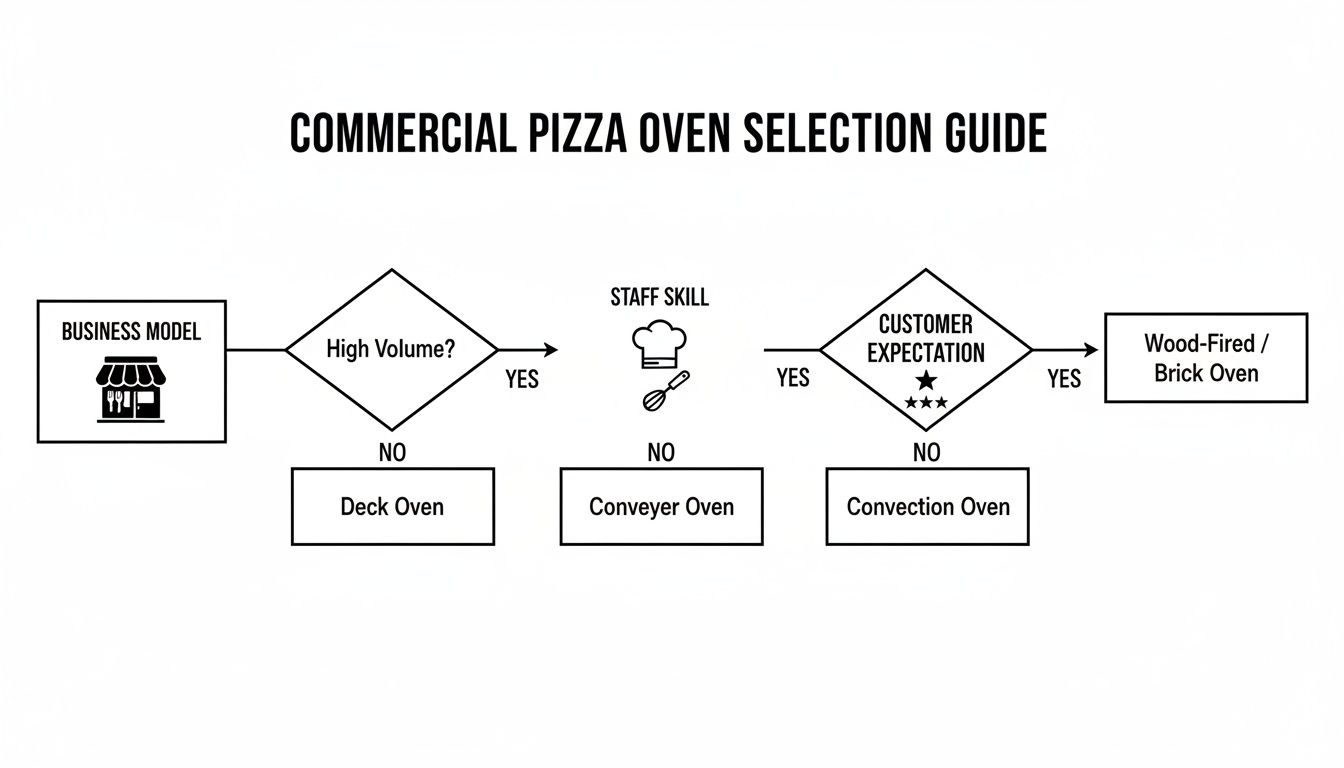
As you can see, matching your oven to your operation is the first and most critical step. Get this right, and you've made a smart investment.
To make this even clearer, let's break down the main oven types in a simple comparison.
Commercial Pizza Oven At-a-Glance Comparison
| Oven Type | Best For | Pros | Cons | Common Fuel Source |
|---|---|---|---|---|
| Deck Oven | Artisan pizzerias, classic New York or Neapolitan style. | Authentic, crisp crust; excellent heat retention; can cook other items. | Requires skilled operator; uneven heating if not managed; slower recovery time. | Gas, Electric |
| Conveyor Oven | High-volume chains, delivery/takeout spots, casinos. | Extremely consistent results; high output; requires minimal staff training. | Less authentic flavor/texture; large footprint; can be noisy. | Gas, Electric |
| Brick/Wood-Fired | Upscale restaurants, trendy bistros, places focused on ambiance. | Unbeatable smoky flavor; creates a "wow" factor for diners; very high heat. | Long preheat time; requires constant fuel management; significant ventilation needs. | Wood, Gas-assist |
| Convection Oven | Cafes, bars, businesses adding pizza as a secondary item. | Versatile for other foods; cooks quickly and evenly; relatively small. | Not ideal for traditional pizza crusts; can dry out toppings. | Gas, Electric |
This table should give you a solid starting point for figuring out which direction to go. Each oven has its place, and the "best" one is the one that fits your kitchen's unique needs.
The Gear That Backs Up Your Oven
No matter which incredible oven you choose, it can't do the job alone. A top-tier pizza kitchen in Las Vegas needs a whole crew of supporting equipment to handle the relentless pace and keep ingredients fresh in our desert heat.
A world-class pizza oven is only as good as the ingredients you put into it. The entire kitchen ecosystem—from refrigeration to prep lines—must work in harmony to support the star of the show.
Here are the absolute must-haves that build the foundation for an efficient pizza operation:
- Commercial Refrigerators: These are non-negotiable for keeping your cheese, sauces, and fresh toppings at safe, consistent temps. A quality fridge prevents spoilage, which directly protects your profits.
- Commercial Freezers: You need a reliable freezer for storing bulk dough, meats, and other key ingredients. It locks in freshness and helps you manage inventory so you don't run out during a dinner rush on the Strip.
- Ice Machines: It's easy to forget, but a dependable ice machine is critical for any Vegas establishment. It supports your beverage program—a huge profit center—and keeps your guests cool and happy.
All these pieces work together to create a smooth workflow, making sure your kitchen can handle the pressure without ever sacrificing quality. While you're thinking about ovens, it's smart to consider how heat works in other equipment, too. If you're curious, you can learn more about how a convection oven vs conventional oven operates in our detailed guide. Choosing the right oven is just the start; outfitting your entire kitchen for success is the real goal.
Calculating Your Oven Size and Capacity Needs
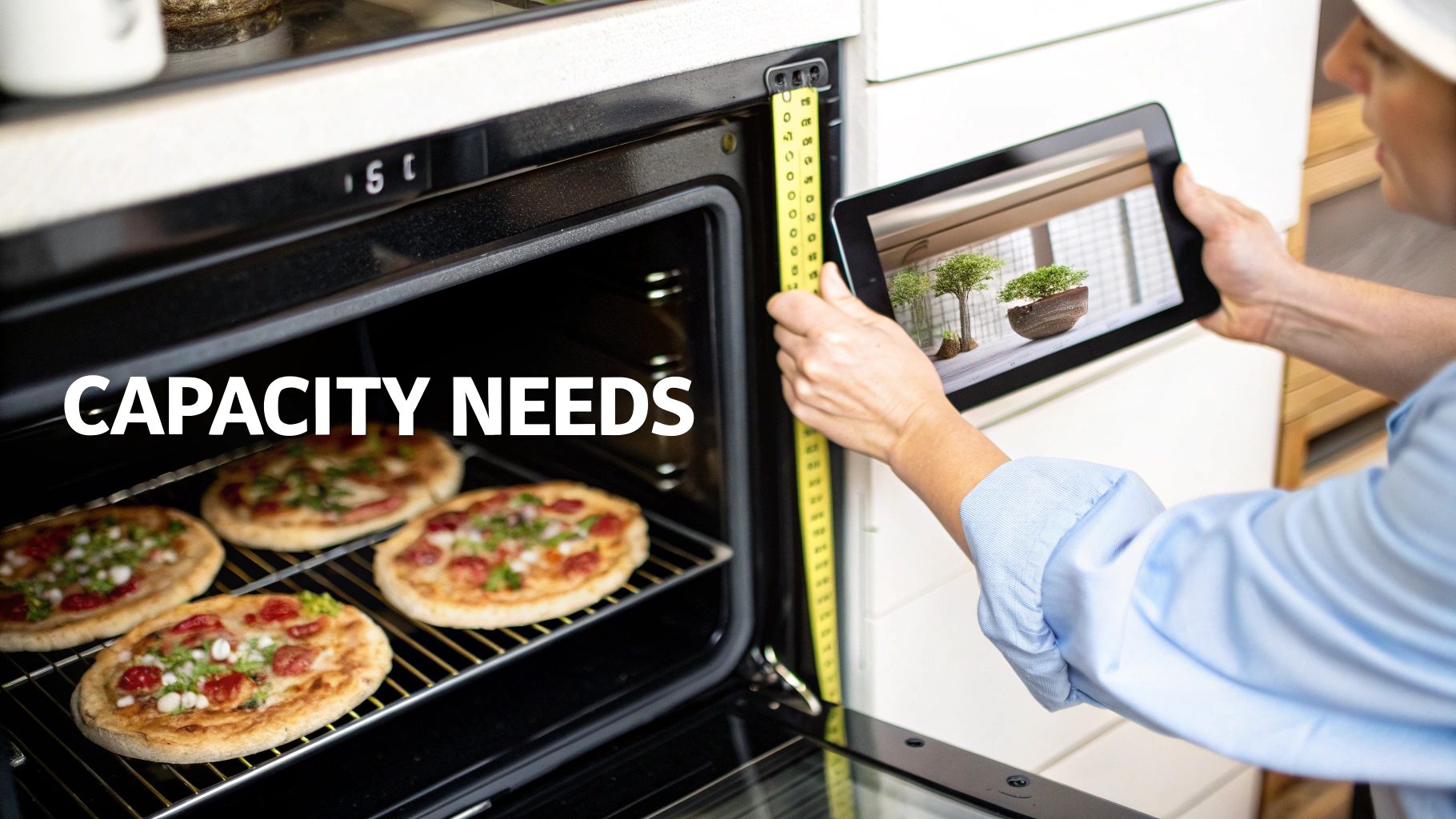
Picking the right size for your commercial pizza oven is a critical balancing act. Go too small, and you’ve got a major bottleneck on a busy Friday night, leaving customers fuming and sales on the table. But go too big, and that oversized beast becomes a constant drain, guzzling energy and hogging precious kitchen real estate.
Let's find your "just right" size.
This all starts with getting real about your peak demand. You have to know exactly how many pies you need to sling during your most chaotic hour to keep both the dining room and the delivery drivers happy. The goal here is to figure out your required throughput—the absolute maximum number of pizzas your oven can pump out per hour.
Finding Your Peak-Hour Pizza Production
To nail down the right oven capacity, you just need to answer two simple questions:
- Pizzas Per Peak Hour (PPH): How many pizzas are you selling when the kitchen is slammed? A high-traffic spot on the Las Vegas Strip might need to push out over 100 pizzas per hour.
- Average Cook Time: How long does it take to cook your signature pizza in the type of oven you're eyeing? A conveyor oven might fly through them in 5-6 minutes, while a classic deck oven could take 6-8 minutes.
Once you have those two numbers, a little back-of-the-napkin math will tell you exactly what you need.
Throughput Formula: (Pizzas Per Peak Hour) ÷ (60 minutes / Average Cook Time) = Pizzas Needed in Oven at One Time
Let's break that down. Say you're a neighborhood joint in Henderson cranking out 40 pizzas an hour, and your pies take 8 minutes to cook. That formula tells you you'll need room for at least 5-6 pizzas in the oven at all times to keep up.
Now, imagine a bustling restaurant right on the Strip that needs 120 pizzas an hour with a 6-minute cook time. They'd need to fit 12 pizzas at once, which means they’re likely looking at a massive conveyor oven or a few stacked deck ovens. This simple calculation gives you a solid, non-negotiable number to shop with.
Beyond Production: Physical Footprint and Efficiency
Okay, so you know how many pizzas you need to cook at once. The next reality check is the oven's physical footprint. Kitchen space is gold in Las Vegas, and every single square foot has to earn its keep. A monster oven that destroys your kitchen's workflow is just as bad as one that's too small.
This is where stackable units are a game-changer. Stacked deck ovens, for instance, can double or even triple your output without taking up one more inch of floor space. It's the perfect solution for kitchens that are tight on space but have some vertical room to play with.
Finally, you have to weigh high output against energy efficiency. A bigger, more powerful oven is going to burn more gas or electricity—that’s just physics. And in a market as competitive as Vegas, your utility bills can make or break your profitability.
Keep an eye out for ovens with top-notch insulation and modern, energy-saving features. A truly efficient oven doesn't just cut down your operating costs; it also makes for a cooler, more bearable kitchen for your crew. Your oven needs to be the powerful engine of your business, not an anchor dragging down your bottom line.
Understanding Fuel Sources and Ventilation
Picking a fuel source for your commercial pizza oven is a much bigger deal than just comparing utility bills. This is a choice that defines your pizza's signature flavor, dictates your kitchen's workflow, and even tells a story about your brand. Here in Vegas, getting the technical details of fuel and ventilation right from the start can save you from some serious headaches and costly mistakes down the road.
Let's break it down. Think of your fuel source as the heart and soul of your oven. It has a direct hand in everything from how fast the oven heats up to the final taste and texture of your crust. Each option—gas, electric, and wood—is a different road to a perfect pie, and each comes with its own unique set of pros and cons.
Comparing Gas, Electric, and Wood
The great fuel debate usually comes down to three heavy hitters: gas, electric, and wood. They all cook a mean pizza, but they get there in very different ways. The right one for you really depends on your restaurant’s vibe and how you plan to operate.
- Gas Ovens: These are the undisputed workhorses of the pizza world. Gas gives you consistent, easy-to-control heat. That makes it a favorite for high-volume shops that need to crank out pies and maintain rock-steady temperatures during a chaotic dinner rush.
- Electric Ovens: Valued for their pinpoint precision and often smaller footprint, electric ovens are incredibly versatile. They deliver super even heating without much fuss and are generally easier to install, since they don’t always need the heavy-duty ventilation that gas or wood ovens demand.
- Wood-Fired Ovens: This is for the artisan, the purist who wants to make a statement. A wood-fired oven gives you that authentic, smoky flavor and beautifully charred "leopard-spotting" on the crust that you just can't fake. It's more than a cooking tool; it's a showpiece that creates a memorable, almost theatrical dining experience.
In the Las Vegas food scene, a big, roaring wood-fired oven can be a massive draw. It screams tradition and quality to your customers. Just remember, managing a live fire takes skill and constant attention.
It’s all a trade-off. Gas is Mr. Reliable, electric is Ms. Precise, and wood is the artist. Your choice should line up with your kitchen crew's experience, your menu’s price point, and the kind of story you want your food to tell. Keep in mind, too, that other equipment plays a role; well-designed filtration systems for commercial ovens are essential for keeping your kitchen's air clean and compliant.
The Non-Negotiable Role of Ventilation
No matter what fuel you land on, ventilation is the unsung hero of a safe, functional kitchen. A commercial pizza oven pumps out an incredible amount of heat, smoke, and grease-filled air. In a place as hot as Las Vegas, you absolutely have to manage that exhaust. It’s not just about comfort—it's a critical safety issue.
For almost any gas or wood-fired oven, a Type 1 hood is a must-have, not a nice-to-have. This is a heavy-duty ventilation system built specifically to suck up grease and the byproducts of combustion. It’s your front line of defense against fire hazards and is required to meet local health and fire codes. Skimping on your ventilation is a fast track to failed inspections, big fines, and a dangerous kitchen for your team. For some electric setups, you might have other options, and it’s worth learning about the applications of a commercial ventless hood.
Why Certifications Are Your Best Insurance
When you're wading through equipment options and prepping for health inspections, look for two acronyms: NSF (National Sanitation Foundation) and ETL (Intertek). Think of these certifications as your best insurance policy. They aren’t just stickers on the side of the machine; they’re proof from an independent party that your oven has been put through the wringer to meet strict public health and safety standards.
An NSF or ETL certified commercial pizza oven guarantees three key things:
- Food-Safe Materials: The oven is built with materials that won’t contaminate your food with anything nasty.
- Hygienic Design: It's designed to be cleaned easily and completely, which helps prevent bacteria from setting up shop.
- Operational Safety: The oven meets established safety standards for its electrical and gas components, protecting your staff and your building.
For any restaurant operator in Las Vegas, buying certified equipment is a no-brainer. It makes the inspection process smoother and shows everyone—from the health inspector to your customers—that you’re serious about safety and quality. That's the kind of solid foundation you want to build your business on.
Equipping Your Entire Pizza Production Line
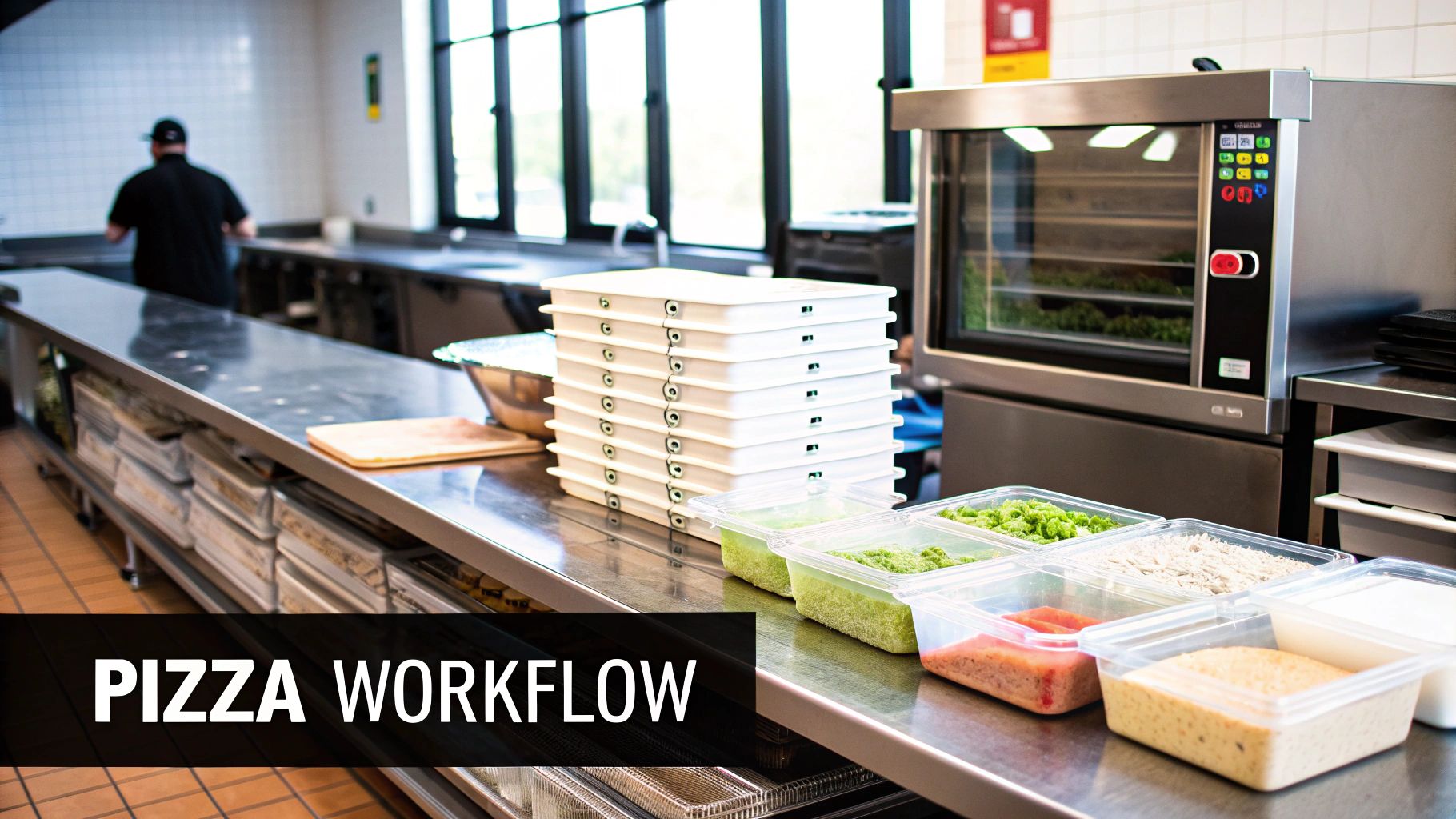
A top-tier commercial pizza oven is the heart of your operation, no doubt. But even the most powerful heart can't pump without veins and arteries. To keep up with the relentless pace of the Las Vegas market, you need to build a seamless production line that feeds your oven and gets finished pies out the door. This workflow starts long before a pizza ever hits the deck.
It's all about designing a complete ecosystem, one that stamps out bottlenecks and protects your valuable inventory. When everything works together, your ingredients stay safe, your prep is lightning-fast, and a pie is ready to fire the second an order comes in. This isn't just a collection of equipment; it's a high-octane pizza-making machine.
Your First Line of Defense: Refrigeration
In the sweltering Las Vegas desert heat, proper refrigeration isn't a suggestion—it's your absolute first line of defense against spoilage, waste, and food safety disasters. Your ingredients start their journey in the cold, and one failure here can tank your profits before you even shape a single crust.
Think of your commercial refrigerators and freezers as the guardians of your quality. They're what stand between you and a dumpster full of melted cheese and spoiled sauce.
- Commercial Refrigerators: These workhorses are non-negotiable for keeping your delicate cheeses, fresh-cut veggies, and signature sauces at perfectly calibrated, food-safe temperatures. A quality fridge actively fights back against the ambient heat of a busy kitchen, making sure every topping is pristine.
- Commercial Freezers: For your bulk items—think dough balls, proteins, and specialty toppings—a dependable freezer is critical. It locks in freshness and texture, giving you the power to manage inventory smartly and cut down on waste that eats directly into your bottom line.
A great pizza is born from great ingredients. In a city like Las Vegas, that quality is won or lost in your walk-in cooler. Powerful, reliable refrigeration is the foundation of a safe and successful kitchen.
Bridging the Gap From Storage to Oven
Okay, your ingredients are chilled and safe. Now what? The next challenge is keeping them organized and cold during the absolute chaos of a dinner rush. This is where a specialized prep table becomes your mission control. A well-designed pizza prep table is the critical link between your cold storage and your oven.
These units are brilliant, combining a tough, durable workspace with built-in, refrigerated wells for all your toppings. This setup keeps everything from pepperoni and mushrooms to peppers and olives perfectly chilled and literally at your pizza maker's fingertips. Your crew can build pies with incredible speed and consistency, all without taking a single step away from their station. That means better ticket times and rock-solid food safety.
To see how these essential units fit into a modern kitchen, explore the different models of a commercial pizza prep table and find the one that matches your workflow.
The Overlooked Hero of Profitability
Finally, let's talk about the unsung hero of your P&L statement: ice. No Las Vegas spot can survive, let alone thrive, without a solid beverage program, and that entire program runs on ice. A reliable commercial ice machine is the quiet workhorse that supports one of your biggest profit centers.
From sodas to signature cocktails, you need a constant supply of clean, clear ice. An undersized or unreliable machine will bring your bar service to a screeching halt on a busy Friday night, costing you sales and frustrating customers. Investing in a high-capacity ice machine that can handle the peak Vegas demand isn't an expense; it's a smart move that pays for itself over and over.
When you equip your entire production line—from freezer to oven to ice machine—you’re building an efficient, resilient operation ready for anything this city can throw at you.
Getting From "I Want It" to "It's Here": Cost, Financing, and Delivery
Alright, you've done the hard work. You’ve picked out the perfect commercial pizza oven for your spot and mentally arranged your entire cook line. Now comes the part where the rubber meets the road: actually getting that beautiful piece of machinery into your kitchen. We’re moving past the spec sheets and into the real-world logistics of cost, financing, and delivery.
For any operator in Las Vegas, a sharp purchasing strategy is just as crucial as the oven itself. In a town this competitive, every dollar counts, and every piece of equipment needs to earn its keep from day one. This goes for the whole lineup of essential restaurant equipment, too—your commercial refrigerators, commercial freezers, and ice machines are the unsung heroes that protect your inventory and keep the profits rolling in.
The Real Price Tag: Understanding Total Cost of Ownership
That initial invoice? It’s just the cover charge. The real number you need to focus on is the total cost of ownership. This figure includes every single expense tied to getting your oven fired up and running smoothly, and it's what truly affects your bottom line.
To get the full picture, you have to account for these make-or-break costs:
- Installation: This is not the place to try and save a few bucks. Professional installation ensures your oven is set up safely, is compliant with all local codes, and performs at its absolute best from the get-go.
- Ventilation: As we’ve hammered home, proper ventilation is non-negotiable in this town. The cost for a Type 1 hood, all the ductwork, and the pro setup can be a serious chunk of your budget. Don't let it be an afterthought.
- Ongoing Energy Use: Your utility bills are a forever expense. In a place like Las Vegas where kitchens are already battling the heat, an energy-efficient oven can literally save you thousands of dollars over its lifespan. It’s a no-brainer.
Smart Ways to Pay for Your Kitchen Powerhouse
A top-tier oven and all its supporting gear, like dependable Atosa commercial freezers and ice makers, is a major investment. But the good news is you don’t have to empty your bank account to get the equipment you need to compete. There are smart financing options out there designed specifically for new and growing restaurants.
For a new restaurant, financing lets you hang onto precious capital for things like marketing and payroll. For an established spot, it means you can upgrade your gear without blowing up your operating budget.
Breaking down a big purchase into manageable monthly payments just makes sense. It lets you get your hands on high-quality, reliable equipment right now, so you can start making the revenue you need to pay for it.
The Final Mile: Getting Your Oven to Your Kitchen
Last but not least, let's talk about getting that oven from the warehouse to your door. In the 24/7 hustle of the Las Vegas restaurant scene, you can't afford to sit around waiting for a delivery. You need a supplier who gets that urgency.
Look for a partner that offers fast, reliable shipping directly to you, whether you're right on the Strip or tucked away in a Henderson neighborhood.
Getting your oven delivered in a day or two means you can get it installed and synced up with your other essential equipment—like your commercial refrigerators and prep tables—without any expensive downtime. That smooth transition from clicking "buy" to sliding in that first pie is what turns a smart investment into delicious, profitable pizzas as fast as possible.
Common Questions Answered
What Are NSF and ETL Certifications, and Why Do They Matter for My Las Vegas Restaurant?
Think of NSF (National Sanitation Foundation) and ETL (Intertek) as the health department’s seal of approval before you even plug anything in. For any restaurant here in the vibrant city of Las Vegas, these certifications aren't just a good idea—they're basically your ticket to passing inspections.
When your commercial pizza oven, commercial refrigerators, or commercial freezers have that sticker, it means they’re built with food-safe materials, designed to be cleaned easily (no weird crevices for bacteria to hide), and won't be a safety hazard. It's about protecting your customers, your crew, and ultimately, your business license.
How Often Does a Commercial Pizza Oven Need Maintenance?
In a high-demand city like Las Vegas, your oven is working overtime. We recommend having a professional technician check it out at least once or twice a year. They'll get in there to check thermostats, deep-clean the burners, and spot any parts that are starting to wear out before they break down mid-shift.
But don't forget the daily stuff. The cleaning your kitchen staff does every single day is just as important. Staying on top of it prevents those expensive emergency repair calls, keeps your oven cooking evenly, and makes that big investment last for years to come.
Can I Install This Equipment in a Food Truck?
Absolutely, but it's a whole different ballgame. You’ll be looking for compact, countertop models that can handle being on the move, and they'll likely run on propane or need a serious generator. This goes for everything from your oven to your undercounter commercial freezers and even a small ice machine.
The biggest hurdle for any food truck in the Las Vegas area is always ventilation. You absolutely must have a commercial-grade hood system that meets all the local fire and health codes for mobile kitchens. Before you buy a single piece of equipment, talk to the Southern Nevada Health District to understand exactly what they require.
Ready to build a kitchen that can handle the Vegas heat? At Las Vegas Restaurant Equipment, we stock a full lineup of NSF and ETL-certified gear, from workhorse pizza ovens to the essential commercial refrigerators, freezers, and ice machines you need to thrive. Check out our collection online and get fast, free shipping right to your door. Head over to https://lasvegasrestaurantequipment.com and let’s get your kitchen set up for success.