

When you're budgeting for a walk-in cooler, the numbers can feel all over the map. You might see a price tag anywhere from $4,000 to over $20,000, and that final cost really boils down to size, the type of refrigeration system you choose, and how complicated the installation will be. For any business here in Las Vegas, getting a handle on walk in cooler pricing is crucial because the sticker price is just where your investment begins.
Decoding Your Walk In Cooler Investment
Thriving in the vibrant city of Las Vegas, where you'll find a diverse array of restaurants that cater to every palate, isn't just about having a killer menu; it's about having solid, reliable operations behind the scenes. The heart of any successful kitchen—whether it’s a massive resort on the Strip or a cool little spot in Summerlin—is its commercial refrigeration. Your commercial refrigerators, freezers, and ice machines are the essential restaurant equipment needed for success, keeping your inventory safe and your quality top-notch. A walk-in cooler isn't just another piece of equipment; it's a foundational part of your business infrastructure.
The initial price you pay covers two main things: the insulated box itself and the refrigeration system that makes it cold. But here in the Las Vegas desert, there's a huge third factor to consider: long-term running costs. A system that runs just fine in a cooler city might get absolutely slammed by our summer heat, leading to sky-high energy bills and a shorter lifespan for your equipment. This guide will give you a straight-up, comprehensive breakdown of walk-in cooler pricing, built specifically for the challenges and opportunities of our local market.
Estimated Walk In Cooler Costs at a Glance
To give you a clearer picture, we've put together a quick cheat sheet with some common sizes and their typical price ranges. Keep in mind these are just ballpark figures—your final cost will depend on the specific features and installation requirements you have.
| Cooler Size (WxL) | Box Price Range | Refrigeration System Range | Estimated Total Cost |
|---|---|---|---|
| 6' x 6' | $3,000 - $5,000 | $2,500 - $4,500 | $5,500 - $9,500 |
| 6' x 8' | $3,500 - $6,000 | $3,000 - $5,000 | $6,500 - $11,000 |
| 8' x 8' | $4,500 - $7,000 | $3,500 - $6,000 | $8,000 - $13,000 |
| 8' x 10' | $5,000 - $8,500 | $4,000 - $7,000 | $9,000 - $15,500 |
| 10' x 10' | $6,000 - $10,000 | $4,500 - $8,000 | $10,500 - $18,000 |
This table should help you start mapping out your budget, showing how the cost scales with the size of the unit and the power of the refrigeration system needed to cool it effectively.
Core Cost Components
Before you get lost in the numbers, let's break down what you're actually paying for. The total cost is really split between the structure and the machinery that brings it to life.
- The Box: This is the enclosure itself—the insulated wall, ceiling, and floor panels. The price here is driven by size, the thickness of the insulation (its R-value), and the type of door you get.
- The Refrigeration System: Think of this as the engine. It includes the compressor, condenser, and evaporator coils. Its cost depends on how much cooling power you need, its energy efficiency, and whether it’s a self-contained unit or a remote system.
This chart gives you a good visual of how that cost split often plays out.
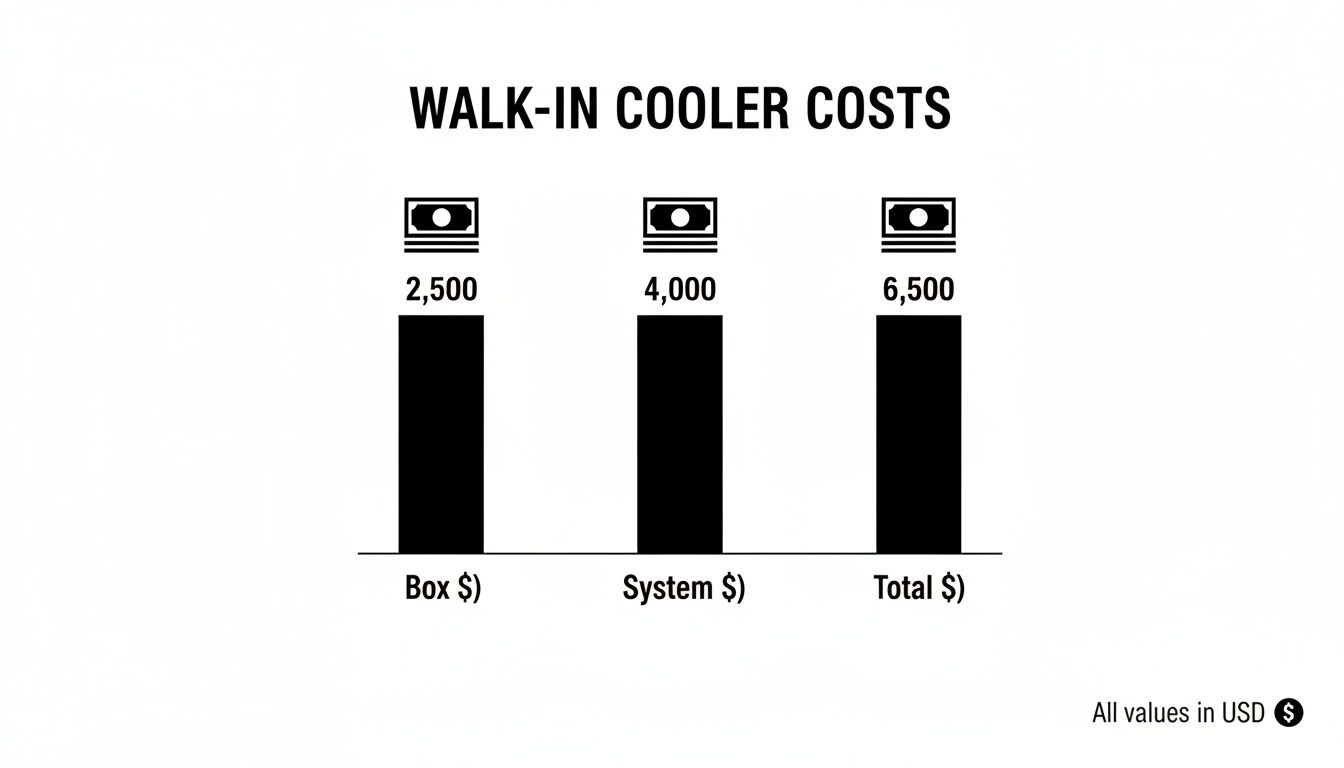
As you can see, the refrigeration system is a huge chunk of the initial investment, which is why it's so important to get that part of your decision right. If you're an equipment dealer, it’s critical to build a pricing model that drives profitability by making sure you account for these high-value components accurately.
Breaking Down the Core Cost Factors
Figuring out the price of a walk-in cooler is a lot like building a custom car—the final number isn't a single sticker price, but the sum of all the parts you choose. Every single decision, from the size of the box to the type of insulation, directly shapes both your upfront cost and what you'll pay to run it every month. For any restaurant owner in Las Vegas, where the brutal heat puts a massive strain on equipment, getting these choices right isn't just a good idea, it's essential.
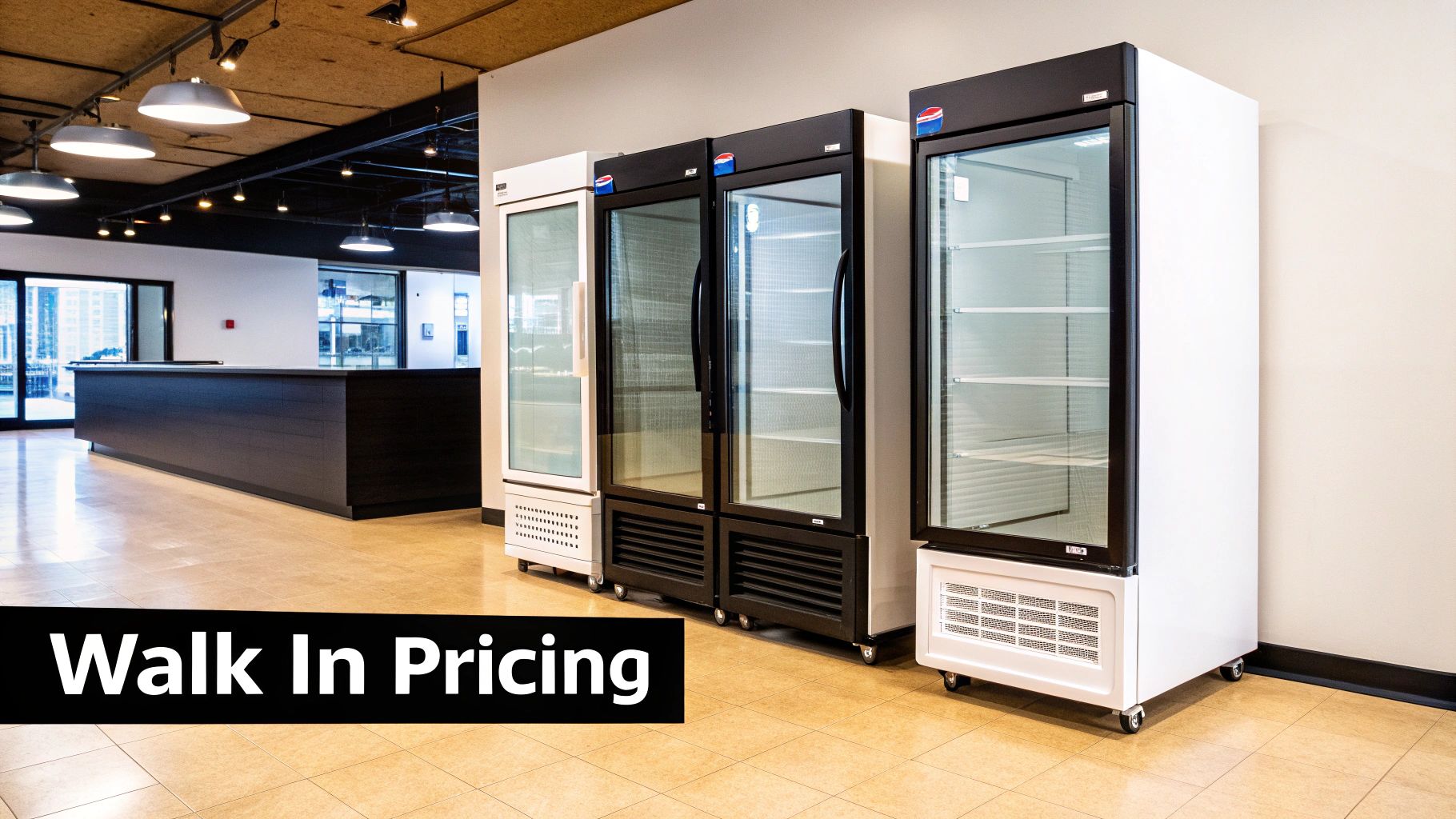
The first and most obvious factor is, of course, the cooler's dimensions. A snug 6'x6' unit for a neighborhood bar is naturally going to be a lot less expensive than a sprawling 12'x20' walk-in needed to service a high-volume casino kitchen. As you go bigger, so does the cost for the panels, the need for a beefier refrigeration system, and the complexity of the installation itself.
Size and Dimensions: The Foundation of Your Quote
Try to think of your walk-in's size not just in square feet, but in cubic feet of air that needs to stay cold 24/7. The bigger the space, the harder that refrigeration system has to work, especially when it’s fighting back against ambient temperatures that can easily top 110°F during a Vegas summer. A bigger box means more insulation, a larger door, and sometimes a reinforced floor—all things that add to the initial price tag.
Before you pull the trigger, map out exactly what you need to store. Don't just think about your current inventory; consider where your business will be in a few years. Stuffing a small cooler to the gills kills airflow and leads to spoiled product, but an oversized unit is just a constant drain on your energy bill. For Las Vegas restaurants juggling a mix of fresh produce, meats, and cases of drinks, planning this stage carefully saves a lot of money and headaches later. You can always explore a variety of commercial refrigerators to find a size that perfectly fits your operation.
Insulation: The Unsung Hero of Efficiency
Insulation is your cooler’s first line of defense against our desert heat. Its power is measured by its R-value, a number that tells you how well it resists heat transfer. Simply put, the higher the R-value, the better the insulation is at keeping the hot air out and the cold air in.
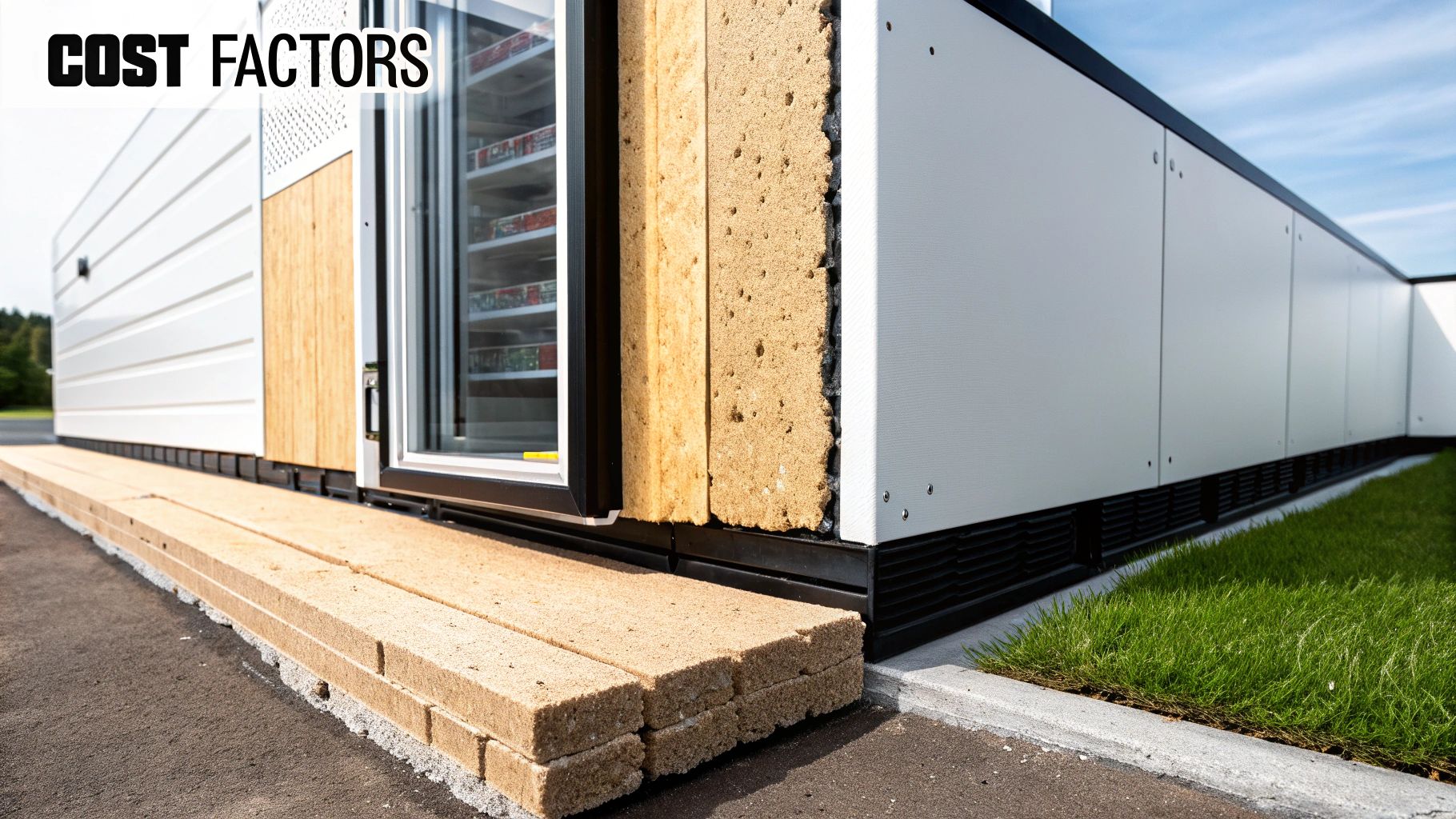
For a place like Las Vegas, standard insulation often just doesn't cut it. Going for thicker panels with a higher R-value (say, R-32 instead of the more common R-25) might cost a bit more upfront, but it acts like a premium-grade thermos. This one choice drastically reduces how hard your refrigeration system has to work, which means lower monthly power bills. It's easily one of the smartest long-term investments any local business can make.
This focus on quality and efficiency is why the demand for reliable cold storage solutions is surging. The global market for walk-in coolers and freezers reflects this, with an estimated value of USD 10.2 billion. This growth is heavily driven by bustling foodservice hubs like Las Vegas, where hotels, restaurants, and bars depend on high-performance commercial freezers and ice machines to serve thousands of guests daily. You can find more insights on the walk-in cooler market and its growth drivers in this comprehensive report.
Flooring Options: A Critical Choice Underfoot
Another key decision that directly impacts the price is whether to get a walk-in with a built-in, insulated floor. The choice between a "floored" and "floorless" model has real-world consequences for both your budget and your cooler's performance.
-
Floorless Walk-Ins: These are designed to sit right on a concrete slab. They're usually cheaper and make it easy to roll in heavy carts and pallet jacks. The catch? This only works if your concrete is already insulated and on the ground level.
-
Floored Walk-Ins: These units come with their own integrated floor panels, creating a complete, insulated box. A floor is mandatory if your cooler is going on a wood-framed surface or an upper story of a building. It's non-negotiable for structural support and preventing temperature leaks.
Here in Las Vegas, even a ground-level concrete slab can get incredibly hot. A floorless model might save you a few bucks at first, but if that slab isn't properly insulated, your cooler will constantly be fighting heat radiating up from the ground. That leads directly to higher energy use. And for walk-in freezers? An insulated floor is always required, no exceptions.
Navigating Installation in the Desert Climate
When you get that first quote for your walk-in cooler, it’s easy to focus on that big number. But that’s just for the hardware—it's only one piece of the puzzle. The next, and arguably more critical, part of your budget involves installation, delivery, and all the local permits. These costs are a whole different ballgame here in Las Vegas, and understanding them upfront is the key to avoiding some nasty financial surprises down the road.
For any Las Vegas restaurant, bar, or hotel, professional installation isn't some luxury add-on; it's a make-or-break necessity. Our relentless desert heat puts a massive strain on refrigeration systems. If your unit is installed with even slightly improper ventilation or a poor seal, it will be constantly overworked. That leads straight to shocking energy bills, parts failing way too soon, and the nightmare scenario: losing thousands of dollars in spoiled inventory.
The True Cost of Professional Installation
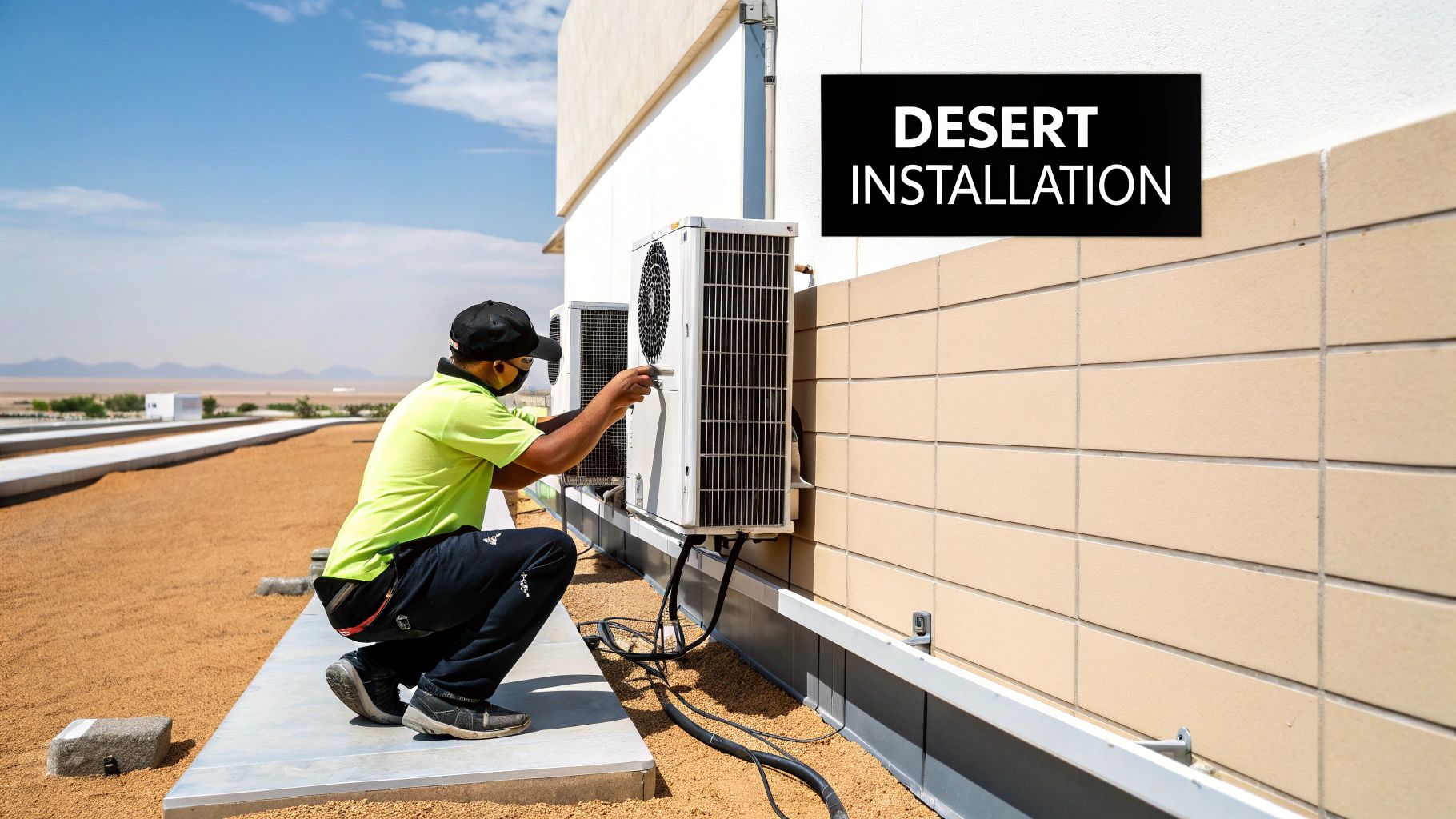
Your standard installation fee will usually cover assembling the insulated panels, sealing every seam to make the box airtight, and mounting the refrigeration unit. But a real pro’s job goes way beyond just putting the pieces together. They have to make absolutely sure the condenser has enough airflow—a game-changing factor when ambient temperatures can easily soar past 110°F.
Without that proper airflow, the condenser can't get rid of heat, forcing the compressor to run nonstop. In the desert, that is the fastest way to burn out your entire system. An installer who knows Las Vegas will position the unit to maximize its efficiency and lifespan, saving you a fortune in future repair bills.
The location of your walk-in cooler is more than just a logistical decision; it's a financial one. Improper placement, even by a few dozen feet, can create ongoing operational costs, not just in energy use but in other areas like product loss during routine line cleaning for draft beer systems. Every foot of distance matters.
Uncovering Hidden Budget Items
Beyond the technician's labor, there are several "hidden" costs that often catch business owners off guard. These items are usually billed separately from the main installation quote but are absolutely essential for a safe, compliant setup. A good supplier will help you see these coming, but it’s always smart to be prepared.
Make sure your budget has room for these potential line items:
- Dedicated Electrical Work: A walk-in cooler needs its own dedicated circuit. This has to be done by a licensed electrician and can run from a few hundred to over a thousand dollars, all depending on how far the run is from your breaker panel.
- Plumbing for Condensate Drains: The evaporator coil inside your cooler produces condensation, and that water has to go somewhere. This often requires a plumber to tie the drain line into your building’s existing plumbing—another job for a licensed pro.
- Clark County Permits: Depending on how big your project is, you might need to pull permits from Clark County for the electrical, plumbing, and mechanical work. These permits have fees and require inspections, adding both time and money to your project.
- Site Preparation: Is the floor perfectly level? Is there enough clearance around the unit for air to circulate and for maintenance? Any prep work, like leveling concrete or moving other equipment, will add to your total cost.
The placement of a walk-in cooler is a core part of a truly functional kitchen layout. Getting these details right from the very beginning is crucial, which is why taking a look at a complete guide on designing a restaurant kitchen can save you from some very expensive mistakes. By building a full budget that includes these often-forgotten expenses, you'll ensure a smooth installation and protect your investment for years to come.
Understanding the True Cost of Ownership
That initial price tag on a walk-in cooler? It’s just the opening act. For any restaurant or bar grinding it out in the vibrant, demanding city of Las Vegas, the real story unfolds over the equipment's entire lifespan. To make a truly smart investment, you have to look past the purchase price and focus on the Total Cost of Ownership (TCO). This includes every single dollar you'll spend on energy, maintenance, and potential repairs long after the installation crew has packed up and left.
This long-term view is especially critical here in Las Vegas, where the scorching summer heat puts an immense, relentless strain on all commercial refrigeration. Make no mistake, the single biggest factor in your TCO will be energy efficiency. A cheaper, less efficient unit will bleed money through your monthly utility bills, quickly wiping out any savings you thought you made upfront.
Energy Efficiency: The Ultimate Cost Factor
Imagine two restaurants on the Strip, both buying an 8'x10' walk-in cooler. One owner grabs a standard, budget-friendly model. The other invests an extra $2,000 in a high-efficiency unit with better insulation and a more advanced refrigeration system.
The first owner's unit might draw 15-20% more power every single day just to fight the desert heat and maintain a food-safe temperature. Over a year, that can easily add up to $1,000 or more in extra electricity costs. In just a couple of years, the higher upfront investment has already paid for itself. From that point on, it’s pure savings dropping to the bottom line.
Think of it this way: The "cheapest" cooler isn't the one with the lowest sticker price. The most economical choice is the one that costs the least to run over its entire 10-15 year lifespan, especially in a 24/7 hospitality environment like ours.
This focus on performance is driving the entire market. In fact, a recent report from Fortune Business Insights shows North America leads the global market with a massive 48.7% share, thanks in large part to construction booms in the U.S. hospitality sector. The U.S. walk-in cooler segment alone just hit USD 3.1 billion, which is 79.6% of North America's total—a huge benefit for Nevada's casino food and beverage teams who need dependable refrigeration for nonstop operations.
Maintenance, Warranties, and The Price of Downtime
Beyond your power bill, TCO also has to account for upkeep and the nightmare scenario: equipment failure. A new, quality walk-in cooler will come with a solid warranty, often covering parts and labor for key components like the compressor for several years. That warranty is your financial safety net.
Let's break down the cost of an unexpected failure. If your cooler's compressor dies on a busy Friday night, you're looking at a cascade of devastating expenses:
- Emergency Repair Call: Get ready to pay premium rates for an after-hours technician. That’s easily $500-$1,000 right out of the gate.
- Lost Inventory: A failed cooler can mean throwing out thousands of dollars worth of produce, meats, and prepped ingredients.
- Lost Revenue: If you can't serve key menu items, you lose sales and risk crushing your restaurant's reputation.
A reliable unit backed by a strong warranty minimizes these risks. Suddenly, the initial cost of a cheap, off-brand cooler seems insignificant compared to the financial gut punch of a single catastrophic failure during peak service. Investing in dependability from the start protects your revenue, your inventory, and your peace of mind.
Smart Financing and Cost Saving Strategies
Getting a big-ticket item like a walk-in cooler doesn't have to mean draining your bank account. In a town like Las Vegas where cash flow is everything, tying up all your capital in one purchase can be a killer. For new restaurants or businesses looking to grow, that upfront cost can look pretty intimidating, but there are smart ways to get a top-tier unit without the sticker shock.
Financing turns a huge one-time hit into predictable, manageable monthly payments. This frees up your operating budget for the important stuff—inventory, paying your staff, and getting the word out. It’s all about getting the high-quality, reliable equipment you need now without putting your business's financial health on the line.
Finding the Right Financial Path
Financing is a lifesaver for businesses of all sizes, from the massive casinos on the Strip to the cozy neighborhood cafes. It's the bridge between what you need today and the cash you have on hand. It ensures you don't have to compromise and settle for a second-rate cooler that’s just going to fail when the Vegas heat is at its worst.
You’ve got a few options to make that walk-in cooler price tag a lot less scary. Exploring different HVAC financing options can open the door to flexible payment plans that actually fit your budget. On top of that, a lot of suppliers have programs specifically for the food and beverage industry. You can learn more about how restaurant equipment financing can get you set up with a new walk-in, ice machines, and more.
The Smart Money is on New Equipment
I get it. The low price of a used walk-in cooler looks really tempting at first glance. But trust me, it’s almost always a costly mistake down the road. Used units rarely, if ever, come with a warranty. That means when something breaks—and it will—you're on the hook for every penny of the repair bill. They're also way less energy-efficient, which means bigger power bills every single month, a real pain in our desert climate.
Investing in a new, warrantied walk-in cooler is genuinely one of the best cost-saving moves you can make. It protects you from surprise repair bills and the nightmare of equipment downtime, giving you a much better return on your investment.
When you buy new from a solid supplier who isn’t jacking up prices with a fancy showroom, you get a reliable, efficient unit that meets all the health codes. That peace of mind and predictable monthly cost are priceless for any business in this town.
Long-Term Value Over Short-Term Savings
Another pro tip is to stick with reputable brands known for their durability. A well-built walk-in is engineered to handle the chaos of a busy commercial kitchen. In the real world, that means fewer frantic calls to a repair tech, less maintenance, and a much longer lifespan.
Think about the real advantages of paying for quality upfront:
- Reduced Repair Costs: Better parts and solid construction mean fewer breakdowns. Simple as that.
- Lower Energy Bills: Modern, efficient designs use a lot less electricity, saving you real money every month.
- Protected Inventory: This is the big one. A reliable cooler protects your thousands of dollars of food from spoiling. A single failure can wipe out more money than you saved by buying cheap.
At the end of the day, the smartest financial play is to stop thinking of your walk-in cooler as just another expense. See it for what it is: a long-term investment in the success and stability of your business.
Answering Your Top Questions About Walk-In Cooler Costs
When you’re running a business in a city that never sleeps, every dollar and every decision counts. From the massive resort kitchens on the Strip to the cool new spots popping up in Summerlin and Henderson, reliable equipment isn't just a nice-to-have—it's everything. At the heart of it all is your cold storage. Your commercial refrigerators, freezers, and ice machines are the unsung heroes of your operation.
But trying to figure out walk-in cooler pricing, especially with our brutal desert heat in mind, can feel like you're navigating a maze. To cut through the noise and give you some straight answers, we’ve put together a list of the most common questions we hear from Las Vegas business owners. Think of this as your cheat sheet for making a smart, confident investment.
What’s a Realistic Budget for a Restaurant Walk-In Cooler in Las Vegas?
For a standard 8'x10' walk-in cooler, a realistic budget for a small or mid-sized Las Vegas restaurant is going to land somewhere between $9,000 and $15,500. This isn't just for the box itself; that price range typically includes the insulated panels, a tough-as-nails refrigeration system built for our climate, and professional installation.
Of course, that number can swing up or down depending on a few key things:
- Refrigeration System Type: A remote system, which kicks the noisy, heat-generating condenser outside or onto the roof, is a popular choice here. It keeps your kitchen cooler but involves longer refrigerant lines and a different installation process than a self-contained unit.
- Flooring Needs: If you're putting the cooler on a ground-level concrete slab, you can often go floorless, which saves some cash. But if it's going on a second story or you need a freezer, an insulated floor is non-negotiable.
- Site-Specific Headaches: How easy is it to get the unit into your building? How far is the run to your electrical panel? Any walls need to be modified? These on-site factors can definitely move the final price tag.
Let me be blunt: don't cheap out on the refrigeration system. Trying to save a few bucks on a unit that isn't powerful enough to handle a 115°F summer day is a recipe for disaster. You'll burn out the equipment, risk losing thousands in product, and end up spending way more in the long run.
How Much Does Walk-In Cooler Installation Typically Cost?
Here in Las Vegas, you can expect the installation to run anywhere from $2,500 to over $5,000. That fee should cover the basics: assembling the panels, sealing every seam airtight, mounting the evaporator and condenser, and charging the system with refrigerant.
But here’s where people get into trouble. You absolutely have to know what that price doesn't include. Always demand an itemized quote so you aren't blindsided by surprise costs that blow up your budget.
Ask your supplier point-blank: "Does this quote include the electrician and plumber?" More often than not, the answer is no. You'll likely have to hire and pay licensed pros separately for that work.
Plan on budgeting for these extras, because they aren't optional:
- Licensed Electrical Work: A walk-in needs its own dedicated circuit. Depending on the complexity, an electrician can add several hundred to a couple of thousand dollars to the project.
- Licensed Plumbing Work: If you need a condensate drain line run to your building's plumbing, you'll have to call in a licensed plumber.
- Permit Fees: New electrical and plumbing work means pulling permits with Clark County. That comes with its own fees and inspection schedules you'll need to account for.
Is Buying a Used Walk-In Cooler a Cheaper Option?
The low initial price of a used walk-in is always tempting, but it’s a gamble that almost never pays off in a demanding market like ours. Think of it this way: you're buying someone else's problems.
The biggest issue is the total lack of a warranty. That means you are on the hook for 100% of all repair costs. When that used compressor dies in the middle of a July dinner rush, you could be looking at a multi-thousand-dollar bill that instantly wipes out any money you thought you saved. On top of that, older units are energy hogs, sticking you with higher NV Energy bills every single month.
You're also rolling the dice on hidden issues—tiny refrigerant leaks, insulation that's lost its R-value, or door gaskets that are so worn out they don't even seal properly. Investing in new, warrantied equipment from a trusted dealer gives you reliability, modern efficiency, and predictable costs. It's about peace of mind, which is priceless.
Do I Really Need a Floor for My Walk-In Cooler?
Whether you need a floor really comes down to where you're putting the cooler and what you're using it for. If it’s going onto a ground-level, insulated concrete slab, you can usually go with a "floorless" model. This saves you some money upfront and makes it a breeze to roll heavy carts and pallet jacks right inside.
But there are a couple of make-or-break situations where an insulated floor is an absolute must:
- Location: If your cooler is going on a wood floor or an upper level of your building, you need a structural, insulated floor. There's no way around it—it's for support and to keep it from sweating.
- Freezer Use: Any walk-in freezer requires an insulated floor, period. This is crucial for hitting and holding those sub-zero temps and preventing the ground underneath from turning into a frozen mess.
Remember, even a ground-level concrete slab in Las Vegas soaks up an incredible amount of heat. If your slab isn't properly insulated, a floorless cooler will be in a constant war with the heat radiating up from the ground, driving up your energy use and putting extra strain on your system.
For a complete selection of reliable, warranty-backed commercial refrigerators, freezers, and ice machines designed to thrive in the demanding Las Vegas climate, trust the experts at Las Vegas Restaurant Equipment. Explore our inventory and get the essential equipment your restaurant needs to succeed. Visit us online at https://lasvegasrestaurantequipment.com.